.webp&w=384&q=75)

Loading, please wait...
Loading, please wait...
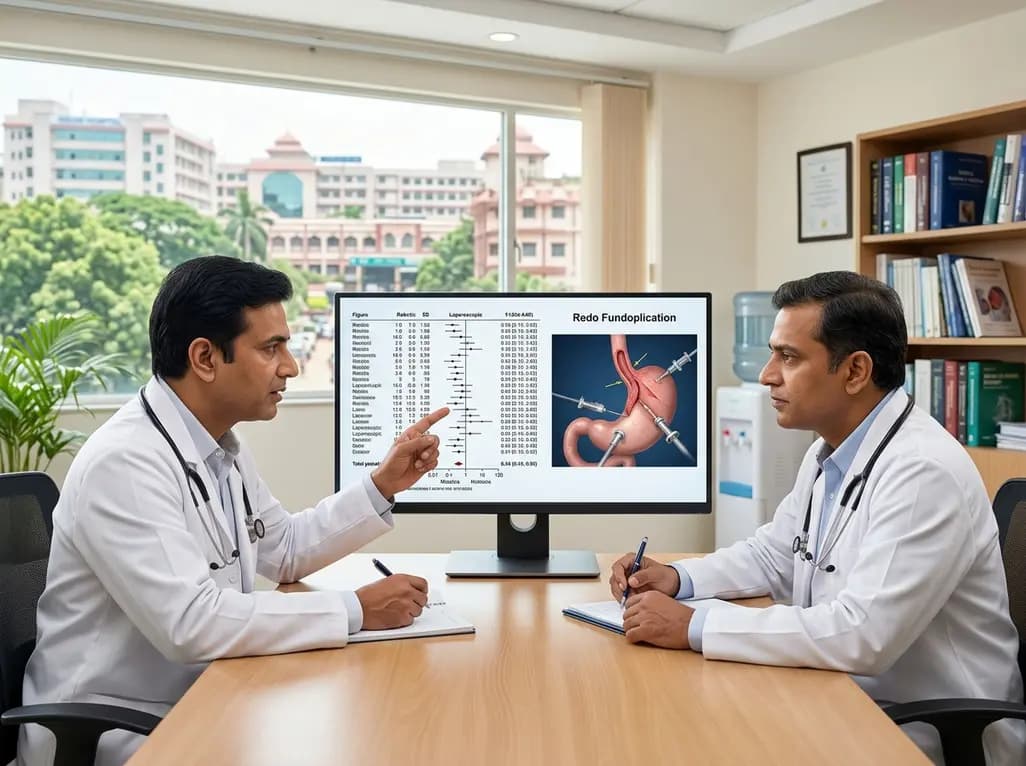
Surgical management of recurrent gastroesophageal reflux disease poses substantial technical hurdles for foregut specialists. When primary anti-reflux procedures fail due to wrap migration, structural disruption, or persistent hiatal herniation, reoperative interventions become necessary. Recent surgical innovations emphasize the adoption of advanced minimally invasive platforms to navigate dense adhesions and distorted hiatal anatomy. A comprehensive meta-analysis has evaluated the perioperative outcomes of robotic redo fundoplication compared to conventional laparoscopy, offering critical clinical insights.
Primary anti-reflux surgery generally delivers high rates of patient satisfaction and sustained symptomatic relief. However, a notable subset of patients eventually develops anatomical wrap failure, severe recurrent reflux, dysphagia, or gas-bloat syndrome. Managing these recurrent manifestations frequently requires redo surgical repair, which inherently carries higher complication rates than primary operations. Dense mediastinal scarring, collateral vascularization, disrupted tissue planes, and vagal nerve entrapment significantly elevate the likelihood of iatrogenic injuries during re-exploration.
During revision surgery, surgeons frequently encounter dense retrocardiac fibrotic changes that obscure the boundaries between the gastric wrap, esophagus, and crural pillars. Consequently, the risks of full-thickness esophageal perforation, gastric devascularization, and pneumothorax rise considerably. Conventional laparoscopy in this setting demands exceptional expertise because rigid instruments and two-dimensional visualization limit delicate tissue manipulation in confined retrocardiac spaces.
Furthermore, patients undergoing secondary interventions often present with compromised general health, severe nutritional deficits, and diminished baseline gastrointestinal quality of life. Therefore, foregut specialists actively explore innovative surgical platforms capable of minimizing intraoperative trauma, reducing conversion rates, and optimizing postoperative recovery for these complex cases.
To clarify the comparative efficacy between surgical modalities, investigators conducted a rigorous systematic review encompassing five major global databases up to July 2026. The resulting meta-analysis analyzed four cohort studies involving 257 consecutive patients undergoing reoperative foregut surgery. Among these cases, robotic procedures accounted for nearly half of the cohort at 49 percent. Baseline demographic characteristics, including patient age, sex distribution, and body mass index, were thoroughly matched across both treatment arms.
The primary outcome of the meta-analysis focused on intraoperative complications, specifically evaluating esophageal lacerations, gastric leaks, bowel injuries, and significant vascular events. Robotic interventions demonstrated an intraoperative complication rate of 6.3 percent compared to 9.1 percent in laparoscopic cases, reflecting a favorable pooled odds ratio of 0.57 without statistical heterogeneity. These findings illustrate that robotic assistance maintains a commendable safety profile in hostile surgical fields.
Similarly, secondary outcomes revealed no statistically significant differences in overall postoperative complication rates between the two surgical approaches. Both modalities demonstrated low rates of early reoperation, readmission, and major systemic morbidity. Hence, robotic technology provides an equally safe alternative to laparoscopy while successfully preserving vital foregut structures.
Surgical efficiency and resource utilization remain crucial elements when adopting robotic platforms in institutional settings. The pooled data demonstrated that robotic redo fundoplication entailed a significantly longer total operative time, with a mean difference of 26.36 minutes compared to conventional laparoscopy. This extended duration largely stems from robotic system docking, instrument exchanges, and meticulous multi-quadrant retrocardiac dissection.
Conversely, the overall length of hospital stay showed a modest reduction favoring the robotic cohort, with a mean difference of 0.16 days. Although this difference did not reach statistical significance, it underscores the rapid recovery pathway achievable with precise robotic manipulation. Patients undergoing robotic reoperation experienced minimal peritoneal trauma, facilitating prompt mobilization, faster resumption of oral liquids, and timely discharge.
Moreover, the extended procedural duration often diminishes as institutional familiarity and surgical team coordination improve over time. High-volume centers consistently demonstrate that standardized nursing protocols and efficient bedside assistance drastically curtail docking durations, making robotic operative times comparable to complex laparoscopic reoperations.
The distinct technical advantages of the robotic platform explain its favorable safety outcomes during complex redo fundoplication. High-definition three-dimensional stereoscopic vision allows operating surgeons to perceive subtle tissue layers with enhanced depth perception. This optical precision proves particularly advantageous when isolating the anterior and posterior vagus nerves from dense surrounding scar tissue.
In addition, articulated Endowrist instruments offer seven degrees of freedom, completely surpassing the maneuverability of standard straight laparoscopic tools. This enhanced dexterity enables surgeons to dissect around the gastroesophageal junction with stable, tremor-filtered movements. Consequently, mobilizing the herniated fundic wrap from the posterior mediastinum occurs with significantly diminished traction trauma.
Furthermore, robotic platforms facilitate precise intracorporeal suturing in tight anatomical spaces, such as the diaphragmatic hiatus. Reconstructing the crural defect and anchoring a tailored revision wrap require secure, tension-free stitches. The robotic needle driver ensures optimal needle angles and controlled knot tying, thereby decreasing the likelihood of structural hiatal breakdown and subsequent wrap herniation.
The findings of this systematic review confirm that robotic technology is a safe, reproducible, and effective tool for secondary foregut reconstructions. Nevertheless, because current published evidence relies primarily on retrospective cohort studies, prospective randomized controlled trials are essential to establish definitive conclusions. Future investigations should prioritize long-term objective outcomes, such as 24-hour pH monitoring, high-resolution esophageal manometry, and verified quality-of-life scores.
Additionally, health economic evaluations must be integrated into future foregut research. While robotic instrumentation introduces higher upfront capital and consumable costs, these expenses may be counterbalanced by fewer catastrophic visceral injuries, lower conversion rates, and reduced post-discharge reinterventions. Identifying specific patient subsets—such as individuals with multiple prior repairs or massive hiatal defects—will maximize clinical utility.
Ultimately, multidisciplinary foregut teams should individualize surgical approaches based on anatomical complexity, patient comorbidities, and center-specific robotic expertise. Continued refinements in robotic platforms, combined with structured surgeon training programs, will likely broaden the adoption of robotic revision techniques in specialized gastrointestinal centers worldwide.
Robotic redo fundoplication is a specialized minimally invasive surgical procedure performed to correct a previously failed anti-reflux repair. Surgeons use computer-assisted robotic arms equipped with articulating instruments and high-definition three-dimensional visualization. This approach enables precise dissection of dense scar tissue, safe mobilization of the stomach and esophagus, and meticulous reconstruction of the anti-reflux wrap while minimizing trauma to adjacent mediastinal and retroperitoneal structures.
Robotic revision foregut surgery typically requires longer operative times due to system setup, precise port placement, and robotic arm docking. In addition, surgeons often utilize the platform's advanced dexterity to perform highly detailed, meticulous dissection around delicate vagal nerves and fibrotic tissue planes. However, as surgical teams gain procedural experience and establish streamlined institutional protocols, total operative duration substantially decreases.
Current meta-analytic evidence indicates that robotic redo fundoplication achieves safety outcomes comparable to conventional laparoscopy. It demonstrates a lower absolute incidence of intraoperative complications, such as esophageal and gastric perforations, without increasing postoperative morbidity. While both techniques remain safe in expert hands, robotic assistance offers technical advantages that help mitigate catastrophic tissue injuries during complex reoperative foregut dissections.
Disclaimer: This content is for informational and educational purposes only. It does not constitute medical advice, diagnosis, or treatment. Healthcare professionals should exercise their clinical judgment when interpreting or applying this information. Refer to the latest local and national guidelines for clinical practice.
References
Rivero-Moreno Y et al. Safety of robotic-assisted surgery in redo fundoplication: a systematic review and meta-analysis. J Robot Surg. 2026 Aug 13. doi: undefined. PMID: 42593598.
Panait L, Burton D, Kuo P, et al. Outcomes of Laparoscopic Redo Fundoplication in Patients With Failed Antireflux Surgery: A Systematic Review and Meta-Analysis. Ann Surg. 2021;274(1):e1-e8.
Coletta D, Romano A, De Angelis N, et al. Robotic surgery versus laparoscopic surgery for anti-reflux and hiatal hernia surgery: a short-term outcomes and cost systematic literature review and meta-analysis. Surg Endosc. 2024;38(7):3512-3524.

Read summarized clinical updates, watch expert medical content, and earn CME certifications right from your smartphone.
Open your smartphone camera to scan and install.





A systematic review and meta-analysis indicates that robotic redo fundoplication is as safe as laparoscopic surgery, demonstrating lower intraoperative complications and comparable postoperative outcomes in complex reoperative foregut procedures.
last month

Modern renal nutrition is shifting toward additive-aware dietary guidance. This paradigm differentiates between intrinsic nutrients in whole foods and hyper-bioavailable inorganic additives, offering practical strategies to mitigate additive stacking and toxicity without restricting nutritious whole foods.
Today

A multiparametric MRI approach combining quantitative T2 shading, apparent diffusion coefficient (ADC) measurements, and morphological signs provides superior diagnostic accuracy over subjective evaluation to differentiate ovarian endometriomas from benign hemorrhagic cysts.
Today
A landmark case report reveals a donor heart beating for a century in a 63-year-old recipient, challenging conventional age limits in cardiac transplantation and offering critical lessons on organ longevity, donor selection, and long-term graft survival.
Today

A new randomized crossover trial reveals that a hinged ulnar gutter orthosis significantly improves hand function and weight-bearing tolerance compared to standard volar splints in patients with degenerative triangular fibrocartilage complex lesions, supporting functionally permissive orthotic designs.
Today
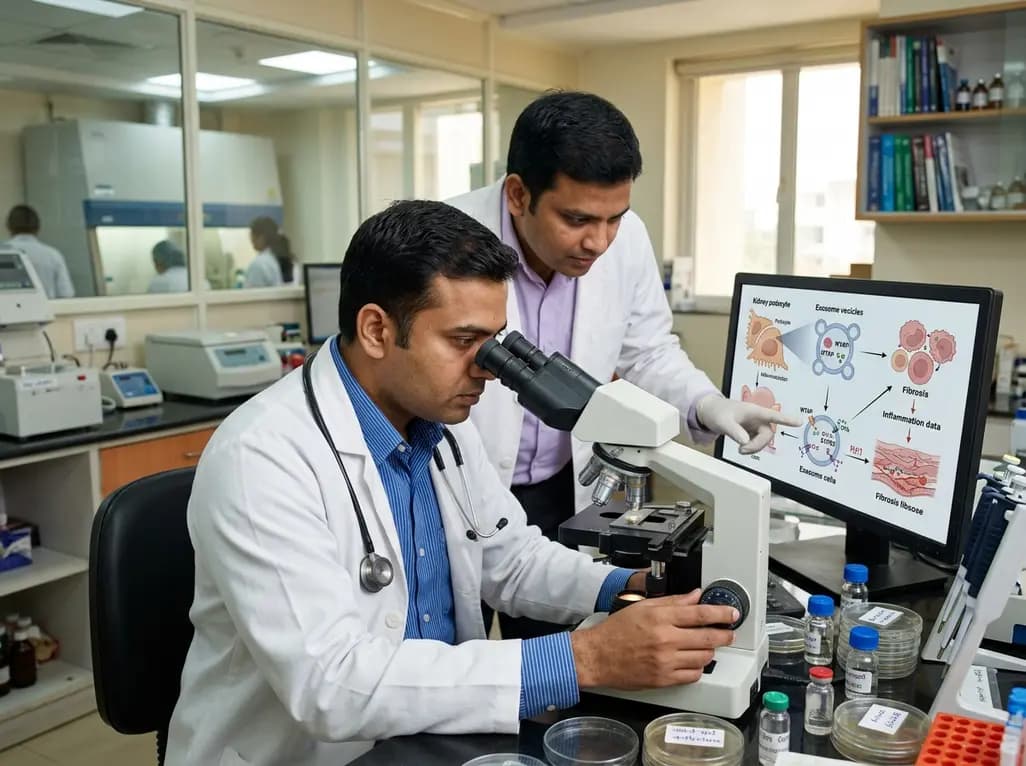
New research reveals that M1 macrophage-derived exosomes aggravate diabetic nephropathy by transferring WTAP to stabilize S1PR2 mRNA. Silencing WTAP in these vesicles attenuates endothelial injury and renal fibrosis, pointing toward innovative nanomedicine therapies.
Yesterday
