.webp&w=384&q=75)

Loading, please wait...
Loading, please wait...
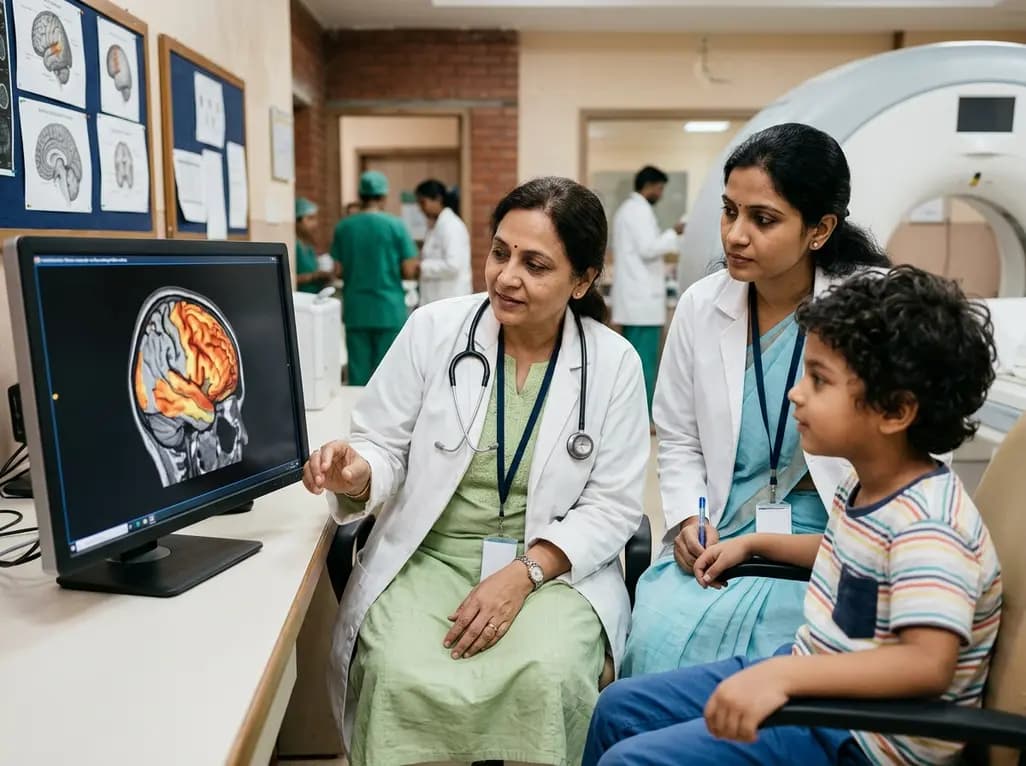
Autism spectrum disorder exhibits profound phenotypic heterogeneity, which complicates early clinical evaluation and individualized prognosis. Recent neuroimaging investigations highlight the vital significance of brain structural asymmetry during early human neurodevelopment. Typically, the human cerebral cortex develops subtle left-right structural specialization that supports distinct cognitive, linguistic, and sensorimotor processes. In neurotypical infants and toddlers, standard lateralization patterns establish foundational neural circuits for expressive communication and social perception. However, disruptions in this structural organization frequently correlate with atypical neurobehavioral developmental trajectories. A landmark multi-center structural magnetic resonance imaging study evaluated cortical patterns in 1030 young children aged one to seven years. The investigative team applied developmental normative models to chart hemispheric organization with unprecedented anatomical precision. Consequently, the findings revealed a distinct rightward lateralization shift in children diagnosed with autism spectrum disorder. This atypical divergence specifically involved regional gray matter volume deviations across key cortical areas. Moreover, these structural alterations correlated directly with core autism symptom severity, providing crucial biological insights into early neurodevelopmental variance.
Traditional neuroimaging investigations frequently rely on simple group-average comparisons, which often mask substantial individual patient heterogeneity. To overcome this limitation, researchers implemented normative developmental modeling based on high-resolution structural magnetic resonance imaging datasets. This statistical framework maps expected developmental centiles, mirroring standard pediatric growth charts routinely used in clinical practice. Consequently, investigators accurately quantified individual patient deviations from healthy normative developmental baselines. The study demonstrated significant rightward laterality shifts in gray matter volume within the inferior parietal lobule and the precentral gyrus. The inferior parietal lobule regulates social communicative processing, multimodal sensorimotor integration, and mirror neuron network activity. Meanwhile, the precentral gyrus governs essential motor execution and somatic coordination pathways. Additionally, affected children exhibited pronounced individual structural variability within the temporal pole, a region critical for socio-emotional cognition. These robust findings indicate that early autistic neurodevelopment involves targeted alterations in lateralized sensorimotor networks rather than diffuse global cortical disorganization.
Clinicians regularly encounter diagnostic challenges when differentiating pure autism from comorbid developmental delay or isolated intellectual disability. Therefore, the study stratified the pediatric cohort into three distinct clinical subgroups. These cohorts comprised autism with developmental delay, autism without developmental delay, and isolated developmental delay. Interestingly, children presenting with combined autism and intellectual impairment exhibited the most severe and extensive atypical deviations. In this subgroup, pronounced laterality alterations correlated directly with both core autism severity and reduced verbal intelligence quotients. In contrast, autistic children with preserved cognitive capacity displayed higher individual variability across cortical regions, linking solely to autistic symptom severity. Most remarkably, children with isolated developmental delay showed no significant deviations in hemispheric asymmetry compared to neurotypical controls. Thus, altered hemispheric lateralization represents a specific neurobiological signature of autism spectrum pathology rather than a non-specific marker of general cognitive impairment.
Understanding the molecular mechanisms underlying structural brain asymmetry requires bridging neuroimaging phenotypes with spatial transcriptomic atlases. The researchers successfully mapped observed cortical deviations against human brain gene expression databases. Notably, regional asymmetry patterns aligned with both shared and group-specific transcriptional profiles across the cortex. Genes regulating neurogenesis, dendritic spine morphogenesis, and synaptic pruning showed significant spatial overlap with affected cortical regions. Furthermore, these transcriptional correlates illuminated cellular mechanisms driving asymmetric cortical maturation during critical early developmental windows. Disruptions in asymmetric gene expression alter axonal guidance and interhemispheric connectivity through the corpus callosum. Consequently, these genetic programs may drive premature cortical thinning or localized gray matter overgrowth in the right hemisphere. By connecting macroscale magnetic resonance imaging markers with microscale molecular genetics, the study bridges a critical gap in contemporary psychiatric neuroscience.
These neuroimaging findings provide actionable diagnostic perspectives for pediatricians, pediatric neurologists, and child psychiatrists. Early childhood represents a critical window of maximal neural plasticity, during which targeted behavioral interventions yield optimal functional outcomes. Currently, routine clinical practice relies heavily on subjective behavioral observations and parent-reported developmental questionnaires. However, identifying reliable structural biomarkers can accelerate diagnostic stratification before comprehensive psychometric testing becomes feasible. Clinicians must recognize that comorbid intellectual disability exacerbates structural lateralization disruptions. Therefore, young patients displaying pronounced language delay and sensorimotor deficits warrant prioritized multidimensional neurodevelopmental assessments. Furthermore, tracking cortical asymmetry patterns could eventually facilitate objective monitoring of therapeutic response over longitudinal follow-up. Integrating objective neurodevelopmental normative metrics into clinical workflows can refine diagnostic precision and guide tailored developmental support strategies.
Advanced neuroimaging techniques are steadily transitioning from academic research environments into translational clinical tools. Developmental normative modeling provides a standardized reference framework to evaluate individual patient scans against large population distributions. In the future, automated machine learning algorithms could analyze routine clinical magnetic resonance imaging to detect subtle lateralization anomalies. Moreover, multi-modal diagnostic approaches combining structural imaging, functional connectivity, and genetic risk scores will enhance prognostic accuracy. Clinicians should anticipate improved biomarker panels capable of predicting individual developmental trajectories across diverse pediatric populations. Nonetheless, longitudinal studies remain essential to evaluate how these early rightward lateralization shifts evolve throughout adolescence and adulthood. As neurodevelopmental research progresses, objective neuroanatomical characterization will ultimately support precision medicine paradigms for children with complex developmental conditions.
Rightward brain structural asymmetry refers to an atypical neurodevelopmental pattern where specific cortical regions, such as the inferior parietal lobule and precentral gyrus, show greater gray matter volume in the right hemisphere compared to the left, deviating significantly from typical early childhood lateralization benchmarks.
Children with autism show significant rightward lateralization shifts in gray matter volume, which correlate directly with symptom severity. Conversely, children with isolated developmental delay or intellectual disability exhibit normal hemispheric symmetry comparable to neurotypical peers, confirming this lateralization shift is specific to autism pathology.
No, neuroimaging metrics currently serve as research and stratification tools rather than standalone diagnostic tests. Clinicians must continue relying on validated behavioral evaluations and developmental assessments, although normative structural modeling holds significant future promise for objective early risk stratification and individualized therapeutic monitoring.
Disclaimer: This content is for informational and educational purposes only. It is not intended to provide medical advice, diagnosis, or treatment. Healthcare professionals must exercise clinical judgment and verify information with appropriate clinical references. Refer to the latest local and national guidelines for clinical practice.
References

Read summarized clinical updates, watch expert medical content, and earn CME certifications right from your smartphone.
Open your smartphone camera to scan and install.





A landmark sMRI study of 1,030 children identifies rightward brain structural asymmetry in young children with autism, differentiating ASD phenotypes and linking cortical deviations to gene expression.
last month

Explore the therapeutic promise of TLR7 and TLR8 inhibitors in managing systemic lupus erythematosus and monogenic autoimmune diseases. Learn how targeting endolysosomal single-stranded RNA sensing and regulatory checkpoints like UNC93B1 and PLD4 offers precision treatment without broad immunosuppression.
Today

A pharmacometric and machine learning study reveals that specific vaginal bacteria alter cervical antiretroviral exposure, highlighting the need for precision HIV PrEP strategies.
Today

Abdominal aortic aneurysm rupture remains a catastrophic vascular emergency. Groundbreaking research reveals that USP53 accelerates aneurysm progression by reprogramming smooth muscle cell metabolism toward aerobic glycolysis, highlighting a promising target beyond conventional diameter-based surveillance.
Today
A breakthrough study leverages natural language processing to accurately identify incident medication-related osteonecrosis of the jaw and track antiresorptive drug holidays from clinical narratives in electronic health records, advancing osteoporosis pharmacovigilance and dental safety.
Today

Recent research defines ferro-aging as a conserved iron-lipid axis driving organ decline across primates. Age-related iron dyshomeostasis stimulates ACSL4-mediated lipid peroxidation, promoting cellular senescence. Notably, vitamin C directly inhibits ACSL4, suppressing phospholipid oxidation and multi-organ decay.
Today
