.webp&w=384&q=75)

Loading, please wait...
Loading, please wait...

The primary goal is to provide a standardized framework for reporting resuscitation education research outcomes. This allows for better comparison between studies and more robust systematic reviews to guide future practice.
Outcomes are grouped into four main tiers: instructor outcomes, learner outcomes, patient outcomes, and systems- or population-level outcomes. There are specific measures tailored for both healthcare professionals and lay rescuers to ensure comprehensive data collection.
Disclaimer: This content is for informational and educational purposes only. It does not constitute professional medical advice, diagnosis, or treatment. Always seek the advice of your physician or other qualified healthcare provider with any questions you may have regarding a medical condition. Refer to the latest local and national guidelines for clinical practice.
References
Cheng A et al. Uniform Reporting of Outcomes From Resuscitation Education Research: The Resuscitation Education Utstein Style: A Consensus Report From the International Liaison Committee on Resuscitation. Circ Popul Health Outcomes. 2026 Apr 20. doi: 10.1161/HCQ.0000000000000144. PMID: 42003483.
American Heart Association. Science News: Uniform Reporting of Outcomes From Resuscitation Education Research. heart.org. 2026.
International Liaison Committee on Resuscitation (ILCOR). Resuscitation Education Science Statement. 2025.

Read summarized clinical updates, watch expert medical content, and earn CME certifications right from your smartphone.
Open your smartphone camera to scan and install.





The ILCOR consensus report introduces the Resuscitation Education Utstein Style to standardize reporting outcomes for cardiac arrest resuscitation research....
6 months ago
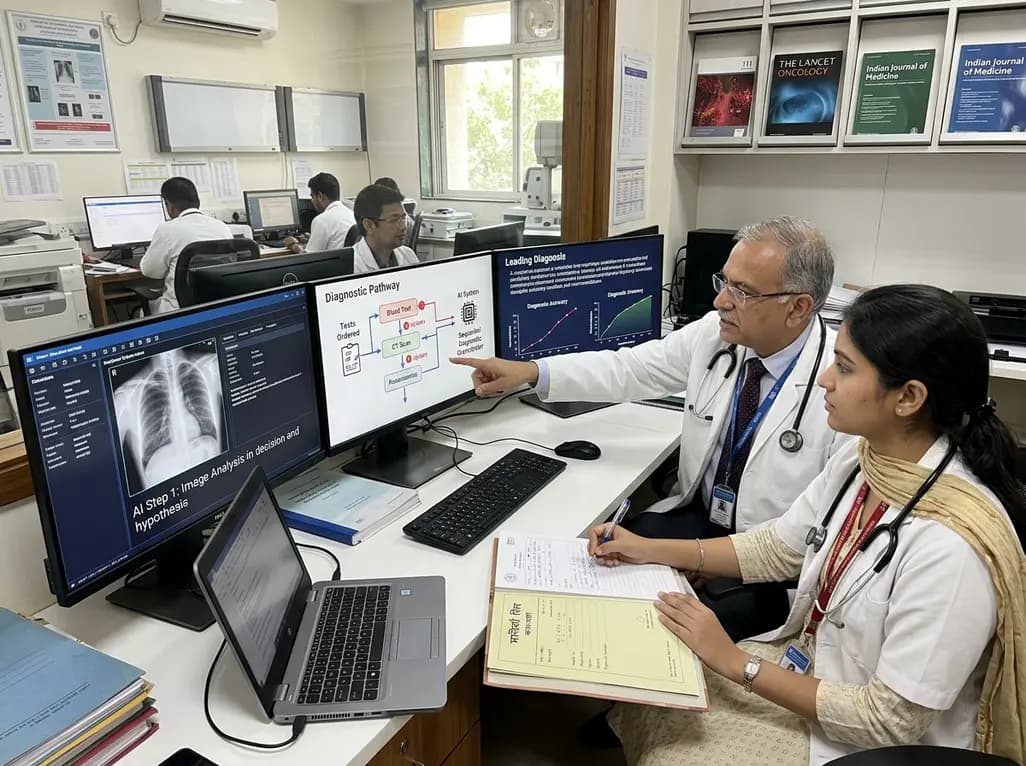
A breakthrough peer-reviewed study demonstrates that a sequential AI diagnosis system can mirror real-world clinical reasoning. By ordering stepwise tests and updating hypotheses dynamically, this multi-agent orchestrator achieved superior diagnostic accuracy while reducing investigative costs.
Today

A prenatal case highlights severe glutaric acidemia type II presenting as bilateral hyperechoic cystic kidneys at 18 weeks. Whole-exome sequencing revealed a novel homozygous ETFDH frameshift variant, demonstrating the power of rapid genetic testing in fetal renal anomalies.
Today

Review how tailored exercise programs benefit frail older patients with heart failure. Explore pathophysiological mechanisms, individualized training prescriptions, and strategies to overcome adherence barriers in clinical practice.
Yesterday

This comparative study evaluates posterior labral tears with and without glenohumeral instability, highlighting distinct demographic patterns, MRI underestimation in stable shoulders, and successful arthroscopic repair outcomes.
Yesterday

A clinical study demonstrates that early intervention with tocilizumab, either as monotherapy or bridged with corticosteroids, achieves significant proptosis reduction and resolves active inflammation in treatment-naive thyroid eye disease.
Yesterday
