.webp&w=384&q=75)

Loading, please wait...
Loading, please wait...

Laryngeal function relies heavily on aerodynamic power, yet clinical evaluations frequently overlook the subglottic power plant that sustains vocal fold vibration. Recent investigations emphasize that respiratory muscle performance plays a foundational role in vocal production, efficiency, and stability across distinct pathologies. When pulmonary mechanics degrade, vocal output suffers notable declines in duration, loudness, and harmonic stability. Conversely, primary vocal pathologies often alter expiratory dynamics through maladaptive muscular compensation. Historically, voice clinicians evaluated respiratory volumes using conventional spirometry, but static lung volumes provide limited insight into dynamic pressure generation during connected speech. To address this limitation, researchers recently introduced composite models combining static and sustained pressure indices. Understanding how the respiratory engine interacts with glottic resistance enables clinicians to differentiate underlying etiologies more effectively. Furthermore, targeted respiratory assessments permit customized therapeutic interventions that optimize phonatory efficiency and reduce laryngeal strain. By evaluating respiratory muscle performance alongside acoustic stability, speech-language pathologists and otolaryngologists can better uncover the pathophysiological mechanisms governing diverse vocal disorders. Consequently, evaluating respiratory biomechanics provides crucial diagnostic clarity for complex voice complaints encountered in specialized ENT practice.
Voice production requires a delicate mechanical balance between subglottic aerodynamic power and glottic tissue resistance. The lungs and respiratory musculature function as the fundamental energy source, driving pressurized airflow through adducted vocal folds to induce mucosal wave oscillations. When patients speak, inspiratory and expiratory muscle groups must coordinate rapid pressure adjustments to maintain uniform sound pressure levels and pitch. Consequently, any disruption to this aerodynamic driving system compromises phonatory stability and duration. In clinical practice, clinicians historically relied on simple spirometric parameters, including forced expiratory volume and vital capacity. However, these static volumetric metrics fail to reflect the muscular endurance and pressure regulation necessary for running speech. Sustained pressure performance requires coordinated isometric and dynamic contractions of the abdominal, intercostal, and accessory musculature. Furthermore, laryngeal resistance changes dynamically according to glottal closure, modulating how much subglottic pressure the respiratory system must generate. When glottic incompetence occurs, excessive airflow escapes, requiring compensatory increases in respiratory effort. Conversely, excessive laryngeal hyperfunction increases glottic resistance, prompting aberrant respiratory breathing patterns. Therefore, a comprehensive evaluation of vocal disorders must integrate dynamic pressure generation metrics alongside glottic acoustics to elucidate the true biomechanical breakdown.
Evaluating respiratory function in dysphonic populations requires objective protocols that measure maximal capacity as well as sustained muscular performance. Recent diagnostic advancements incorporate maximal inspiratory pressure, maximal expiratory pressure, and the Mean Sustained Pressure Index into composite analytical models. Through principal component analysis, investigators derived the Respiratory Muscle Performance Factor, which captures both peak pressure output and sustained endurance across phonatory tasks. In clinical cohorts comprising organic, neurological, and functional voice disorders, this composite factor demonstrated remarkable discriminative capacity. Specifically, statistical analyses controlling for age and sex revealed significant differences in respiratory muscle performance across diagnostic groups. Patients with organic vocal fold lesions exhibited significantly higher composite respiratory scores compared to individuals with functional voice disorders. This difference likely reflects distinct pathophysiological adaptations within each cohort. Patients with organic structural lesions often recruit vigorous respiratory compensations to overcome glottal gap leakage and maintain audible phonation. In contrast, patients with functional disorders often exhibit uncoordinated respiratory mechanics rather than intrinsic muscular weakness. Thus, composite pressure indices offer deeper diagnostic insights than isolated spirometry, clarifying how diverse etiologies influence respiratory mechanics and breath support.
The physiological disparities between organic and functional voice disorders highlight fundamentally divergent compensatory strategies. Organic voice disorders, including vocal fold polyps, nodules, cysts, and structural lesions, alter the physical geometry and mass of the vibratory margin. These anatomical imperfections prevent complete vocal fold adduction during the closed phase of vibration. Consequently, transglottic air leakage occurs rapidly, diminishing aerodynamic efficiency and reducing sustained vocal duration. To overcome this substantial air loss, patients unconsciously recruit expiratory musculature to generate greater subglottic driving pressure. Therefore, their maximal and sustained pressure-generating capacities frequently appear robust or heightened during formal testing. In stark contrast, functional voice disorders, such as muscle tension dysphonia, involve inappropriate laryngeal muscle activation without any structural or neurological lesion. Patients with functional dysphonia frequently demonstrate excessive perilaryngeal hypertonicity paired with erratic, shallow thoracic breathing. Although their underlying pulmonary parenchyma and neuromuscular pathways remain completely intact, their coordination between respiratory driving pressure and glottic adduction becomes profoundly dysregulated. Consequently, functional dysphonic individuals achieve lower composite performance scores, demonstrating that disorganized motor coordination impairs sustained pressure generation far more severely than structural glottal incompetence.
Acoustic and aerodynamic parameters correlate in distinct ways across vocal etiologies, illuminating the exact nature of vocal dysfunction. In both organic and neurological voice disorders, composite respiratory muscle scores correlate positively with maximum phonation time. When patients suffer from structural glottic gaps or neurological paresis, vocal duration depends almost entirely on the available respiratory driving pressure and expiratory reserve. A stronger respiratory pump directly offsets the acoustic penalties of glottal incompetence, thereby extending sustained vowel phonation. Conversely, functional voice disorders display no meaningful correlation between respiratory performance and maximum phonation time. Instead, functional dysphonia exhibits a strong positive correlation between respiratory muscle performance and cepstral peak prominence during continuous connected speech. Cepstral peak prominence represents the dominance of harmonic energy relative to background noise, serving as a reliable marker of voice quality and stability. In functional disorders, superior respiratory pressure control directly stabilizes fluctuating laryngeal tension during the complex articulatory transitions of connected speech. Thus, respiratory mechanics govern phonatory duration in structural and paretic disorders, whereas they determine acoustic clarity and stability in functional voice disorders.
These physiological distinctions provide actionable clinical guidance for otolaryngologists, laryngologists, and speech-language pathologists managing voice disorders in outpatient settings. Relying solely on laryngeal visualization through videostroboscopy may overlook the critical subglottic contributions driving chronic dysphonia. Therefore, clinicians should incorporate targeted respiratory evaluations, including maximum phonation duration and maximal respiratory mouth pressures, into routine vocal workups. When managing organic lesions or vocal fold immobility, therapy must focus on optimizing respiratory endurance to maximize sustained phonation and aerodynamic efficiency. Interventions such as expiratory muscle strength training can augment subglottic pressure generation, providing substantial functional relief before or after surgical intervention. In contrast, patients diagnosed with functional dysphonia require therapeutic approaches that restore respiratory-phonatory coordination. These patients benefit most from resonant voice therapy, manual laryngeal tension release, and diaphragmatic flow phonation rather than isolated strength training. By realigning expiratory airflow with relaxed laryngeal posturing, clinicians can eliminate hyperfunctional vocal habits and restore harmonic stability. Ultimately, tailoring rehabilitation protocols to the patient's specific respiratory-phonatory phenotype enhances clinical outcomes, reduces treatment failures, and promotes long-term vocal health.
Respiratory muscle performance significantly influences vocal pathology classification by highlighting distinct aerodynamic compensatory strategies across clinical groups. Patients with organic vocal lesions often demonstrate elevated respiratory pressure capacity to counteract glottal gap leakage. In contrast, individuals with functional dysphonia exhibit impaired pressure endurance due to dysregulated motor coordination rather than muscular weakness. Evaluating these dynamic subglottic pressures alongside videostroboscopy helps clinicians distinguish between organic glottic incompetence and functional hyperkinetic patterns accurately.
Patients with functional voice disorders exhibit lower sustained pressure performance because aberrant neuromuscular coordination disrupts the respiratory-phonatory link. Although their lung parenchyma and respiratory muscles remain structurally normal, excessive laryngeal hypertonicity generates erratic opposing resistance. This maladaptive pattern promotes inefficient, shallow breathing mechanics and poor expiratory regulation. Consequently, these individuals struggle to maintain steady subglottic pressure during continuous testing, which diminishes overall performance factors despite the absence of organic neuromuscular lesions.
Clinicians can capture dynamic respiratory and vocal interactions by combining maximal respiratory mouth pressures with aerodynamic and cepstral acoustic measures. Assessing maximum inspiratory pressure, maximum expiratory pressure, and the sustained pressure index evaluates subglottic capacity thoroughly. Pairing these parameters with maximum phonation time and continuous-speech cepstral peak prominence reveals how respiratory drive influences glottic efficiency. This comprehensive approach identifies whether breathiness, vocal fatigue, or acoustic instability stems from respiratory insufficiency or laryngeal hyperfunction.
Disclaimer: This content is for informational and educational purposes only and should not be considered medical advice. Healthcare professionals must exercise their independent clinical judgment. Refer to the latest local and national guidelines for clinical practice.
References

Read summarized clinical updates, watch expert medical content, and earn CME certifications right from your smartphone.
Open your smartphone camera to scan and install.





A clinical study evaluates how respiratory muscle performance differs across organic, neurological, and functional voice disorders, linking pressure capacity to maximum phonation time and connected-speech cepstral peak prominence.
Today

Nanoscale graphene oxide demonstrates remarkable neuroprotective potential in Parkinson's disease models by remodeling toxic alpha-synuclein fibrils, rescuing dopaminergic neurons, and curbing neuroinflammation, marking a new milestone for translational nanomedicine.
Today

The FEBE study investigates the prevalence of post-traumatic stress disorder symptoms in women receiving high-dose-rate brachytherapy for cervical cancer, highlighting the critical role of procedural sedation and trauma-informed clinical care.
Today

A landmark study reveals that intraoperative goal-directed perfusion targeting oxygen extraction ratio significantly reduces renal replacement therapy and two-year mortality in LVAD explant heart transplantation, offering a vital metabolic target for cardiac surgery teams.
Today

A Level I trauma center study shows a brief bedside mental health intervention boosts 30-day follow-up screening adherence by 84% in nonviolent injury patients. However, outcomes for violence survivors reveal critical care gaps, underscoring the urgent need for specialized community violence intervention programs.
Today
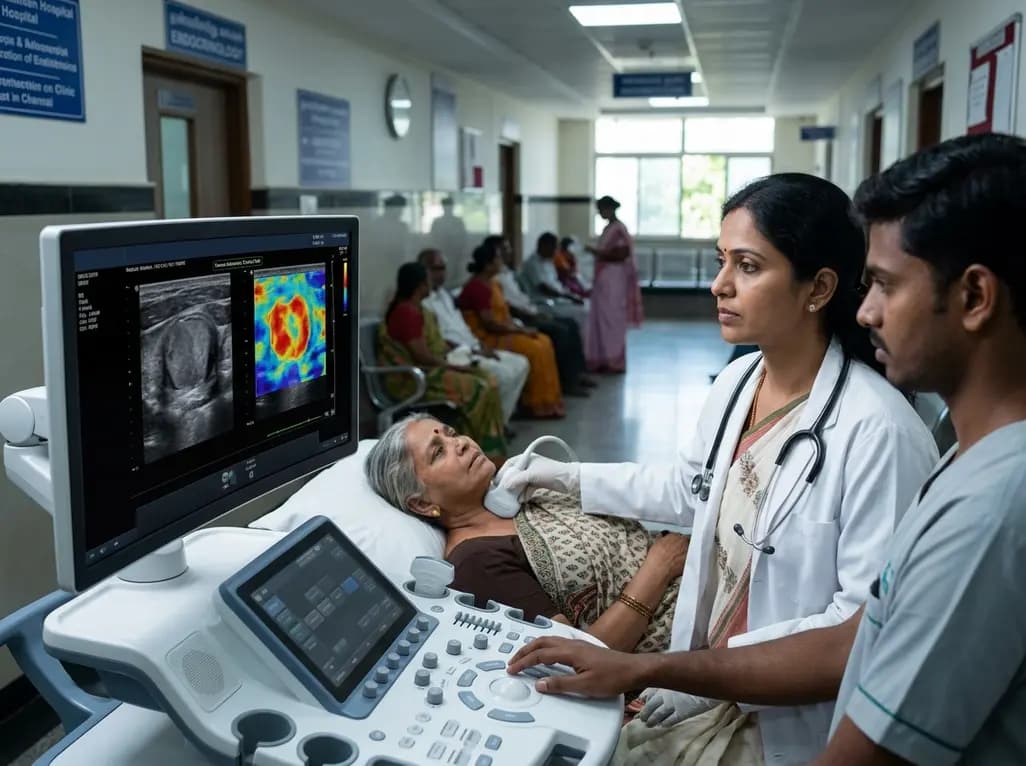
A study introduces a dual-discriminator generative adversarial network (DD-GAN) capable of generating virtual elastography ultrasound from standard B-mode images. The tool matches real elastography performance and improves thyroid nodule risk stratification when combined with TI-RADS.
Today
