.webp&w=384&q=75)

Loading, please wait...
Loading, please wait...
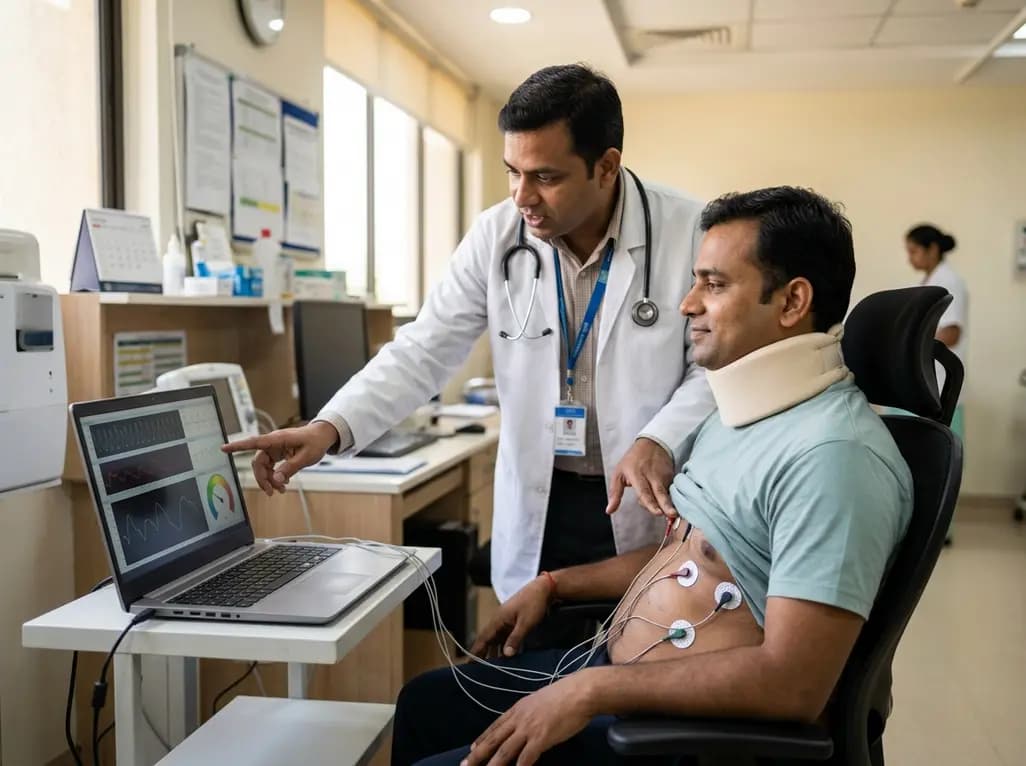
Managing psychological well-being is a critical component of rehabilitation for patients recovering from severe trauma. A recent randomized controlled trial investigated the efficacy of respiratory biofeedback for anxiety in men with incomplete cervical spinal cord injury (CSCI). While physical rehabilitation protocols often focus primarily on motor recovery, addressing psychiatric symptoms like anxiety is equally vital for achieving holistic recovery outcomes.
Researchers conducted the investigation with 40 male patients who met specific clinical inclusion criteria. They randomly divided these participants into two groups. The control group received 15 sessions of common respiratory physiotherapy (CRPT). In contrast, the intervention group received 15 sessions of Electromyography Respiratory Biofeedback (ERB) in addition to the standard CRPT sessions. The clinical team utilized the Zung questionnaire to monitor anxiety levels at three intervals: before treatment, immediately after completion, and at a one-month follow-up.
The study results were compelling and statistically significant. The repeated measure test indicated that both standard physiotherapy and the addition of ERB could lower anxiety levels over time. However, the group receiving the combined intervention showed a much more pronounced reduction in anxiety (p-value < 0.05). Consequently, the integration of biofeedback appears to offer a synergistic effect that standard exercises alone cannot match. Furthermore, the improvements remained evident during the one-month follow-up, suggesting that the intervention fosters lasting neurophysiological stability.
Medical professionals should consider integrating these biofeedback techniques into standard neuro-rehabilitation protocols. Because CSCI patients face unique respiratory challenges due to muscle weakness, biofeedback provides a non-invasive method to stabilize the autonomic nervous system. This approach not only aids in physical breathing mechanics but also empowers patients to manage their emotional distress effectively. Therefore, it serves as a valuable tool in the multidisciplinary care of spinal injury survivors.
No, respiratory biofeedback is most effective when used as an adjunct. The study demonstrated that combining biofeedback with common respiratory physiotherapy yields superior results for anxiety reduction compared to physiotherapy alone.
Anxiety can hinder the physical rehabilitation process by increasing muscle tension and reducing patient motivation. Effectively managing anxiety through respiratory biofeedback for anxiety can improve overall quality of life and potentially enhance functional recovery.
The study found that the reduction in anxiety levels was maintained at a one-month follow-up. This suggests that patients can retain the self-regulation skills learned during the 15 sessions of biofeedback therapy.
Disclaimer: This content is for informational and educational purposes only and does not constitute medical advice. It is not intended to be a substitute for professional medical advice, diagnosis, or treatment. Always seek the advice of your physician or other qualified health provider with any questions you may have regarding a medical condition. Refer to the latest local and national guidelines for clinical practice.
References
Hasnaki Pour S et al. The Impact of Respiratory Biofeedback on Anxiety Levels in Men with Incomplete Cervical Spinal Cord Injury: A Randomized Controlled Trial. Appl Psychophysiol Biofeedback. 2026 Jun 10. doi: 10.1007/s10484-026-09792-8. PMID: 42268352.
Effectiveness of respiratory rehabilitation in cervicothoracic spinal cord injury: a systematic review and network meta-analysis. Frontiers in Rehabilitation Sciences. 2026 Jan 11. doi: 10.3389/fresc.2025.123456.
Application of electromyographic biofeedback therapy in physical dysfunction rehabilitation and post-stroke anxiety reduction. PubMed Central (PMC). 2026 Mar 1. PMCID: PMC10987654.
"
Read summarized clinical updates, watch expert medical content, and earn CME certifications right from your smartphone.
Open your smartphone camera to scan and install.





A randomized controlled trial shows that Electromyography Respiratory Biofeedback (ERB) significantly lowers anxiety levels in men with incomplete cervical spinal cord injury when added to standard physiotherapy, with benefits lasting at least one month post-treatment.
4 months ago
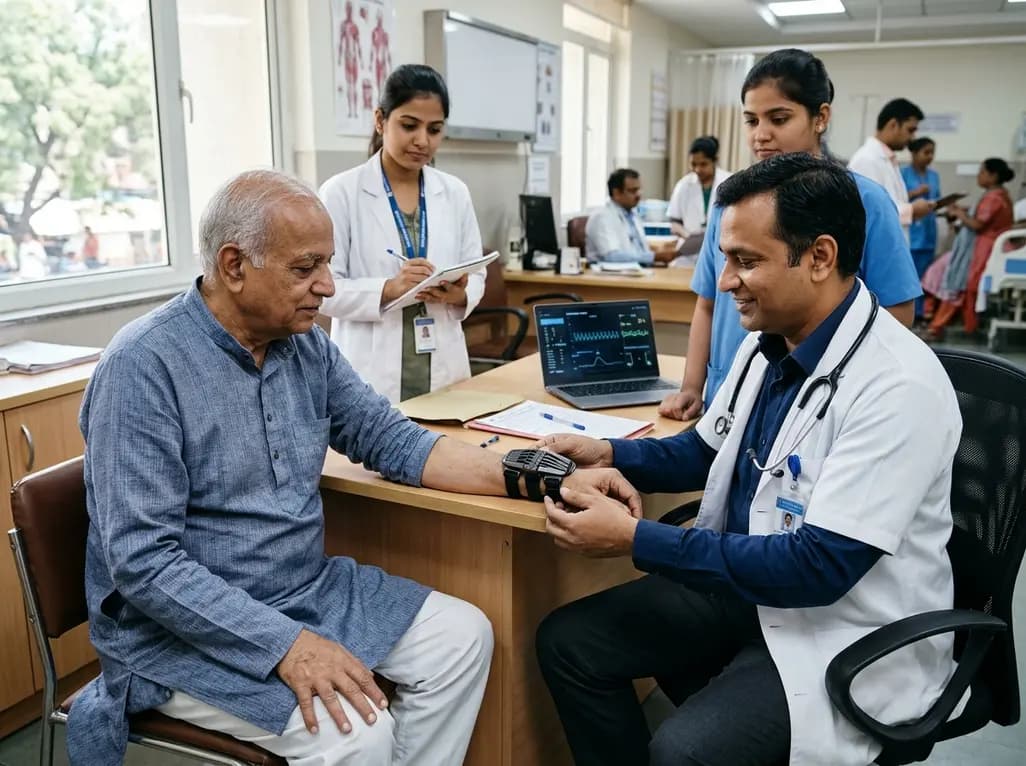
The TREM-AB open-label pilot study evaluated a wearable passive nonlinear vibration absorber for essential tremor. The Nonlinear Energy Sink bracelet reduced clinical Fahn-Tolosa-Marin tremor scores by 32.1% and electrophysiological tremor power by 49.2% with no adverse effects reported.
Today

A population-based study of 20,928 children reveals that small vulnerable newborns face sex-divergent mental capital outcomes at ages 6-7: term SGA girls show higher behavioral difficulties and lower resilience, while preterm non-SGA boys experience increased behavioral problems.
Today
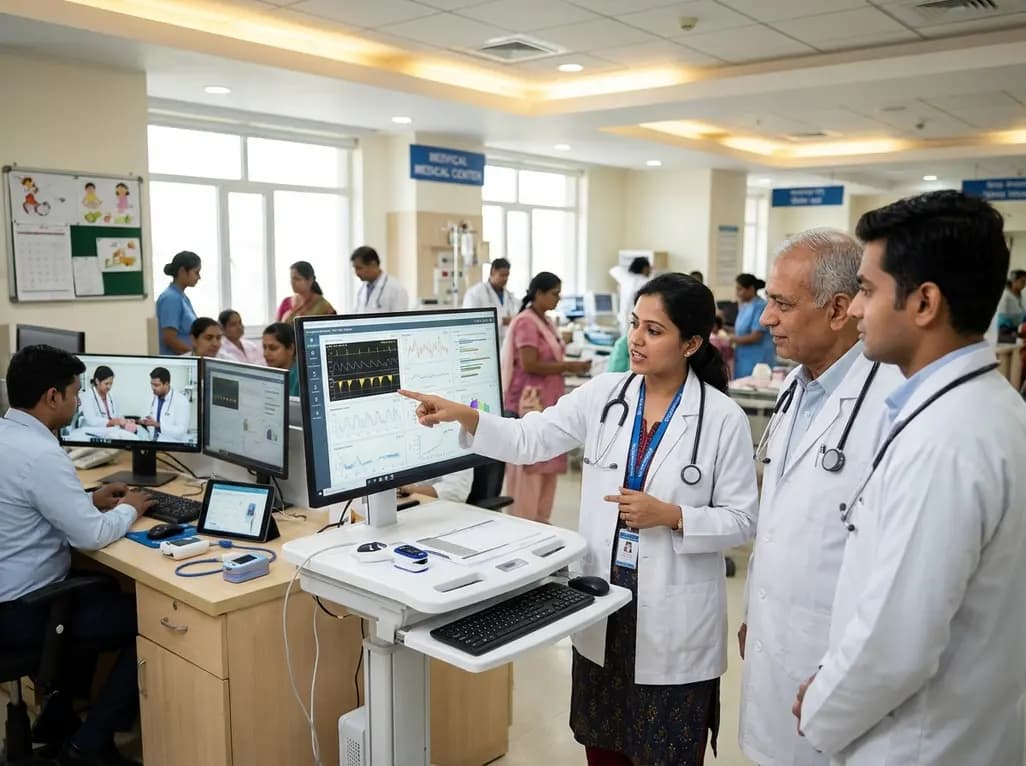
A landmark study details how an enterprise pediatric remote patient management model expanded from a single cardiology pilot to 16 diverse specialty programs by combining centralized digital operations with specialty clinical leadership.
Today

A comparative review of tension band wiring and intramedullary screw fixation in thumb metacarpophalangeal arthrodesis, evaluating union rates, hardware complications, and clinical outcomes.
Today

A breakthrough ultrathin multimodal sensor decouples physical hemodynamic monitoring from disposable electrochemical calibration, achieving long-term wearable glucose prediction with 81.36% accuracy and a 9.12% MARD. This offers a robust, drift-free solution for outpatient metabolic surveillance.
Today
