.webp&w=384&q=75)

Loading, please wait...
Loading, please wait...

Acute intracranial atherosclerotic disease-related large vessel occlusion (ICAD-LVO) represents a distinct and often challenging subtype of ischemic stroke. This condition is particularly prevalent among Asian populations, including in India, where the burden of intracranial atherosclerosis is significantly higher than in Western cohorts. While mechanical thrombectomy (MT) has become the gold standard for treating embolic strokes, its efficacy in ICAD-related occlusions is frequently compromised. Specifically, the underlying stenotic lesion often leads to immediate reocclusion or persistent high-grade stenosis after initial clot retrieval. Consequently, clinicians often face a dilemma when standard MT fail to maintain vessel patency. In such scenarios, rescue stent implantation emerges as a viable procedural alternative to restore and maintain blood flow. A recent multicenter study conducted in Zhejiang, China, has provided pivotal data on this technique, comparing its safety and efficacy directly against successful mechanical thrombectomy. The findings suggest that stenting is not merely a fallback but a highly effective therapeutic strategy when applied correctly within the interventional workflow.
Understanding the unique nature of ICAD-LVO is essential for optimizing treatment outcomes. Unlike embolic strokes where a foreign clot lodges in a healthy vessel, ICAD-LVO involves the rupture or erosion of a pre-existing atherosclerotic plaque. This process triggers local thrombosis and vessel narrowing. Therefore, when a surgeon attempts to remove the thrombus using a stent retriever or aspiration catheter, the underlying fixed stenosis remains. This residual narrowing frequently acts as a nidus for platelet aggregation, leading to rapid reocclusion. Moreover, the vessel wall in ICAD patients is often fragile and prone to dissection or rupture during aggressive mechanical manipulation. These factors explain why standard thrombectomy techniques often yield sub-optimal results in this population. Historically, interventionalists were hesitant to use permanent stents in the acute phase due to concerns about hemorrhagic transformation and the need for dual antiplatelet therapy. However, emerging evidence indicates that without definitive stabilization of the plaque, many patients will suffer from persistent hypoperfusion. By providing mechanical support to the diseased vessel wall, rescue stent implantation effectively addresses the root cause of the occlusion, ensuring long-term vessel patency and improved cerebral blood flow.
The Zhejiang study analyzed 1125 patients, specifically focusing on 430 cases of ICAD-LVO. Researchers employed propensity score matching to balance the groups, ensuring a robust comparison between those who achieved successful MT and those who required rescue stenting. Notably, the primary outcome was the modified Rankin Scale (mRS) score at 90 days, which is the standard measure of functional disability. The results revealed no statistically significant differences in the rates of good functional outcomes (mRS 0-2) between the two groups. Furthermore, the incidence of symptomatic intracranial hemorrhage (sICH) and 90-day mortality rates were comparable. These findings are revolutionary because they suggest that rescue stent implantation can salvage an otherwise failed procedure without increasing the risk of catastrophic bleeding. For neurointerventionalists in India, where ICAD is a leading cause of stroke, this provides a clear mandate for the use of stenting when initial thrombectomy passes do not result in stable recanalization. Instead of accepting a failed procedure, clinicians can move toward stenting as a reliable rescue maneuver that parallels the benefits of successful primary thrombectomy.
One of the most critical insights from the recent comparative analysis involves the timing of the stenting procedure. The data demonstrated that the number of thrombectomy attempts significantly impacts the final prognosis. Specifically, patients who received a rescue stent after only one failed thrombectomy attempt had better functional outcomes compared to those who underwent multiple failed attempts before stenting. The adjusted odds ratio (aOR) for a good functional prognosis was 0.43 for those stented after multiple attempts, highlighting a significant decrease in benefit. Consequently, the study emphasizes a "less is more" philosophy regarding mechanical passes in ICAD-LVO. Multiple passes can cause cumulative endothelial damage, increase the risk of vessel perforation, and delay the eventual restoration of flow. Therefore, transition to rescue stent implantation should be considered early in the procedure if the underlying ICAD is identified. By reducing the time to final recanalization and limiting vessel trauma, early stenting maximizes the chances of independent living for the patient. This shift in strategy requires the clinician to accurately identify ICAD early, often by observing the characteristic "tapering" or "waisting" of the stent retriever during the first pass.
Safety is the primary concern whenever permanent implants are used in the brain during an acute stroke. The requirement for immediate antiplatelet therapy—usually tirofiban or aspirin and clopidogrel—poses a theoretical risk of symptomatic intracranial hemorrhage. However, the study results were reassuring. There was no statistical difference in sICH incidence between the successful MT group and the rescue stent implantation group. This suggests that the benefits of reperfusion outweigh the risks associated with periprocedural antiplatelet use. Similarly, 90-day mortality rates did not differ significantly between the groups. This parity in safety profiles indicates that the rescue stenting technique is a stable and safe intervention. Nevertheless, careful patient selection remains vital. Factors such as the size of the initial infarct core and the patient's baseline blood pressure must be considered to mitigate the risk of reperfusion injury. In the Indian clinical context, where follow-up care and medication adherence are sometimes challenging, the use of stents also necessitates a clear plan for long-term antiplatelet management. Despite these complexities, the evidence clearly supports the safety of stenting as a life-saving rescue measure when initial recanalization efforts fail.
The implications of this research extend far beyond the operating room. As stroke care continues to evolve in Asia, specialized protocols for ICAD-LVO are becoming essential. The Zhejiang study reinforces the need for a tailored approach that differs from the embolic stroke protocols developed in the West. Moving forward, the development of specialized stents and delivery systems designed specifically for the intracranial environment will likely further improve outcomes. Additionally, the role of adjunctive therapies, such as drug-coated balloons or advanced imaging like optical coherence tomography, remains an exciting area of research. For Indian medical centers, incorporating early rescue stent implantation into the stroke workflow can significantly improve the success rates of endovascular therapy. Moreover, training programs must emphasize the early recognition of atherosclerotic features to prevent the "multiple-pass" trap. By adopting a proactive stenting strategy, clinicians can provide a more consistent and effective level of care for a population heavily affected by intracranial atherosclerosis. This study marks a significant step toward defining the optimal endovascular strategy for a complex and common patient demographic.
Yes, research indicates that rescue stent implantation is safe when used for ICAD-related large vessel occlusions. The study found no significant difference in the rates of symptomatic intracranial hemorrhage or 90-day mortality compared to successful mechanical thrombectomy. Proper use of periprocedural antiplatelets is necessary to maintain stent patency while minimizing bleeding risks.
Surgeons should consider stenting early in the procedure, particularly after the first failed thrombectomy attempt if underlying ICAD is suspected. The study showed that functional outcomes are significantly better when stenting is performed after one failed pass rather than after multiple unsuccessful attempts, which can increase vessel damage and delay reperfusion.
The outcomes are remarkably similar. The comparative analysis demonstrated that there were no statistical differences in 90-day functional independence (mRS 0-2) between patients who had successful mechanical thrombectomy and those who required a rescue stent. This makes rescue stenting a highly effective fallback option that preserves the patient’s chance of a good recovery.
Disclaimer: This content is for informational and educational purposes only. It does not constitute medical advice or establish a doctor-patient relationship. Always seek the advice of a qualified healthcare provider regarding any medical condition or treatment. Refer to the latest local and national guidelines for clinical practice.
References
Wang C et al. Therapeutic effect of rescue stent implantation on acute intracranial atherosclerotic disease-related large vessel occlusion. Neurosurg Rev. 2026 Jun 25. doi: 10.1007/s10143-026-04379-7. PMID: 42347994.
Abu Qdais A et al. Large Vessel Occlusion Stroke due to Intracranial Atherosclerotic Disease: Identification, Medical and Interventional Treatment, and Outcomes. Stroke. 2023 Mar. doi: 10.1161/STROKEAHA.122.040125.
European Stroke Organisation (ESO) guidelines on treatment of patients with intracranial atherosclerotic disease (ICAD). Eur Stroke J. 2022. doi: 10.1177/23969873221094801.

Read summarized clinical updates, watch expert medical content, and earn CME certifications right from your smartphone.
Open your smartphone camera to scan and install.





A comparative analysis reveals that rescue stent implantation for acute ICAD-related large vessel occlusion (ICAD-LVO) can achieve functional outcomes comparable to successful mechanical thrombectomy. Notably, the study emphasizes that early stenting after a single failed attempt is superior to late intervention.
3 months ago
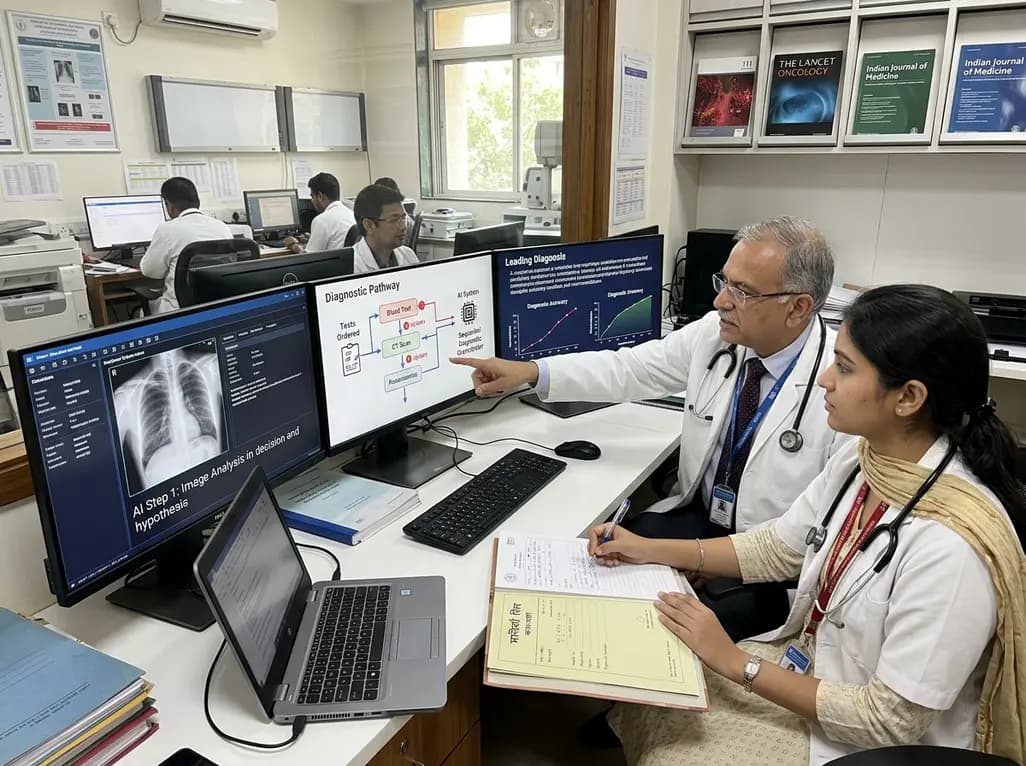
A breakthrough peer-reviewed study demonstrates that a sequential AI diagnosis system can mirror real-world clinical reasoning. By ordering stepwise tests and updating hypotheses dynamically, this multi-agent orchestrator achieved superior diagnostic accuracy while reducing investigative costs.
Today

A prenatal case highlights severe glutaric acidemia type II presenting as bilateral hyperechoic cystic kidneys at 18 weeks. Whole-exome sequencing revealed a novel homozygous ETFDH frameshift variant, demonstrating the power of rapid genetic testing in fetal renal anomalies.
Today

Review how tailored exercise programs benefit frail older patients with heart failure. Explore pathophysiological mechanisms, individualized training prescriptions, and strategies to overcome adherence barriers in clinical practice.
Yesterday

This comparative study evaluates posterior labral tears with and without glenohumeral instability, highlighting distinct demographic patterns, MRI underestimation in stable shoulders, and successful arthroscopic repair outcomes.
Yesterday

A clinical study demonstrates that early intervention with tocilizumab, either as monotherapy or bridged with corticosteroids, achieves significant proptosis reduction and resolves active inflammation in treatment-naive thyroid eye disease.
Yesterday
