.webp&w=384&q=75)

Loading, please wait...
Loading, please wait...
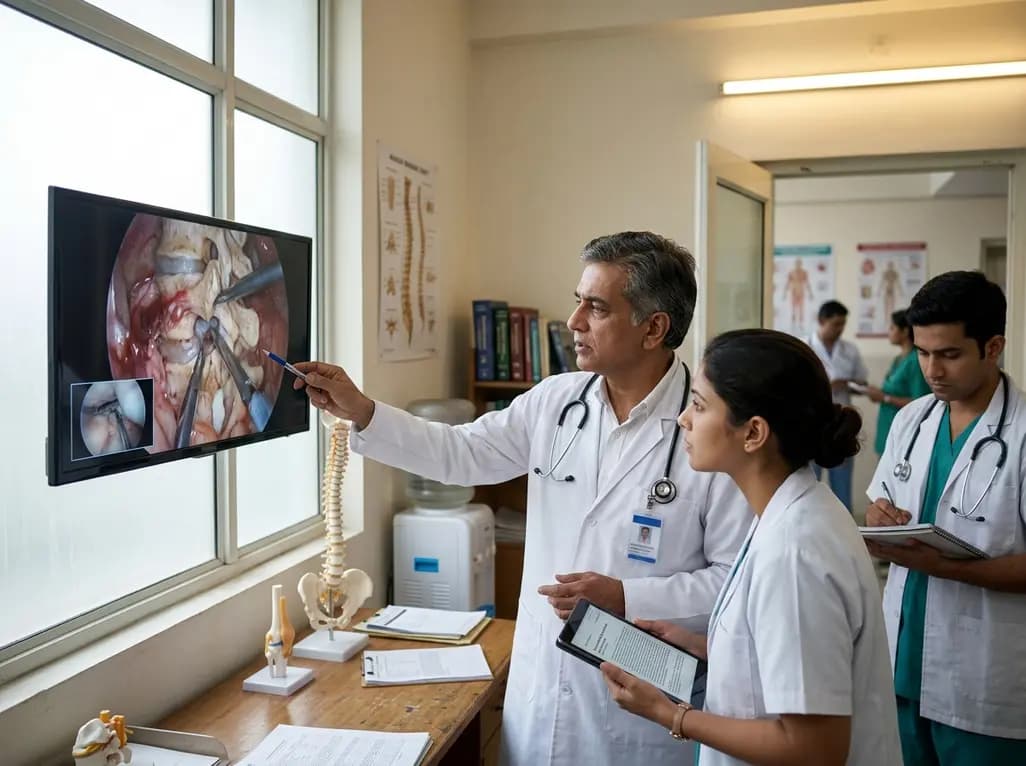
Modern surgical education increasingly relies on multimedia resources to prepare trainees for complex operating room procedures. In particular, spine surgery operative videos provide trainees with indispensable visual insight into three-dimensional anatomy and dynamic tissue manipulation. Surgical residents often encounter steep learning curves when transitioning from textbook anatomy to live tissue dissection. Therefore, curated video demonstrations offer a vital bridge between didactic study and hands-on clinical performance. Multimedia platforms allow residents to observe specialized instruments and delicate microdissection maneuvers repeatedly before entering the operating suite. Consequently, digital operative recordings reinforce standard surgical steps while reducing perioperative anxiety among junior surgeons. However, unvetted public video platforms frequently contain variable production values and unverified surgical techniques. In contrast, peer-reviewed journals address this fundamental limitation by validating scientific accuracy and procedural integrity through formal editorial oversight. Furthermore, these published recordings furnish reliable references that surgeons can revisit throughout their careers. As medical curricula adopt asynchronous learning models, peer-reviewed operative videos increasingly function as indispensable training standards.
A recent ten-year journal-based investigation evaluated 1,581 operative recordings published between 2015 and 2026 across four prominent neurosurgical publications. Interestingly, the researchers discovered a substantial disparity across procedural subspecialties. Cranial procedures represented 72.9% of all archived recordings, whereas spine surgery accounted for only 24.0% of the total dataset. Thus, spinal interventions remain significantly underrepresented in the scientific literature despite their high prevalence in daily surgical practice. Within the spine category, oncologic resections accounted for 28.2% of the cases, followed closely by degenerative spine pathologies at 26.3%. Additionally, institutions within the United States generated 58.6% of all accepted video submissions, demonstrating marked geographical centralization. This procedural imbalance creates noticeable pedagogical gaps for orthopedic and neurosurgical trainees who seek diverse spinal operative examples. Because degenerative and deformity cases represent the vast majority of real-world operative volume, journals must publish more representative collections. Consequently, academic societies must actively solicit and prioritize high-quality spinal contributions from international training centers to broaden global access.
To assess procedural quality, researchers measured an educational content score based on three essential pedagogical criteria. Specifically, investigators verified the presence of synchronized audio narration, stepwise procedural breakdowns, and pertinent preoperative and postoperative imaging. The analysis revealed that published spine surgery operative videos maintained exceptionally high and stable instructional scores. Between 2023 and 2026, the mean educational content score ranged consistently from 2.85 to 2.97 out of 3.0 points. Therefore, peer-reviewed journals preserve rigorous editorial benchmarks that protect learners from inadequate instructional material. Clear narration allows seasoned operators to articulate subtle surgical nuances, clinical decision-making, and critical safety margins. Furthermore, high-resolution radiographic correlation enables trainees to anticipate patient-specific anatomical variations and evaluate postoperative structural outcomes. In comparison, open-access social media repositories rarely maintain uniform instructional quality or standardized scientific critique. Consequently, academic surgical journals remain the premier reference standard for reliable, high-yield digital surgical guidance across surgical departments worldwide.
The pronounced disparity between cranial and spinal video volume stems largely from distinct anatomical and technological obstacles. Unlike cranial microsurgery, where the operative field remains focused and illuminated under a fixed operative microscope, spine surgery presents unique optical challenges. Specifically, open spinal procedures frequently demand an expansive surgical corridor, extensive soft-tissue retraction, and dynamic multi-angle instrument trajectories. Furthermore, deep operative cavities and prominent surgical instrumentation frequently cast shadows or obstruct external camera lenses. Consequently, standard surgical field cameras often fail to capture critical intraoperative depths or microscopic neural interfaces effectively. Surgeons must often choose between broad anatomical views and magnified neural decompression, complicating cohesive single-camera recording. Recent technological advancements, such as high-definition surgical exoscopes, 4K digital endoscopes, and wearable head-mounted camera systems, offer promising remedies for these visualization hurdles. Nevertheless, academic centers require dedicated recording workflows, synchronized lighting, and skilled video editing teams to produce journal-ready footage. Therefore, simplifying video capture infrastructure represents a crucial prerequisite for expanding peer-reviewed spine surgical archives.
Modern residency programs worldwide operate under strict work-hour restrictions, which significantly limits direct intraoperative observation time. Consequently, surgical educators must integrate structured multimedia platforms into formal resident assessment frameworks. Curated operative videos permit deliberate practice, mental rehearsal, and cognitive task analysis before junior trainees step into actual operative environments. In addition, repeated video observation enhances anatomical familiarity, instrument recognition, and situational awareness during critical decompression and instrumentation phases. However, trainees must exercise caution when consulting uncontrolled online video platforms, where misleading techniques can propagate adverse operative habits. Academic training programs should therefore curate accredited digital video repositories that satisfy validated educational criteria. Furthermore, faculty mentors should encourage senior residents to record, edit, and publish operative videos through peer-reviewed journals. This academic practice fosters meticulous procedural introspection, sharpens technical communication skills, and enriches the global surgical literature. Ultimately, standardizing peer-reviewed video education elevates surgical training standards and enhances patient outcomes across neurosurgical and orthopedic disciplines.
The pronounced dominance of Western academic institutions in published operative videos highlights an important opportunity for international collaboration. Currently, centers in developing healthcare systems, including India, encounter diverse spinal pathologies ranging from complex spinal tuberculosis to severe neglected congenital deformities. Nevertheless, international journals publish relatively few operative videos originating from these high-volume global centers. By addressing technical recording limitations and institutional video production barriers, international surgeons can share innovative operative techniques and cost-effective instrumentation strategies. Moreover, journal editorial boards should establish standardized submission guidelines and technical support frameworks for video submissions. Such collaborative initiatives will diversify procedural representation, democratize access to advanced surgical techniques, and enrich resident education globally. In addition, incorporating artificial intelligence for automated video segmentation and procedural milestone tracking may streamline video processing for busy clinical teams. Thus, expanding global representation within peer-reviewed media represents an essential step forward for contemporary spine surgery education.
Spine surgery presents significant technical hurdles for optical capture compared to cranial procedures. Cranial surgeries rely heavily on fixed operative microscopes with integrated coaxial cameras that effortlessly record magnified surgical corridors. In contrast, spine operations require wider operative fields, dynamic illumination, and multi-angle instrumentation that frequently obstruct overhead cameras. Consequently, capturing high-yield surgical footage demands specialized camera equipment, exoscopic systems, or complex audiovisual workflows that fewer operating suites routinely maintain.
Peer-reviewed journals evaluate educational content using objective structural criteria rather than mere visual appeal. Specifically, high-yield videos must feature comprehensive audio narration explaining surgical rationale, stepwise procedural breakdowns that highlight anatomical landmarks, and corresponding pre- and postoperative radiographic imaging. Furthermore, successful videos delineate operative hazards, management of unexpected complications, and critical safety margins. These stringent criteria ensure that published recordings deliver reproducible pedagogical value for surgical residents and practicing clinicians.
Peer-reviewed operative recordings provide surgical trainees with validated, standardized demonstrations of complex techniques. Because work-hour restrictions limit direct intraoperative exposure, asynchronous video-based learning facilitates deliberate mental rehearsal and cognitive skill acquisition before entering the operating suite. Additionally, reviewing curated operative footage improves anatomical orientation, technical instrument familiarity, and procedural efficiency. Unlike unvetted social media clips, peer-reviewed videos adhere to strict educational benchmarks that protect trainees from adopting non-standard or hazardous operative maneuvers.
Disclaimer: This content is for informational and educational purposes only and does not constitute medical advice, diagnosis, or treatment. Always consult a qualified healthcare professional regarding any medical condition or treatment options. Never disregard professional medical advice or delay in seeking it because of something you have read here. Clinical practices and guidelines can vary significantly across different regions, countries, and healthcare systems. The information provided reflects general medical knowledge at the time of publication. While we strive to present accurate and evidence-based information, medical knowledge evolves rapidly, and new research may supersede existing findings. Refer to the latest local and national guidelines for clinical practice.
References

Read summarized clinical updates, watch expert medical content, and earn CME certifications right from your smartphone.
Open your smartphone camera to scan and install.





A 10-year journal-based study evaluates the representation and educational content of spine surgery operative videos across peer-reviewed neurosurgical journals. While spine procedures remain underrepresented compared to cranial cases, peer-reviewed videos demonstrate consistently high educational quality.
4 weeks back

A systematic review of 41 preclinical studies reveals that baicalin dampens systemic inflammation, inhibits NF-κB and NLRP3 pathways, and improves organ preservation in sepsis models. However, substantial study heterogeneity and a complete lack of human clinical trials highlight the need for further translational research.
Today
Discover the crucial distinctions between mesonephric and mesonephric-like proliferations of the female genital tract. Learn the key histomorphologic, immunohistochemical, and molecular differences essential for accurate diagnosis and clinical management.
Today
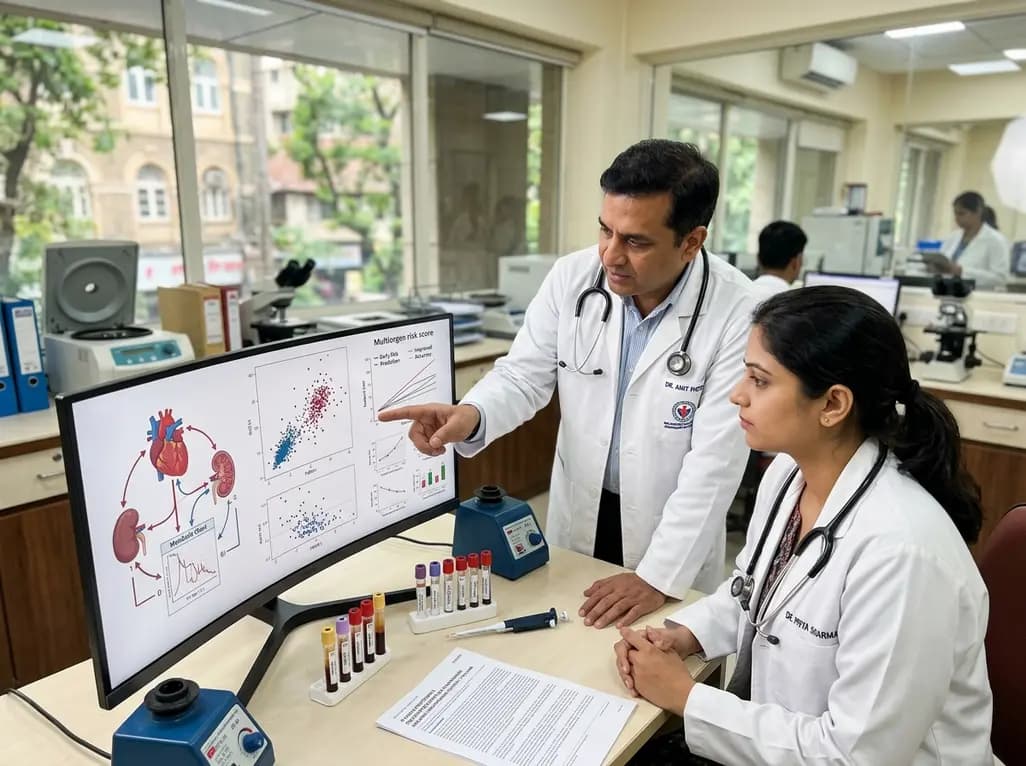
A large UK Biobank study reveals that plasma proteomic signatures capture preclinical organ damage and improve multiorgan risk prediction across early CKM syndrome stages 0 to 2 beyond traditional PREVENT clinical models.
Today
A narrative review investigates whether the articularis genus muscle functions as an independent anatomical entity or blends with the vastus intermedius. We evaluate its morphology, role in retracting the suprapatellar bursa, and direct clinical significance in anterior knee pain and arthroplasty.
Today

A Bayesian multilevel meta-analysis reveals that aerobic training combined with moderate carbohydrate restriction modestly lowers HbA1c in type 2 diabetes. However, sparse data and very low certainty leave incremental benefits over exercise or diet alone unproven, highlighting the need for individualized care.
Today
