.webp&w=384&q=75)

Loading, please wait...
Loading, please wait...

Mesenchymal stem cells (MSCs) serve as the foundation of this biological revolution. These versatile cells possess a unique ability to differentiate into various tissue types, including chondrocytes. Furthermore, MSCs exert powerful immunomodulatory effects that help stabilize the inflammatory joint environment. Moreover, clinicians increasingly view these cells as \"living pharmacies\" because they release anti-inflammatory cytokines precisely where the body needs them most. This dual action facilitates both structural repair and immune homeostasis.
Exosomes represent the next frontier in regenerative arthritis therapy. These tiny, membrane-bound vesicles carry essential proteins, lipids, and microRNAs from stem cells directly to target tissues. Because they are cell-free, exosomes offer a significantly lower risk of immune rejection compared to traditional live cell transplants. Additionally, their inherent stability makes them much easier for laboratories to standardize and scale for clinical use across India. Specifically, they replicate the paracrine benefits of MSCs without the safety concerns associated with cell proliferation.
Synthetic and natural polymer scaffolds provide the critical structural framework necessary for successful joint repair. These bioengineered materials mimic the natural extracellular matrix, effectively guiding cell growth and tissue integration. Consequently, combining these scaffolds with MSCs or exosomes often yields superior functional outcomes for patients. Furthermore, emerging technologies like gene editing and artificial intelligence are currently being integrated to further personalize these biological treatments for individual patients. These innovations ensure that therapy matches the specific degenerative profile of each joint.
Despite this significant progress, several hurdles remain regarding clinical standardization and long-term safety monitoring. In India, the National Guidelines for Stem Cell Research 2025, issued by the ICMR and DBT, provide a strict regulatory framework for these interventions. Doctors must ensure that all regenerative procedures strictly adhere to these ethical and clinical protocols to protect patient safety. Scaling these therapies for a large and diverse population also requires significant infrastructure investment and continued research into cost-effective delivery methods.
MSCs help by differentiating into new cartilage cells and secreting vital anti-inflammatory factors that slow joint destruction. They also help regulate the overactive immune responses seen in rheumatoid arthritis, providing a more stable environment for healing.
Exosome therapies are often considered a safer alternative because they are cell-free, which eliminates the risk of tumor formation or unwanted cell differentiation. However, doctors still recommend clinical trials to establish their long-term efficacy compared to autologous live cell therapies.
Disclaimer: This content is for informational and educational purposes only. It does not constitute medical advice, diagnosis, or treatment. Always seek the advice of a qualified healthcare provider with any questions regarding a medical condition. Refer to the latest local and national guidelines for clinical practice.
References
1. Sharma A et al. Regenerative and Stem Cell-Based Therapies for Arthritis: Harnessing Mesenchymal Stem Cells, Exosomes, and Bioengineered Scaffolds for Functional Joint Repair. Stem Cell Rev Rep. 2026 Feb 28. doi: 10.1007/s12015-026-11087-8. PMID: 41762433.
2. ICMR-DBT. National Guidelines for Stem Cell Research 2025. Government of India.
3. ReGen 2025 Conference Report. Clinical Guidelines for Regenerative Medicine and PRP Therapy. Chennai, India. August 2025.

Read summarized clinical updates, watch expert medical content, and earn CME certifications right from your smartphone.
Open your smartphone camera to scan and install.





Learn how MSCs, exosomes, and bioengineered scaffolds are shifting arthritis treatment from symptom management to true biological joint repair and restorati...
6 months ago

A new case study illuminates how functional connectivity changes drive recovery from pure alexia following posterior cerebral artery infarction. Functional reorganization supports reading recovery despite permanent structural tract disconnection, highlighting key implications for stroke rehabilitation.
Today

A premature neonate developed upper limb compartment syndrome after uterine rupture extruded the arm through a scar defect. Conservative management with continuous monitoring yielded complete functional recovery and normal limb growth at 10-year follow-up, highlighting non-operative safety in selected cases.
Today

Dendritic cells bridge innate and adaptive immunity in myocardial infarction. This review explores their pathological roles, circulating dynamics, novel tolerogenic interventions, and how standard cardiovascular medications modulate dendritic cells to improve post-infarction myocardial repair and patient outcomes.
Today
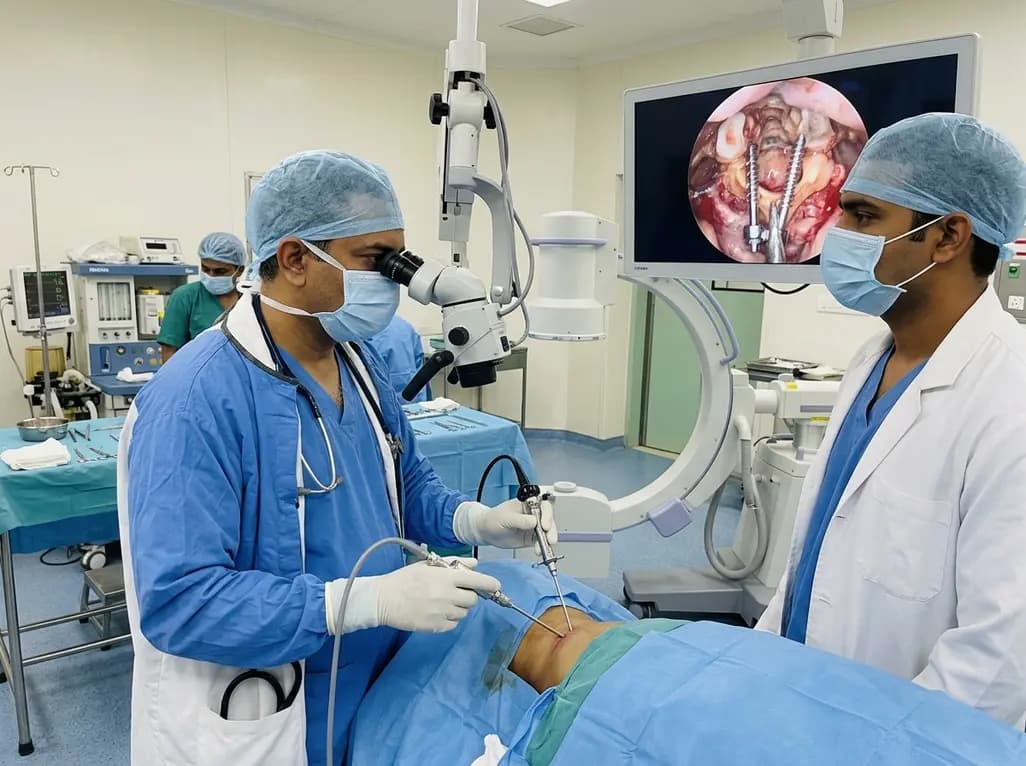
Endoscopic posterior cervical fusion combines minimally invasive decompression, joint preparation, and rigid screw-rod fixation for atlantoaxial pathologies. Early clinical findings demonstrate solid bony union, excellent symptom relief, and minimal soft-tissue morbidity without significant vascular compromise.
Yesterday
Atherosclerosis involves extensive glycometabolic reprogramming across immune and vascular cells. This review examines how glycolysis, the pentose phosphate pathway, and lactate-driven epigenetic shifts fuel plaque vulnerability, while highlighting novel therapeutic targets like PFKFB3 and LDHA.
Today
