.webp&w=384&q=75)

Loading, please wait...
Loading, please wait...
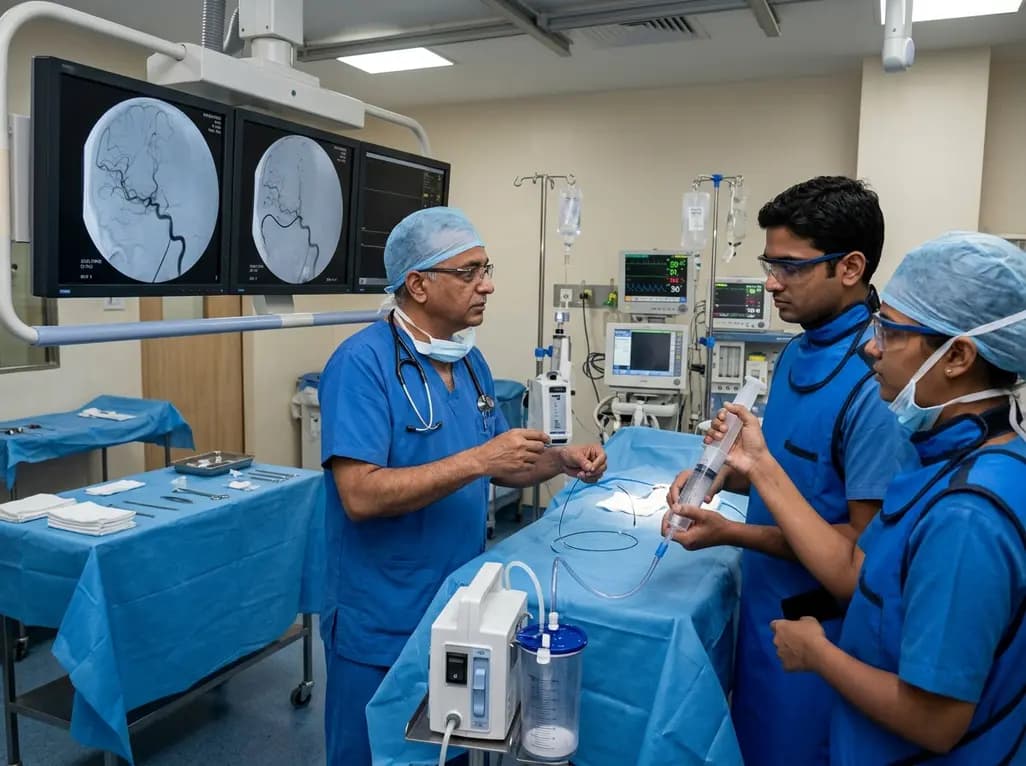
The landscape of endovascular stroke treatment has undergone significant technological shifts over the past decade. Among these advancements, the RED-78 aspiration catheter represents a major step forward for interventional neurology. Acute ischemic stroke remains a leading cause of disability worldwide, which makes rapid and effective revascularization strategies absolutely essential. While mechanical thrombectomy has become the standard of care for large-vessel occlusions, clinicians constantly seek better tools to improve first-pass success. Consequently, the MAPLE-78 study provides the first published clinical data on this novel large-bore device. This Canadian multicentre registry evaluated both the technical success and safety of the device in real-world settings. Therefore, these findings provide important insights for neurologists and interventionalists alike. Effective aspiration requires a careful balance between catheter trackability and suction power. Notably, the RED-78 aims to maximize aspiration force while still navigating complex and tortuous cerebral anatomy. Understanding its performance is vital for optimizing stroke care pathways and patient recovery. Furthermore, in the Indian medical context, where the stroke burden is high, such data is invaluable for enhancing patient care and reducing morbidity.
Large-bore aspiration catheters utilize a larger cross-sectional area to facilitate the complete ingestion of various thrombus types. This concept is a core principle of the ADAPT technique, which focuses primarily on direct aspiration as the frontline approach. Specifically, the RED-78 aspiration catheter features a distal internal diameter that is optimized for addressing large-vessel occlusions in major cerebral arteries. Moreover, a larger lumen allows for a significantly greater suction force at the catheter tip during the procedure. The engineering of this device ensures that it remains flexible enough to reach even the most distal vascular segments safely. This flexibility is crucial because more rigid catheters often fail to navigate the challenging ophthalmic segment of the internal carotid artery. Additionally, the transition zones along the catheter shaft are designed to prevent kinking during the application of high negative pressure. As a result, interventionalists can maintain a consistent and powerful vacuum throughout the thrombectomy process. This technical advantage effectively reduces the risk of clot fragmentation and subsequent distal embolization. Ultimately, the design of the RED-78 simplifies the procedure while improving the probability of a successful outcome.
The MAPLE-78 study employed a retrospective multicentre design that included six comprehensive stroke centres across Canada. Specifically, researchers collected data on consecutive patients who were treated between April 2024 and December 2025. This timeframe reflects the most current practices in endovascular stroke therapy. The primary goal of the registry was to measure the rate of near-complete or complete reperfusion. In the study, researchers defined this endpoint as achieving an eTICI score of 2c or 3. Notably, this specific metric strongly correlates with long-term functional independence and positive clinical outcomes. Secondary endpoints included the first-pass effect and the total time from arterial puncture to successful recanalization. Additionally, the study monitored safety events, such as symptomatic intracranial hemorrhage and vessel perforation. The patient cohort consisted of 60 individuals with a median age of 71 years. Furthermore, the internal carotid artery was the most frequent site of occlusion, occurring in 60% of cases. These cases are typically considered difficult due to the high volume of the clot. Therefore, evaluating the RED-78 in this group provided a rigorous test of its utility in practice.
The efficacy results from the MAPLE-78 registry are highly encouraging for the global stroke community. The RED-78 aspiration catheter achieved final near-complete or complete reperfusion in an impressive 88.3% of the study patients. This high percentage suggests that the device is exceptionally effective for clearing major large-vessel occlusions. Furthermore, clinicians observed the first-pass effect in 35% of the total cohort. While some might consider this figure modest, it is important to remember that many occlusions were located in the challenging intracranial ICA. The median number of passes required was only two, which indicates a highly streamlined and efficient process. Additionally, the median time from puncture to recanalization was just 30 minutes, which is quite fast. Rapid recanalization is consistently linked to better neurological outcomes and higher rates of survival. These findings suggest that the RED-78 facilitates efficient clot removal without the need for excessive maneuvers. In the majority of cases, contact aspiration alone served as the primary frontline technique. This highlights the device's capability as a standalone tool in the interventional suite. Moreover, the consistency of results across multiple centers adds significant weight to these findings.
Safety is a paramount concern for any physician when adopting new interventional hardware. The MAPLE-78 study reported an excellent safety profile for the RED-78 aspiration catheter during its clinical use. Remarkably, no cases of vessel perforation or other device-related complications occurred throughout the study period. This is a significant finding because larger catheters are sometimes perceived to have a higher risk of causing arterial wall injury. Symptomatic intracranial hemorrhage occurred in only one patient, representing a very low rate of 1.7%. This figure is well within the expected range for modern mechanical thrombectomy procedures. In addition, the absence of distal embolization suggests that the aspiration force was sufficient to secure the thrombus during retrieval. Furthermore, the technical success rate was high, as the catheter successfully reached the target occlusion in every attempted case. This demonstrates superior trackability even within the complex neurovasculature of elderly patients. Therefore, the RED-78 appears to be a safe and reliable option for frontline stroke therapy. For medical facilities, these safety metrics provide the necessary confidence for integrating the device into existing clinical protocols for emergency stroke care.
The success of the RED-78 catheter in this Canadian registry opens several new paths for clinical research. While these retrospective results are strong, future prospective randomized trials could further validate its performance against other catheters. Additionally, testing the synergy between the RED-78 and newer stent retriever designs may improve reperfusion rates even further. In the context of Indian healthcare, adopting such advanced aspiration technology could bridge existing gaps in acute stroke management. However, cost-effectiveness remains an important consideration for many public and private hospitals. Consequently, gathering local data on outcomes and procedural efficiency will be necessary for wider implementation. Training programs for interventionalists must also adapt to the nuances of handling large-bore catheters safely. Achieving high-grade reperfusion quickly is essential for improving the overall prognosis for stroke patients. In conclusion, the MAPLE-78 study establishes the RED-78 as a powerful tool in the fight against stroke-related disability. As technology continues to evolve, the primary goal remains a 'one-and-done' recanalization for every patient. These findings provide a solid foundation for the continued use and study of this innovative aspiration device in various clinical settings.
The RED-78 catheter features a large-bore design specifically engineered for high-volume aspiration. Its large internal diameter maximizes the suction force at the catheter tip, which is essential for capturing and removing large thrombi in major cerebral arteries. Additionally, the catheter is constructed with specialized transition zones to maintain flexibility while preventing kinking. This balance allows interventionalists to navigate tortuous vascular anatomy while maintaining the structural integrity required for effective vacuum-assisted clot retrieval.
The First Pass Effect refers to achieving complete or near-complete reperfusion after a single pass of the thrombectomy device. Achieving FPE is a critical clinical goal because it is strongly correlated with better functional outcomes and lower rates of procedural complications. When a clot is removed in one attempt, the risk of distal embolization and vessel trauma is minimized. Consequently, devices like the RED-78 strive to optimize FPE to ensure the highest quality of stroke care.
Based on the MAPLE-78 registry, the RED-78 aspiration catheter demonstrates an excellent safety profile. The study reported no device-related complications or vessel perforations, even when navigating challenging anatomy. Furthermore, the rate of symptomatic intracranial hemorrhage was only 1.7%, which is exceptionally low for this patient population. These results indicate that the large-bore design does not compromise the safety of the procedure. Therefore, clinicians can confidently use the device as a frontline option for endovascular stroke treatment.
Disclaimer: This content is for informational and educational purposes only. It does not constitute medical advice or establish a doctor-patient relationship. Always seek the advice of a qualified healthcare provider regarding any medical condition or treatment. Refer to the latest local and national guidelines for clinical practice.
References
Carpani F et al. Multicentre AsPiration Large-vessel Evaluation: Canadian registry of RED-78 aspiration catheter (MAPLE-78). Neurol Res. 2026 Jul 12. doi: 10.1080/01616412.2026.2695824. PMID: 42437535.

Read summarized clinical updates, watch expert medical content, and earn CME certifications right from your smartphone.
Open your smartphone camera to scan and install.





The MAPLE-78 study evaluates the RED-78 large-bore aspiration catheter in 60 stroke patients across Canada. Results show a high near-complete or complete reperfusion rate (88.3%) and a favorable safety profile, supporting its use as an effective tool for endovascular stroke treatment.
3 months ago

A retrospective cohort study of 7,716 ICU patients from the MIMIC-IV database demonstrates that Gradient Boosting Decision Trees significantly outperform traditional SOFA scores in predicting in-hospital mortality among patients with sepsis and diabetes, with SHAP analysis providing clinical interpretability.
Today

A prenatal case highlights severe glutaric acidemia type II presenting as bilateral hyperechoic cystic kidneys at 18 weeks. Whole-exome sequencing revealed a novel homozygous ETFDH frameshift variant, demonstrating the power of rapid genetic testing in fetal renal anomalies.
Today
This article reviews the forensic and clinical complexities of acute myocarditis arising on left ventricular hypertrophy in children, highlighting early diagnostic red flags and multidisciplinary postmortem autopsy protocols.
Today

This comparative study evaluates posterior labral tears with and without glenohumeral instability, highlighting distinct demographic patterns, MRI underestimation in stable shoulders, and successful arthroscopic repair outcomes.
Yesterday

A clinical study demonstrates that early intervention with tocilizumab, either as monotherapy or bridged with corticosteroids, achieves significant proptosis reduction and resolves active inflammation in treatment-naive thyroid eye disease.
Yesterday
