

Loading, please wait...
Loading, please wait...

Stroke remains one of the primary contributors to adult chronic physical disability globally. Although acute revascularization therapies have revolutionized emergent stroke interventions, neurorehabilitation approaches have progressed at a significantly slower pace. Consequently, clinicians frequently encounter long-term upper extremity paresis that impairs daily living, autonomy, and vocational rehabilitation. Evaluating poststroke motor recovery accurately has always presented considerable logistical difficulties. In routine clinical workflows, neurologists and physiatrists rely upon structured assessment scales during episodic office visits. However, periodic clinical snapshots often miss the dynamic, real-world motor fluctuations that stroke survivors encounter in their home environments. Furthermore, large-scale multi-omics studies and biological recovery investigations require precise, deeply phenotyped clinical data from thousands of participants. Collecting comprehensive motor endpoints manually places an excessive burden on vulnerable individuals and clinical staff. Therefore, the medical community urgently requires objective, scalable, and decentralized methods to track upper extremity recovery trajectories longitudinally. Accelerometer-based activity tracking provides a promising solution to bridge this diagnostic barrier. By analyzing spontaneous limb movement outside controlled laboratory settings, medical teams can gather continuous behavioural metrics. Ultimately, establishing valid digital phenotypes will accelerate discovery, optimize restorative therapies, and individualize long-term neurorehabilitation.
Wearable sensors such as bilateral wrist-worn accelerometers continuously record movement acceleration during habitual waking activities. Instead of measuring isolated capacity in an examination room, actigraphy evaluates how patients actually use their limbs throughout everyday routines. Researchers capture limb asymmetry through a mathematical variable known as the use ratio. Specifically, the use ratio reflects the total duration the paretic arm remains active divided by the total duration the nonparetic arm remains active. This proportional metric effectively normalizes individual differences in overall physical activity. If an individual maintains a highly sedentary lifestyle, their raw movement hours remain low across both upper extremities. Conversely, an energetic person demonstrates higher absolute activity bilaterally. The use ratio accounts for these systemic lifestyle variations by isolating true functional asymmetry. Moreover, clinical investigators discovered that this asymmetric ratio correlates far more strongly with validated clinical scales than raw hours of movement alone. When individuals experience hemiparesis, they frequently develop learned nonuse, relying preferentially on the intact limb for daily activities. Continuous real-world actigraphy detects these subtle behavioral compensations during unconstrained living. As a result, the use ratio provides an objective, ecologically valid biomarker that monitors functional limb participation across extensive community-dwelling populations.
To validate remote sensor monitoring, researchers recently conducted a robust multicenter study across diverse cohorts. The investigators evaluated 198 cross-sectional participants up to 52 weeks poststroke alongside 98 longitudinal participants tracked over 26 weeks. They compared the sensor-derived use ratio against two gold-standard instruments: the Fugl-Meyer Assessment upper extremity subscale and the Action Research Arm Test. The Fugl-Meyer Assessment isolates motor impairment, evaluating reflex activity, synergic movements, and selective joint coordination. In comparison, the Action Research Arm Test evaluates task-specific manual dexterity, grasping ability, and functional arm capacity. The study findings demonstrated remarkable concurrent validity between real-world actigraphy and both standardized metrics. Early after stroke, the correlation between the use ratio and the Action Research Arm Test reached an impressive 0.87. Furthermore, the correlation with the Fugl-Meyer Assessment exhibited similarly high statistical congruence. Longitudinal analyses reinforced these findings by revealing that individual gains in clinical scores matched corresponding increases in spontaneous arm usage. Because these sensors capture unconstrained daily activities, they confirm that early motor recovery translates directly into active arm usage. Moreover, this robust relationship proved consistent across diverse participating clinical sites, confirming that sensor actigraphy delivers reproducible measurements regardless of clinical location.
Although early correlations proved exceptionally strong, the study revealed a critical temporal phenomenon across extended recovery timelines. Specifically, as recovery progressed, the statistical association between the use ratio and clinical motor scores steadily attenuated. At 52 weeks poststroke, the correlation between the use ratio and the Action Research Arm Test declined to 0.58. This attenuation highlights a fundamental distinction between clinical capacity and actual performance. During acute hospitalization and early rehabilitation, biological repair, spontaneous neurological restitution, and formal physical therapy dictate arm movements. In this early phase, what a patient can do in the clinic directly dictates what they do in their surroundings. However, as individuals reintegrate into home life, personal and environmental factors exert an increasingly dominant influence. Stroke survivors often develop entrenched compensatory motor habits, favoring the nonparetic limb to expedite complex daily routines. Additionally, depression, fear of dropping objects, cognitive fatigue, and caregiver support styles profoundly affect spontaneous limb use. Therefore, high isolated motor scores in chronic stroke do not automatically ensure proportional limb usage at home. Understanding this late divergence helps clinicians identify chronic patients who underutilize their affected arm despite adequate physical strength. Furthermore, recognizing this gap allows therapy teams to target habitual arm use through specialized behavioral interventions.
The integration of wearable actigraphy into neurovascular clinical workflows heralds major advancements for both clinical practice and translational research. For large multicenter clinical trials, recruiting participants and administering lengthy in-person functional testing remains a major operational bottleneck. Wearable wrist sensors eliminate these obstacles by passively and securely gathering high-dimensional movement phenotypes from thousands of patients. Consequently, researchers can combine actigraphy endpoints with multi-omics biomarkers to clarify the biological drivers of neuroplastic recovery. Furthermore, actigraphy serves as an invaluable clinical decision support tool for multidisciplinary rehabilitation teams. In regions where distance restricts clinic visits, remote sensor monitoring enables scalable tele-rehabilitation models. Clinicians can monitor arm use ratios remotely to verify if patients actively execute their prescribed home exercise programs. If actigraphy reveals a declining use ratio despite stable motor strength, therapists can promptly intervene with targeted behavioral strategies. For instance, clinicians might implement constraint-induced movement therapy or home modifications to prevent learned nonuse before disability solidifies. Ultimately, decentralized objective monitoring bridges hospital care and home recovery, fostering equitable and personalized neurorehabilitation worldwide. Additionally, objective tracking provides quantifiable feedback that encourages patients during self-directed rehabilitation sessions.
The use ratio quantifies the total activity duration of the paretic upper limb relative to the nonparetic limb. Clinicians determine this metric using bilateral wrist-worn accelerometers. Consequently, it reflects real-world spontaneous limb engagement, distinguishing true functional usage from compensatory reliance on the unaffected arm.
Early poststroke recovery depends predominantly on spontaneous biological healing and primary neural repair. Over time, however, personal routines, coping mechanisms, and home environmental barriers heavily influence functional limb usage. As a result, isolated motor ability measured in the clinic diverges from actual physical usage at home.
Traditional in-clinic motor assessments require extensive time, clinical infrastructure, and in-person visits. In contrast, wearable actigraphy captures continuous behavioral phenotypes passively in natural environments. Therefore, researchers can deploy these objective metrics at scale across large cohorts, enabling high-throughput biomarker discovery and precision neurorehabilitation studies.
Disclaimer: This content is for informational and educational purposes only. It is not intended to be a substitute for professional medical advice, diagnosis, or treatment. Refer to the latest local and national guidelines for clinical practice.
References

Read summarized clinical updates, watch expert medical content, and earn CME certifications right from your smartphone.
Open your smartphone camera to scan and install.





Wearable actigraphy and the arm use ratio provide strong concurrent validity with clinical motor scales early poststroke, though behavioral divergence emerges over time.
Today

Maternal cardiovascular risk factors such as hypertension, obesity, and diabetes significantly elevate offspring cardiovascular disease risk through placental dysfunction and fetal programming. Enhancing preconception screening and antenatal care offers clinicians a powerful strategy to protect long-term heart health.
Today
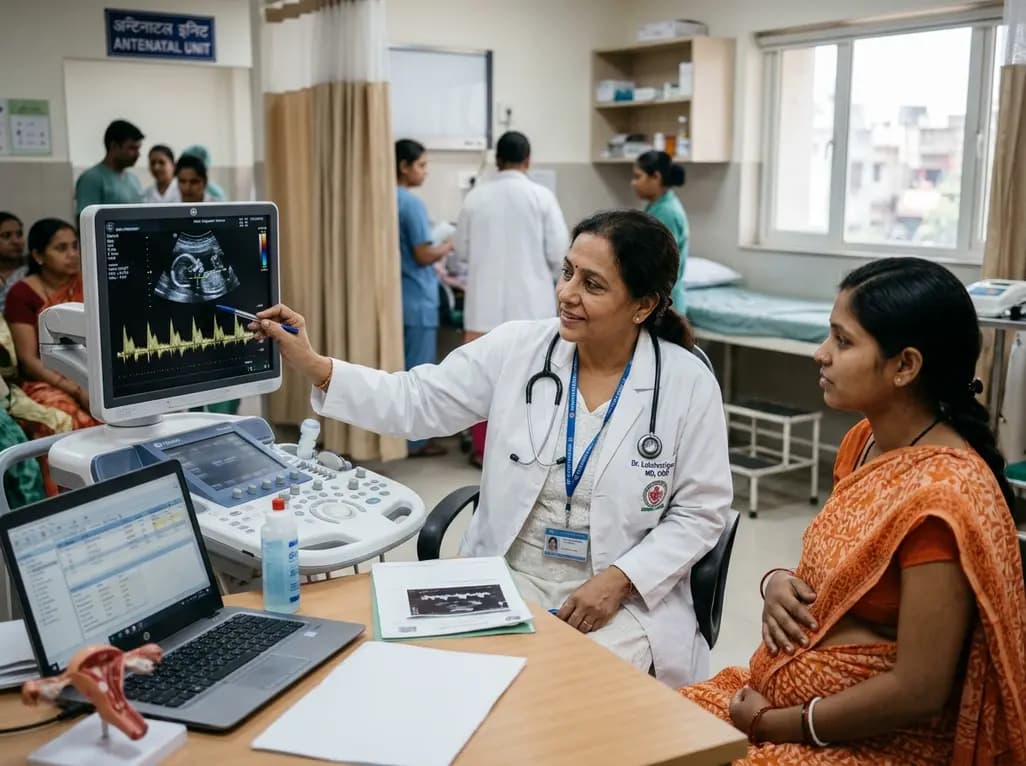
Non-RhD alloimmunization poses an emerging challenge in modern obstetric care as RhIG reduces RhD cases. This review highlights key non-RhD antigens, Doppler monitoring, and neonatal management strategies.
Today

New phase I data evaluate the impact of food and beverages on enlicitide, the first oral PCSK9 inhibitor. While food reduces peak absorption, model simulations demonstrate robust LDL-C lowering of approximately 60%, confirming meaningful pharmacokinetic forgiveness and flexible real-world administration.
Today

A retrospective cohort study reveals that lumbar spine bone mineral density does not distinguish extremity long bone fracture status in adults with severe motor and intellectual disabilities. Because age drove fracture risk rather than spinal density, clinicians must adopt comprehensive assessment tools.
Today

A landmark UK Biobank study by Karolinska Institutet researchers reveals that optimal rest mitigates neurodegeneration in cardiometabolic illness. Patients maintaining high sleep quality demonstrated superior cognitive scores and larger brain volumes, highlighting sleep optimization as an actionable clinical strategy.
Yesterday
