.webp&w=384&q=75)

Loading, please wait...
Loading, please wait...

The Rajasthan Medical Education Department has ordered all medical colleges to enforce the airtight execution of maternal safety protocols. Specifically, this decisive mandate follows an expert AIIMS Delhi investigation into recent maternal deaths in Kota and Bikaner. Additionally, serious post-childbirth complications in eight women in Jodhpur have highlighted critical vulnerabilities in obstetrical workflows. Consequently, healthcare administrators must now overhaul clinical systems to prevent postpartum morbidity. Therefore, authorities are demanding immediate compliance to restore public trust in state-run labor rooms and operating theatres.
First, the state directive mandates that every medical college department must prepare localized SOPs based on national guidelines. These guidelines rely heavily on standards from the National Medical Commission and the Indian Council of Medical Research. Furthermore, clinical heads must circulate these documents to all faculty, residents, and nursing staff immediately. To ensure compliance, hospitals must conduct regular training and brainstorming sessions. Meanwhile, department heads bear the ultimate responsibility for daily monitoring and reporting. By formalizing these steps, the government hopes to minimize clinical error. Consequently, every clinician in the labor room must remain fully aware of their emergency roles. In addition, the physical display of these SOPs in wards will serve as a constant guide for staff. This systematic approach ensures that clinicians never miss critical steps. Indeed, standardizing these workflows remains the best defense against preventable complications. Specifically, the department requires daily compliance audits to verify adherence. Faculty members must also supervise junior residents during high-risk deliveries. Thus, the hospital can quickly identify any deviation from the established protocols. Ultimately, maintaining high clinical standards will protect patient lives and improve maternal outcomes.
Additionally, the new order introduces strict guidelines regarding infection control to combat hospital-acquired pathogens. Historically, poor sanitation in surgical suites has contributed heavily to severe postpartum septicemia and related complications. To address this, the state now bars medical staff from traveling between home and hospital in scrubs. Instead, they must arrive in regular clothing and change into clean, designated uniforms inside the hospital. Moreover, the administration has restricted any movement outside the operating theatre or ICU in designated scrubs. Subsequently, surgical departments must ensure patients wear clean, white hospital gowns before transferring them to surgical zones. Hospitals no longer allow patients to enter the operating theatre in street clothes or ward clothes. Consequently, ward in-charges must strictly verify patient attire before allowing any transfer to proceed. This rigid protocol significantly reduces the risk of introducing external contaminants into sterile fields. Furthermore, laboratories will perform environmental screening of operating rooms at regular intervals. Ultimately, these measures aim to protect vulnerable postpartum patients from devastating surgical site infections. Consequently, consistent adherence to these hygiene rules remains essential for reducing hospital-acquired infection rates.
Meanwhile, the government has overhauled operating theatre management to eliminate chaotic crowding and delayed surgical starts. For instance, hospitals must not move scheduled surgery patients to operating theatre gates in large groups. Instead, hospitals must stagger all patient transfers to ensure orderly transitions. Specifically, transfers should occur no earlier than fifteen minutes before the scheduled surgery time. This timing prevents prolonged patient waiting in semi-sterile transfer corridors. Furthermore, surgical departments must establish and enforce strict preoperative and postoperative protocols for all common surgeries. Staff must submit copies of these protocols directly to the medical superintendent and the college principal. Consequently, this administrative oversight guarantees that surgical teams do not bypass critical preoperative safety checklists. Moreover, anesthesia providers must coordinate closely with the surgical team prior to incision. This collaborative approach minimizes anesthetic delays and improves patient outcomes during emergency procedures. Therefore, managing patient flow and keeping the surgical environment sterile is now a top administrative priority. By implementing these structural changes, hospitals can significantly lower the incidence of surgical errors. In addition, this operational discipline ensures that each surgical team can focus entirely on patient safety.
In addition to surgical upgrades, the state is heavily focusing on upgrading critical care units. Indeed, hospitals must never leave critical care units without a designated, qualified doctor on duty. To maintain high standards, administrators have made hourly bedside monitoring charts mandatory for all patients. These charts must accurately record vital signs, fluid intake-output, ventilator settings, and high-alert medication details. Consequently, this continuous tracking allows the medical team to detect early signs of physiological deterioration. Furthermore, staff must alert senior consultants immediately if a postoperative patient shows any signs of decline. This rapid escalation pathway is crucial for managing severe complications such as acute kidney injury and septic shock. Historically, delayed recognition of sepsis has been a primary driver of maternal mortality. Thus, constant vigilance at the bedside is a non-negotiable requirement under the new directives. Additionally, hospitals must ensure that emergency drug carts remain fully stocked at all times. This proactive preparation ensures that life-saving interventions remain immediately available during a crisis. Ultimately, these critical care upgrades aim to bridge the gap between early detection and timely therapeutic action. Therefore, robust monitoring is a cornerstone of effective postpartum critical care.
To enforce these rules, the medical department has placed direct responsibility on hospital leadership. Specifically, principals, controllers, superintendents, and principal medical officers must oversee local implementation. Furthermore, these administrative heads must submit regular compliance reports to the state government. If lapses occur, the state will hold these officers directly accountable for any system failures. Moreover, senior officials will conduct unannounced inspections to verify that labor rooms adhere to the new standards. Meanwhile, heads of departments must clearly display SOPs in all treatment areas. This strategy keeps clinical guidelines visible to every doctor and nurse on duty. Consequently, staff members cannot claim ignorance of the updated protocols. Additionally, the government plans to audit drug procurement and medical equipment quality across all districts. This measure aims to eliminate substandard supplies that could compromise patient safety. Therefore, administrative accountability forms the cornerstone of this healthcare reform. By enforcing strict oversight, the state aims to rebuild public confidence in its healthcare institutions. Ultimately, these collective efforts represent a vital step toward safeguarding maternal health throughout Rajasthan. Consequently, the administrative team must lead by example to foster a culture of safety.
Q1: Why did the Rajasthan government update its maternal safety protocols?
The government updated these protocols following seven tragic maternal deaths in Kota and Bikaner, alongside severe post-childbirth complications in Jodhpur. Specifically, an expert investigation by AIIMS Delhi highlighted critical gaps in infection control, operating theatre management, and critical care monitoring. Consequently, these new measures enforce standardized clinical practices to prevent future tragedies and protect postpartum patients across the state.
Q2: What specific dress code rules must hospital staff follow under the new guidelines?
Under the new guidelines, doctors, residents, nurses, and paramedical staff are strictly prohibited from wearing operating theatre or intensive care scrubs outside designated clinical areas. Instead, they must travel from home in regular clothes and change into sterile hospital uniforms before entering high-risk zones. Additionally, patients must wear clean, designated hospital gowns rather than street clothes during transfers.
Q3: How will critical care monitoring change under the updated regulations?
Critical care units must now maintain a designated doctor on duty at all times without exception. Furthermore, nurses must update hourly bedside monitoring charts, recording vital signs, ventilator settings, and high-alert medication details. Consequently, if a postoperative patient shows any signs of physiological decline, staff must alert senior consultants immediately to initiate rapid, life-saving clinical interventions.
Disclaimer: This content is for informational and educational purposes only. It does not constitute medical advice or replace professional judgment. Refer to the latest local and national guidelines for clinical practice.
References

Read summarized clinical updates, watch expert medical content, and earn CME certifications right from your smartphone.
Open your smartphone camera to scan and install.





Following tragic maternal deaths in Kota and Bikaner, and complications in Jodhpur, Rajasthan's Medical Education Department has enforced airtight execution of standard operating procedures. The new directives target operating theatres, infection control, and critical care monitoring to ensure maternal safety.
3 months ago
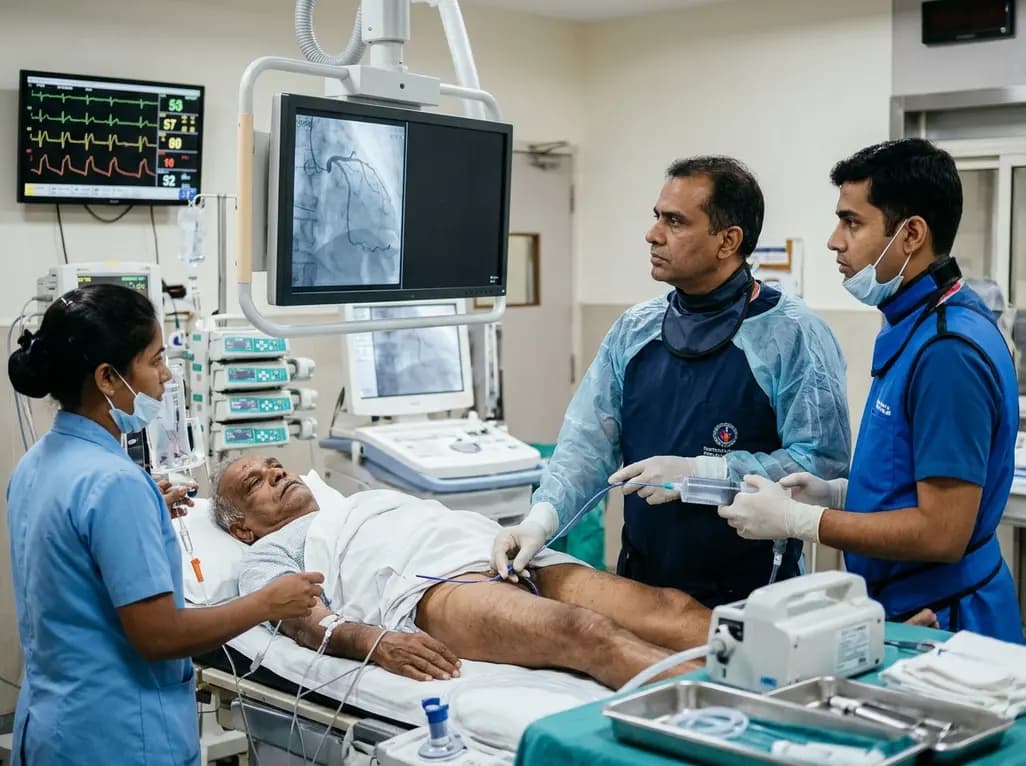
An elderly man with partially repaired Tetralogy of Fallot presented with STEMI caused by coronary embolism rather than atherosclerosis. Successful treatment with sustained mechanical aspiration thrombectomy underscores the vital need for high clinical vigilance in adult congenital heart disease.
Today

Demanding exhaustive hormonal profiling can inadvertently discourage clinical studies involving females. Methodological standards must align with the specific scientific question to expand, not restrict, equitable evidence for women.
Today

A recent study demonstrates that spinal oxygen sensors do not require mitochondrial electron transport to trigger sympathetic excitation during acute hypoxia, revealing new insights into how mitochondrial oxidative stress modulates autonomic tone in cardiovascular and neurological diseases.
Today

A novel calcium polyphosphate coacervate enables injectable bone implants with in situ hierarchical porosity via phase separation and gas foaming, significantly enhancing cell proliferation, energy metabolism, and osteogenic differentiation for minimally invasive bone defect repair.
Today

Following regulatory scrutiny from FSSAI regarding promotional representations and lean muscle preservation claims, Dr. Reddy's Laboratories and Nestlé Health Science are currently reviewing the branding and marketing strategy for their joint nutritional supplement Celevida GLP+.
Today
