.webp&w=384&q=75)

Loading, please wait...
Loading, please wait...
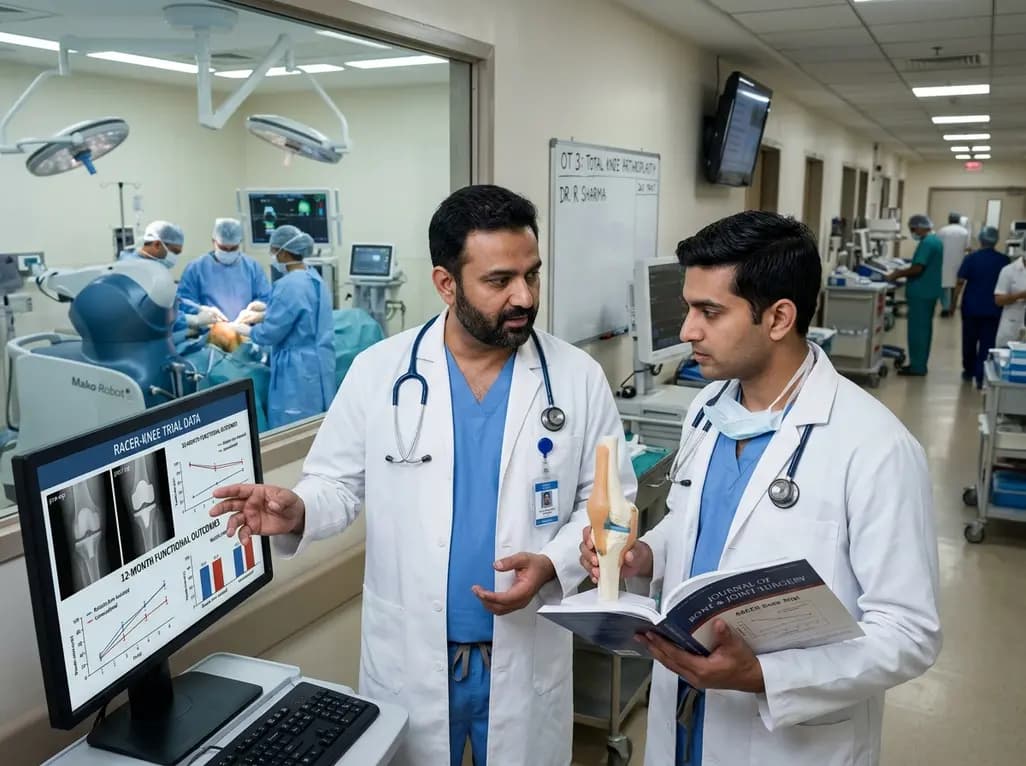
Total knee arthroplasty remains the established benchmark surgical intervention for severe knee osteoarthritis. In recent years, rapid technological advances have fueled widespread adoption of robotic surgical systems. Proponents suggest that robotic total knee replacement enhances surgical precision, refines component alignment, and delivers superior postoperative functional recovery. However, high-quality randomized evidence evaluating functional outcomes and healthcare economics has remained sparse. The landmark RACER-Knee trial directly addresses this clinical uncertainty. Investigators conducted a multicentre, pragmatic randomized controlled trial to determine whether robotic-arm assistance provides superior outcomes and acceptable cost-effectiveness compared to standard manual instrumentation. The findings provide essential insights for orthopaedic surgeons and healthcare systems.
The RACER-Knee study utilized a pragmatic, multicentre, superiority design across ten hospital centers in Great Britain. Investigators recruited 339 adult patients presenting with advanced knee osteoarthritis requiring primary joint arthroplasty. The trial randomized participants in a 1:1 ratio to receive either conventional manual surgery or robotic-arm-assisted surgery using the Mako platform. Thirty-three experienced surgeons performed the operations across participating centers.
To eliminate observational bias, the trial instituted robust masking protocols for both participants and outcome assessors. Masking strategies included applying sham incisions, identical surgical draping, and masked operative documentation. Key exclusion criteria screened out post-traumatic deformities, previous periarticular fractures, inflammatory arthropathies, and patients requiring complex implants. Randomization was centrally executed via computer minimization balancing age, body mass index, surgical center, treating surgeon, and primary affected compartment.
The primary outcome measure was the Forgotten Joint Score at twelve months postoperatively. This validated instrument assesses joint awareness during everyday activities. Investigators predefined a target difference of twelve points as the threshold for clinical superiority.
Evaluating primary functional endpoints revealed striking equivalence between the two surgical cohorts. At twelve months following surgery, participants in the robotic-arm cohort achieved a mean Forgotten Joint Score of 49.2 points. Similarly, participants who underwent conventional manual replacement demonstrated a mean Forgotten Joint Score of 50.2 points. The adjusted mean difference between cohorts was -1.5 points in favor of manual instrumentation.
Statistical analysis confirmed that this minor difference lacked clinical relevance and was statistically non-significant, with a p-value of 0.62. Because the 95% confidence intervals spanned from -7.5 to 4.5 points, the study definitively excluded the prespecified twelve-point superiority threshold. Therefore, robotic total knee replacement failed to establish superiority over conventional techniques. Both groups achieved substantial, comparable improvements in joint function and pain relief relative to baseline.
Secondary functional assessments, patient-reported outcome measures, and quality-of-life indices mirrored primary findings. Enhanced robotic alignment and bone resection precision did not translate into noticeable functional gains or reduced joint awareness for patients during routine daily activities.
Perioperative safety remains a crucial consideration when evaluating emerging surgical technologies. In the RACER-Knee investigation, both surgical approaches exhibited nearly identical complication and adverse event profiles. Specifically, sixteen participants in the robotic-assisted cohort experienced a serious adverse event within the twelve-month monitoring period. Exactly sixteen participants in the conventional instrumentation group experienced a serious adverse event, demonstrating equivalent safety.
These serious adverse events encompassed typical post-arthroplasty surgical and medical complications. Common complications documented across both groups included periprosthetic joint infection, deep vein thrombosis, pulmonary embolism, wound healing complications, and medical decompensations. Importantly, no unexpected or novel platform-specific device complications occurred in the robotic group.
Furthermore, rates of early revision surgery, manipulation under anesthesia, and re-admission remained balanced across both treatment arms. The addition of robotic pin tracking sites and stereotactic boundaries did not introduce extra surgical morbidity. Clinicians can conclude that robotic assistance operates within a comparable safety margin relative to established manual instrumentation protocols.
Comprehensive health technology assessments must evaluate both clinical efficacy and resource utilization. In routine clinical workflows, robotic platforms introduce substantial capital expenditures, software licensing fees, disposable per-case costs, and additional pre-operative computed tomography imaging requirements. The RACER-Knee economic evaluation demonstrated that robotic surgery was substantially more costly than conventional manual arthroplasty.
Because the robotic platform failed to deliver incremental functional improvement or quality-adjusted life year gains, it did not satisfy criteria for health economic cost-effectiveness. In public healthcare systems and resource-conscious private sectors, allocating substantial financial resources toward robotic platforms yields minimal measurable return regarding patient-reported joint function.
Furthermore, operating room duration and surgical scheduling logistics often expand when incorporating robotic setup, calibration, and intraoperative optical tracking registration. While procedural times may moderately decrease with experience, persistent equipment overhead maintains an unfavorable cost-effectiveness ratio. Healthcare institutions must carefully weigh these economic realities before expanding capital investments in robotic arthroplasty infrastructure.
The findings from this landmark trial provide essential guidance for contemporary orthopaedic surgeons and healthcare stakeholders. Robotic total knee replacement remains an impressive technological advancement capable of refining component positioning and bone resection geometry. However, these radiographic and mechanical refinements do not automatically translate into superior subjective joint perception or enhanced physical function for the average patient.
Surgeons should communicate balanced, evidence-based expectations during pre-operative shared decision-making. Patients frequently encounter promotional marketing that promises accelerated recovery and superior joint function with robotic technology. Clinicians must explain that excellent functional outcomes and low complication rates are readily achievable using standard manual instruments in skilled surgical hands.
Future research should explore whether specific patient subgroups, complex kinematic alignments, or unusual anatomical variations derive unique benefits from robotic guidance. Until such evidence emerges, conventional manual total knee arthroplasty remains the clinical and economic standard of care for routine primary knee osteoarthritis management.
No, the RACER-Knee trial demonstrated that robotic-assisted total knee replacement did not provide superior joint function compared to conventional manual instrumentation. At twelve months postoperatively, the mean Forgotten Joint Score was 49.2 for robotic surgery and 50.2 for manual surgery. This difference was statistically non-significant and well below the prespecified twelve-point threshold for clinical relevance, indicating comparable functional recovery between both techniques.
Both surgical approaches demonstrated virtually identical safety profiles throughout the twelve-month monitoring period. Exactly sixteen patients in each study group experienced a serious adverse event, encompassing standard arthroplasty complications such as periprosthetic infection, thromboembolism, and wound healing issues. The robotic platform did not introduce any extra device-specific surgical risks or elevate neurovascular complication rates compared to conventional manual instrumentation methods.
According to the RACER-Knee trial economic evaluation, robotic-arm-assisted total knee replacement is not cost-effective compared to conventional manual surgery. The robotic platform incurred substantially higher capital, maintenance, and procedural expenses without producing any meaningful gain in patient-reported functional outcomes or quality of life. Consequently, conventional manual knee replacement remains the more cost-effective choice for routine primary osteoarthritis management.
Disclaimer: This content is for informational and educational purposes only and is not intended to serve as medical advice, diagnosis, or treatment. Healthcare professionals should rely on their clinical judgment, institutional protocols, and individual patient evaluations when making therapeutic decisions. Refer to the latest local and national guidelines for clinical practice.
References
Parsons H et al. Robotic-arm-assisted versus conventional total knee replacement (RACER-Knee): a pragmatic, multicentre, participant-masked and assessor-masked, superiority, randomised controlled trial. Lancet. 2026 Aug 20. doi: undefined. PMID: 42624811.
Metcalfe A et al. Robotic Arthroplasty Clinical and cost Effectiveness Randomised controlled trial (RACER-knee): a study protocol. BMJ Open. 2023;13(6):e071271.
Haddad FS et al. Robotic-arm assisted versus conventional total knee arthroplasty. Bone Joint J. 2022;104-B(5):545-553.

Read summarized clinical updates, watch expert medical content, and earn CME certifications right from your smartphone.
Open your smartphone camera to scan and install.





The multicentre RACER-Knee randomized trial reveals that robotic-arm-assisted total knee replacement does not provide superior functional outcomes at 12 months compared to conventional surgery. Both techniques demonstrated identical safety profiles, but robotic arthroplasty incurred higher healthcare costs.
last month
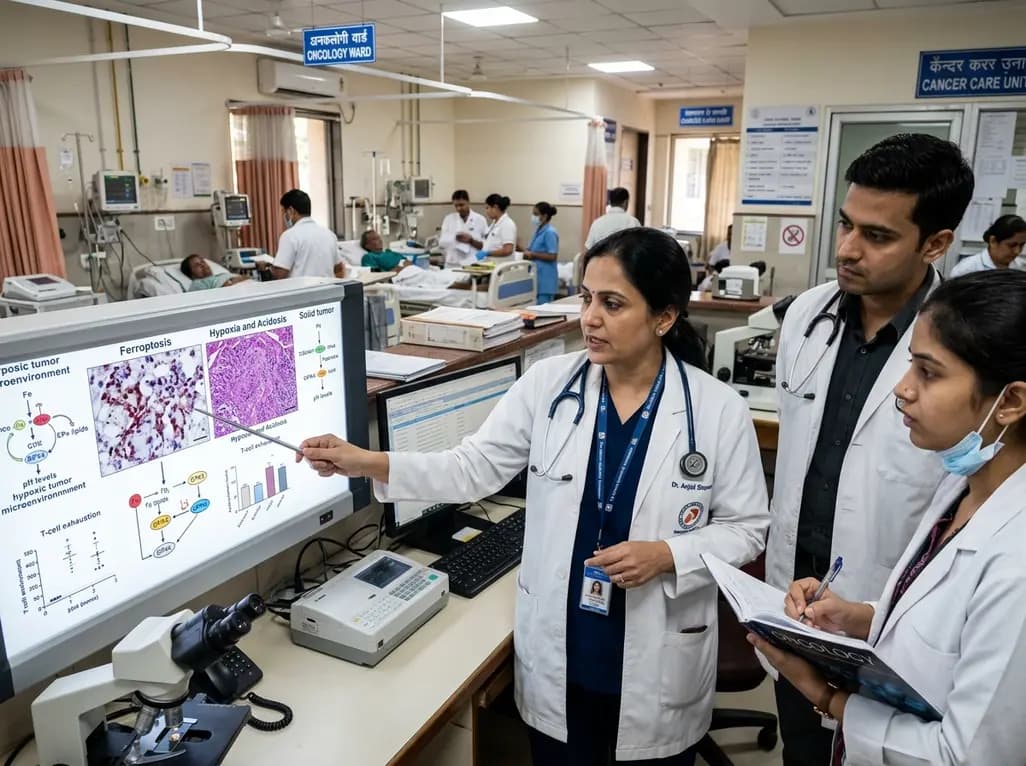
Targeting ferroptosis provides a compelling strategy to dismantle hypoxia- and acidosis-driven immunosuppression in solid tumors, enhancing response to modern immunotherapy.
Today

Findings from Project Viva indicate that sustained postpartum weight retention, rather than excessive gestational weight gain alone, directly worsens women's mid-life cardiovascular health, degrading blood pressure and glycemic parameters decades after delivery.
Today

A large UK Biobank study reveals that plasma proteomic signatures capture preclinical organ damage and improve multiorgan risk prediction across early CKM syndrome stages 0 to 2 beyond traditional PREVENT clinical models.
Today

A retrospective CBCT study reveals that superior TMJ space asymmetry correlates moderately with occipital condyle-atlas-axis asymmetry in unilateral TMJ osteoarthritis, highlighting an imaging correlate between jaw biomechanics and upper cervical alignment rather than a standalone diagnostic marker.
Today

A Bayesian multilevel meta-analysis reveals that aerobic training combined with moderate carbohydrate restriction modestly lowers HbA1c in type 2 diabetes. However, sparse data and very low certainty leave incremental benefits over exercise or diet alone unproven, highlighting the need for individualized care.
Today
