.webp&w=384&q=75)

Loading, please wait...
Loading, please wait...

Psychotropic medications are fundamental pillars of modern psychiatric care, yet their precise neurophysiological impacts often remain enigmatic to many clinicians. Currently, prescribing remains largely a process of clinical observation and trial-and-error, which can lead to delays in effective treatment. However, a landmark study by Szponar et al. has recently transformed our understanding of Psychotropic Medication EEG Signatures by analyzing a massive dataset of over 24,000 clinical recordings. This cross-sectional observational study provides a detailed window into how common drug classes alter human neural dynamics in real-time. By leveraging more than 6,000 hours of electroencephalography (EEG) data, the researchers have established a population-level reference atlas that could fundamentally change psychiatric prescribing. Consequently, this research addresses a critical gap in the field, moving us closer to mechanism-informed monitoring. Moreover, the study utilizes an expansive range of psychiatric diagnoses, ensuring that the findings are applicable across diverse clinical populations. Ultimately, these insights offer a non-invasive method for clinicians to visualize the direct impact of pharmacological agents on brain function. Such a shift from symptom-based observation to objective data-driven analysis marks a significant milestone in neuropharmacology.
The scale of this investigation is unprecedented, providing a level of statistical power rarely seen in previous pharmaco-EEG research. Specifically, the researchers compared over 75,000 distinct features, including spectral, connectivity, and nonlinear EEG metrics, across various medication regimens. This granular analysis allowed the team to filter through the inherent noise of clinical data to find consistent patterns associated with specific drug classes. For instance, the methodology employed dimensionality-reduction techniques to pinpoint the most robust indicators of drug effect. By doing so, they moved beyond simple frequency band analysis to explore complex signal dynamics and neural connectivity. Furthermore, the inclusion of benzodiazepines, SSRIs, antipsychotics, and anticonvulsants ensures the study covers the most commonly prescribed agents in psychiatry. Notably, the researchers systematically analyzed these recordings to account for varying regimens and polypharmacy common in clinical practice. Therefore, the resulting signatures are not merely theoretical but represent real-world neurophysiological changes seen in patients. This systematic approach establishes a baseline for future clinical trials aiming to use EEG as a predictive biomarker for treatment success.
One of the most striking findings of the study involves the distinct Psychotropic Medication EEG Signatures identified for benzodiazepines and Selective Serotonin Reuptake Inhibitors (SSRIs). Benzodiazepines, which facilitate GABAergic neurotransmission, were found to produce a robust increase in high-frequency beta power while simultaneously decreasing theta and alpha activity. This specific profile reflects the inhibitory influence of these agents on cortical arousal and can serve as a marker for pharmacological adherence or dosage adequacy. In contrast, SSRIs exhibited a entirely different neurophysiological fingerprint, primarily characterized by enhanced gamma-band coherence. This enhancement in connectivity suggests that antidepressants may influence the synchronization of fast neural oscillations, potentially reflecting shifts in synaptic plasticity or network-level integration. Moreover, these signatures remained consistent across different psychiatric diagnoses, suggesting that the drugs exert a fundamental effect on neural dynamics regardless of the underlying condition. Consequently, clinicians can utilize these specific patterns to verify if a medication is engaging the intended neural pathways. Such objective verification is invaluable in cases where clinical improvement is slow to manifest. Ultimately, these findings clarify the immediate physiological impact of the most common psychotropics.
Antipsychotics and anticonvulsants produced perhaps the most profound alterations in neural signal complexity and slow-wave activity. The study revealed that these drug classes lead to marked slow-wave amplification, particularly in the delta and theta frequency ranges. This increase in low-frequency power is often associated with a damping effect on cortical excitability and neural processing speed. Furthermore, the researchers observed significant reductions in signal complexity, indicating a more predictable and less dynamic neural state under these medications. This reduction in entropy may correlate with the therapeutic stabilizing effects of these agents, but it also provides a window into their cognitive side-effect profiles. Specifically, the degree of slow-wave amplification could potentially serve as a proxy for monitoring the level of dopaminergic or glutamatergic blockade. Additionally, the study highlights how these medications fundamentally reorganize the brain's bioelectrical landscape. By establishing these signatures, the researchers have provided a tool to detect excessive pharmacological effects before they become clinically problematic. Therefore, this data supports a more nuanced approach to dosage titration in patients taking high-potency neuroleptics or mood stabilizers. Consequently, the atlas helps clinicians balance therapeutic efficacy against the risk of neurophysiological over-suppression.
To ensure these findings are accessible to the global medical community, the researchers developed BrainwavesRX, an interactive online resource. This platform allows clinicians and researchers to explore medication-specific EEG effects at multiple levels of granularity and across various clinical parameters. For example, a practitioner can use the tool to compare a patient's EEG results against the reference population for a specific drug class. This comparison helps in determining if the patient’s neural response is typical or an outlier, which might suggest a need for dose adjustment. Furthermore, the resource supports the identification of insufficient pharmacological effects, which is crucial for patients who appear non-responsive to standard therapy. Notably, the public accessibility of this database encourages further collaborative research and validation across different clinical settings. By providing this infrastructure, the study moves psychiatry away from isolated observations toward a shared, data-driven framework. Moreover, the integration of such tools into clinical workflows could streamline the monitoring of complex polypharmacy cases. Ultimately, BrainwavesRX serves as a bridge between high-level neuroscientific research and the daily practical needs of psychiatric providers. It represents a significant step toward making pharmaco-EEG a routine part of modern clinical practice.
The establishment of this reference atlas marks a foundational shift toward the goal of personalized, precision psychiatry. By identifying clear neurophysiological signatures, we can begin to move away from subjective symptom reporting as the sole guide for treatment. In the future, EEG may be used to predict which patients are most likely to respond to a specific class of medication based on their baseline neural dynamics. Furthermore, real-time monitoring of these signatures can help clinicians detect non-adherence or malabsorption early in the treatment course. This objective data is particularly helpful for managing treatment-resistant cases where traditional clinical indicators are ambiguous. Additionally, the study provides a roadmap for developing new medications by offering clear neural targets for pharmacological intervention. As machine learning algorithms become more integrated with these large datasets, the accuracy of individual response predictions will likely improve significantly. Consequently, the burden of the current trial-and-error approach could be greatly reduced, leading to faster recovery times for patients. Therefore, this research does not just describe current drugs; it paves the way for an entire ecosystem of data-driven mental health care. Ultimately, the integration of EEG biomarkers will empower clinicians to prescribe with greater confidence and precision than ever before.
EEG signatures provide objective evidence of how a drug influences brain function, allowing clinicians to see if a specific dose is engaging the target neural pathways. For example, a lack of the expected beta power increase in a patient taking benzodiazepines might indicate insufficient dosage or non-adherence. Conversely, excessive slow-wave amplification could signal that a dose is too high, potentially allowing for adjustments before severe adverse effects occur.
Yes, one of the most important findings of this study is that these neurophysiological signatures are class-specific and remain robust across a wide range of psychiatric diagnoses. This suggests that the medications exert a fundamental influence on neural dynamics that is independent of the specific disorder being treated. Consequently, these signatures can be used as reliable biomarkers for drug effect regardless of whether the patient has depression, anxiety, or a psychotic disorder.
BrainwavesRX is a publicly accessible interactive resource developed from this study's data, containing reference signatures for major psychotropic drug classes. Clinicians can use this platform to explore how specific medications typically alter EEG features like spectral power and connectivity. By comparing a patient's individual EEG data to these population-level references, practitioners can better understand the neurophysiological impact of the prescribed regimen and make more informed decisions about treatment optimization.
Disclaimer: This content is for informational and educational purposes only and does not constitute medical advice. Always seek the advice of a physician or other qualified health provider with any questions you may have regarding a medical condition or treatment. Refer to the latest local and national guidelines for clinical practice.
References
Szponar M et al. Brainwaves under medication: revealing class-specific neural signatures of psychotropic medication from 24,000 EEGs. EBioMedicine. 2026 Jul 09. doi: undefined. PMID: 42424703.
Loo SK, Makeig S. Clinical Utility of EEG in Attention-Deficit/Hyperactivity Disorder: A Review. Journal of Clinical Neurophysiology. 2012;29(6):569-587.
Hunter AM, Cook IA, Leuchter AF. The promise of pharmaco-electroencephalography in predicting treatment response to antipsychotic medication. Frontiers in Psychiatry. 2013;4:112.

Read summarized clinical updates, watch expert medical content, and earn CME certifications right from your smartphone.
Open your smartphone camera to scan and install.





A groundbreaking study of 24,000 clinical EEGs has identified distinct neurophysiological signatures for major psychotropic drug classes, including SSRIs and antipsychotics. This population-level reference atlas offers a foundation for data-driven, individualized prescribing in psychiatry.
3 months ago
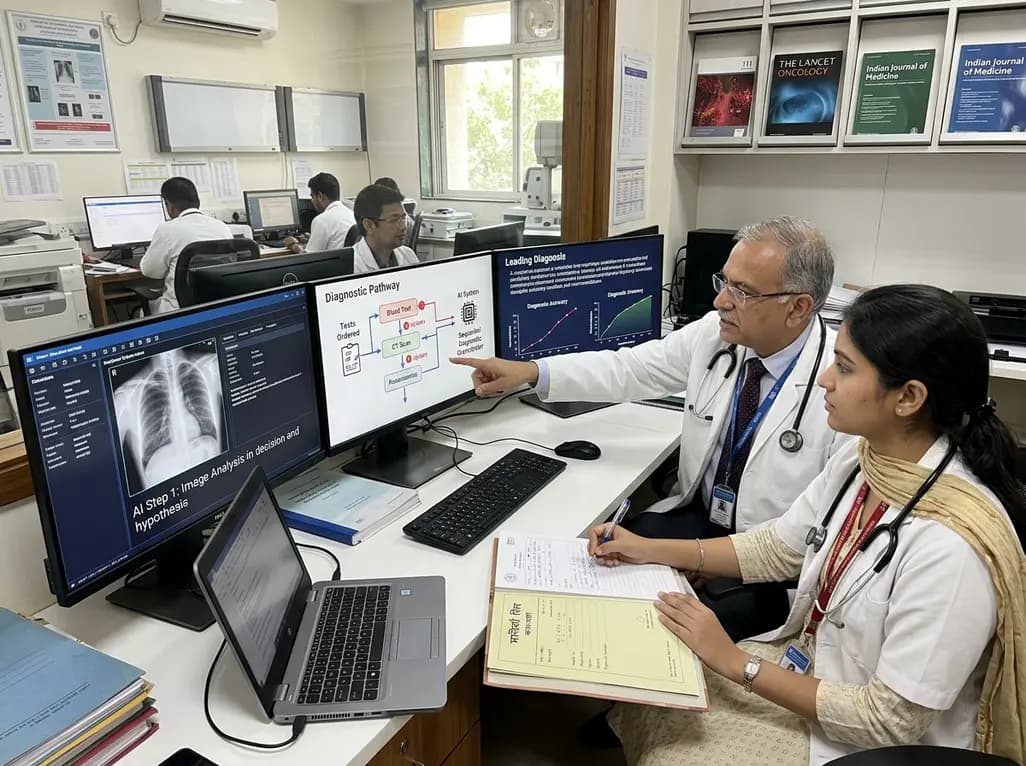
A breakthrough peer-reviewed study demonstrates that a sequential AI diagnosis system can mirror real-world clinical reasoning. By ordering stepwise tests and updating hypotheses dynamically, this multi-agent orchestrator achieved superior diagnostic accuracy while reducing investigative costs.
Today

A prenatal case highlights severe glutaric acidemia type II presenting as bilateral hyperechoic cystic kidneys at 18 weeks. Whole-exome sequencing revealed a novel homozygous ETFDH frameshift variant, demonstrating the power of rapid genetic testing in fetal renal anomalies.
Today

Review how tailored exercise programs benefit frail older patients with heart failure. Explore pathophysiological mechanisms, individualized training prescriptions, and strategies to overcome adherence barriers in clinical practice.
Yesterday

This comparative study evaluates posterior labral tears with and without glenohumeral instability, highlighting distinct demographic patterns, MRI underestimation in stable shoulders, and successful arthroscopic repair outcomes.
Yesterday

A clinical study demonstrates that early intervention with tocilizumab, either as monotherapy or bridged with corticosteroids, achieves significant proptosis reduction and resolves active inflammation in treatment-naive thyroid eye disease.
Yesterday
