.webp&w=384&q=75)

Loading, please wait...
Loading, please wait...

Posttraumatic stress disorder remains a pervasive and disabling condition across resource-constrained environments. Although traumatic exposures from interpersonal violence, natural disasters, and accidents occur frequently, evidence synthesis for mental healthcare in these regions has historically lagged behind high-income nations. A landmark systematic review and Bayesian meta-analysis provides robust evidence supporting psychosocial interventions for PTSD in low- and middle-income countries. Furthermore, it reinforces international treatment guidelines recommending psychological therapies as first-line clinical options. Consequently, these findings offer clear clinical guidance for scaling nonpharmacological therapies across underserved healthcare systems globally.
Trauma survivors in low- and middle-income countries frequently encounter severe institutional barriers to psychiatric care. Specifically, acute shortages of trained mental health professionals and fragmented community referral networks severely restrict clinical access. To evaluate real-world therapeutic solutions, researchers conducted a comprehensive systematic review registered under PROSPERO. The investigators searched major biomedical databases alongside the specialized PTSD Trials Standardized Data Repository for randomized controlled trials published between 1980 and 2025. Ultimately, the team identified fifty-five randomized trials evaluating nonpharmacological care across diverse developing economies. This pooled cohort encompassed 5,041 adult participants exhibiting clinically significant trauma manifestations. Moreover, the trial participants represented diverse community cohorts exposed to varied traumatic stressors. Furthermore, the researchers applied Cochrane's RoB 2 framework to rigorously assess risk of bias across all trial domains. By systematically synthesizing these trials, the analysis establishes the first comprehensive meta-analytic evidence base for adult trauma care in developing territories. Therefore, the findings confirm that structured psychological interventions can overcome resource constraints and deliver tangible clinical value.
Conventional meta-analytic techniques often struggle with heterogeneous clinical trials that feature varied sample sizes and diverse outcome measures. Therefore, the researchers implemented a three-level Bayesian random-effects meta-regression model to synthesize clinical outcomes accurately. This advanced mathematical architecture effectively handled effect size dependencies while modeling both within-group and between-group treatment trajectories. Moreover, the Bayesian analytical framework incorporated informative prior distributions, generating transparent credible intervals that reflect therapeutic impact reliably. Sensitivity analyses subsequently verified that the primary results remained robust across multiple alternative prior specifications. In addition, the investigators conducted extensive backward citation tracking to capture eligible community-based trials that standard database searches might miss. Cochrane risk of bias assessments ensured thorough appraisal of randomization, protocol deviations, and outcome reporting. Consequently, clinicians can trust these pooled estimates as an uncommonly reliable representation of therapeutic efficacy. Thus, the rigorous Bayesian design provides a methodologically sound foundation for clinical decision-making.
The primary outcome analysis evaluated post-treatment trauma symptom severity and subsequent symptom persistence over extended follow-up windows. At the post-treatment assessment, psychosocial modalities demonstrated remarkable clinical potency, yielding a massive within-group effect size of -1.88. Furthermore, between-group comparisons against control conditions revealed a substantial effect size of -1.31. Importantly, longitudinal evaluations confirmed that these meaningful therapeutic gains persisted throughout subsequent follow-up periods without significant decay. Treatment regimens proved particularly effective when clinicians utilized trauma-focused paradigms rather than non-specific supportive counseling. In addition, therapies delivered through face-to-face interactions achieved superior symptom reduction compared to indirect formats. Older adult participants also demonstrated notably heightened therapeutic responsiveness to these structured interventions. Accordingly, these data dispel historical skepticism regarding whether vulnerable populations can engage effectively with structured trauma processing. Ultimately, evidence confirms that focused psychosocial care produces profound, enduring recovery from intrusive thoughts, hyperarousal, and avoidant trauma symptoms.
In clinical practice, posttraumatic stress disorder rarely occurs as an isolated psychiatric condition. Instead, trauma survivors frequently suffer from debilitating major depression, pervasive generalized anxiety, and severe social impairment. Fortunately, the Bayesian meta-analysis revealed that psychosocial interventions produced medium to large beneficial effects on these secondary psychiatric morbidities. Furthermore, these concurrent mental health improvements remained sustained across long-term follow-up assessments. This multifaceted therapeutic impact provides enormous practical value in resource-limited primary care settings where secondary psychiatric referrals are unavailable. By effectively reducing co-occurring depressive and anxiety symptoms, psychological therapies help restore daily functional capacity and vocational engagement. Similarly, improving mood stability facilitates active participation in occupational and family responsibilities. In addition, addressing comorbid depression substantially diminishes chronic suicide risk among vulnerable trauma survivors. Importantly, achieving these clinical gains without initiating complex psychotropic polypharmacy minimizes adverse drug reactions and financial strain. Consequently, comprehensive psychosocial interventions provide holistic psychiatric relief, fundamentally improving patient well-being and general quality of life.
In India, diverse trauma etiologies—including road traffic collisions, domestic violence, industrial accidents, and natural calamities—generate substantial mental health morbidity. However, tertiary psychiatric infrastructure remains overwhelmingly concentrated in metropolitan cities, creating enormous treatment gaps across rural districts. These meta-analytic findings provide compelling evidence to integrate structured psychosocial modalities into primary healthcare through Ayushman Arogya Mandirs. Specifically, medical officers can employ World Health Organization task-sharing frameworks to train community counselors and frontline healthcare workers. By teaching community teams structured, face-to-face, trauma-focused cognitive techniques, health systems can deliver accessible psychological care locally. Furthermore, primary care physicians should proactively screen for hidden trauma history among patients presenting with unexplained chronic pain, somatic distress, or refractory insomnia. Adapting these therapies to local sociocultural contexts will optimize patient engagement and therapeutic alliance. Ultimately, scaling evidence-based psychosocial interventions will dramatically reduce trauma-induced disability and alleviate the overwhelming burden on secondary healthcare facilities across India.
Trauma-focused cognitive behavioral therapies and narrative exposure therapy demonstrate the strongest clinical efficacy. The meta-analysis confirms that interventions directly addressing trauma memories significantly outperform generic supportive counseling. Clinicians should prioritize face-to-face, trauma-focused modalities as first-line nonpharmacological management across primary and secondary care facilities.
Therapeutic benefits remain highly durable over extended follow-up intervals. The Bayesian meta-analysis demonstrated that significant reductions in posttraumatic stress, depressive symptoms, and generalized anxiety persisted long after intervention completion. Patients acquire long-term emotional regulation skills and cognitive processing mechanisms that provide ongoing psychological resilience against future life stressors.
Yes, trained non-specialists can successfully deliver structured trauma interventions under clinical supervision. Task-sharing models endorsed by the World Health Organization allow community health workers, nurses, and primary care counselors to administer brief evidence-based protocols safely. This practical strategy effectively bridges massive mental healthcare gaps in rural and underserved Indian regions.
Disclaimer: This content is for informational and educational purposes only. It is not intended to provide medical advice or to be used for diagnosing or treating a health problem or disease. Patients must always consult with a qualified healthcare provider for specific medical advice. Refer to the latest local and national guidelines for clinical practice.
References

Read summarized clinical updates, watch expert medical content, and earn CME certifications right from your smartphone.
Open your smartphone camera to scan and install.





A comprehensive Bayesian meta-analysis of 55 RCTs reveals that psychosocial interventions provide large, durable symptom relief for adults with PTSD in low- and middle-income countries. Trauma-focused, face-to-face treatments demonstrated superior efficacy, supporting their prioritization in resource-limited clinics.
Today
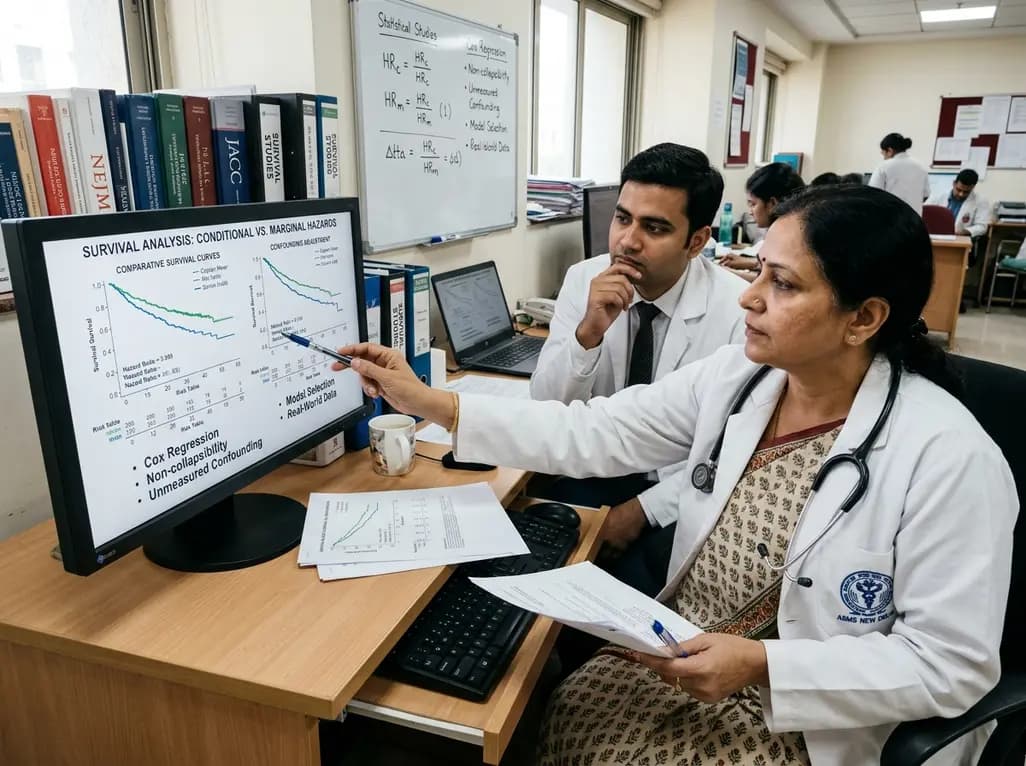
Survival analyses often report hazard ratios, but mathematical non-collapsibility creates crucial differences between conditional and marginal estimates. Clinicians must account for unmeasured confounding and model selection when interpreting trial endpoints and real-world cardiovascular outcomes.
Today

A cross-sectional study of 700 college students highlights significant contraceptive knowledge disparities between sexually active and inactive young adults. The findings demonstrate a critical need for proactive, comprehensive sexual health counseling before sexual debut.
Yesterday
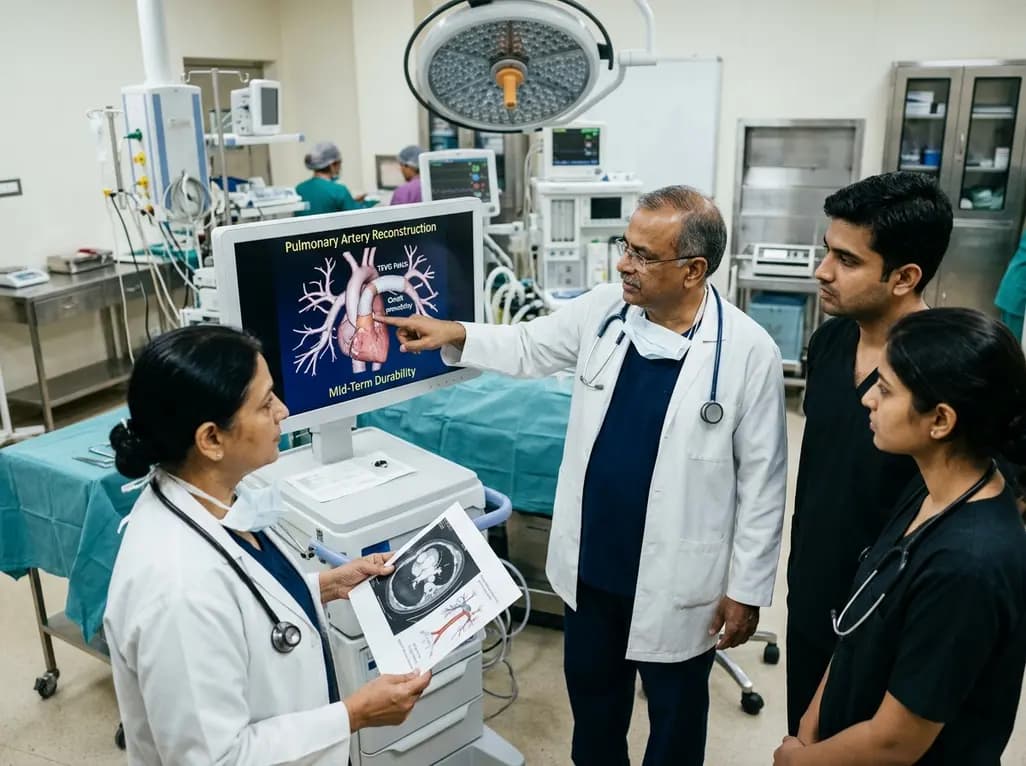
Autologous tissue-engineered vascular graft patches created via in-body tissue architecture show excellent mid-term durability and safety for pulmonary artery reconstruction in congenital heart surgery, particularly for peripheral branch augmentation.
Today

A novel cluster analysis of real-world datasets reveals four distinct CPPD disease phenotypes, validating existing EULAR categories while uncovering previously unrecognized monoarticular and axial presentations to refine patient management.
Today

Recent pharmacokinetic research demonstrates that trace dermal exposure to microgram quantities of trenbolone and metenolone produces detectable urinary metabolites for days to over a week, providing critical objective data for evaluating unintentional contamination claims in sports drug testing.
Today
