.webp&w=384&q=75)

Loading, please wait...
Loading, please wait...
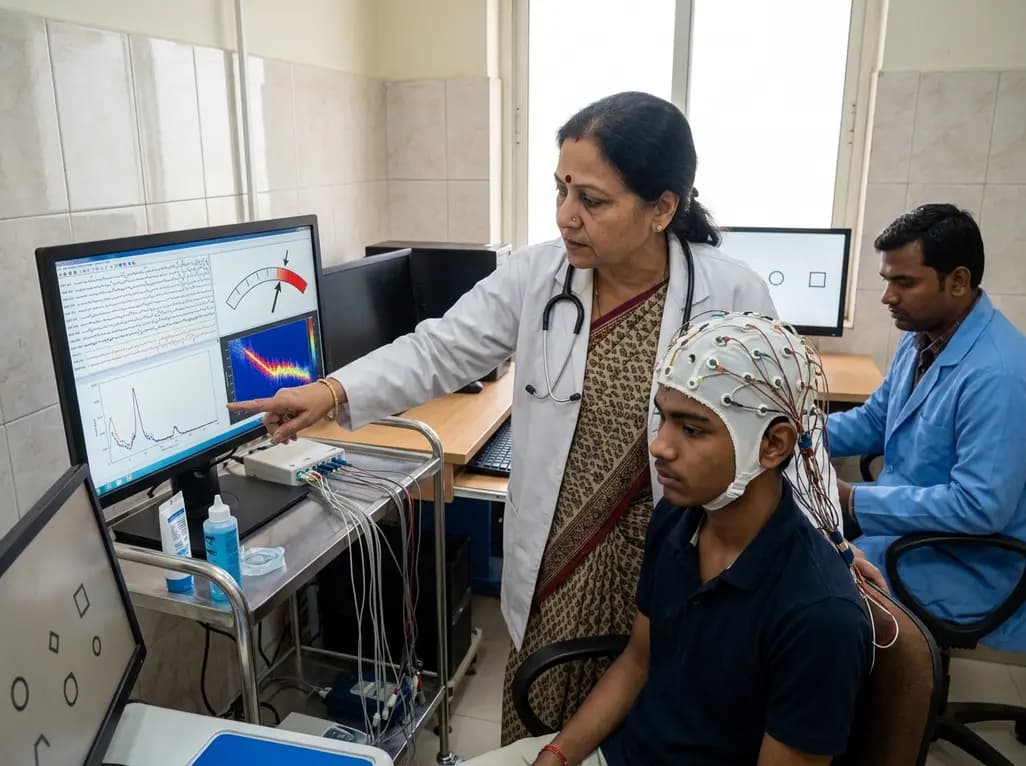
Early identification of individuals at clinical high-risk (CHR) for psychosis remains a cornerstone of modern psychiatric intervention. Clinicians frequently encounter patients who exhibit attenuated psychotic symptoms, but predicting which of these individuals will transition to a full-blown psychotic disorder is notoriously difficult. Consequently, the search for reliable psychosis conversion biomarkers has become a primary focus in neuroscientific research. Objective markers would allow for more personalized treatment plans, potentially delaying or even preventing the onset of chronic illness. Traditional clinical assessments, while useful, often lack the sensitivity and specificity required to differentiate between those who will remain stable and those who will convert. Therefore, researchers are turning to electrophysiology to uncover subtle neural signatures of vulnerability.
Recent studies suggest that neurophysiological changes often precede the emergence of overt clinical symptoms. Specifically, the clinical high-risk state involves complex alterations in neural connectivity and processing speed. By employing sophisticated recording techniques like electroencephalography (EEG), scientists can observe how the brain responds to environmental stimuli in real-time. This provides a window into the underlying pathophysiology of the schizophrenia spectrum. Furthermore, identifying these markers early in the prodromal phase offers a critical window for neuroprotective strategies. Current evidence emphasizes that early intervention leads to significantly better long-term functional outcomes for patients across the globe.
The visual oddball paradigm is a standard tool used to assess cognitive processing and attention in psychiatric populations. During this task, participants must identify infrequent target stimuli among a stream of frequent, non-target stimuli. This process elicits a specific event-related potential (ERP) known as the P300, which typically peaks around 300 milliseconds after the presentation of a target. Researchers widely recognize the P300 as a marker of cognitive resource allocation and working memory update processes. Historically, a reduction in P300 amplitude has been one of the most replicated findings in patients with schizophrenia, suggesting a fundamental deficit in stimulus evaluation.
In the context of the clinical high-risk population, P300 abnormalities are also prevalent. Specifically, a recent study demonstrated that individuals who eventually converted to psychosis (CHR-C) exhibited significantly lower P300 amplitudes in the parietal region compared to healthy controls. Notably, the statistical significance of this finding (p = 0.01) reinforces the idea that parietal processing is impaired early in the disease course. However, while P300 is a robust indicator of general cognitive dysfunction, it may not always possess enough predictive power on its own to serve as a standalone biomarker for conversion. This limitation has prompted researchers to look beyond traditional oscillations and explore the aperiodic components of the EEG signal.
Traditionally, EEG analysis focuses on periodic oscillations, such as alpha, beta, and gamma rhythms. However, the raw EEG signal also contains a non-oscillatory, aperiodic component characterized by a 1/f-like power distribution. This aperiodic activity, often represented by the spectral exponent, was once dismissed as simple background noise. Modern neurophysiology now understands that this "noise" reflects the underlying balance between neural excitation and inhibition (E/I balance). A steeper exponent typically suggests a shift toward inhibition, whereas a flatter or attenuated exponent suggests increased neural noise or higher excitation.
Moreover, the modulation of this aperiodic exponent during cognitive tasks provides unique insights into how the brain adapts to demand. As the brain engages with complex information, the exponent usually shifts, reflecting a dynamic adjustment of neural resources. In clinical populations, this modulation often appears dysfunctional. For instance, in individuals at risk for psychosis, the inability to properly modulate aperiodic activity may indicate a lack of neural efficiency or a breakdown in the E/I balance. Understanding these dynamics is essential for developing psychosis conversion biomarkers that go beyond simple amplitude measurements. Consequently, scientists are increasingly integrating aperiodic analysis into standard psychiatric research protocols to improve diagnostic accuracy.
The latest evidence highlights a significant attenuation of aperiodic activity modulation in those who transition to psychosis. In a longitudinal study comparing psychosis converters (CHR-C) and non-converters (CHR-NC), researchers measured the change in the aperiodic exponent from pre-stimulus to post-stimulus (Δ-exponent). The results showed that the Δ-exponent was significantly attenuated in the CHR-C group compared to both healthy controls (p < 0.001) and non-converters (p = 0.001). This suggests that the brain's ability to shift its neural state in response to a stimulus is severely compromised in those at the highest risk of conversion.
Interestingly, the non-converter group did not show the same level of attenuation, which distinguishes them from those who develop full psychosis. This distinction is vital for clinical practice because it provides a potential physiological marker to stratify risk. While both groups might present with similar clinical symptoms, their neural responses to a simple visual task tell a different story. Therefore, the Δ-exponent serves as a reflection of the brain's functional flexibility. When this flexibility is lost, it likely marks a trajectory toward clinical deterioration. These findings suggest that aperiodic modulation is not just a secondary feature of the illness but a core component of the prodromal neurobiology.
When comparing traditional ERPs like the P300 with the newer aperiodic markers, the latter appears to offer superior predictive utility. Logistic regression modeling in recent research indicated that the Δ-exponent had a higher predictive power for psychosis conversion than the P300 amplitude. While the P300 reflects the outcome of cognitive processing, the aperiodic exponent may capture the underlying neural environment that makes such processing possible. Specifically, the study reported that the Δ-exponent alone could distinguish converters from non-converters with significant accuracy. This finding is revolutionary because it suggests that we can identify high-risk individuals before major cognitive deficits become obvious in traditional ERPs.
Furthermore, the aperiodic exponent is less sensitive to the artifacts that often plague oscillatory analysis, such as muscle noise or subtle movements. This makes it a more robust and reliable marker for clinical use. Similarly, the fact that aperiodic changes were specifically linked to conversion—and not just general illness severity—highlights its potential as a specific prognostic tool. By combining these different measures, clinicians could theoretically build a multi-modal risk profile for each patient. This holistic approach would likely include clinical symptoms, traditional ERP data, and advanced aperiodic metrics to ensure the most accurate assessment of psychosis risk.
Looking forward, the integration of advanced EEG markers into routine psychiatric care could transform the landscape of early intervention. In countries like India, where the burden of untreated mental illness is high, having low-cost and objective tools like EEG is invaluable. Clinicians could use these psychosis conversion biomarkers to monitor patients over time, adjusting interventions based on changes in neural activity rather than waiting for symptom worsening. This proactive approach would shift psychiatry from a reactive discipline to a more preventative one. However, achieving this requires the standardization of EEG protocols across different clinical settings to ensure results are comparable.
Additionally, future research should investigate whether these aperiodic markers can also predict responses to specific treatments, such as antipsychotic medication or cognitive-behavioral therapy. If an attenuated Δ-exponent predicts a poor response to traditional therapies, clinicians might opt for more intensive or novel interventions earlier in the treatment process. Ultimately, the goal is to bridge the gap between bench research and bedside practice. By validating these neurophysiological markers in larger, more diverse cohorts, the psychiatric community moves closer to a truly precision-medicine-based approach for schizophrenia and related disorders.
The aperiodic exponent represents the non-oscillatory component of the EEG signal, reflecting the balance between neural excitation and inhibition. In psychiatric research, it serves as a measure of neural noise and efficiency. A flatter exponent often correlates with increased neural noise and cognitive deficits. It provides a more stable and robust marker than traditional oscillations, making it an excellent candidate for identifying early physiological changes in prodromal psychosis states.
The visual oddball paradigm requires the brain to detect rare targets within a sequence of frequent stimuli, demanding high-level attention and working memory. By measuring the brain's electrical response, such as the P300 amplitude, clinicians can identify deficits in cognitive resource allocation. Reduced responses in this task are characteristic of the schizophrenia spectrum and can signal neurophysiological vulnerability in individuals at clinical high-risk even before severe symptoms emerge.
Recent research indicates that the Δ-exponent, which measures the change in aperiodic activity during a task, possesses higher predictive power for psychosis conversion than P300 amplitude. While P300 measures a specific cognitive event, the Δ-exponent reflects the brain's fundamental ability to modulate its state and E/I balance. This makes it a more sensitive indicator of the specific neural instability that leads to the transition from a high-risk state to a full psychotic disorder.
Disclaimer: This content is for informational and educational purposes only and does not constitute medical advice, diagnosis, or treatment. Always seek the advice of your physician or another qualified health provider with any questions you may have regarding a medical condition. Refer to the latest local and national guidelines for clinical practice.
References
Zhao J et al. Aperiodic activity modulation during visual oddball paradigm in clinical high-risk individuals and relationship with psychosis conversion. Schizophr Res. 2026 Jul 08. doi: undefined. PMID: 42418869.
Voytek B, et al. Age-related changes in 1/f neural noise and its relationship to cognitive performance. Journal of Neuroscience. 2015;35(38):13257-13265.
Northoff G, et al. Is the self-specific? A meta-analysis of neuroimaging studies of self-referential processing. Trends in Cognitive Sciences. 2020;24(12):1001-1015.

Read summarized clinical updates, watch expert medical content, and earn CME certifications right from your smartphone.
Open your smartphone camera to scan and install.





Recent research highlights the potential of aperiodic EEG activity as a powerful biomarker for predicting psychosis conversion in clinical high-risk individuals. By analyzing task-related exponent modulation during visual oddball paradigms, clinicians may better identify those at the highest risk of transition.
3 months ago

As monsoon seasons elevate arboviral disease threats, Tamil Nadu has initiated an ICMR-monitored evaluation of the tetravalent dengue vaccine in Tenkasi district. Clinicians emphasize clinical monitoring, public prevention, and high-quality early pediatric care to reduce disease morbidity across endemic regions.
Today

A comparative cohort study evaluates vNOTES vs TLH hysterectomy for benign conditions, demonstrating shorter operative duration, faster return to daily activities, and equivalent female sexual function scores without increased dyspareunia.
Today

Review how tailored exercise programs benefit frail older patients with heart failure. Explore pathophysiological mechanisms, individualized training prescriptions, and strategies to overcome adherence barriers in clinical practice.
Today

This comparative study evaluates posterior labral tears with and without glenohumeral instability, highlighting distinct demographic patterns, MRI underestimation in stable shoulders, and successful arthroscopic repair outcomes.
Today

A clinical study demonstrates that early intervention with tocilizumab, either as monotherapy or bridged with corticosteroids, achieves significant proptosis reduction and resolves active inflammation in treatment-naive thyroid eye disease.
Today
