.webp&w=384&q=75)

Loading, please wait...
Loading, please wait...
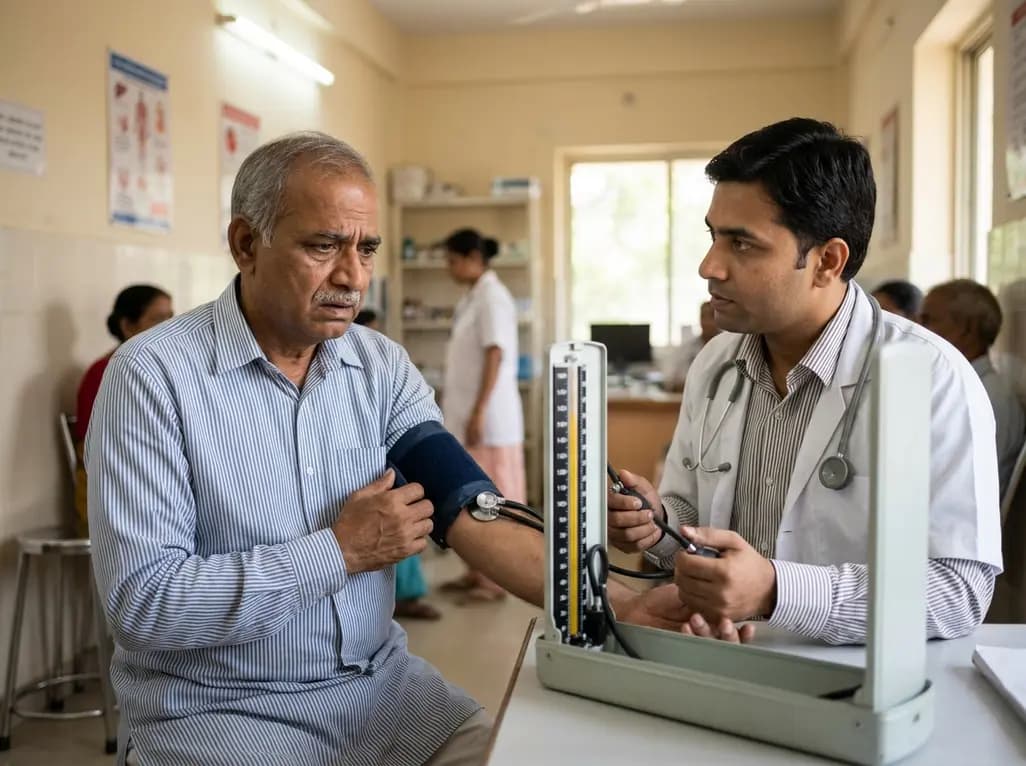
Hypertension remains one of the most significant global health challenges, serving as a primary driver of cardiovascular disease and premature mortality. In India, the prevalence of high blood pressure is alarmingly high, affecting millions of adults across diverse socioeconomic backgrounds. Effective management of this condition extends far beyond pharmacological intervention; it relies heavily on consistent Hypertension self-care behaviors. These behaviors include medication adherence, regular blood pressure monitoring, dietary modifications, and physical activity. However, many patients struggle to maintain these routines, often due to underlying psychological barriers that clinicians may overlook during routine consultations. Emerging research indicates that psychological distress, encompassing stress, anxiety, and depression, plays a pivotal role in determining a patient's capacity for self-regulation. Therefore, understanding the intersection between mental health and chronic disease management is essential for improving clinical outcomes. This article examines recent findings regarding the prevalence of psychological disorders in hypertensive populations and explores how these factors directly correlate with self-care efficacy.
Recent analytical studies have shed light on the staggering rates of mental health comorbidities among those living with hypertension. For instance, a study conducted in Gonabad revealed that a significant majority of hypertensive patients exhibit signs of psychological distress. Specifically, the researchers found that 75.2% of participants experienced anxiety, while 62.5% suffered from depression, and 59.3% reported high levels of stress. These figures are notably higher than those seen in the general population, suggesting that the burden of chronic disease management itself may exacerbate mental health issues. Moreover, the psychological weight of a hypertension diagnosis can lead to a cycle of worry and physiological arousal. Furthermore, the high prevalence of these conditions indicates that many patients are navigating their treatment while simultaneously dealing with cognitive and emotional impairments. Consequently, clinicians must recognize that psychological distress is not an outlier but a common feature of the hypertensive clinical profile. This realization necessitates a shift toward more holistic screening protocols in primary care settings.
The relationship between mental health and Hypertension self-care behaviors is characterized by a significant negative correlation. Pearson’s correlation analysis often demonstrates that as levels of depression and anxiety rise, the quality of self-care maintenance and management declines. Depression, in particular, can lead to a lack of motivation, making it difficult for patients to adhere to low-sodium diets or maintain regular exercise regimens. Additionally, anxiety may cause patients to feel overwhelmed by the complexities of medication schedules or the fear of potential complications. This psychological burden impairs the executive functions necessary for effective health monitoring. For example, a patient experiencing high stress may forget to take their antihypertensive medication or neglect regular blood pressure checks. Therefore, the physiological benefits of treatment are often negated by the behavioral failures induced by distress. Addressing these psychological components is not merely about improving mood; it is a clinical necessity for achieving target blood pressure levels and reducing the risk of stroke or myocardial infarction.
Demographic factors significantly influence both the prevalence of psychological distress and the execution of self-care tasks. Research indicates that variables such as age, marital status, education level, and occupation are closely tied to patient outcomes. Interestingly, older persons and females often report higher levels of anxiety and depression within hypertensive cohorts. Marital status also plays a crucial role, as social support from a spouse can provide the emotional stability needed to maintain healthy habits. Conversely, individuals with lower education levels may face challenges in understanding the nuances of Hypertension self-care behaviors, leading to lower self-efficacy. Moreover, occupation-related stress can exacerbate existing hypertension, creating a bidirectional relationship between work life and cardiovascular health. Additionally, patients who live alone or lack a strong social network are at a higher risk for poor self-care due to the absence of external encouragement and assistance. Consequently, clinicians should tailor their counseling strategies to account for these sociodemographic vulnerabilities, ensuring that interventions are accessible and culturally relevant to each patient's unique circumstances.
In the Indian context, where the healthcare system often faces high patient volumes, integrating mental health screening into hypertension management is a formidable but necessary task. Clinicians should prioritize the identification of psychological distress early in the treatment process to prevent the deterioration of self-care. Notably, the use of brief, validated tools can help identify patients at risk without significantly increasing the duration of a consultation. Furthermore, fostering a multidisciplinary approach that includes counselors or social workers can bridge the gap between physical and mental health care. Additionally, patient education programs should move beyond simple dietary advice and include stress management techniques, such as mindfulness or deep breathing exercises. However, the success of these programs depends on the clinician's ability to communicate the importance of mental well-being as a component of cardiovascular health. Ultimately, by addressing the psychological barriers to Hypertension self-care behaviors, healthcare providers can empower patients to take an active role in their recovery, leading to more sustainable blood pressure control and a better quality of life.
To effectively manage the intersection of hypertension and mental health, clinicians can utilize standardized instruments designed for clinical and research settings. The Depression, Anxiety, and Stress Scale (DASS-21) is a widely recognized tool that provides a quantitative measure of distress across three distinct subscales. This scale is particularly useful for tracking changes in a patient's emotional state over time, allowing for timely adjustments in their care plan. Similarly, the Self-Care of Hypertension Inventory (SC-HI V3) offers a comprehensive assessment of how well a patient is managing their condition. It evaluates three critical domains: self-care maintenance, monitoring, and management. By using these tools in tandem, clinicians can pinpoint exactly where a patient is struggling. For instance, a high DASS-21 score combined with a low SC-HI V3 monitoring score suggests that anxiety may be interfering with the patient's ability to track their blood pressure. Consequently, these objective measures provide a roadmap for personalized interventions. Therefore, incorporating these scales into routine practice can significantly enhance the precision of hypertension management and ensure that psychological needs are addressed alongside physiological ones.
Anxiety creates a state of chronic worry that can impair a patient's cognitive focus and decision-making abilities. This often leads to fragmented self-care, where patients feel too overwhelmed to follow strict dietary guidelines or maintain consistent medication schedules, ultimately resulting in poorer blood pressure control and increased cardiovascular risk.
Marital status often serves as a proxy for social support, which is critical for maintaining long-term health behaviors. Supportive partners can assist with medication reminders, encourage healthy eating, and provide emotional stability, all of which reduce psychological distress and improve the patient's overall adherence to self-care protocols.
The DASS-21 is highly effective for measuring levels of depression, anxiety, and stress, while the SC-HI V3 specifically assesses the quality of a patient's self-care maintenance and management. Using these together allows clinicians to identify psychological barriers and tailor interventions to improve both mental health and hypertension outcomes.
Disclaimer: This content is for informational and educational purposes only and does not constitute medical advice or a professional relationship between the reader and the author. It should not be used as a substitute for professional diagnosis and treatment. Always seek the advice of your physician or other qualified health provider with any questions you may have regarding a medical condition. Refer to the latest local and national guidelines for clinical practice.
References
Naddafi F et al. Psychological distress in hypertension: Prevalence and links to self-care in Gonabad, Iran. PLoS One. 2026. doi: 10.1371/journal.pone.0352892. PMID: 42430300.
Sundarrajan IB et al. Mental health of hypertensive patients and its association with their blood pressure in a rural area of Tamil Nadu. J Family Med Prim Care. 2022;11(5):1761-1764.
Frontiers in Psychiatry. Mental health and hypertension: assessing the prevalence of anxiety and depression and their associated factors in a tertiary care population. 2024.
Gupta R, Xavier D. Hypertension: The most important risk factor for vascular disease in India. Indian Heart J. 2018;70(4):565-572.

Read summarized clinical updates, watch expert medical content, and earn CME certifications right from your smartphone.
Open your smartphone camera to scan and install.





A recent study in Gonabad, Iran, reveals that over 75% of hypertensive patients experience anxiety, significantly hindering their ability to perform essential self-care. Managing psychological distress is crucial for improving blood pressure control and preventing long-term cardiovascular complications.
3 months ago

Discover the crucial role of glymphatic dysfunction in stroke, where perivascular clearance failure and neuroinflammation exacerbate cerebral edema and post-stroke brain injury.
Today

A prenatal case highlights severe glutaric acidemia type II presenting as bilateral hyperechoic cystic kidneys at 18 weeks. Whole-exome sequencing revealed a novel homozygous ETFDH frameshift variant, demonstrating the power of rapid genetic testing in fetal renal anomalies.
Today

Review how tailored exercise programs benefit frail older patients with heart failure. Explore pathophysiological mechanisms, individualized training prescriptions, and strategies to overcome adherence barriers in clinical practice.
Yesterday

This comparative study evaluates posterior labral tears with and without glenohumeral instability, highlighting distinct demographic patterns, MRI underestimation in stable shoulders, and successful arthroscopic repair outcomes.
Yesterday

A clinical study demonstrates that early intervention with tocilizumab, either as monotherapy or bridged with corticosteroids, achieves significant proptosis reduction and resolves active inflammation in treatment-naive thyroid eye disease.
Yesterday
