.webp&w=384&q=75)

Loading, please wait...
Loading, please wait...

Standard psychiatric treatment often addresses positive symptoms effectively through pharmacotherapy. However, persistent deficits in interpersonal functioning continue to pose substantial therapeutic challenges for individuals with psychosis. To address this unmet need, clinicians developed specialized relationship-centered interventions. Recent landmark trial data demonstrate that manualized psychodynamic psychotherapy for schizophrenia, when combined with standard psychiatric care, yields sustained and meaningful improvements in real-world functioning.
Historically, psychoanalytic techniques fell out of favor for schizophrenia during the mid-twentieth century due to a lack of empirical verification. In addition, early interpretive strategies sometimes exacerbated patient distress. Nevertheless, modern therapeutic frameworks have substantially evolved. Contemporary clinicians adapt psychodynamic interventions specifically to address the structural and relational vulnerabilities characteristic of psychotic illnesses. Rather than uncovering repressed conflict or analyzing unconscious defenses prematurely, these modified methods focus on affect regulation, mentalizing capacity, and self-other differentiation. Consequently, therapists cultivate a secure relational alliance that respects interpersonal boundaries. Moreover, modern psychodynamic modalities prioritize stability, emotional containment, and communicative clarity over traditional free association. Therefore, this supportive modification enables outpatients to safely navigate interpersonal interactions without overwhelming their psychological resources. As clinical psychiatry shifts toward comprehensive recovery models, evidence-based psychotherapeutic options represent crucial therapeutic adjuncts.
Researchers conducted a rigorous, single-centre, assessor-blinded, parallel-group randomised controlled trial at the Psychiatric University Hospital of the Charité at St Hedwig Hospital in Berlin. Specifically, investigators recruited 130 adult outpatients diagnosed with schizophrenia or schizoaffective disorder between 2015 and 2021. The team excluded individuals presenting with organic brain disorders, somatic illnesses affecting cerebral function, or severe active substance use disorders requiring specialized addiction treatment. Subsequently, investigators randomly allocated participants to receive either Modified Psychodynamic Psychotherapy for Schizophrenia alongside treatment as usual or treatment as usual alone. Participants assigned to the experimental arm received a minimum of thirty structured psychotherapy sessions. Furthermore, masked outcome assessors evaluated participants at baseline, post-treatment at twenty-four months, and long-term follow-up at thirty-six months. To ensure methodological rigor, investigators analysed data using linear mixed models under the intention-to-treat principle.
The primary trial outcome focused on psychosocial functioning measured via the Mini International Classification of Functioning, Disability and Health Rating for Limitations of Activities and Participation in Psychological Disorders. Significantly, the trial demonstrated robust group-by-time interactions favoring the psychotherapeutic intervention. At the primary 24-month post-treatment evaluation, the adjusted between-group difference in functioning scores reached -3.45 in favor of the psychotherapy cohort. Furthermore, these benefits not only persisted but widened at the 36-month follow-up, reaching an adjusted difference of -4.07. Lower scores on this rating scale denote superior functional capacity across occupational, familial, and social domains. In contrast, standard care alone failed to replicate these continuous functional gains. Additionally, adverse events occurred at similar rates between the two groups, confirming intervention tolerability. Three serious adverse events occurred during the observation window, including two tragic suicides and one forensic admission, reflecting typical illness severity rather than trial-related harm.
The remarkable continuation of functional gains following treatment cessation provides compelling insight into therapeutic mechanisms. Unlike symptom-focused interventions that often show waning efficacy over time, structural psychotherapy aims to build durable psychological capacities. Specifically, the manualized protocol systematically fosters mentalization, helping patients recognize personal emotional states and interpret social cues accurately. Furthermore, the collaborative therapeutic frame offers a novel relational experience that directly counteracts social withdrawal. Consequently, patients internalize healthier interpersonal templates that help them negotiate daily social demands. As individuals learn to tolerate emotional intimacy and regulate social anxiety, their social networks expand naturally. Therefore, the delayed emergence of functional advantages highlights a gradual consolidation of interpersonal skills. These structural improvements empower patients to sustain vocational pursuits and independent community living over extended periods.
These findings carry significant implications for modern psychiatric care teams managing chronic psychotic disorders. While antipsychotic medications remain indispensable for acute positive symptom stabilization, they rarely remediate social cognitive deficits or pervasive loneliness. Therefore, integrating manualized psychodynamic therapy into standard psychiatric outpatient regimens provides a balanced, person-centered paradigm. Psychiatrists should view tailored psychotherapy not as an alternative to pharmacotherapy, but as an essential synergistic tool. However, implementing such specialized programs requires adequate clinical training and dedicated institutional resources. Mental health systems must invest in training clinicians to deliver manualized interventions safely and effectively. Ultimately, expanding access to structured psychotherapeutic interventions empowers patients to move beyond mere symptom remission toward genuine functional recovery and dignified community reintegration.
Modified Psychodynamic Psychotherapy for Schizophrenia is a manualized psychological treatment adapted for psychosis. Instead of utilizing traditional psychoanalytic interpretations, it focuses on strengthening affect regulation, self-other differentiation, and mentalizing capacity within a supportive, structured therapeutic relationship to improve daily social functioning.
Investigators measured functional outcomes using the validated Mini International Classification of Functioning, Disability and Health Rating for Limitations of Activities and Participation in Psychological Disorders. Masked clinicians evaluated participants across thirteen key capacity dimensions at baseline, twenty-four months post-treatment, and thirty-six months follow-up.
The intervention primarily targeted interpersonal and psychosocial functioning rather than acute psychotic symptom reduction. While general psychopathology and negative symptoms showed favorable improvements, positive psychotic symptoms decreased similarly across both groups, confirming that psychodynamic therapy works synergistically with standard medical treatments.
Disclaimer: This content is for informational and educational purposes only and should not be considered medical advice. It is not intended to replace consultation with a qualified medical professional. Patients should seek the advice of their physician or other qualified healthcare provider regarding any medical condition or treatment. The findings and perspectives discussed here reflect the cited research and are not endorsed by the publisher. Refer to the latest local and national guidelines for clinical practice.
References
Montag C et al. The efficacy of modified psychodynamic psychotherapy for patients with schizophrenia-spectrum disorders in Germany: a prospective, single-centre, assessor-blinded, parallel-group, randomised controlled trial. Lancet Psychiatry. 2026 Oct. doi: 10.1016/S2215-0366(26)00240-3. PMID: 42716057.
Linden M, Baron S, Muschalla B. Relationship of work capacity limitations and psychological symptoms: a study with the Mini-ICF-APP. Int J Rehabil Res. 2015;38(3):214-220.
Bighelli I, Salanti G, Huhn M, et al. Psychological interventions to reduce positive symptoms in schizophrenia: systematic review and network meta-analysis. World Psychiatry. 2018;17(3):316-329.

Read summarized clinical updates, watch expert medical content, and earn CME certifications right from your smartphone.
Open your smartphone camera to scan and install.





A randomized controlled trial published in Lancet Psychiatry shows that Modified Psychodynamic Psychotherapy for Schizophrenia (MPP-S) combined with usual care significantly enhances long-term psychosocial functioning compared to standard care alone, providing crucial empirical support for psychodynamic approaches.
Today

Left bundle branch pacing is an emerging physiological resynchronization strategy for heart failure. While observational data and some trials show benefits over biventricular pacing, divergent trial outcomes highlight the importance of confirmed conduction capture and specialized operator technique.
Today

A retrospective study of 86,012 pregnancies demonstrates that size-selective cfDNA enrichment boosts mean fetal fraction to 18.88% and achieves a 59.20% PPV for fetal copy number variants. However, 85.83% of CNVs showed size discrepancies, underscoring the mandatory role of confirmatory microarray testing.
Today
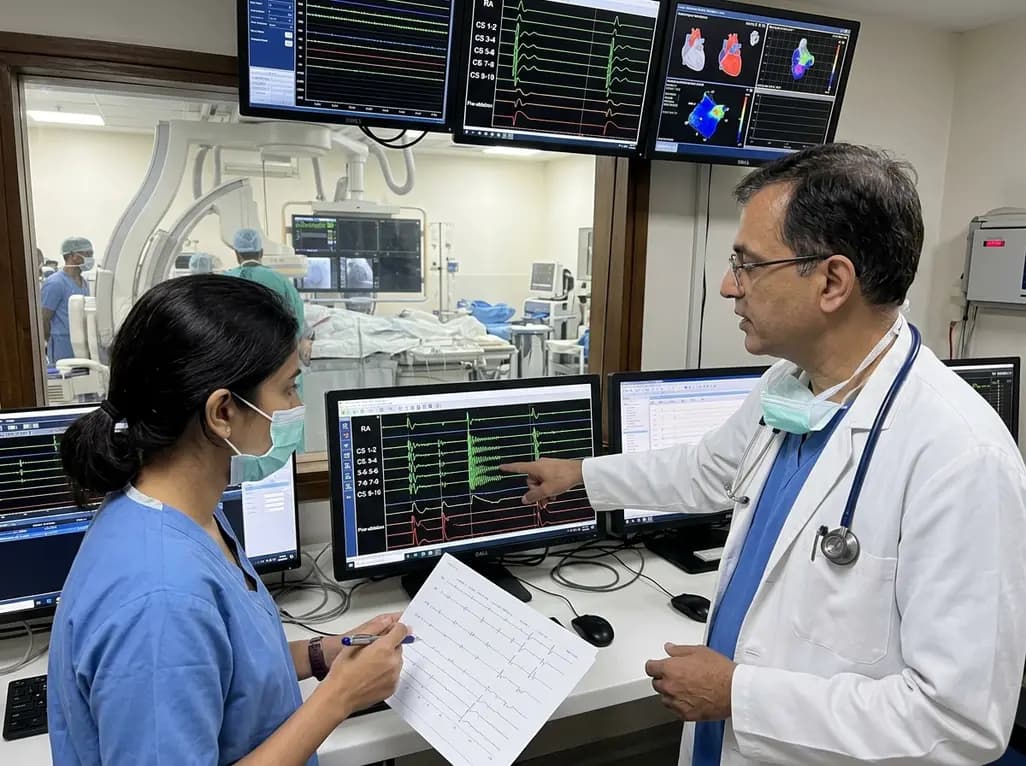
Radiofrequency catheter ablation of the cavotricuspid isthmus successfully terminates typical atrial flutter. This article reviews the mechanisms driving coronary sinus electrogram changes, wavefront activation pathways, and clinical criteria to verify bidirectional block during electrophysiology studies.
Today

A recent investigation examined load-dependent kinetic and kinematic profiles during two-way ballistic exercise across 30% to 80% 1-RM. Findings highlight load effects on velocity, impulse, and power, offering sports physicians objective guidance for neuromuscular conditioning and rehabilitation.
Today

A cross-sectional study demonstrates that increased BMI in adolescents significantly enhances mandibular length and alters salivary adipokines like adiponectin and resistin, providing novel insights into craniofacial growth and orthodontic planning.
Today
