.webp&w=384&q=75)

Loading, please wait...
Loading, please wait...

Psychiatric Emergency Department visits following an inpatient stay represent a critical juncture for mental health systems worldwide. These visits often signal significant gaps in the continuity of care and the robustness of community support. Consequently, identifying the factors that lead patients back to the emergency room is essential for improving long-term outcomes. Clinicians frequently encounter patients who cycle between acute inpatient care and emergency services, a phenomenon often described as the "revolving door." Therefore, understanding the underlying drivers of this pattern is paramount. Research recently conducted in Alberta, Canada, sought to illuminate these drivers by examining 1,070 participants over a twelve-month period following their discharge. The study specifically investigated how clinical factors, sociodemographic variables, and patient satisfaction influenced subsequent healthcare utilization. By focusing on these elements, the research provides a clearer picture of the vulnerabilities inherent in the transition from hospital to home. Moreover, the findings underscore the necessity of a multidisciplinary approach to post-discharge planning. When patients exit a controlled clinical environment, they often face structural barriers that can exacerbate mental health conditions. Specifically, these barriers include a lack of stable housing and employment, which can hinder recovery. Consequently, the transition phase becomes a period of heightened risk for psychiatric Emergency Department visits.
One of the most striking findings of the study is the role of historical healthcare usage. Specifically, prior psychiatric Emergency Department visits within the six months preceding an admission emerged as the strongest predictor of future visits. This suggests that past behavior in navigating the healthcare system often dictates future patterns of care. Therefore, patients with a history of frequent emergency service use should be identified early during their inpatient stay. Clinicians can then prioritize these individuals for more intensive transitional support. Furthermore, this trend highlights a potential reliance on emergency services as a primary point of contact for mental health crises. Instead of utilizing community-based clinics or outpatient services, these patients may view the emergency department as the most accessible resource. Consequently, the cycle of emergency care continues unless proactive interventions are implemented. Notably, this pattern remained consistent regardless of the primary diagnosis or the severity of symptoms at the time of discharge. This finding is significant because it shifts the focus from purely clinical indicators to behavioral and systemic interactions. By recognizing that prior utilization is a major risk factor for subsequent psychiatric Emergency Department visits, healthcare providers can tailor their discharge protocols to include more robust follow-up mechanisms for high-risk cohorts.
Social determinants of health play a pivotal role in the trajectory of psychiatric recovery. According to the study, unemployment and housing instability were significantly associated with an increased likelihood of psychiatric Emergency Department visits within a year of discharge. These structural factors often create a level of stress that clinical interventions alone cannot resolve. For instance, a patient returning to an unstable living environment may find it nearly impossible to adhere to medication regimens or attend follow-up appointments. Similarly, the financial strain of unemployment can exacerbate symptoms of anxiety and depression, creating a feedback loop that leads back to the emergency room. Therefore, mental health care must extend beyond the walls of the hospital. Addressing these social factors is not just a matter of social justice; it is a clinical necessity for reducing readmission rates. Healthcare systems must integrate social workers and community liaisons more effectively into the discharge process. When patients receive assistance with housing applications or vocational training, their risk of returning to acute care decreases. Consequently, these findings highlight the importance of a holistic approach that considers the patient's environment. Without addressing these socioeconomic hurdles, even the most advanced psychiatric treatments may fail to prevent recurrent psychiatric Emergency Department visits.
An interesting aspect of this research was the evaluation of patient-centered metrics, such as inpatient satisfaction. While patient satisfaction is an essential goal of quality care, the study found that it did not independently predict future psychiatric Emergency Department visits. This result might seem counterintuitive to those who believe that a positive hospital experience leads to better adherence and outcomes. However, it suggests that the external factors mentioned previously—such as socioeconomic status and prior utilization—carry significantly more weight than the patient's perception of their inpatient stay. Therefore, while improving the patient experience is valuable for ethical and quality reasons, it may not be the primary lever for reducing emergency department reliance. Additionally, the study noted that resilience, wellbeing, and measures of depression or anxiety at discharge were not strong independent predictors. This further emphasizes that the post-discharge environment is often more influential than the clinical state at the moment of exit. Specifically, the challenges of daily life post-hospitalization often overshadow the benefits of a satisfactory inpatient experience. Consequently, providers should not assume that a satisfied patient is necessarily a safe patient in terms of readmission risk. Instead, they must look toward long-term structural supports to ensure that the progress made during hospitalization is maintained in the community, thereby preventing future psychiatric Emergency Department visits.
The study also examined the effectiveness of various transitional care interventions, including supportive text messaging (SMS) and peer support (PS). Interestingly, these interventions did not significantly reduce the likelihood of psychiatric Emergency Department visits in this specific cohort. While digital health tools and peer support are often lauded as innovative solutions, their impact may be limited if they do not address the foundational social needs of the patient. For example, a supportive text message may provide brief emotional relief, but it cannot fix a housing crisis or provide a steady income. Therefore, transitional care planning must move toward more intensive, resource-based interventions for those at the highest risk. Specifically, this might include assertive community treatment or direct assistance with social determinants. Moreover, the lack of association between intervention groups and ED visits suggests that a "one-size-fits-all" approach is likely insufficient. Instead, transitional care must be highly personalized and focused on the specific barriers each patient faces. Therefore, clinicians should view digital tools as supplements rather than replacements for traditional, resource-intensive support. By acknowledging the limitations of current interventions, healthcare systems can refine their strategies to better serve vulnerable populations. Consequently, the goal remains to create a seamless transition that minimizes the need for acute psychiatric Emergency Department visits through targeted, comprehensive support.
Ultimately, the findings from Alberta emphasize a crucial shift in how we approach psychiatric care. To truly reduce the frequency of psychiatric Emergency Department visits, we must look beyond the psychiatric diagnosis itself. Instead, the focus must broaden to include the socioeconomic and historical contexts of each patient. In regions like India, where social support systems can be fragmented and housing or employment may be precarious, these findings are particularly relevant. Clinicians should incorporate social risk assessments into their routine discharge protocols. By identifying patients who lack stable housing or employment, providers can advocate for community resources or involve family support systems more effectively. Furthermore, understanding that prior emergency department use is a red flag allows for more vigilant monitoring during the first few months post-discharge. This period is often the most vulnerable time for patients as they re-adjust to the stressors of independent living. Therefore, early intervention during this window can be life-saving. In conclusion, the reduction of recurrent emergency department use requires a dedicated effort to bridge the gap between clinical care and social welfare. By addressing the structural determinants of health, we can foster a more resilient mental health system that truly supports recovery. This holistic approach is the only sustainable way to decrease the burden of psychiatric Emergency Department visits on both patients and providers.
The strongest predictor identified is a history of prior psychiatric Emergency Department visits within the six months preceding hospital admission. Additionally, socioeconomic factors such as unemployment and housing instability are significant risk factors. These indicators suggest that behavioral patterns and social stressors are more influential than clinical symptoms at the time of discharge.
According to the study, inpatient satisfaction was not independently associated with a reduction in subsequent psychiatric Emergency Department visits. While providing patient-centered care remains vital for quality and ethical reasons, a positive experience alone is insufficient to overcome the structural and social barriers that lead patients back to emergency care.
The research found that interventions such as supportive text messaging (SMS) and peer support did not significantly reduce psychiatric Emergency Department visits in this cohort. This highlights that while digital tools offer some benefit, they must be part of a broader strategy that also addresses essential social needs like housing and employment.
Disclaimer: This content is for informational and educational purposes only and does not constitute medical advice. It is not intended to replace professional medical consultation, diagnosis, or treatment. Refer to the latest local and national guidelines for clinical practice.
References
Elgendy HE et al. Predictors of psychiatric emergency department visits within twelve months post-inpatient psychiatric discharge in Alberta, Canada. PLoS One. 2026. doi: 10.1371/journal.pone.0351753. PMID: 42418456.
Vigod SN, Kurdyak PA, Dennis CL, et al. Transitional care interventions for patients being discharged from psychiatric inpatient units: A systematic review and meta-analysis. Canadian Journal of Psychiatry. 2023.
Kripalani S, Theobald CN, Anctil B, Vasilevskis EE. Redesigning hospital-to-home transitions: A systematic review of interventions to reduce readmission and emergency department use. Medical Care Research and Review. 2024.

Read summarized clinical updates, watch expert medical content, and earn CME certifications right from your smartphone.
Open your smartphone camera to scan and install.





A study in Alberta, Canada, identifies prior utilization and socioeconomic factors as the strongest predictors of psychiatric emergency department visits within twelve months of discharge, highlighting the need to address social determinants of health to improve continuity of care.
3 months ago
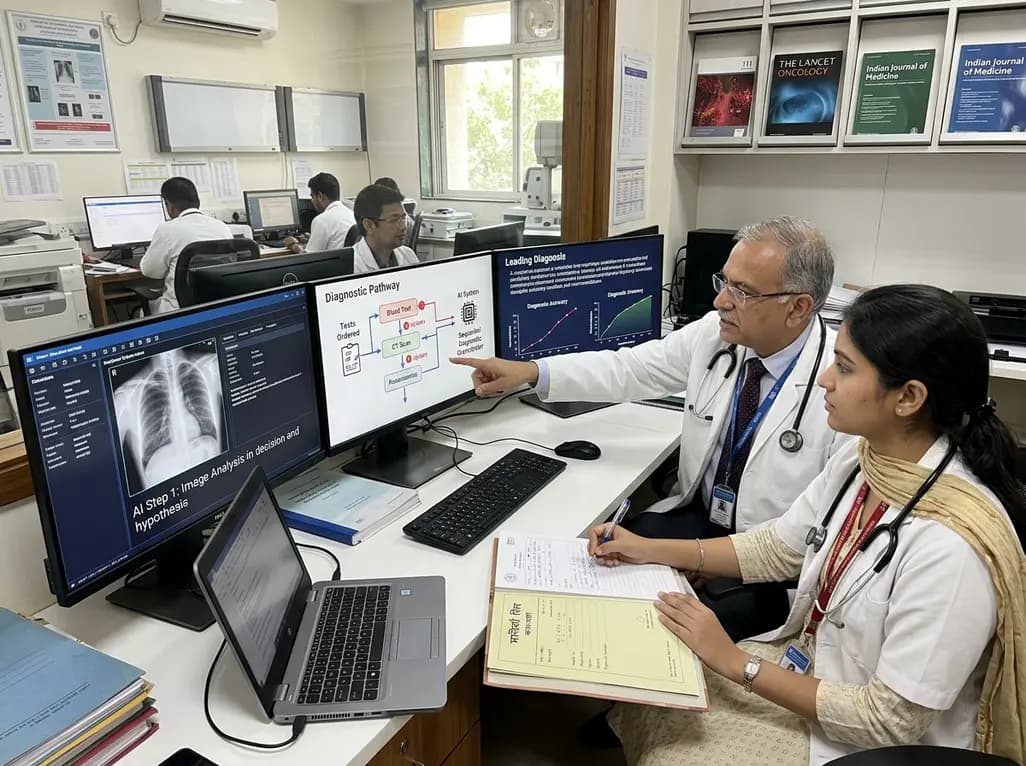
A breakthrough peer-reviewed study demonstrates that a sequential AI diagnosis system can mirror real-world clinical reasoning. By ordering stepwise tests and updating hypotheses dynamically, this multi-agent orchestrator achieved superior diagnostic accuracy while reducing investigative costs.
Today

A prenatal case highlights severe glutaric acidemia type II presenting as bilateral hyperechoic cystic kidneys at 18 weeks. Whole-exome sequencing revealed a novel homozygous ETFDH frameshift variant, demonstrating the power of rapid genetic testing in fetal renal anomalies.
Today

Review how tailored exercise programs benefit frail older patients with heart failure. Explore pathophysiological mechanisms, individualized training prescriptions, and strategies to overcome adherence barriers in clinical practice.
Yesterday

This comparative study evaluates posterior labral tears with and without glenohumeral instability, highlighting distinct demographic patterns, MRI underestimation in stable shoulders, and successful arthroscopic repair outcomes.
Yesterday

A clinical study demonstrates that early intervention with tocilizumab, either as monotherapy or bridged with corticosteroids, achieves significant proptosis reduction and resolves active inflammation in treatment-naive thyroid eye disease.
Yesterday
