.webp&w=384&q=75)

Loading, please wait...
Loading, please wait...

Identifying immunological patient subgroups is essential for personalized treatment in dermatology. Predicting Psoriasis biologic therapy efficacy allows clinicians to select the most effective treatment early in the disease course. A recent longitudinal study analyzed 329 patients and discovered three distinct clusters based on peripheral blood immune cells. Specifically, patients in Cluster 1 showed the most robust response to modern biological interventions.
The research team utilized hierarchical clustering to evaluate peripheral blood flow cytometry data. This analysis revealed three unique immunological profiles. Cluster 1, which included 57.8% of the cohort, featured moderate T-cell counts and low NK cells. Furthermore, this specific group reached the PASI90 endpoint significantly faster than other clusters. In contrast, Cluster 2 demonstrated decreased T-cell levels and increased NK cells, while Cluster 3 showed high total lymphocyte counts.
Moreover, the study highlighted the performance of different drug classes. Interestingly, Cluster 1 patients responded exceptionally well to both IL-17 and IL-23 inhibitors. Consequently, the researchers suggested that these immunological signatures could serve as reliable predictive biomarkers. Therefore, clinicians can use these insights to tailor therapy for individual patients. Additionally, identifying these clusters helps in understanding why some patients might experience a slower response to standard treatments. Ultimately, incorporating immune profiling into routine care might improve long-term outcomes for patients with moderate-to-severe plaque psoriasis.
The study identified three distinct clusters: Cluster 1 (moderate T cells/low NK cells), Cluster 2 (decreased T cells/increased NK cells), and Cluster 3 (increased total lymphocytes).
Cluster 1 patients reached the PASI90 treatment goal significantly faster than those in Clusters 2 or 3 when they received IL-17 or IL-23 inhibitors.
Disclaimer: This content is for informational and educational purposes only. It does not constitute medical advice or a professional relationship. Always seek the advice of a qualified healthcare provider for any medical condition or treatment. Refer to the latest local and national guidelines for clinical practice.
References
1. Liu R et al. Identification of plaque psoriasis subgroups based on peripheral blood immune cells subtypes and their relationship with biologic therapy efficacy: a single-center longitudinal cohort study in China. Expert Opin Biol Ther. 2026 Jun 13. doi: 10.1080/14712598.2026.2688136. PMID: 42287100.
2. Song C et al. Correlation between peripheral blood inflammatory markers and efficacy of biologic agents in treating plaque psoriasis. Acad J Chin PLA Med Sch. 2025;46(7):710-715.
3. Armstrong AW, et al. Psoriasis treatment in the era of biologics. JAMA Dermatol. 2023.

Read summarized clinical updates, watch expert medical content, and earn CME certifications right from your smartphone.
Open your smartphone camera to scan and install.





A new study identifies three distinct immunological clusters in plaque psoriasis patients. Cluster 1 patients achieve PASI90 significantly faster with IL-17 and IL-23 inhibitors. These peripheral blood immune cell subtypes provide a path for personalized treatment and predicting biologic efficacy.
4 months ago
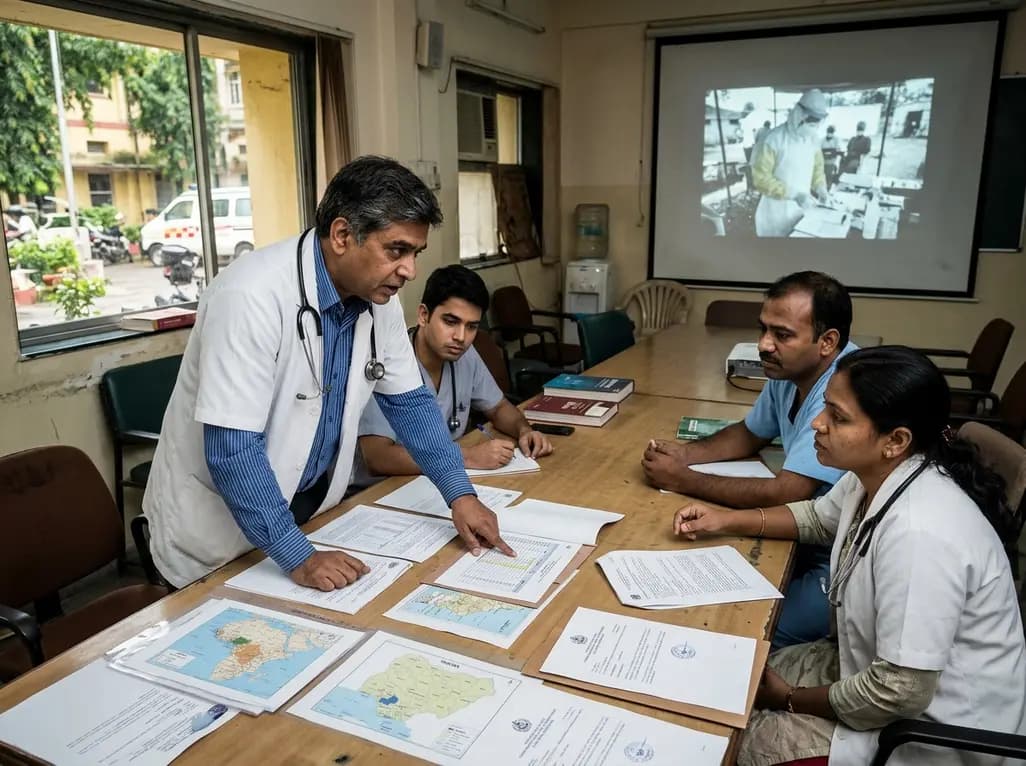
Following Nigeria's first recorded Ebola case linked to regional travel, the Africa CDC has convened an emergency ministerial summit. This alert underscores critical clinical priorities for healthcare professionals, including differentiating early viral infection from malaria, implementing barrier nursing, and triage.
Today

Leucine Rich Bio has introduced South Asia's first comprehensive vaginal microbiome test, BugSpeaks. By profiling microbial dysbiosis, pathogens, and antimicrobial resistance, this next-generation diagnostic platform provides clinicians with deeper insights into recurrent infections, fertility, and reproductive health.
Today

Review how tailored exercise programs benefit frail older patients with heart failure. Explore pathophysiological mechanisms, individualized training prescriptions, and strategies to overcome adherence barriers in clinical practice.
Today

This comparative study evaluates posterior labral tears with and without glenohumeral instability, highlighting distinct demographic patterns, MRI underestimation in stable shoulders, and successful arthroscopic repair outcomes.
Today

A clinical study demonstrates that early intervention with tocilizumab, either as monotherapy or bridged with corticosteroids, achieves significant proptosis reduction and resolves active inflammation in treatment-naive thyroid eye disease.
Today
