.webp&w=384&q=75)

Loading, please wait...
Loading, please wait...
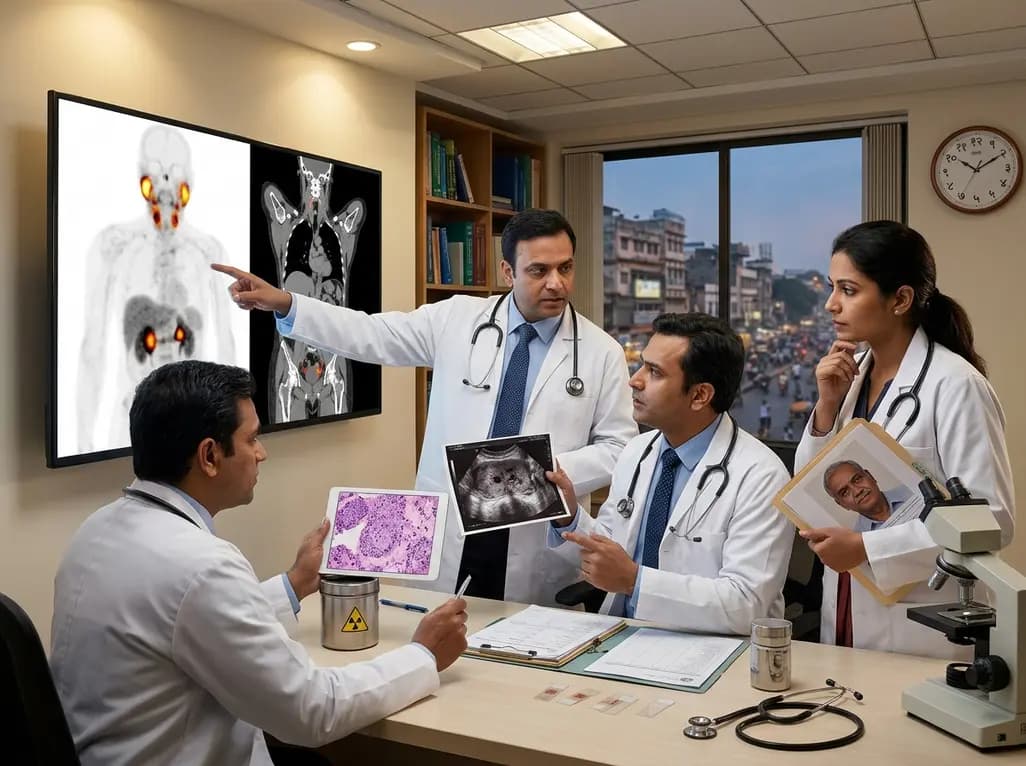
Recent advancements in nuclear medicine have introduced PSMA radioligand therapy as a cornerstone for managing advanced malignancies. Traditionally, clinicians utilize this modality primarily for metastatic castration-resistant prostate cancer. However, the expression of prostate-specific membrane antigen is not exclusive to prostatic tissue. Various other malignancies, including certain types of salivary gland tumors like parotid carcinoma, can also exhibit significant PSMA expression. This shared molecular target allows for the application of Lutetium-177-labeled ligands across different oncological disciplines. While this cross-applicability offers new therapeutic avenues, it also introduces complex clinical scenarios that require careful interpretation. Consequently, understanding the nuances of PSMA targeting is essential for modern oncologists and urologists. This case report examines a unique situation where a patient underwent treatment for one PSMA-expressing tumor, only to be diagnosed with a primary prostate malignancy during the process. Such occurrences challenge our assumptions about the curative or preventive potential of systemic radioligand treatments on early-stage localized disease. Therefore, medical professionals must remain vigilant when using PSMA radioligand therapy in patients with multi-organ risks. Analyzing these rare clinical events helps refine our approach to personalized medicine and enhances patient safety in the growing field of theranostics.
The patient, a 67-year-old white male, initially presented with metastatic parotid carcinoma. Given the expression of PSMA on the parotid tumor cells, the medical team initiated multiple cycles of [177Lu]Lu-PSMA-RLT. This decision aligned with the principles of theranostics, targeting the metastatic lesions with precision. However, during the course of his treatment for parotid disease, clinicians identified a new concern regarding his prostate health. Despite receiving systemic doses of the radioligand, which should theoretically target any PSMA-expressing tissue, diagnostic evaluations suggested a localized issue. Further investigation led to a diagnosis of high-risk localized prostate cancer. This finding was particularly striking because the patient was already undergoing a therapy specifically designed to target the very antigen expressed by prostate cancer cells. The clinical team faced a paradox: how could a high-risk malignancy emerge and advance while the patient was actively receiving a targeted radioactive agent? This scenario underscores the importance of not assuming that systemic therapy for one condition provides incidental protection against another, even if they share a molecular marker. Furthermore, it highlights the necessity of maintaining routine screening protocols for age-related cancers, regardless of ongoing intensive therapies for other primary malignancies.
To optimize PSMA radioligand therapy, one must consider the diverse biological behavior of different tumors. In this case, the parotid carcinoma and the newly diagnosed prostate cancer both existed within the same physiological environment, yet they responded differently to the Lutetium-177 exposure. The patient had completed several cycles of the radioligand therapy, which were intended to manage his metastatic parotid disease. During the subsequent workup for localized symptoms, the biopsy revealed high-grade prostate cancer. Interestingly, the histopathological examination did not show the expected regressive changes typically seen after radiation exposure. This suggests that the dose delivered to the prostate, while potentially sufficient for imaging or treating specific metastatic sites, did not achieve a therapeutic threshold for the localized primary tumor. Alternatively, the specific biology of this high-risk PCa might have conferred a degree of radioresistance. Moreover, clinicians must recognize that PSMA expression levels can vary significantly between different tumor types and even between different lesions within the same patient. Consequently, the efficacy of PSMA radioligand therapy is not uniform across all PSMA-positive tissues. This highlights a critical need for large-scale studies to determine the minimum inhibitory doses required for different histological subtypes when utilizing these advanced radiopharmaceutical agents.
Histopathological analysis remains the gold standard for understanding why certain treatments fail despite molecular targeting. In this specific case, the lack of regressive changes in the prostate biopsy specimen after multiple cycles of [177Lu]Lu-PSMA-RLT is highly significant. Usually, successful radioligand therapy induces cellular damage, necrosis, or structural alterations in target tissues. The absence of these signs in the localized prostate cancer tissue indicates a disconnect between antigen expression and therapeutic effect. It is possible that the uptake of the radioligand was insufficient to induce DNA double-strand breaks required for cell death. Furthermore, the selection of high-grade disease components might have occurred, where more aggressive cell populations survived the low-level radiation. This phenomenon of tumor heterogeneity is a well-known challenge in oncology. When cells with different genetic profiles coexist, a single targeted therapy may only eliminate a subset of the population. Therefore, the surviving high-grade cells can continue to proliferate, leading to the progression of localized disease. This case serves as a warning that PSMA positivity on a PET scan does not always guarantee a successful therapeutic outcome with radioligand therapy, especially in the context of high-risk, aggressive primary tumors.
The management of this patient required an integrated approach involving urologists, oncologists, and nuclear medicine specialists. In the Indian clinical context, where theranostics is gaining rapid traction, such cases emphasize the need for robust follow-up protocols. Doctors should not rely solely on PSA levels or general imaging when a patient is receiving PSMA-targeted treatment for non-prostate indications. Instead, a comprehensive assessment of the prostate gland remains necessary, particularly in older male patients. Additionally, the possibility of 'tumor escape' mechanisms must be considered. If a primary prostate cancer develops during systemic therapy, it may indicate a particularly aggressive phenotype that requires immediate local intervention, such as surgery or external beam radiation. Transitioning from systemic radioligand therapy to localized treatments requires careful timing to avoid cumulative toxicity while ensuring oncological control. Furthermore, this case highlights that the expression of PSMA in the salivary glands—while often viewed as a site for potential side effects like xerostomia—also represents a therapeutic target for parotid malignancies. However, the dose-response relationship is complex. Consequently, clinicians must balance the treatment of the primary life-threatening metastasis with the monitoring of potential secondary primary cancers that might emerge during the journey.
Moving forward, the medical community must conduct further research into the use of [177Lu]Lu-PSMA-RLT for localized disease. While currently reserved for metastatic stages, its potential role in high-risk localized cases is an area of active investigation. However, as this case illustrates, the presence of PSMA does not always translate to treatment success. Future studies should focus on identifying biomarkers that predict which tumors will respond to radioligands and which will remain resistant. Additionally, clinicians should consider the impact of prior therapies on the prostate microenvironment. For patients undergoing PSMA-targeted treatments for other cancers, a baseline prostate evaluation and periodic monitoring are recommended. This proactive approach ensures that secondary primary cancers are caught early and managed appropriately. In conclusion, the integration of molecular imaging and therapy offers great promise, but it also reveals the intricate complexities of tumor biology. We must continue to refine our diagnostic tools and therapeutic strategies to address the challenges of tumor heterogeneity and treatment resistance. Only through rigorous clinical observation and interdisciplinary collaboration can we maximize the benefits of these innovative therapies for our patients.
Prostate cancer can develop during PSMA radioligand therapy because the treatment dose delivered to a localized, primary tumor may be insufficient to cause total cell death. Tumor heterogeneity also plays a significant role, where certain high-grade cell populations may be inherently resistant to the radiation levels provided by the Lutetium-177 ligand, allowing the cancer to progress despite the systemic presence of the therapeutic agent.
No, PSMA expression is not exclusive to prostate cancer. While it is highly overexpressed in prostatic tissues, it is also found in the neovasculature of various solid tumors, salivary glands, the small intestine, and kidneys. This explains why PSMA radioligand therapy can be used for other malignancies like parotid carcinoma, but it also necessitates careful monitoring of all PSMA-expressing organs during the course of treatment.
If a secondary tumor like localized prostate cancer is diagnosed during radioligand therapy, clinicians should perform a thorough histopathological review and reassess the treatment plan. This often involves a multispecialty consultation to determine if localized interventions, such as surgery or targeted radiation, are required. It is vital to address the new malignancy independently while continuing to manage the primary condition for which the RLT was initiated.
Disclaimer: This content is for informational and educational purposes only. It is not intended as a substitute for professional medical advice, diagnosis, or treatment. Always seek the advice of your physician or other qualified health provider with any questions you may have regarding a medical condition. Refer to the latest local and national guidelines for clinical practice.
References
Orf C et al. Newly diagnosed high-risk localized prostate cancer after multiple [177Lu]Lu-PSMA radioligand therapy in the context of metastatic parotid carcinoma: a case report. J Med Case Rep. 2026 Jul 06. doi: undefined. PMID: 42410477.
"
Read summarized clinical updates, watch expert medical content, and earn CME certifications right from your smartphone.
Open your smartphone camera to scan and install.





This case report discusses a 67-year-old patient diagnosed with high-risk localized prostate cancer while receiving [177Lu]Lu-PSMA therapy for metastatic parotid carcinoma. It highlights the complexities of PSMA expression and the need for vigilant monitoring in theranostics.
3 months ago

Following regulatory scrutiny from FSSAI regarding promotional representations and lean muscle preservation claims, Dr. Reddy's Laboratories and Nestlé Health Science are currently reviewing the branding and marketing strategy for their joint nutritional supplement Celevida GLP+.
Today

A comprehensive scoping review synthesises evidence linking prenatal maternal mental health to long-term offspring neurodevelopment, evaluating neuroendocrine, inflammatory, and epigenetic pathways while highlighting clinical screening and future research priorities.
Today

The Directorate General of Health Services directs Indian states to halt the hazardous reuse and reprocessing of single-use medical devices. Discover regulatory implications under the Drugs and Cosmetics Act, critical infection risks, legal liabilities, and operational changes required across clinical specialties.
Today

A 25-year multi-institutional cohort reveals high recurrence rates in pediatric giant cell tumor of bone, particularly in patients with open physes and bone marrow edema on preoperative MRI. Early surveillance and careful balance between growth plate preservation and tumor clearance are essential.
Today

India is advancing preventive healthcare by integrating genomics, artificial intelligence, and quantum technologies. With the SANGAM programme sequencing one million Indian genomes, clinicians can unlock personalized therapies, detect cardiometabolic risks early, and curb the burden of diabetes and heart disease.
Today
