.webp&w=384&q=75)

Loading, please wait...
Loading, please wait...
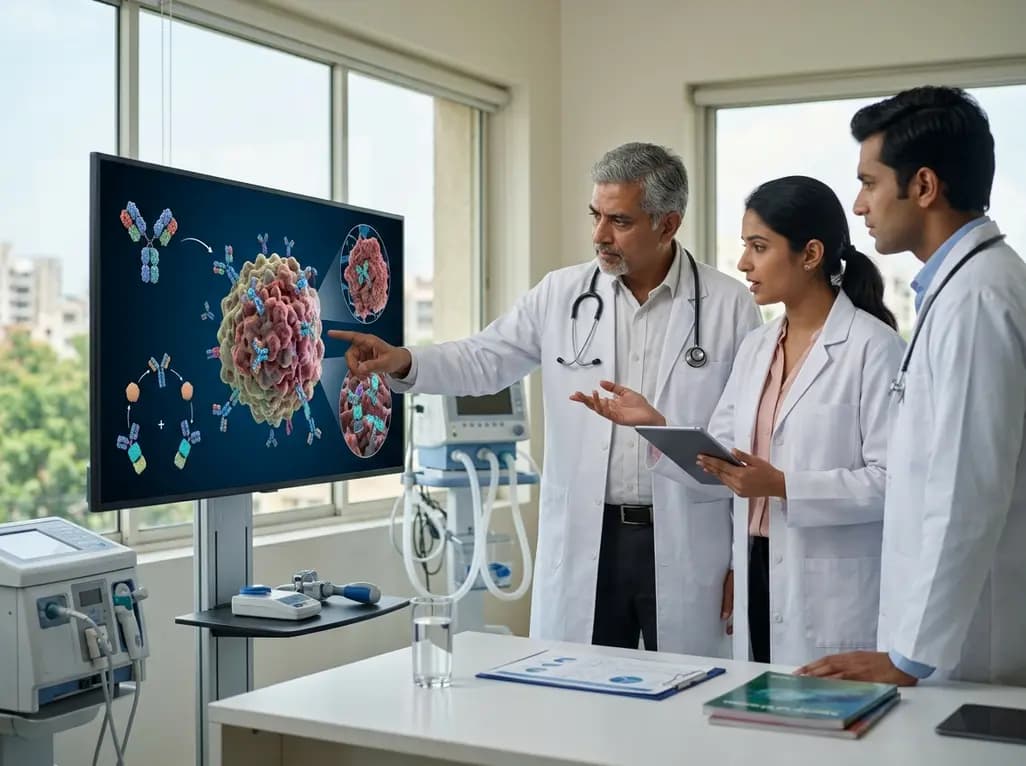
Modern oncology has long relied on monoclonal antibodies (mAbs) to revolutionize the treatment of various malignancies. However, despite their successes, traditional antibodies face several significant clinical and economic hurdles. These large, complex molecules often suffer from high production costs and limited penetration into dense solid tumors. Furthermore, their systemic administration frequently triggers immune-related toxicities, which can severely limit the therapeutic window for many patients. In response to these challenges, researchers are pivoting toward protein scaffold cancer immunotherapy as a more versatile and efficient alternative. These engineered scaffolds offer a streamlined structural framework that overcomes many of the biophysical limitations inherent in conventional IgG-based therapies. By moving beyond the bulky structure of antibodies, clinicians can potentially deliver more precise treatments with fewer systemic side effects.
Consequently, the development of non-antibody-binding platforms has gained significant momentum. These platforms prioritize stability, solubility, and rapid tissue clearance. Unlike traditional antibodies that remain in the bloodstream for extended periods, protein scaffolds can be designed to clear quickly from non-target tissues. This rapid clearance reduces the risk of long-term toxicity while maintaining high concentrations at the tumor site. Moreover, the modular nature of these scaffolds allows for the simultaneous targeting of multiple antigens. As the field of oncology evolves, the integration of these sophisticated proteins marks a pivotal shift toward more localized and potent immune activation strategies in the fight against cancer.
The precision of protein scaffold cancer immunotherapy is largely driven by advanced engineering techniques such as phage, yeast, and ribosome display technologies. These methodologies allow scientists to screen vast libraries of protein variants to identify those with the highest affinity for specific tumor markers. Furthermore, directed evolution enables the refinement of these proteins over multiple generations, ensuring that the final therapeutic agent binds its target with extreme specificity. Rational computational design has also emerged as a cornerstone of this process. By utilizing predictive modeling, researchers can pre-determine the ideal structural modifications needed to enhance a scaffold’s stability or solubility. This proactive approach significantly shortens the development timeline compared to traditional trial-and-error laboratory methods.
In addition to affinity tuning, engineers utilize computational tools to address the pharmacokinetic profiles of these scaffolds. For instance, the small size of these proteins, while beneficial for tumor penetration, often results in rapid renal clearance. To counteract this, technologies like PEGylation, albumin fusion, and FC linkage are strategically applied to extend the therapeutic half-life. Significantly, these modifications do not compromise the protein’s ability to navigate the complex tumor microenvironment. By balancing molecular size with systemic longevity, engineered scaffolds provide a robust platform for sustained immune engagement. This synergy between biology and computational engineering ensures that each protein is optimized for both safety and efficacy in a clinical setting.
The primary mechanism through which protein scaffolds exert their therapeutic effect involves the modulation of immune checkpoints and the tumor microenvironment (TME). Scaffolds such as Affibodies and DARPins are uniquely suited to target critical checkpoints like CTLA-4, PD-1, and PD-L1. By blocking these inhibitory pathways, scaffolds can effectively restore T-cell activity, allowing the patient’s own immune system to recognize and eliminate malignant cells. Notably, the small size of these scaffolds allows them to penetrate deeper into the TME than standard antibodies. This deep penetration is essential for reaching immune cells that are otherwise shielded by the tumor’s physical barriers. Consequently, the localized suppression of oncogenic signaling pathways becomes much more effective.
Moreover, these engineered proteins can be designed to regulate cytokine signaling within the TME. This regulation helps to transform an immunosuppressive "cold" tumor into an immune-active "hot" tumor. For example, KRAS-binding DARPins have shown immense promise in suppressing intracellular signaling that drives tumor growth. Additionally, HER2-targeted affibodies, such as ABY-025, have demonstrated exceptional utility in high-resolution tumor imaging. This dual functionality as both a therapeutic and a diagnostic tool highlights the versatility of the scaffold platform. By addressing the TME from multiple angles, protein scaffolds offer a comprehensive strategy for overcoming therapeutic resistance and enhancing the overall success of targeted cancer treatments.
One of the most challenging aspects of cancer therapy is ensuring that the drug reaches the tumor in sufficient concentrations without harming healthy tissue. Protein scaffolds address this through their exceptional structural stability and modular design. Because they are smaller than mAbs, scaffolds move through the interstitial spaces of a tumor with greater ease. However, this small size also means they are filtered quickly by the kidneys. To solve this, multivalency is often employed, where multiple binding domains are linked together. This not only increases the binding strength through the avidity effect but also increases the overall molecular weight just enough to reduce renal filtration while maintaining superior penetration capabilities.
Furthermore, the high solubility of these proteins allows for the formulation of high-concentration injections, which can be administered more conveniently than the long infusions required for most antibodies. In contrast to traditional biologics, scaffolds are also highly resistant to proteolytic degradation. This durability ensures that the protein remains functional even within the harsh, acidic environment of a solid tumor. Specifically, the use of Anticalins and Monobodies has shown that these structures can maintain their shape and binding capacity under extreme physiological stress. By engineering these proteins to be both robust and adaptable, researchers are creating a new class of biologics that can survive the complex journey from the injection site to the core of a malignancy.
The future of oncology lies in the integration of artificial intelligence (AI) with protein engineering. AI-assisted scaffold modification allows for the rapid identification of neoantigen targets that are unique to an individual patient's tumor. By feeding genomic data into machine learning algorithms, clinicians can design personalized protein scaffolds that target the specific mutations driving a patient's cancer. This level of personalization was previously unattainable with traditional monoclonal antibodies due to their complex manufacturing requirements. Scaffolds, however, can be produced recombinantly in microbial systems like E. coli, making them far more cost-effective and faster to manufacture for personalized applications. This efficiency is critical for treating aggressive cancers where time is of the essence.
Additionally, the emergence of multi-functional immunomodulatory structures represents a significant leap forward. These next-generation scaffolds can simultaneously block checkpoints, deliver cytotoxic payloads, and recruit T-cells to the tumor site. Such "all-in-one" molecules reduce the need for combination therapies, which often carry a higher risk of adverse drug-drug interactions. While challenges like potential immunogenicity and off-target binding remain, the continuous refinement of these structures through AI and directed evolution is rapidly mitigating these risks. As these technologies mature, protein scaffolds are poised to revolutionize the landscape of targeted cancer immunotherapy, offering hope for more effective, affordable, and personalized treatment options for patients worldwide.
Protein scaffolds, such as DARPins and Affibodies, are significantly smaller and more structurally stable than traditional monoclonal antibodies. Their reduced size allows for superior penetration into dense solid tumors, reaching malignant cells that large antibodies cannot access. Additionally, they are highly soluble and can be produced efficiently in microbial systems, which lowers manufacturing costs. These features make them ideal for creating multi-specific therapies that target various aspects of tumor biology simultaneously.
Engineered scaffolds overcome resistance by utilizing a modular design that can target multiple inhibitory pathways at once. By simultaneously blocking checkpoints like PD-1 and LAG-3, or by modulating the tumor microenvironment to revert immunosuppression, these scaffolds can re-activate exhausted T-cells more effectively than single-target antibodies. Their ability to penetrate deep into the tumor tissue ensures that the checkpoint blockade occurs exactly where it is most needed, bypassing the physical barriers that often lead to resistance.
Artificial intelligence plays a transformative role by accelerating the design of high-affinity scaffolds and predicting their behavior in the human body. Machine learning algorithms analyze vast datasets to identify optimal protein sequences that maximize binding specificity while minimizing the risk of immunogenicity or off-target effects. AI also facilitates the development of personalized medicine by rapidly matching scaffold designs to specific tumor neoantigens, allowing for the creation of customized immunotherapies tailored to an individual patient’s unique genetic profile.
Disclaimer: This content is for informational and educational purposes only and does not constitute medical advice, diagnosis, or treatment. Always seek the advice of your physician or another qualified health provider with any questions you may have regarding a medical condition. Refer to the latest local and national guidelines for clinical practice.
References
Deshmukh A et al. Protein scaffold engineering for immune checkpoint targeting, tumor microenvironment modulation, and Cancer immunotherapy. Int Immunopharmacol. 2026 Jun 30. doi: undefined. PMID: 42378826.
Gabriele F et al. Recent Advances on Affibody- and DARPin-Conjugated Nanomaterials in Cancer Therapy. Int J Mol Sci. 2023;24(9):8680. doi: 10.3390/ijms24098680.
Stumpp MT et al. A Decade of Clinical Experience with DARPins in Oncology and Virology: A Systematic Review. medRxiv. 2025. doi: 10.1101/2025.05.22.25327912.
"
Read summarized clinical updates, watch expert medical content, and earn CME certifications right from your smartphone.
Open your smartphone camera to scan and install.





Protein scaffold engineering is revolutionizing cancer immunotherapy by providing alternatives to monoclonal antibodies. These small, stable proteins offer better tumor penetration, lower costs, and enhanced targeting of the tumor microenvironment through modular design and advanced engineering techniques.
3 months ago

Explore vital recurrent stroke predictors in lacunar stroke patients managed with intensive blood pressure lowering. This analysis examines trial findings from SPS3 to uncover residual vascular risks, metabolic factors, and targeted secondary prevention strategies for high-risk neurological patients.
Today

Odisha has established India's first state-level clinical protocol specifically tailored for pregnant women with sickle cell disease. Developed with NHM and UNICEF, the framework provides structured antenatal screening, crisis mitigation, standardized referral pathways, and specialized interdisciplinary care.
Today

The Directorate General of Health Services directs Indian states to halt the hazardous reuse and reprocessing of single-use medical devices. Discover regulatory implications under the Drugs and Cosmetics Act, critical infection risks, legal liabilities, and operational changes required across clinical specialties.
Today

Mitochondria-targeted nanoparticles self-assembled from EGCG and L-glutamic acid effectively restore mitochondrial homeostasis, suppress synovial inflammation, and attenuate chondrocyte senescence in osteoarthritis, offering a promising disease-modifying nanotherapy.
Today

India is advancing preventive healthcare by integrating genomics, artificial intelligence, and quantum technologies. With the SANGAM programme sequencing one million Indian genomes, clinicians can unlock personalized therapies, detect cardiometabolic risks early, and curb the burden of diabetes and heart disease.
Today
