.webp&w=384&q=75)

Loading, please wait...
Loading, please wait...

Managing critical neurological emergencies requires rapid decision-making and meticulous airway planning. In neurocritical care units, predicting prolonged mechanical ventilation in patients with aneurysmal or spontaneous subarachnoid hemorrhage remains a major challenge. Patients who undergo invasive ventilation face heightened risks of ventilator-associated complications, secondary brain injury, and prolonged intensive care stays. A recent investigation utilizing the MIMIC-IV database evaluated whether multivariable clinical models could accurately identify patients requiring extended respiratory support. Consequently, this study offers critical perspectives on risk stratification, early physiologic indicators, and the realistic limitations of machine learning in acute neurovascular care.
Patients admitted with severe subarachnoid hemorrhage frequently require endotracheal intubation to protect against airway compromise, hypoxemia, and elevated intracranial pressure. However, identifying which individuals will experience prolonged mechanical ventilation exceeding seven days remains notoriously difficult. In this retrospective analysis, approximately 24.2% of invasively ventilated patients met the criteria for prolonged ventilation.
To clarify risk trajectories, investigators analyzed multiple early physiological and clinical parameters documented within the indexed intensive care unit stay. Sequential Organ Failure Assessment scores, baseline respiratory rate, and core body temperature emerged as the most consistent early predictors. Specifically, elevated systemic organ dysfunction reflected widespread secondary physiologic stress. Higher respiratory rates often indicated neurogenic pulmonary dysfunction, underlying respiratory acidosis, or early systemic inflammation. Furthermore, elevated temperature frequently represented either neurogenic fever or early infectious complications, both of which increase cerebral metabolic demand and delay extubation. By synthesizing these early variables, clinicians can appreciate how systemic extra-cerebral disturbances substantially dictate ventilation duration alongside primary intracranial pathology.
Researchers evaluated 623 invasively ventilated adult patients with coded subarachnoid hemorrhage from the Beth Israel Deaconess Medical Center MIMIC-IV database version 3.1. Among these individuals, 151 patients sustained invasive mechanical ventilation for more than seven cumulative days. The primary complete-case derivation cohort comprised 557 patients, containing 144 prolonged ventilation events.
Methodologically, the investigators prespecified a multivariable logistic regression model incorporating grouped Glasgow Coma Scale categories to retain clinical interpretability. They assessed discrimination using the area under the receiver operating characteristic curve and the area under the precision-recall curve. Additionally, the team evaluated overall forecast accuracy via the Brier score and inspected calibration curves. To address missing data, investigators performed multiple imputation sensitivity analyses across key clinical features. Furthermore, the team trained three advanced tree-based machine learning algorithms, namely Random Forest, XGBoost, and LightGBM, to benchmark performance against standard logistic regression. This rigorous dual-track methodology ensured that researchers could directly contrast complex algorithmic predictions against standard regression paradigms commonly utilized in clinical protocols.
The initial apparent performance of the grouped Glasgow Coma Scale logistic regression model yielded modest statistical results. In the derivation cohort, the apparent area under the receiver operating characteristic curve reached 0.677 with a 95% confidence interval spanning 0.624 to 0.727. Furthermore, the model achieved an area under the precision-recall curve of 0.400 and a Brier score of 0.1794.
However, apparent metrics often mask predictive overfitting in complex retrospective datasets. Therefore, the investigators performed rigorous internal validation utilizing bootstrap resampling across 1000 iterations to quantify optimism. Following this bootstrap procedure, the optimism-corrected area under the receiver operating characteristic curve dropped to 0.608. Simultaneously, the calibration slope declined to 0.600, demonstrating substantial statistical optimism and overfitting. In sensitivity testing with multiple imputation, the mean area under the curve measured 0.671. These findings highlight a critical principle in predictive modeling: models that appear adequate during initial fitting may degrade significantly upon internal cross-validation. Consequently, clinicians must interpret unvalidated scoring algorithms cautiously before applying them to critical bedside management.
Statistical discrimination alone does not establish whether a predictive tool aids bedside decisions. Therefore, researchers conducted decision curve analysis to evaluate the clinical net benefit across practical treatment thresholds. Decision curve analysis compares model-guided strategies against default approaches of treating all patients or treating no patients.
Interestingly, the logistic model demonstrated a net clinical benefit exceeding the treat-all strategy across threshold probabilities ranging between approximately 16% and 60%. Because prolonged mechanical ventilation occurred in roughly 24% of the cohort, this operational range aligns well with actual clinical prevalence. For instance, intensivist teams frequently deliberate early tracheostomy or targeted weaning protocols within these probability boundaries. Within this decision window, the model could theoretically prevent unnecessary interventions while capturing patients who truly require extended airway management. Nevertheless, because discrimination remained modest overall, the authors emphasized that these decision curve conclusions remain exploratory. Clinical teams should avoid basing invasive management decisions solely on this unvalidated scoring framework.
Modern critical care literature often assumes that advanced machine learning automatically outperforms classical regression models. However, this study demonstrated that complex non-linear algorithms did not provide superior predictive utility. Specifically, the mean area under the receiver operating characteristic curve was 0.609 for Random Forest, 0.612 for XGBoost, and 0.609 for LightGBM.
Consequently, machine learning architectures showed essentially identical discrimination compared to the optimism-corrected logistic model. These comparative results indicate that the modest performance stems from data boundaries rather than modeling algorithm limitations. In acute subarachnoid hemorrhage, subsequent complications such as delayed cerebral ischemia, vasospasm, and hospital-acquired sepsis frequently occur days after admission. Early baseline data cannot easily anticipate these delayed secondary insults. Therefore, sophisticated algorithms cannot overcome inherently unpredictable downstream critical care trajectories. Ultimately, standard logistic regression models remain preferable in this context because they maintain high transparency and clinical interpretability for intensive care specialists.
For intensive care practitioners, these findings offer valuable practical guidance for daily neurocritical workflows. Systemic organ compromise, persistent tachypnea, and pyrexia during initial hours should prompt heightened vigilance regarding airway dependence. When patients manifest high Sequential Organ Failure Assessment scores alongside abnormal respiratory dynamics, clinicians should prepare early weaning pathways.
Additionally, teams can optimize resource allocation by anticipating potential tracheostomy needs without relying prematurely on unvalidated digital calculators. Healthcare systems in resource-conscious settings must balance ventilator bed availability and nurse-patient ratios carefully. Identifying at-risk patients early can streamline communication with surgical and rehabilitation teams. Nonetheless, the single-centre derivation setting of this study underscores that clinicians must await external multi-centre validation before embedding these tools into electronic health records. Future investigations must integrate dynamic, time-varying neurological biomarkers and continuous monitoring parameters to achieve robust clinical discrimination.
In this investigation, researchers defined prolonged mechanical ventilation as cumulative invasive mechanical ventilation lasting more than seven days during the indexed intensive care unit stay. This threshold represents a critical benchmark where intensivists typically evaluate patients for early tracheostomy, specialized pulmonary hygiene, and comprehensive rehabilitation planning.
The primary multivariable logistic model identified the Sequential Organ Failure Assessment score, baseline respiratory rate, and core body temperature as the most consistent early predictors. These variables reflect concurrent systemic organ dysfunction, early neurogenic or metabolic respiratory demand, and systemic inflammation that delay successful extubation.
No, advanced machine learning models such as Random Forest, XGBoost, and LightGBM demonstrated modest discrimination with mean receiver operating characteristic areas around 0.61. They provided no clear diagnostic advantage over multivariable logistic regression, highlighting that algorithm complexity cannot compensate for inherently unpredictable downstream ICU complications.
Disclaimer: This content is for informational and educational purposes only. It should not be used as a substitute for professional medical advice, diagnosis, or treatment. Always seek the advice of your physician or another qualified healthcare provider with any questions you may have regarding a medical condition. Refer to the latest local and national guidelines for clinical practice.
References

Read summarized clinical updates, watch expert medical content, and earn CME certifications right from your smartphone.
Open your smartphone camera to scan and install.





A MIMIC-IV study evaluates prediction models for prolonged mechanical ventilation in subarachnoid hemorrhage. SOFA score, respiratory rate, and temperature emerged as early predictors. Both logistic regression and machine learning showed modest accuracy, highlighting the need for external model validation.
Today

The CARE study protocol introduces a multilingual, RAG-powered conversational interface designed by IIT Bombay to support tobacco cessation in India. Evaluating feasibility and behavioral outcomes across three cessation centers, this digital health initiative aims to enhance quitting support for diverse users.
Today

A large UK cohort study of 1.4 million women shows that pregnancy complications, including gestational diabetes, hypertension, and preterm birth, substantially raise long-term risks for hypertension, chronic kidney disease, type 2 diabetes, and cardiovascular events, highlighting early postpartum intervention needs.
Today
A cross-sectional study reveals that hypertension knowledge, illness perceptions, depression, and substance use significantly predict self-care behaviors. Addressing mental health and cognitive beliefs in primary care is crucial for optimal blood pressure control and cardiovascular disease prevention.
Today
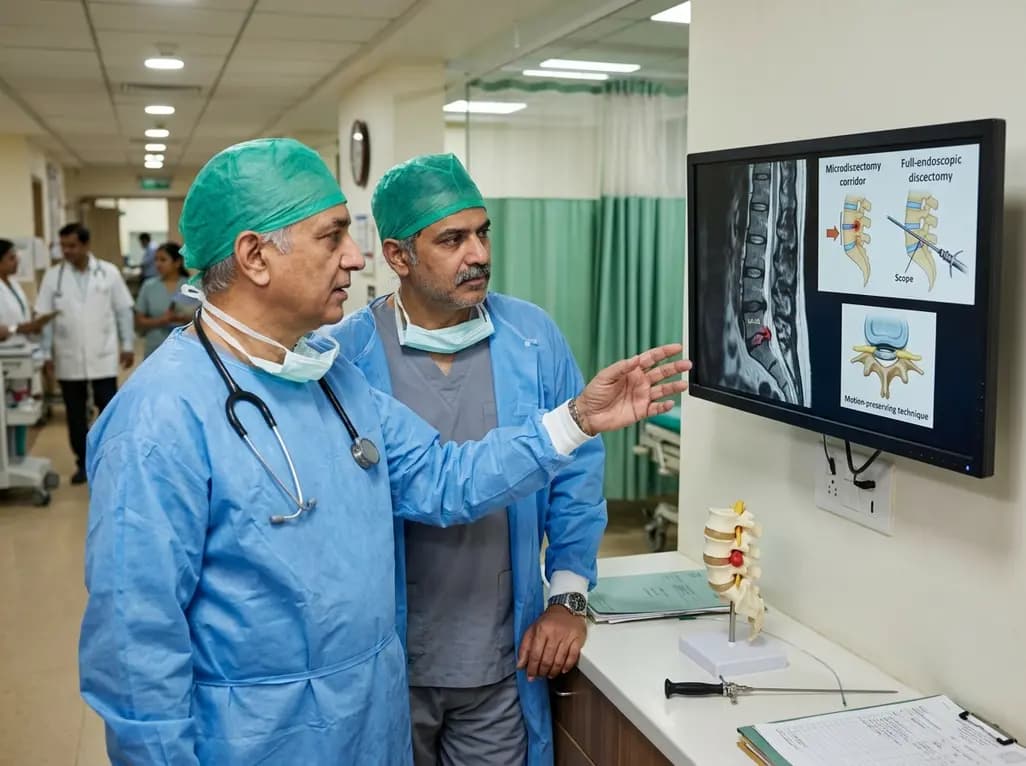
This clinical overview examines recent advancements in lumbar disc herniation surgery, comparing microscopic and full-endoscopic discectomy while highlighting biportal techniques and emerging motion-preserving innovations for spine specialists.
Today

Small interfering RNA (siRNA) therapeutics harness RNA interference to degrade disease-causing messenger RNA. By delivering hepatocyte-targeted, durable gene silencing, agents targeting PCSK9, LPA, and angiotensinogen offer potent cardiovascular risk reduction with infrequent, biannual dosing schedules.
Today
