.webp&w=384&q=75)

Loading, please wait...
Loading, please wait...

The International Classification of Diseases (ICD-11) recently recognized Prolonged Grief Disorder as a distinct clinical entity. This condition involves persistent and pervasive longing for the deceased. Consequently, clinicians need better tools to understand its prevalence and risk factors. The MARBLES project addresses this need. By pooling data from 16,666 bereaved individuals across nine countries, this initiative builds a unified archive for bereavement research.
Preliminary analyses of the MARBLES archive reveal striking statistics. About 18.3% of participants met the criteria for probable Prolonged Grief Disorder under ICD-11 guidelines. Furthermore, the study highlights specific demographics. The mean age of participants was in their mid-40s, and roughly 70% were female. One in four individuals had lost a partner. Similarly, 25% experienced an unnatural loss, such as an accident or suicide. These findings suggest that certain types of loss significantly increase the risk of pathological grief.
Researchers designed the archive to be FAIR: Findable, Accessible, Interoperable, and Reusable. Currently, it includes data on posttraumatic stress and depression symptoms. Moreover, it tracks emotion regulation and sociodemographic characteristics. This evolving resource will eventually include underrepresented groups like migrants. Therefore, it provides a powerful platform for studying the pathogenesis of grief. Professionals can use this data to refine interventions and improve patient outcomes in mental health care.
According to ICD-11, the diagnosis requires persistent longing or preoccupation with the deceased. These symptoms must last for at least six months post-bereavement. Additionally, the grief must exceed social and cultural norms while causing significant impairment in daily functioning.
Preliminary research from the MARBLES project suggests that women and those who experience unnatural losses are at higher risk. Additionally, losing a life partner is a major risk factor identified in the current datasets. Mental health history and poor emotion regulation also play significant roles.
Disclaimer: This content is for informational and educational purposes only and does not constitute medical advice. Always seek the advice of a qualified healthcare provider with any questions you may have regarding a medical condition. Refer to the latest local and national guidelines for clinical practice.
References

Read summarized clinical updates, watch expert medical content, and earn CME certifications right from your smartphone.
Open your smartphone camera to scan and install.





The MARBLES project pools data from 16,666 bereaved individuals to improve the understanding and clinical management of Prolonged Grief Disorder....
4 months ago

This clinical review examines the dangerous intersection of climate change and antimicrobial resistance (AMR). It highlights thermal selection, altered transmission pathways, and the imperative for One Health and Planetary Health adaptation frameworks to preserve therapeutic efficacy.
Today
Discover the crucial distinctions between mesonephric and mesonephric-like proliferations of the female genital tract. Learn the key histomorphologic, immunohistochemical, and molecular differences essential for accurate diagnosis and clinical management.
Today
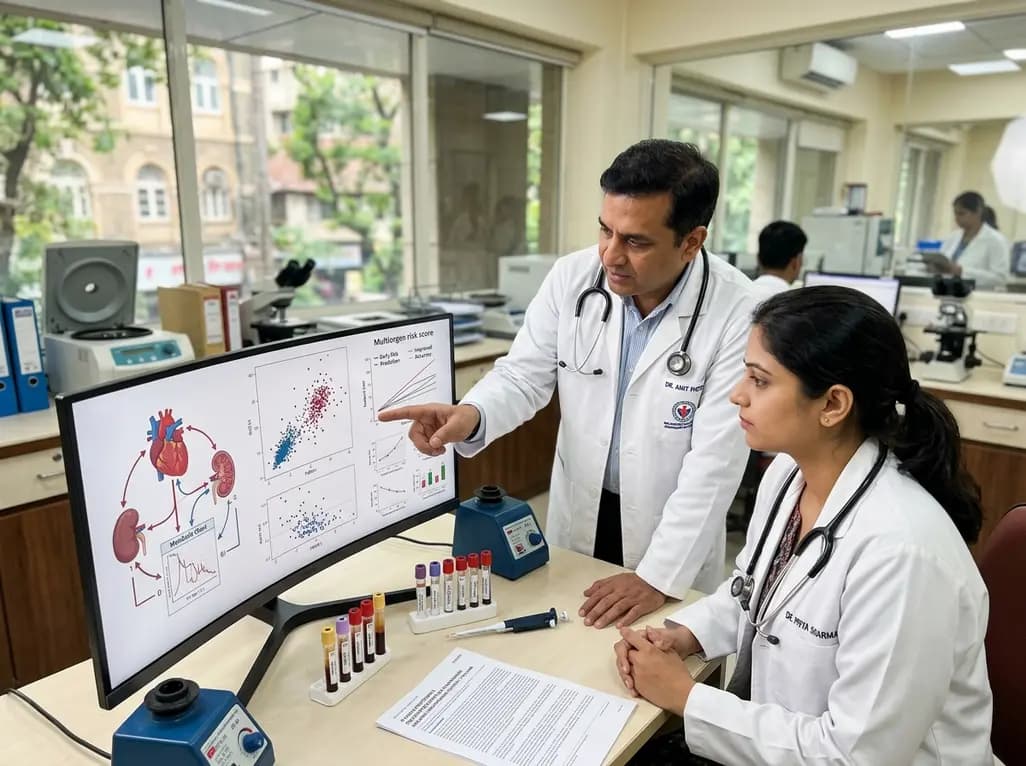
A large UK Biobank study reveals that plasma proteomic signatures capture preclinical organ damage and improve multiorgan risk prediction across early CKM syndrome stages 0 to 2 beyond traditional PREVENT clinical models.
Today

A narrative review investigates whether the articularis genus muscle functions as an independent anatomical entity or blends with the vastus intermedius. We evaluate its morphology, role in retracting the suprapatellar bursa, and direct clinical significance in anterior knee pain and arthroplasty.
Today

A Bayesian multilevel meta-analysis reveals that aerobic training combined with moderate carbohydrate restriction modestly lowers HbA1c in type 2 diabetes. However, sparse data and very low certainty leave incremental benefits over exercise or diet alone unproven, highlighting the need for individualized care.
Today
