.webp&w=384&q=75)

Loading, please wait...
Loading, please wait...
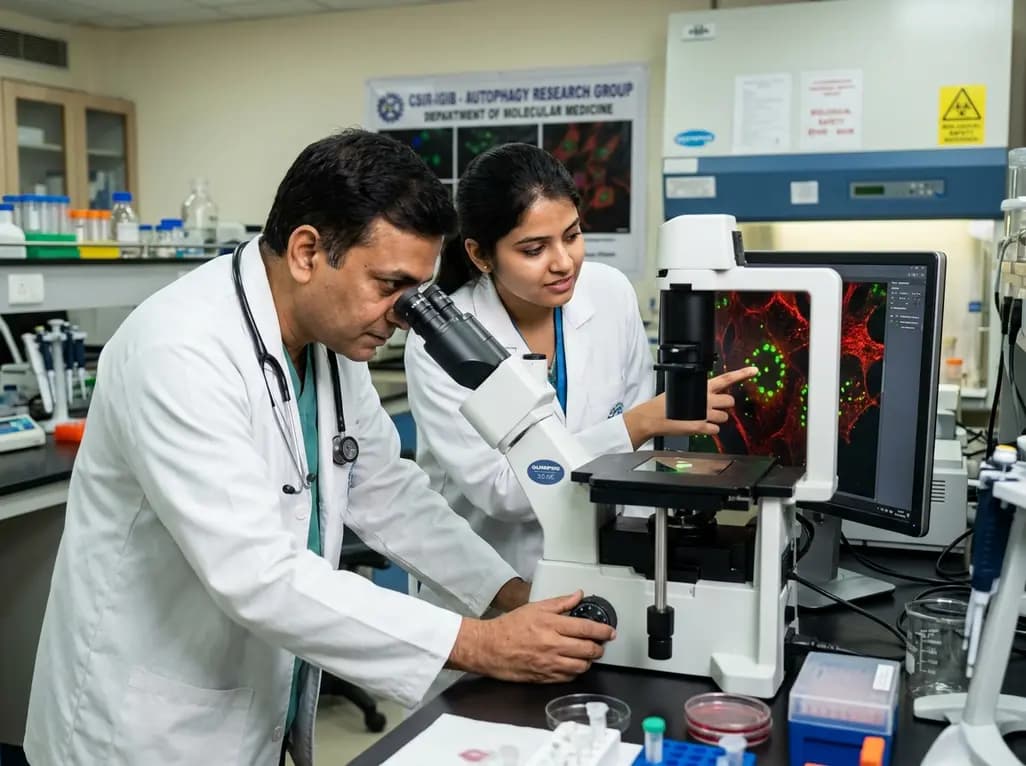
Medical researchers have achieved a landmark breakthrough in molecular biology by successfully demonstrating programmable autophagy. Cellular recycling mechanisms routinely degrade damaged organelles and misfolded proteins to sustain metabolic homeostasis. However, impaired cellular clearance directly drives progressive neurodegeneration and malignant tumor evolution. Scientists have now engineered structural protein switches that precisely accelerate or halt this internal cleansing machinery.
Autophagy functions as the primary catabolic process through which eukaryotic cells isolate and degrade dysfunctional cellular components. During metabolic starvation, depleted nutrient levels signal cells to conserve metabolic reserves through regulated self-digestion. The cell subsequently constructs a double-membrane vesicle termed an autophagosome to encapsulate cytotoxic aggregates. Structurally, this vesicle expands around damaged organelles before ultimately delivering them to lysosomes for enzymatic breakdown. A central executioner in this pathway is the microtubule-associated protein LC3. Cytosolic LC3 undergoes enzymatic lipidation, conjugating directly to phosphatidylethanolamine within nascent autophagosomal membranes. Membrane tethering triggers spatial reorganization that recruits designated cargo receptors to the vesicle lumen. Consequently, LC3 acts as both a physical scaffold and a selective sorting adapter. When this delicate assembly pathway falters, toxic cellular waste accumulates uncontrollably. Cellular stress spikes rapidly, initiating inflammatory signaling cascades and eventual cell death. Conversely, uncontrolled autophagosome synthesis can cause excessive self-consumption during acute tissue injuries. Understanding how LC3 shifts conformation upon lipid binding provides fundamental insight into cellular maintenance.
Investigators at CSIR-Institute of Genomics and Integrative Biology deciphered the structural transitions of LC3 using high-performance molecular simulations. They discovered that LC3 alters its tertiary configuration upon contacting the autophagosome's inner membrane. Dynamic simulations revealed cryptic binding pockets that remain tightly closed while the protein floats freely in the cytosol. However, contact with the membrane leaflet exposes these functional binding pockets to cargo receptors. Computational biologists systematically mapped the allosteric network connecting the membrane interface to these active pockets. Subsequently, the team engineered targeted amino acid substitutions within this critical allosteric regulatory site. Laboratory assays confirmed that these targeted mutations produce opposing functional states on demand. Specifically, one engineered mutant drives hyperactive autophagosome clearance by markedly accelerating cargo binding. In stark contrast, a second mutant acts as an off-switch, rendering membrane-anchored LC3 completely inert. Therefore, this dual synthetic biology platform establishes genuine programmable autophagy for clinical research. Researchers can now interrogate pathological states by toggling cellular clearance at will.
Age-dependent neurodegenerative diseases share a catastrophic common denominator: the intracellular buildup of neurotoxic protein aggregates. In Parkinson's disease, defective clearance permits misfolded alpha-synuclein to form toxic Lewy bodies within dopaminergic neurons. Similarly, Alzheimer's disease pathology features intra-neuronal neurofibrillary tangles alongside damaged, leaking mitochondria. Post-mitotic neurons cannot dilute aggregate burdens through cell division, making intact autophagy mandatory for long-term neuronal survival. Consequently, pharmacological tools that stimulate clearance could prevent permanent cognitive and motor decline. The newly designed hyperactive LC3 variant demonstrates tremendous potential for clearing dense cytosolic aggregates. By accelerating autophagosome cargo recruitment, this engineered variant restores rapid aggregate elimination. Furthermore, it facilitates selective mitophagy, purging dysfunctional mitochondria before they release cytotoxic reactive oxygen species. Experts emphasize that relieving this degradation bottleneck could halt disease progression in Huntington's and Parkinson's patients. Thus, precise kinetic control over protein clearance represents an unprecedented disease-modifying strategy.
Unlike neurodegeneration, malignant oncology presents a complex biological paradox regarding autophagic activity. In early oncogenesis, baseline autophagy acts as an indispensable tumor suppressor. It eliminates genotoxic reactive oxygen species and preserves genomic stability, preventing malignant transformation. However, established solid tumors hijack this recycling mechanism to survive microenvironmental stress. Malignant cells within hypoxic, nutrient-starved tumor cores digest their own organelles to sustain continuous metabolic proliferation. Furthermore, therapy-induced autophagy frequently allows cancer cells to evade chemotherapy and targeted radiation. Clinicians have historically struggled to target this pathway because traditional small-molecule inhibitors lack biological specificity. In contrast, programmable LC3 mutants offer surgical control over neoplastic survival pathways. Oncologists can deploy the inactive LC3 switch to disable cytoprotective autophagy in chemoresistant tumors. Blocking cellular recycling sensitizes resistant cancer cells to standard antineoplastic agents. Conversely, transiently elevating autophagy flux during initial stages may destroy pre-malignant lesions. This functional flexibility creates substantial clinical opportunities across diverse oncology subspecialties.
Translating synthetic LC3 variants into human clinical trials requires sophisticated molecular delivery systems. Fortunately, recent advances in lipid nanoparticle formulations offer a validated delivery pipeline. Lipid nanoparticles effectively encapsulated mRNA payloads during global immunization campaigns against COVID-19. Scientists propose loading synthetic mRNA encoding engineered LC3 mutants directly into targeted lipid nanoparticles. Once delivered into target cells, endogenous ribosomal machinery translates the engineered protein switches in situ. Clinicians could selectively functionalize nanoparticle surfaces with ligands to target specific tissues, such as dopaminergic neurons or malignant tumors. Computational artificial intelligence models continue to accelerate the structural refinement of these synthetic therapeutic proteins. By integrating predictive structural biology with rigorous biochemical validation, researchers have compressed drug discovery timelines significantly. International patents already protect these engineered constructs, attracting international biotechnology collaborators. Consequently, pharmaceutical partnerships will spearhead upcoming translational trials in human tissue models. This interdisciplinary convergence between machine learning, nanotechnology, and medicine marks a transformative era for targeted therapeutics.
Q1: What is programmable autophagy and how does it function?
Programmable autophagy is the precise biological modulation of cellular waste clearance using engineered structural proteins. Scientists mutated the regulatory allosteric site of the human LC3 protein based on predictive molecular dynamics simulations. Consequently, the engineered proteins can either accelerate autophagosome cargo sequestration to hyperactive levels or halt vesicle maturation entirely, granting clinicians bidirectional control over intracellular recycling pathways.
Q2: Why does autophagy demonstrate a dual role in cancer treatment?
Autophagy behaves as a double-edged sword during neoplastic development. During initial oncogenesis, healthy autophagic flux suppresses malignant transformation by removing genotoxic stress and damaged organelles. Conversely, advanced tumor cells exploit autophagic digestion to survive severe hypoxia, vascular deprivation, and chemotherapeutic injury. Therefore, selectively toggling autophagy off can destroy established tumors, whereas activating it may prevent early malignant progression.
Q3: How could lipid nanoparticles deliver engineered LC3 proteins to patients?
Lipid nanoparticles serve as advanced biological transport vehicles, analogous to modern mRNA vaccine technology. Clinicians can package synthetic mRNA molecules encoding specific LC3 mutants into these biocompatible lipid spheres. Following systemic or targeted administration, cellular ribosomes translate the mRNA into functional protein switches. Surface-conjugated ligands ensure the therapeutic nanoparticles accumulate specifically within targeted diseased tissues or tumors.
Disclaimer: This content is for informational and educational purposes only. It does not constitute medical advice or replace professional judgment. Refer to the latest local and national guidelines for clinical practice.
References

Read summarized clinical updates, watch expert medical content, and earn CME certifications right from your smartphone.
Open your smartphone camera to scan and install.





Indian researchers at CSIR-IGIB and collaborating institutions have successfully engineered LC3 protein switches to control cellular autophagy. This breakthrough enables precise modulation of cell cleansing mechanisms, paving the way for targeted therapies against neurodegenerative disorders and aggressive cancers.
Today

A Bayesian multilevel meta-analysis reveals that aerobic training combined with moderate carbohydrate restriction modestly lowers HbA1c in type 2 diabetes. However, sparse data and very low certainty leave incremental benefits over exercise or diet alone unproven, highlighting the need for individualized care.
Today

Findings from Project Viva indicate that sustained postpartum weight retention, rather than excessive gestational weight gain alone, directly worsens women's mid-life cardiovascular health, degrading blood pressure and glycemic parameters decades after delivery.
Today
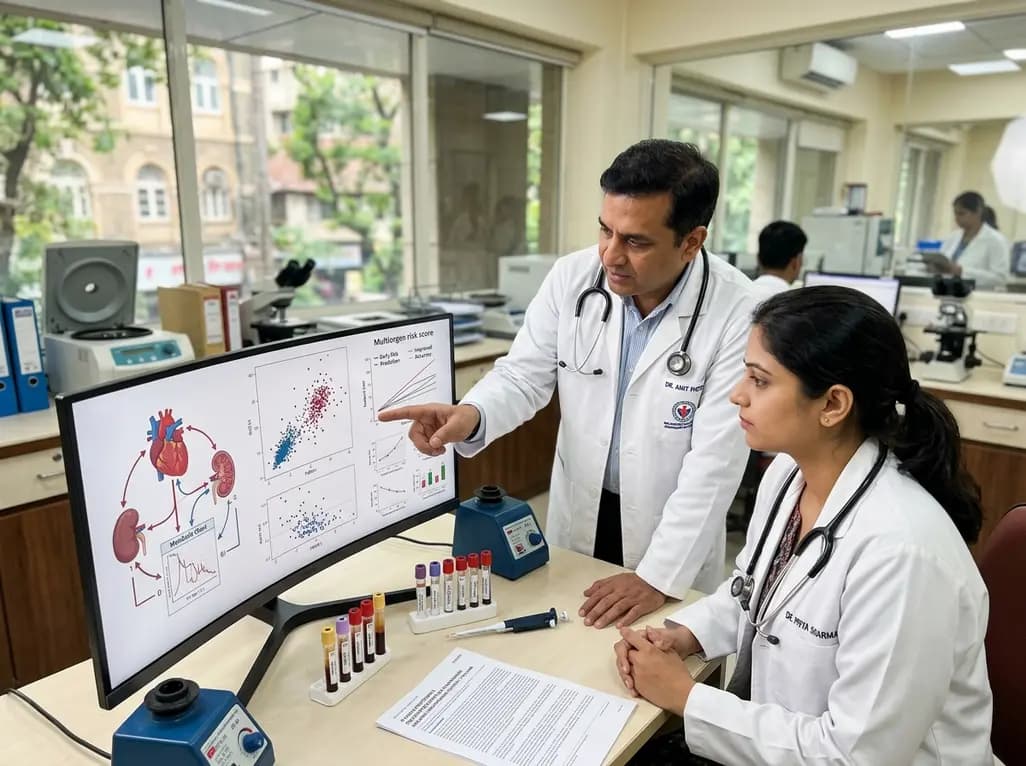
A large UK Biobank study reveals that plasma proteomic signatures capture preclinical organ damage and improve multiorgan risk prediction across early CKM syndrome stages 0 to 2 beyond traditional PREVENT clinical models.
Today

A retrospective CBCT study reveals that superior TMJ space asymmetry correlates moderately with occipital condyle-atlas-axis asymmetry in unilateral TMJ osteoarthritis, highlighting an imaging correlate between jaw biomechanics and upper cervical alignment rather than a standalone diagnostic marker.
Today

A cross-sectional investigation highlights the complex pathophysiological links between serum Klotho deficiency, secondary hyperaldosteronism, and vascular damage in CKD. Discover key insights into non-invasive vascular stiffness markers and targeted therapeutic pathways for cardiorenal protection.
Today
