.webp&w=384&q=75)

Loading, please wait...
Loading, please wait...
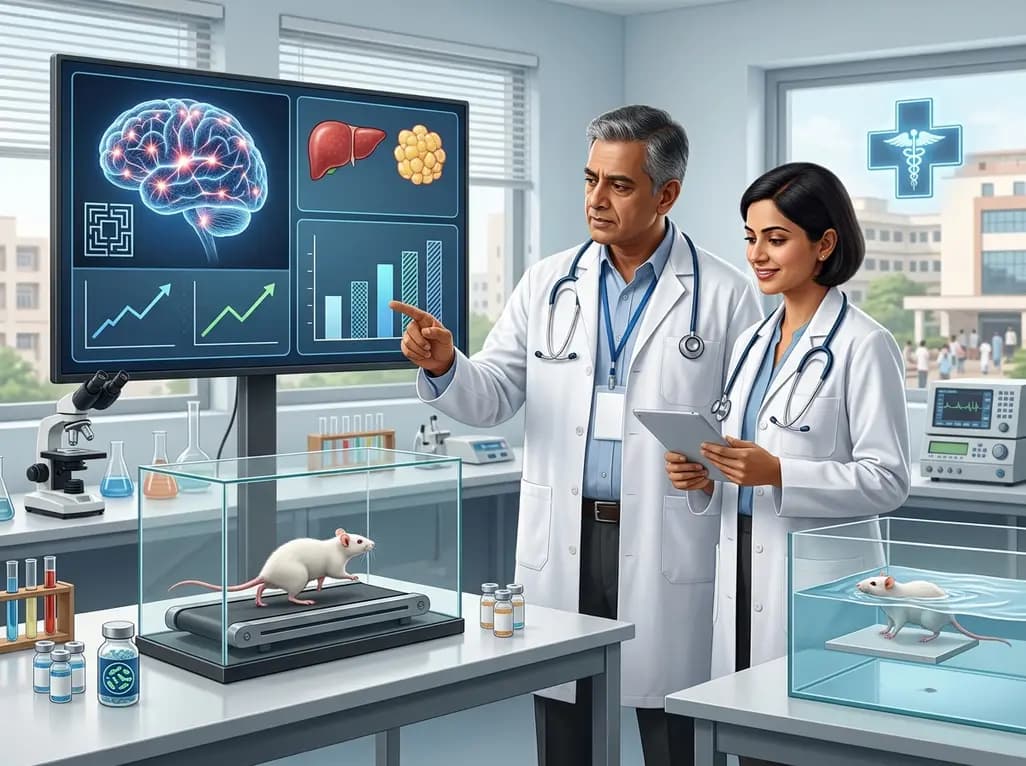
Metabolic syndrome has become a burgeoning health crisis globally, particularly within the Indian demographic where rapid dietary shifts toward high-fat and ultra-processed foods are increasingly prevalent. Recent research indicates that these dietary patterns do more than just expand waistlines; they significantly compromise neurological integrity and cognitive flexibility. Clinicians are now recognizing the \"gut-brain axis\" as a critical highway where metabolic health directly dictates cognitive performance. This paradigm shift has led researchers to explore non-pharmacological interventions that can simultaneously address systemic inflammation and neurodegeneration. One such promising area of research focuses on the probiotic and HIIT benefits as a multi-pronged approach to restoring hippocampal function. By targeting the microbiome and physical activity levels concurrently, healthcare providers may offer a more comprehensive strategy for patients struggling with obesity-related memory deficits. Consequently, understanding the molecular mechanisms behind these lifestyle interventions is paramount for modern clinical practice. The interplay between systemic metabolic markers and hippocampal synaptic health suggests that the brain is highly sensitive to the fuels we consume and the way we move our bodies.
Chronic consumption of a high-fat diet (HFD) triggers a cascade of detrimental biochemical events that reach far beyond the adipose tissue. In rodent models, which often mirror human metabolic pathways, HFD leads to significant elevations in serum leptin, triglycerides, and low-density lipoprotein (LDL) cholesterol. These systemic changes are not isolated to the vascular system; they permeate the blood-brain barrier, fostering an environment of oxidative stress within the hippocampus. The hippocampus is a region vital for social behavior and memory consolidation, making it particularly vulnerable to metabolic insults. Furthermore, a high-fat diet often correlates with elevated liver enzymes such as ALT and AST, indicating underlying hepatic stress that further contributes to systemic inflammation. Notably, recent studies emphasize that HFD significantly reduces long-term potentiation (LTP), the cellular hallmark of learning and memory. When synaptic plasticity is compromised by poor nutrition, the risk of developing early-onset cognitive impairment rises sharply. Therefore, reversing these HFD-induced changes requires interventions that address both the biochemical markers in the blood and the oxidative environment of the brain.
The administration of Lactobacillus rhamnosus GG (LGG), a well-documented probiotic strain, has shown remarkable efficacy in mitigating the damage caused by nutritional stressors. Probiotics function primarily by modulating the gut microbiota, which in turn influences systemic cytokine levels and neurotrophic factors. In the context of the gut-brain axis, LGG helps reduce intestinal permeability\u2014often referred to as \"leaky gut\"\u2014which prevents the translocation of inflammatory lipopolysaccharides into the systemic circulation. In addition to probiotics, high-intensity interval training (HIIT) has emerged as a potent physiological stimulus for brain health. Unlike traditional steady-state cardio, HIIT involves short bursts of near-maximal effort that significantly elevate brain-derived neurotrophic factor (BDNF). This protein is essential for neuronal survival and synaptic plasticity. When analyzing the probiotic and HIIT benefits, it becomes clear that while each intervention is powerful individually, their combined impact creates a unique synergy. This dual approach helps restore the delicate balance between oxidative stress and antioxidant defense mechanisms, specifically by increasing levels of superoxide dismutase and catalase in the hippocampus.
One of the most striking findings of recent research is the restoration of long-term potentiation (LTP) through combined lifestyle interventions. Electrophysiological assessments reveal that subjects fed a high-fat diet exhibit diminished synaptic strength, which directly translates to poor performance in social and working memory tasks. However, the introduction of both LGG and HIIT protocols reverses these deficits by enhancing the electrical responsiveness of hippocampal circuits. This recovery is likely mediated by the reduction of neuroinflammation and the stabilization of mitochondrial function within neurons. Moreover, the study demonstrates that the combined protocol is superior in improving Y-maze task performance, a standard measure of spatial working memory. By increasing the efficiency of hippocampal synapses, the combination therapy ensures that memory formation and recall are maintained despite the presence of metabolic stressors. Consequently, the electrophysiological data provides a strong mechanical foundation for why combined microbiome and exercise therapies are effective in preventing cognitive decline. This reinforces the idea that the brain retains a level of plasticity that can be salvaged through targeted lifestyle changes even after chronic dietary neglect.
Beyond the brain, the combination of LGG and HIIT exerts profound effects on the lipid profile and hepatic health. High-fat diets typically suppress high-density lipoprotein (HDL) while skyrocketing triglyceride and cholesterol levels. Subjects receiving the combined treatment showed a significant increase in serum HDL, often called \"good\" cholesterol, which aids in reverse cholesterol transport and reduces vascular inflammation. Simultaneously, there was a marked reduction in LDL and leptin levels. Leptin resistance is a common feature of obesity that perpetuates metabolic dysfunction; thus, lowering leptin levels suggests a restoration of metabolic sensitivity. Furthermore, the liver enzymes alanine transaminase (ALT) and alkaline phosphatase (ALP) were significantly lowered in the intervention groups. This suggests that the combined effect of probiotics and HIIT offers hepatoprotective benefits, likely by reducing lipid accumulation and inflammatory infiltration in the liver tissue. For clinicians, these findings highlight a holistic recovery where metabolic parameters and cognitive functions improve in tandem. The systemic reduction of oxidative stress markers serves as a bridge connecting improved liver health to improved neurological outcomes.
The evidence supporting the combination of Lactobacillus rhamnosus GG and HIIT suggests a paradigm shift in how we manage patients at risk for metabolic-related cognitive disorders. Traditional management often focuses on isolated pharmacological treatments for dyslipidemia or glucose control. However, these results advocate for a \"multi-pathway intervention\" that addresses the gut, the muscles, and the brain simultaneously. In the Indian context, where lifestyle-related metabolic diseases are on the rise, recommending a specific probiotic strain like LGG alongside time-efficient exercise protocols like HIIT could be highly effective for patient compliance. This approach is not only cost-effective but also empowers patients to take an active role in their neuro-metabolic health. Future clinical trials in humans are necessary to confirm these animal model findings, but the mechanistic groundwork is solid. In summary, integrating microbiome-based therapies with structured high-intensity exercise represents a sophisticated, non-invasive frontier in preventing the cognitive consequences of the modern high-fat diet. Clinicians should consider these combined benefits as a core component of preventive neurology and endocrinology.
HIIT is uniquely effective because the short bursts of high-intensity effort create a significant physiological stressor that triggers a more robust release of brain-derived neurotrophic factor (BDNF). This neurotrophin is critical for synaptic plasticity and the survival of hippocampal neurons. Unlike moderate-intensity exercise, HIIT has been shown to more effectively stimulate the electrophysiological processes involved in long-term potentiation. This results in sharper working memory and better social cognitive performance, especially when metabolic inflammation is present.
Lactobacillus rhamnosus GG is one of the most extensively researched probiotic strains due to its high survival rate in the gastrointestinal tract and its strong immunomodulatory properties. Research has consistently shown that LGG can strengthen the intestinal barrier, thereby reducing the systemic influx of pro-inflammatory markers that contribute to neuroinflammation. By stabilizing the gut-brain axis, LGG provides a neuroprotective environment that complements the physiological benefits of high-intensity exercise in reversing high-fat diet damage.
While animal models are vital for understanding molecular mechanisms, human responses can vary based on genetics and baseline health. However, rodents share similar lipid metabolism and hippocampal structures with humans, making these findings highly relevant. Many clinical trials in humans already support the use of HIIT for improving lipid profiles and the use of probiotics for gastrointestinal health. Therefore, it is clinically plausible that human patients would see similar synergistic benefits in metabolic markers.
Disclaimer: This content is for informational and educational purposes only and does not constitute professional medical advice, diagnosis, or treatment. Always seek the advice of your physician or other qualified health provider with any questions you may have regarding a medical condition. Refer to the latest local and national guidelines for clinical practice.
References
Karami F et al. The combined effects of probiotic and high-intensity interval training on memory function in high fat diet-fed rats. Behav Brain Funct. 2026 Jul 04. doi: 10.1186/s12993-026-00347-9. PMID: 42401969.
Sanborn V et al. Randomized Clinical Trial Examining the Impact of Lactobacillus rhamnosus GG Probiotic Supplementation on Cognitive Functioning in Middle-aged and Older Adults. Neuropsychiatr Dis Treat. 2020;16:2765-2777.
You et al. High-fat diet and cognitive dysfunction: Mechanistic insights into diet-induced neurodegeneration (Review). PMC. 2026. PMCID: PMC12634066.
"
Read summarized clinical updates, watch expert medical content, and earn CME certifications right from your smartphone.
Open your smartphone camera to scan and install.





A recent study demonstrates that the combination of the probiotic Lactobacillus rhamnosus GG and HIIT training significantly improves memory function and metabolic health in rats fed a high-fat diet, offering a potential multi-pathway lifestyle therapy for cognitive and metabolic disorders.
3 months ago

As monsoon seasons elevate arboviral disease threats, Tamil Nadu has initiated an ICMR-monitored evaluation of the tetravalent dengue vaccine in Tenkasi district. Clinicians emphasize clinical monitoring, public prevention, and high-quality early pediatric care to reduce disease morbidity across endemic regions.
Today

Leucine Rich Bio has introduced South Asia's first comprehensive vaginal microbiome test, BugSpeaks. By profiling microbial dysbiosis, pathogens, and antimicrobial resistance, this next-generation diagnostic platform provides clinicians with deeper insights into recurrent infections, fertility, and reproductive health.
Today

Review how tailored exercise programs benefit frail older patients with heart failure. Explore pathophysiological mechanisms, individualized training prescriptions, and strategies to overcome adherence barriers in clinical practice.
Today

This comparative study evaluates posterior labral tears with and without glenohumeral instability, highlighting distinct demographic patterns, MRI underestimation in stable shoulders, and successful arthroscopic repair outcomes.
Today

A clinical study demonstrates that early intervention with tocilizumab, either as monotherapy or bridged with corticosteroids, achieves significant proptosis reduction and resolves active inflammation in treatment-naive thyroid eye disease.
Today
