.webp&w=384&q=75)

Loading, please wait...
Loading, please wait...
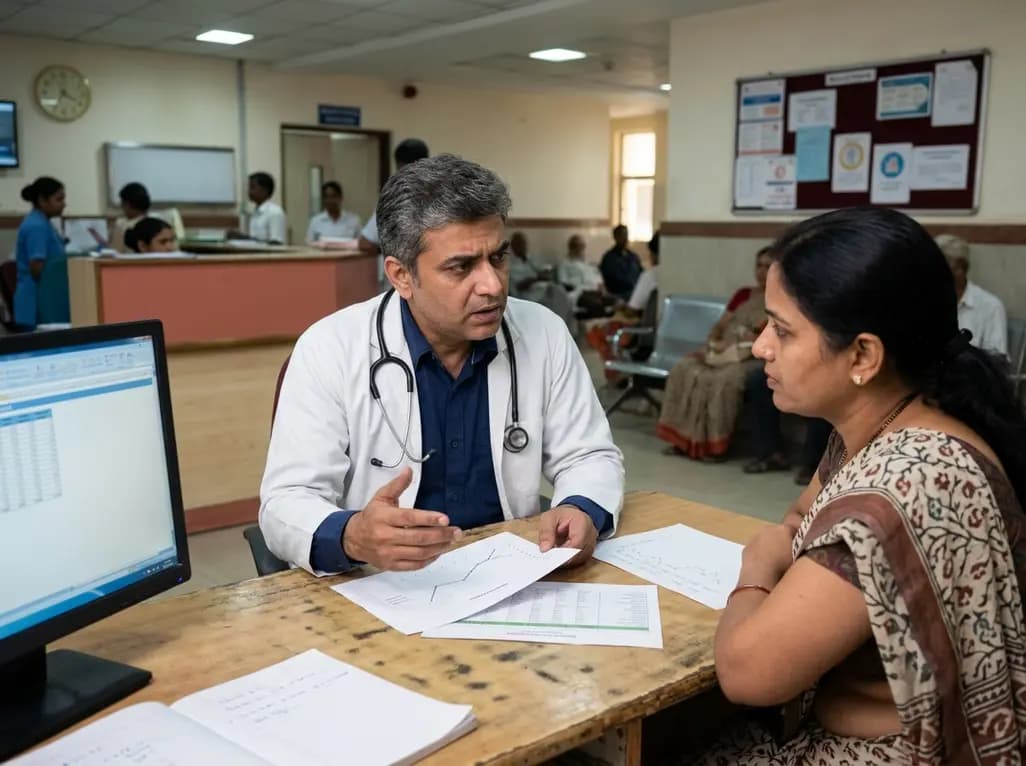
The rapid expansion of private healthcare in India has fundamentally transformed the national medical landscape over the past four decades. However, soaring out-of-pocket expenditures and unpredictable treatment charges have created severe financial strain for millions of families. A parliamentary standing committee on health and family welfare highlighted these systemic concerns in a comprehensive report. The panel recommended benchmarking basic private hospital room tariffs to average three-star hotel charges in metropolitan cities. This dramatic proposal brings into sharp focus the widening tension between commercial healthcare investments and public affordability.
Historically, medical services across the country operated primarily through standalone clinics, charitable trusts, and government institutions. However, the establishment of the first corporate hospital in Chennai in 1983 initiated a fundamental shift in healthcare delivery. Dr. Prathap Reddy campaigned vigorously to classify hospitals as an enterprise, thereby unlocking formal institutional financing. Consequently, multispecialty hospitals expanded rapidly across major metropolitan centers and secondary cities. This growth filled an acute infrastructure gap that public health facilities struggled to bridge alone.
Consequently, private providers have become the primary pillars of tertiary and quaternary clinical care. According to recent National Sample Survey findings, private institutions now handle approximately 58% of hospitalizations in rural regions and 64.6% in urban locations. Furthermore, private facilities perform nearly 70% of all major surgical procedures nationwide. Because public sector budgetary allocations grew incrementally, corporate hospital networks progressively expanded their operational footprint. Today, these hospital chains manage complex clinical programs, advanced organ transplants, robotic surgeries, and state-of-the-art diagnostic facilities across all major Indian states.
In recent years, global financial investors have recognized the substantial returns offered by the domestic medical sector. Over the past three years alone, investors executed roughly 60 hospital-focused private equity deals valued at ₹49,000 crore. Marquee global asset managers, including Temasek, KKR, Blackstone, Carlyle, and TPG, have acquired substantial or majority stakes in premier hospital chains. These institutions include Manipal Health, Sahyadri Hospitals, Healthcare Global, Star Hospitals, and Baby Memorial Hospital. Investors actively pursue lucrative exit multiples through secondary sales or initial public offerings.
However, aggressive private equity involvement has also transformed financial targets within hospital management. Industry data indicates that the average revenue per occupied bed across leading corporate chains increased by 11% between FY23 and FY25, rising from ₹50,821 to ₹56,520. Financial sponsors frequently influence crucial operational decisions, including doctor compensation models, advanced technology procurement, clinical tariff structures, and aggressive geographical expansion. While capital injections modernize diagnostic equipment and expand bed capacity, critics argue that aggressive return expectations contribute directly to escalating patient bills.
The 176th report of the Parliamentary Standing Committee on Health and Family Welfare presented a detailed critique of existing billing mechanisms. Specifically, the parliamentary panel expressed deep concern over arbitrary room charges that vary dramatically across institutions. To curb excessive charges, the committee proposed capping basic room tariffs at the average prevailing rate of nearby three-star hotels in major metropolitan regions. The panel suggested that hospitals could bill medical consumables, resident doctor fees, meals, and specialized nursing care as distinct, itemized line items.
Additionally, lawmakers highlighted that room categories frequently serve as artificial multipliers for standard surgical packages, doctor consultations, and routine laboratory tests. Therefore, the committee recommended standardizing procedure pricing to prevent differential billing based purely on room tier selection. The panel also called for mandatory upfront, legally binding treatment estimates for complex medical interventions. Moreover, the report proposed deploying dedicated hospital financial navigators to assist distressed families in navigating costs, insurance limits, and available charitable funds before starting inpatient therapy.
Conversely, leading private hospital operators and industry associations, such as NATHEALTH, have raised serious concerns regarding rigid price caps. Healthcare executives argue that hotel rooms and hospital rooms are fundamentally incomparable entities. A standard clinical room requires dedicated biomedical gas pipelines, emergency crash carts, backup power grids, infection control air filtration, and continuous nursing observation. Consequently, corporate leaders contend that arbitrary price ceilings on room tariffs could severely stifle capital reinvestment, halt expansion, and compromise clinical quality.
Furthermore, hospital administrators stress that private tertiary centers cross-subsidize complex critical care and subsidized bed quotas through premium room charges. If regulators enforce sweeping price caps without considering capital intensity and depreciation of high-end equipment, smaller nursing homes and mid-tier hospitals might face insolvency. Healthcare leaders therefore advocate for a nuanced, scientifically determined costing framework rather than broad, hotel-linked benchmarks. They also recommend transitioning healthcare services to a zero-rated goods and services tax structure to lower operational procurement costs.
Addressing the healthcare affordability crisis requires a calibrated policy approach that balances consumer protection with institutional viability. While corporate hospitals provide cutting-edge care, the lack of universal insurance coverage exposes middle-class households to catastrophic medical debt. The parliamentary committee emphasized that public healthcare spending must expand toward 2.5% to 5% of gross domestic product. A robust network of government district hospitals and secondary medical colleges can naturally introduce healthy price competition and moderate private sector rates.
Simultaneously, the regulatory framework must encourage ethical clinical governance and billing transparency across all healthcare facilities. Hospitals must openly publish standard treatment schedules, package inclusions, and diagnostic pricing to empower patients before admission. Furthermore, public-private partnerships should incentivize corporate groups to establish secondary centers in underserved peri-urban and rural districts. By harmonizing investor expectations with ethical patient care standards, policymakers can build a sustainable healthcare ecosystem that preserves clinical excellence without bankrupting vulnerable citizens.
Q1: Why did the parliamentary panel recommend capping hospital room charges against three-star hotels?
The parliamentary committee recommended this benchmark to curb arbitrary and highly inflated room charges in metropolitan private hospitals. By establishing an external, objective pricing reference, the panel aims to eliminate unjustified billing variations. This measure seeks to protect patients from excessive out-of-pocket hospitalization expenses while requiring hospitals to provide clear, itemized bills for nursing and consumables.
Q2: How does private equity investment influence hospital billing and patient treatment costs?
Private equity funds invest significant capital to modernize infrastructure, acquire cutting-edge biomedical technology, and expand hospital capacity. However, these investors usually target high financial returns and rapid revenue growth. Consequently, this financial pressure often drives hospitals to maximize their average revenue per occupied bed, influencing clinical pricing structures, procedure packages, and administrative billing targets across tertiary medical networks.
Q3: What alternative mechanisms can improve private healthcare affordability without stifling industry growth?
Policymakers can enhance affordability by strengthening public hospital infrastructure, expanding national health insurance coverage, and mandating transparent upfront treatment estimates. Additionally, moving healthcare inputs to a zero-rated tax regime can reduce hospital procurement costs. Encouraging structured public-private partnerships and scientific costing methodologies ensures fair patient pricing while preserving financial incentives for continued private healthcare investment.
Disclaimer: This content is for informational and educational purposes only. It does not constitute medical advice or replace professional judgment. Refer to the latest local and national guidelines for clinical practice.
References

Read summarized clinical updates, watch expert medical content, and earn CME certifications right from your smartphone.
Open your smartphone camera to scan and install.





A parliamentary standing committee has recommended benchmarking private hospital room charges against three-star hotel tariffs. This policy analysis explores the interplay between private equity investments, escalating average revenue per bed, and regulatory efforts to protect patient affordability in India.
last month

A Bayesian multilevel meta-analysis reveals that aerobic training combined with moderate carbohydrate restriction modestly lowers HbA1c in type 2 diabetes. However, sparse data and very low certainty leave incremental benefits over exercise or diet alone unproven, highlighting the need for individualized care.
Today

Findings from Project Viva indicate that sustained postpartum weight retention, rather than excessive gestational weight gain alone, directly worsens women's mid-life cardiovascular health, degrading blood pressure and glycemic parameters decades after delivery.
Today
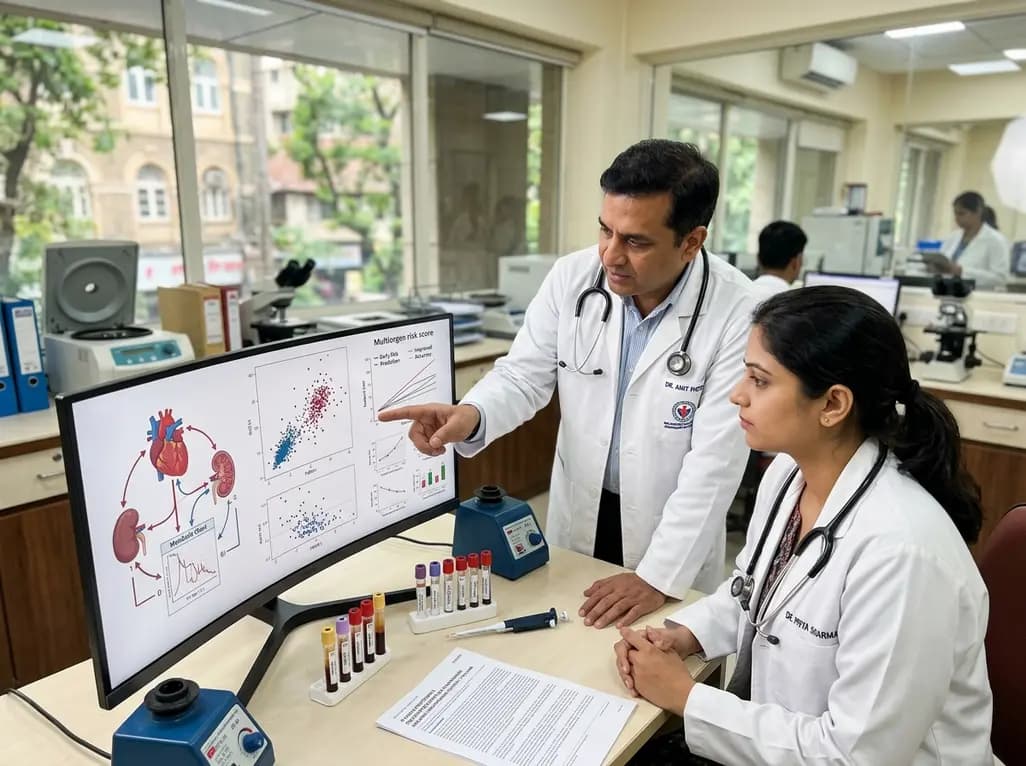
A large UK Biobank study reveals that plasma proteomic signatures capture preclinical organ damage and improve multiorgan risk prediction across early CKM syndrome stages 0 to 2 beyond traditional PREVENT clinical models.
Today
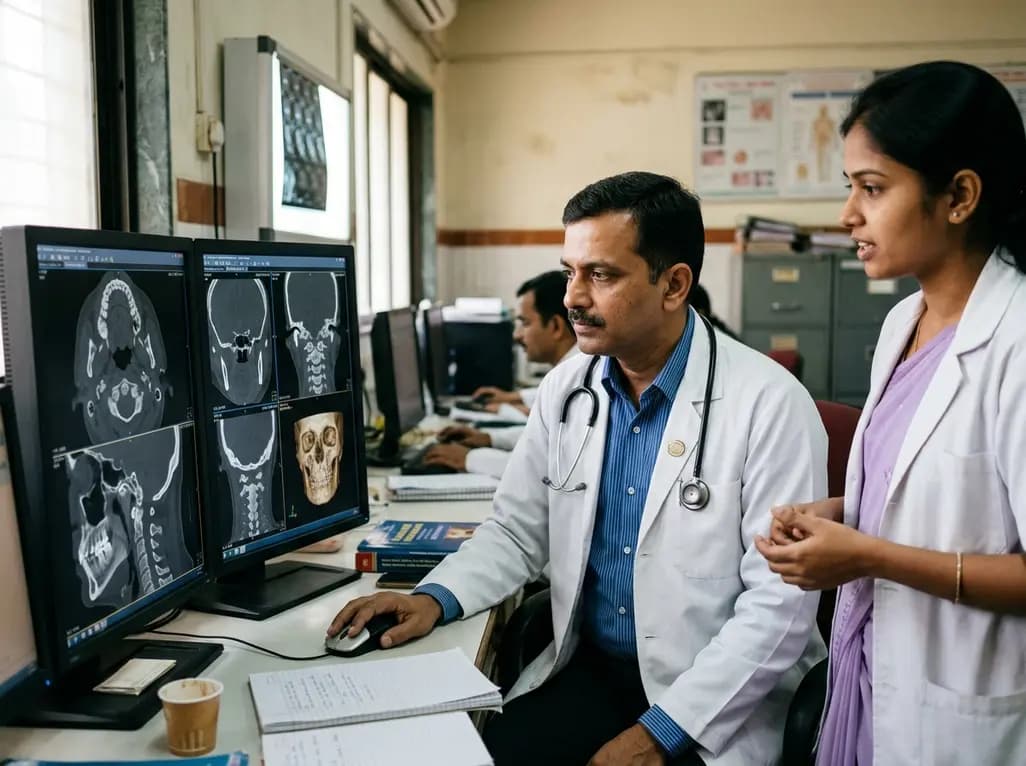
A retrospective CBCT study reveals that superior TMJ space asymmetry correlates moderately with occipital condyle-atlas-axis asymmetry in unilateral TMJ osteoarthritis, highlighting an imaging correlate between jaw biomechanics and upper cervical alignment rather than a standalone diagnostic marker.
Today
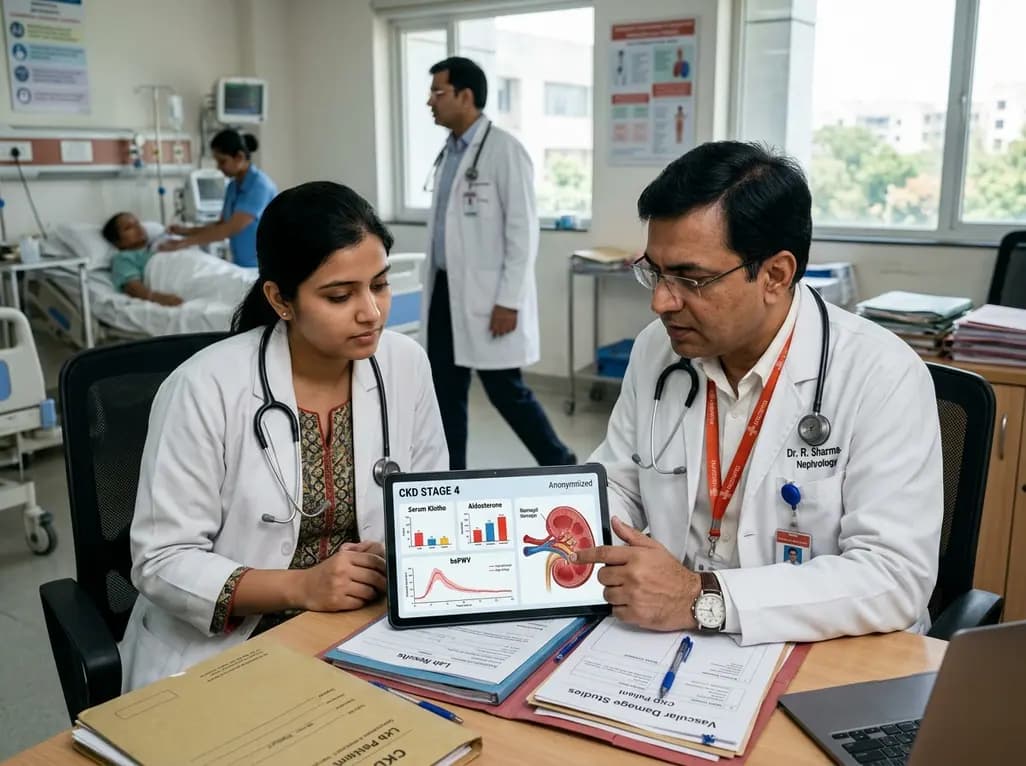
A cross-sectional investigation highlights the complex pathophysiological links between serum Klotho deficiency, secondary hyperaldosteronism, and vascular damage in CKD. Discover key insights into non-invasive vascular stiffness markers and targeted therapeutic pathways for cardiorenal protection.
Today
