.webp&w=384&q=75)

Loading, please wait...
Loading, please wait...

Hyalinizing clear cell carcinoma (HCCC) of the lung represents an exceptionally rare salivary gland-type neoplasm. Because it presents with nonspecific symptoms, a primary pulmonary HCCC diagnosis often requires a combination of cytomorphologic, immunohistochemical, and molecular analyses. This tumor generally follows an indolent clinical course. Consequently, its rarity makes it a significant diagnostic challenge for clinicians. Pathologists must distinguish it from more common lung cancers using specific cellular features and architectural patterns.
The cytomorphology of HCCC reveals nests or sheets of bland tumor cells with clear or eosinophilic cytoplasm. These cells often exhibit small nuclei with smooth membranes and scant cytoplasm. Furthermore, the presence of a hyalinized paucicellular stroma is a hallmark feature of this disease. Immunohistochemically, these tumors typically express markers like p40 and CK7. However, they consistently lack TTF-1 and Napsin A expression. Therefore, this specific immunoprofile helps distinguish HCCC from common lung malignancies like adenocarcinoma or squamous cell carcinoma.
Recent advances in pathology have identified the EWSR1::ATF1 fusion as a characteristic molecular driver of this tumor. In addition, identifying this fusion through molecular analysis is essential for a definitive diagnosis. Moreover, surgical resection remains the primary treatment of choice for localized cases. Most patients show excellent long-term outcomes following a successful segmentectomy or lobectomy. Nevertheless, clinicians should maintain long-term follow-up because of the potential for late recurrence or rare metastasis in some clinical settings.
Pulmonary HCCC typically tests positive for p40, p63, and CK7, while remaining negative for TTF-1 and Napsin A. This specific profile helps in differentiating it from common primary lung adenocarcinomas.
Molecular testing identifies characteristic EWSR1::ATF1 or EWSR1::CREM fusions. These markers are critical because they confirm the diagnosis and rule out other clear-cell-containing mimics like mucoepidermoid carcinoma.
Disclaimer: This content is for informational and educational purposes only. It does not constitute medical advice or a professional relationship. Refer to the latest local and national guidelines for clinical practice.
References

Read summarized clinical updates, watch expert medical content, and earn CME certifications right from your smartphone.
Open your smartphone camera to scan and install.





Explore the rare diagnosis of primary pulmonary hyalinizing clear cell carcinoma, featuring its distinct molecular markers and cytomorphology....
7 months ago
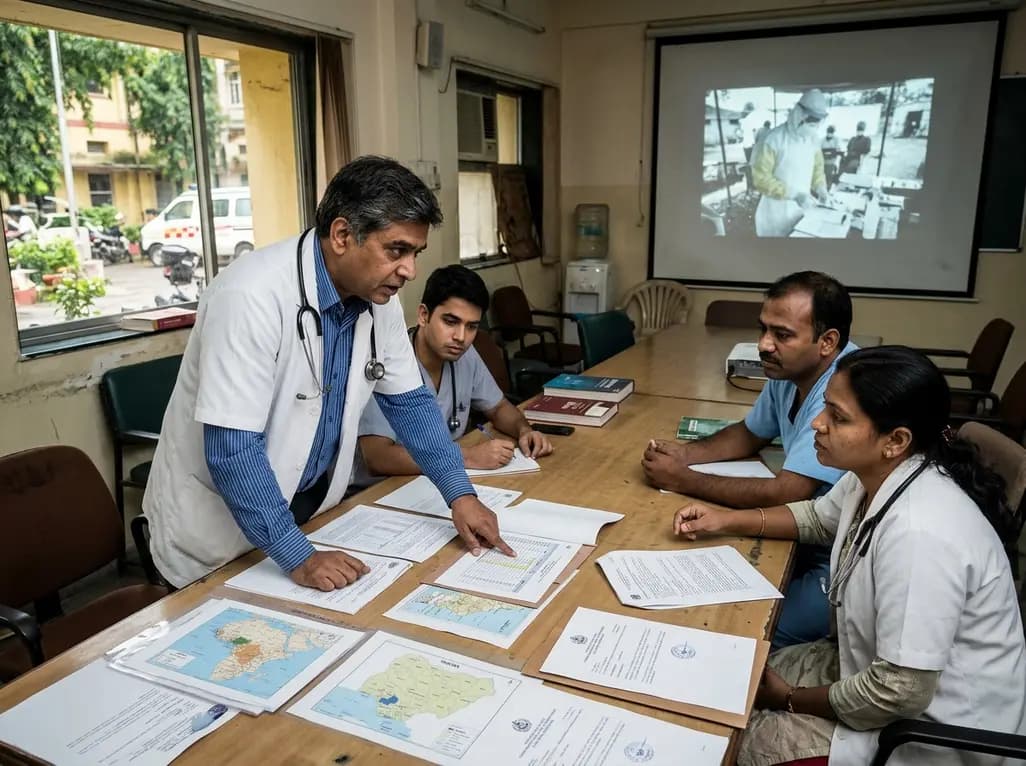
Following Nigeria's first recorded Ebola case linked to regional travel, the Africa CDC has convened an emergency ministerial summit. This alert underscores critical clinical priorities for healthcare professionals, including differentiating early viral infection from malaria, implementing barrier nursing, and triage.
Today

Leucine Rich Bio has introduced South Asia's first comprehensive vaginal microbiome test, BugSpeaks. By profiling microbial dysbiosis, pathogens, and antimicrobial resistance, this next-generation diagnostic platform provides clinicians with deeper insights into recurrent infections, fertility, and reproductive health.
Today

Review how tailored exercise programs benefit frail older patients with heart failure. Explore pathophysiological mechanisms, individualized training prescriptions, and strategies to overcome adherence barriers in clinical practice.
Today

This comparative study evaluates posterior labral tears with and without glenohumeral instability, highlighting distinct demographic patterns, MRI underestimation in stable shoulders, and successful arthroscopic repair outcomes.
Today

A clinical study demonstrates that early intervention with tocilizumab, either as monotherapy or bridged with corticosteroids, achieves significant proptosis reduction and resolves active inflammation in treatment-naive thyroid eye disease.
Today
