.webp&w=384&q=75)

Loading, please wait...
Loading, please wait...

Primary epidural extraosseous Ewing sarcoma (EES) represents a rare and aggressive clinical entity involving the soft tissues of the spinal canal. Unlike the traditional skeletal variant, this form does not typically involve the bony spinal column. Consequently, clinicians must maintain a high index of suspicion when they evaluate epidural masses in young patients who present with neurological symptoms.
A recent case report highlighted a 19-year-old male who presented with a one-month history of left leg dysesthesias and neuropathic pain. Eventually, he developed acute leg weakness over a period of two weeks. MRI imaging identified an epidural lesion at the L2 level that extended into the left L2-3 neural foramen. Therefore, the surgical team prioritized an urgent decompression to address the evolving neurological deficits.
Post-surgical pathological analysis confirmed the diagnosis of Ewing sarcoma. Subsequently, the patient started a comprehensive multidisciplinary treatment regimen. This plan included both intensive chemotherapy and radiation therapy. Furthermore, the 6-week follow-up revealed significant recovery in leg strength. Recent imaging confirmed that the patient had no evidence of residual tumor or recurrence.
A systematic review of 80 cases provides deeper insights into this rare condition. The data shows that the mean age at presentation is approximately 21.2 years. Remarkably, over 80% of these patients fall within the pediatric or young adult demographic. Because EES is highly aggressive, early diagnosis remains critical for preventing permanent spinal cord damage and improving survival rates.
In conclusion, medical professionals should consider EES in the differential diagnosis of spinal epidural lesions, especially when bone involvement is absent. Multimodal therapy, combining surgical resection with systemic and local adjuvants, generally leads to favorable clinical outcomes.
Patients typically present with radicular pain, sensory changes like dysesthesias, and progressive motor weakness. Additionally, some may experience bowel or bladder dysfunction depending on the specific location of the lesion.
MRI serves as the primary imaging tool, usually showing an extradural mass that enhances with contrast. However, a definitive diagnosis requires histopathological examination and immunohistochemistry to identify the characteristic small round blue cells.
Disclaimer: This content is for informational and educational purposes only. It does not constitute medical advice or establish a doctor-patient relationship. Always seek the advice of a qualified healthcare provider for any questions regarding a medical condition. Refer to the latest local and national guidelines for clinical practice.
References
Salaheen Z et al. Primary epidural extraosseous Ewing sarcoma of the spine in a 19-year-old male: illustrative case. J Neurosurg Case Lessons. 2026 Apr 27. doi: undefined. PMID: 42044535.
Patil AS et al. Primary Spinal Extradural Extraosseous Primitive Neuroectodermal Tumor/Ewing's Sarcoma: A Critical Analysis and Review. Asian J Neurosurg. 2020;15(4):1068-1071. doi:10.4103/ajns.AJNS_143_20.
Tiwari S et al. Primary Spinal Epidural Extraosseous Ewing's Sarcoma with Brachial Plexus Infiltration. Asian J Neurosurg. 2020;15(4):1068-1071.

Read summarized clinical updates, watch expert medical content, and earn CME certifications right from your smartphone.
Open your smartphone camera to scan and install.





Case report of a 19-year-old with primary epidural extraosseous Ewing sarcoma and a review of 80 clinical cases for better diagnostic insights....
5 months ago

Review how tailored exercise programs benefit frail older patients with heart failure. Explore pathophysiological mechanisms, individualized training prescriptions, and strategies to overcome adherence barriers in clinical practice.
Today

Leucine Rich Bio has introduced South Asia's first comprehensive vaginal microbiome test, BugSpeaks. By profiling microbial dysbiosis, pathogens, and antimicrobial resistance, this next-generation diagnostic platform provides clinicians with deeper insights into recurrent infections, fertility, and reproductive health.
Today
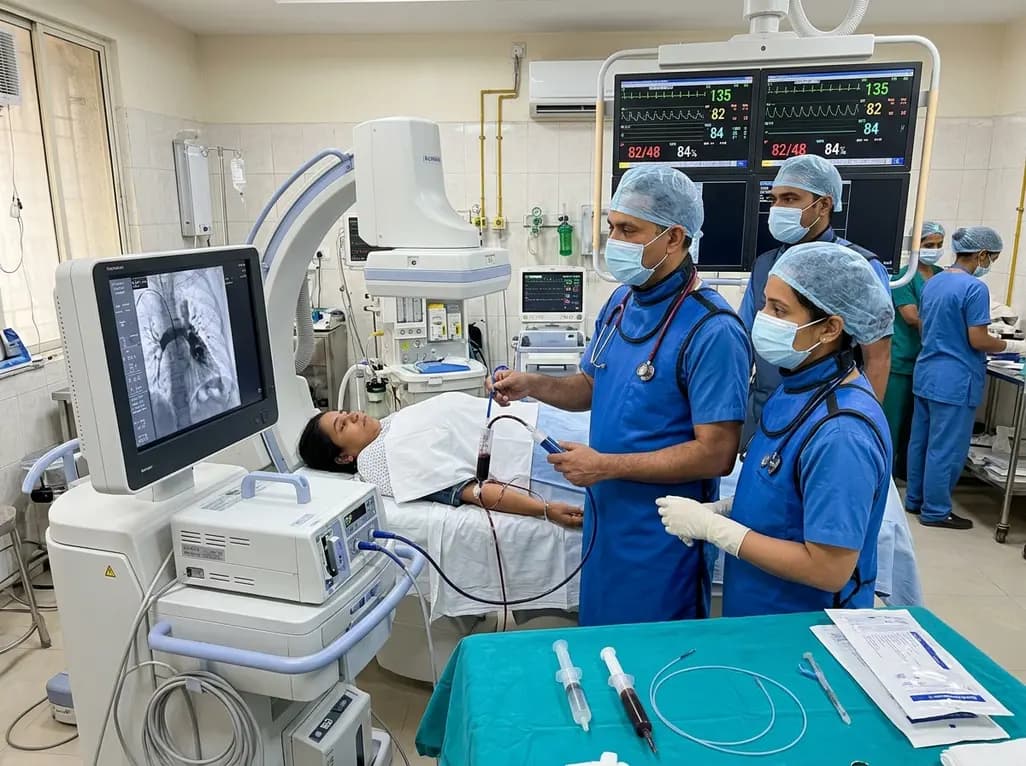
In high-risk pulmonary embolism complicated by severe anemia and active uterine bleeding, systemic thrombolysis is contraindicated. Large-bore aspiration thrombectomy provides rapid hemodynamic rescue without fibrinolysis, supported by inferior vena cava filter placement and multidisciplinary critical care.
Today

This comparative study evaluates posterior labral tears with and without glenohumeral instability, highlighting distinct demographic patterns, MRI underestimation in stable shoulders, and successful arthroscopic repair outcomes.
Today

A clinical study demonstrates that early intervention with tocilizumab, either as monotherapy or bridged with corticosteroids, achieves significant proptosis reduction and resolves active inflammation in treatment-naive thyroid eye disease.
Today
