.webp&w=384&q=75)

Loading, please wait...
Loading, please wait...

Global data shows that sexual violence in children represents an alarming public health crisis with severe physical and psychological consequences. Healthcare practitioners frequently stand on the frontlines of detecting hidden trauma, treating injuries, and safeguarding vulnerable minors. A comprehensive systematic review from 2017 to 2023 underscores major gaps in global knowledge regarding protective measures. It carefully evaluates victim-perpetrator dynamics, structural vulnerabilities, and clinical interventions. Consequently, clinicians must master identifiable behavioral markers and trauma-informed assessment paradigms to protect young populations.
Robust epidemiological synthesis reveals striking consistencies regarding the demographic patterns and circumstances surrounding child victimization worldwide. Most notably, girls disproportionately bear the burden of documented sexual trauma across diverse regional and socioeconomic strata. Furthermore, contrary to common assumptions about stranger danger, most perpetrators belong to the child's immediate social circle or household. Trusted relatives, close acquaintances, and custodial caregivers constitute the primary perpetrators identified in systematic analyses. In addition, the temporal and spatial patterns of these offenses highlight vulnerable domestic intervals. Evidence indicates that abusive incidents occur predominantly during daytime hours within private residences rather than secluded public locations. This domestic concentration often enables offenders to manipulate authority, enforce secrecy, and sustain ongoing psychological coercion over extended durations. Therefore, pediatricians and family physicians must abandon preconceived assumptions regarding outside threats. Clinicians must recognize that subtle behavioral regressions, unexplained somatic distress, and chronic anxiety frequently originate within domestic confines. Proactive screening during routine checkups helps detect these hidden crises.
Recognizing hidden abuse requires physicians to maintain exceptional diagnostic acumen, as pediatric victims rarely disclose traumatic experiences directly. Instead, children frequently manifest distress through non-specific somatic complaints, developmental regression, or abrupt behavioral transformations. Specifically, clinicians should carefully examine recurrent enuresis, encopresis, unexplained genitourinary pain, and chronic lower abdominal discomfort. In addition, unexplained genital erythema, recurrent urinary tract infections, or sexually transmitted infections in young children warrant thorough, trauma-informed evaluation. Beyond physical markers, psychological alterations provide critical diagnostic indicators that general practitioners cannot overlook. Affected youth often display hypervigilance, sudden academic decline, aggressive outbursts, or premature sexualized play that exceeds normative developmental milestones. Clinicians must approach these clinical signs with extreme sensitivity, avoiding leading interrogations that could induce secondary traumatization. By establishing a secure consultation environment, healthcare providers empower children to communicate comfortably while ensuring meticulous documentation of all clinical findings. Thorough documentation aids clinical management and forensic proceedings.
The systematic analysis synthesizes primary interventions into four interconnected domains that substantially reduce child vulnerability and optimize community awareness. First, universal prevention programs provide foundational protective layers by fostering school-based environments that prioritize bodily autonomy and respectful relationship dynamics. Second, modern information and communications technologies offer scalable platforms to disseminate evidence-based safety guidance to youth and caregivers alike. Interactive digital resources, educational applications, and moderated online safety portals educate children on navigating digital threats while reinforcing reporting avenues. Third, age-appropriate comprehensive sexual education equips children with essential anatomical vocabulary and conceptual knowledge regarding personal boundaries. Understanding anatomical terminology ensures children can articulate inappropriate boundary crossings with clarity and confidence. Fourth, specific education directly targets risk mitigation by instructing minors on recognizing coercive touch, resisting boundary transgressions, and identifying trusted adult confidants. Crucially, these educational initiatives achieve maximum efficacy when clinicians and educators concurrently train parents to foster supportive domestic environments. Strong parental alliances significantly amplify prevention outcomes.
In India, pediatric healthcare delivery intersects inextricably with statutory child protection under the Protection of Children from Sexual Offences Act. Indian law establishes mandatory reporting requirements for any medical practitioner who suspects, observes, or receives disclosure regarding sexual abuse of a child. Consequently, failure to report such occurrences to the Special Juvenile Police Unit or local police constitutes a punishable legal offense. Clinicians must also navigate the delicate procedural requirements governing emergency care and forensic documentation without delaying urgent medical stabilization. Under statutory provisions, hospitals cannot condition emergency medical care or post-exposure prophylaxis upon formal police registration or maternal legal filings. Physicians must provide compassionate clinical stabilization, treat acute physical trauma, test for sexually transmitted infections, and administer post-exposure prophylaxis against HIV when clinically indicated. Furthermore, clinicians must preserve potential forensic evidence meticulously, adhering strictly to standardized chain-of-custody protocols established by health authorities. Compassionate medical care protects the child's health while preserving justice.
Translating systemic prevention research into daily clinical encounters represents an indispensable responsibility for all healthcare providers treating pediatric patients. Primary care physicians and pediatricians should incorporate basic boundary and body safety discussions into routine well-child visits and adolescent health screenings. Moreover, clinical teams should make culturally sensitive educational brochures, helpline numbers, and child-friendly digital resources readily accessible within clinical waiting rooms. When treating children, clinicians must cultivate multidisciplinary partnerships with pediatric psychiatrists, clinical psychologists, child welfare committees, and medical social workers. Coordinated multidisciplinary intervention ensures comprehensive trauma-informed rehabilitation, protecting children against long-term sequelae including chronic depression, post-traumatic stress disorder, and substance experimentation. Additionally, medical societies must champion continuous continuing medical education programs to train practicing physicians on emerging forensic examination methodologies and updated reporting procedures. By actively championing prevention education and systemic advocacy, healthcare practitioners serve as vital bulwarks against childhood trauma in their communities. Clinicians can decisively alter outcomes.
Primary care physicians should employ routine surveillance during standard health visits rather than aggressive direct interrogations. Specifically, clinicians must review inconsistent injury histories, monitor non-verbal cues between child and guardian, and gently evaluate sudden behavioral shifts. When suspicious indicators arise, physicians should ask open-ended, non-leading questions in a calm, safe environment. In addition, thorough physical assessments and objective medical documentation ensure that practitioners capture critical findings without compounding psychological distress.
Following a disclosure, the physician must immediately ensure the child's physical safety and provide urgent medical care. Clinicians should conduct a comprehensive trauma-informed physical examination, assess for acute injuries, and administer necessary emergency contraception or infection prophylaxis. Furthermore, practitioners must meticulously document all physical findings and verbatim statements without expressing personal skepticism. Finally, clinicians must immediately fulfill mandatory reporting obligations to local child protection authorities in accordance with legal statutes.
Parental education remains essential because parents represent the primary protective buffer within a child's everyday domestic environment. When community programs educate parents, caregivers learn to recognize subtle distress signals, discuss bodily boundaries comfortably, and dismantle cultural stigmas surrounding abuse. Moreover, informed parents maintain vigilant supervision and supervise online activities prudently. Consequently, educated parents foster supportive domestic spaces where children feel empowered to report inappropriate incidents immediately without fearing parental disbelief or retribution.
Disclaimer: This content is for informational and educational purposes only, and should not be taken as medical advice. It is not intended to provide medical advice, diagnosis, or treatment. Always consult with your physician, doctor or other qualified healthcare provider with any questions you may have regarding a medical condition. Refer to the latest local and national guidelines for clinical practice.
References

Read summarized clinical updates, watch expert medical content, and earn CME certifications right from your smartphone.
Open your smartphone camera to scan and install.





A systematic review evaluates global prevalence, common patterns, and evidence-based prevention strategies regarding sexual violence in children. Discover clinical implications, screening methods, and mandatory legal reporting frameworks under the POCSO Act for healthcare professionals in India.
Today

This clinical review examines the dangerous intersection of climate change and antimicrobial resistance (AMR). It highlights thermal selection, altered transmission pathways, and the imperative for One Health and Planetary Health adaptation frameworks to preserve therapeutic efficacy.
Today
Discover the crucial distinctions between mesonephric and mesonephric-like proliferations of the female genital tract. Learn the key histomorphologic, immunohistochemical, and molecular differences essential for accurate diagnosis and clinical management.
Today
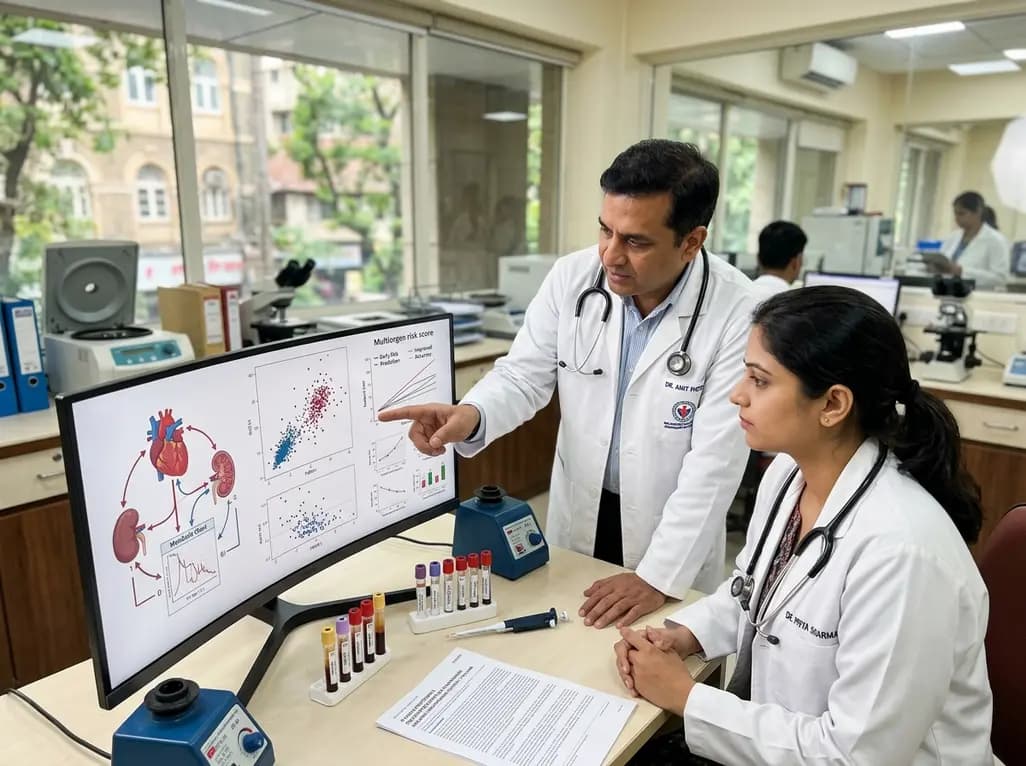
A large UK Biobank study reveals that plasma proteomic signatures capture preclinical organ damage and improve multiorgan risk prediction across early CKM syndrome stages 0 to 2 beyond traditional PREVENT clinical models.
Today
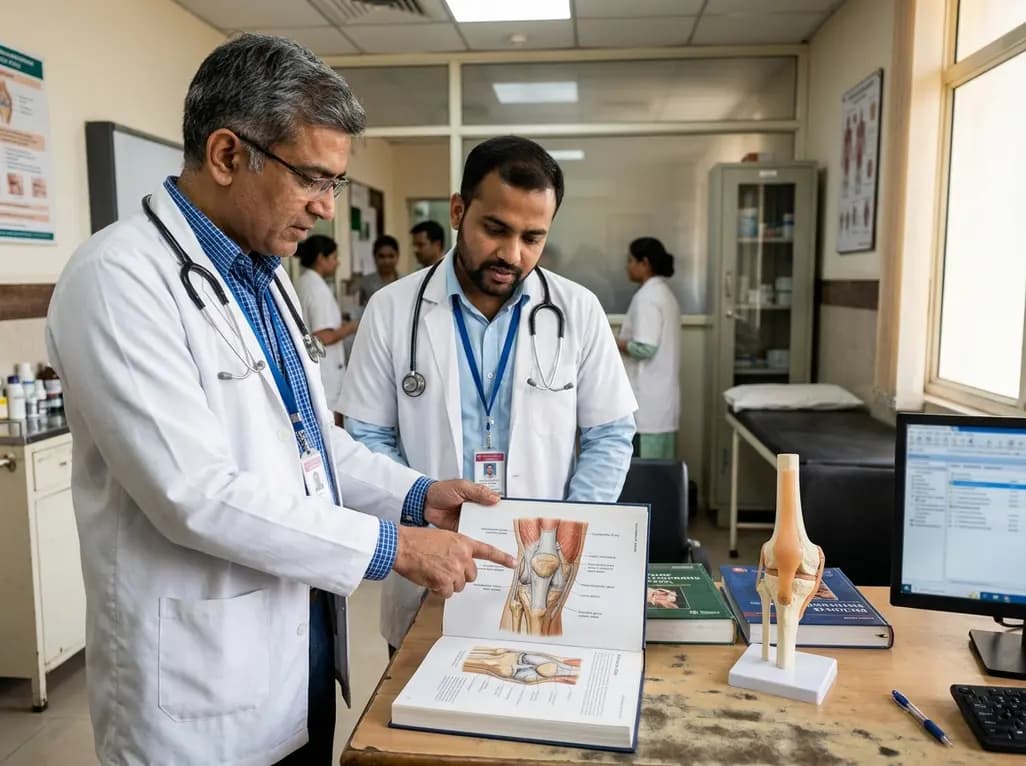
A narrative review investigates whether the articularis genus muscle functions as an independent anatomical entity or blends with the vastus intermedius. We evaluate its morphology, role in retracting the suprapatellar bursa, and direct clinical significance in anterior knee pain and arthroplasty.
Today

A Bayesian multilevel meta-analysis reveals that aerobic training combined with moderate carbohydrate restriction modestly lowers HbA1c in type 2 diabetes. However, sparse data and very low certainty leave incremental benefits over exercise or diet alone unproven, highlighting the need for individualized care.
Today
