.webp&w=384&q=75)

Loading, please wait...
Loading, please wait...

Cervical disc arthroplasty (CDA) has emerged as a major motion-preserving treatment for symptomatic cervical disc disease. This procedure specifically targets patients who remain refractory to nonoperative management after six weeks of dedicated therapy. Surgeons often prefer CDA because it maintains segmental mobility and potentially reduces the risk of adjacent segment disease compared to traditional fusion. However, identifying Cervical Disc Arthroplasty contraindications is essential to ensure patient safety and long-term surgical success. While the technology has advanced, clinical success depends heavily on strict adherence to patient selection criteria. Consequently, understanding the prevalence of these contraindications helps hospitals manage resources and patient expectations effectively. Surgeons must navigate a complex landscape of anatomical and physiological factors before deciding on an arthroplasty device. This challenge is further complicated by the expansion of on-label uses for hybrid and multilevel constructs. Therefore, evaluating the current prevalence of these barriers is vital for modern spine practices. By analyzing historical data and recent cases, researchers can provide a clearer picture of how many patients actually qualify for this advanced intervention. This introduction sets the stage for a deeper look into absolute and relative barriers that dictate the surgical path for degenerative spine patients.
Absolute contraindications represent non-negotiable barriers that prevent the safe implantation of a motion-preserving device. These typically include conditions that compromise the structural integrity of the vertebral body or the biological environment for the implant. For instance, active systemic infection or localized infection at the surgical site remains a strict exclusion criterion. Furthermore, patients with significant osteoporosis or osteopenia face a higher risk of implant subsidence or endplate fracture. Consequently, these individuals are generally excluded from CDA clinical trials and standard care protocols. Severe spondylosis characterized by a lack of motion at the intended level also serves as a primary absolute contraindication. Specifically, if the segment is already naturally fused or severely ankylosed, the mechanical benefits of an artificial disc are rendered moot. Moreover, known allergies to implant materials, such as cobalt-chromium or titanium, represent definitive exclusion factors. Surgeons must also be wary of marked cervical instability, which is often defined as more than three millimeters of translation on flexion-extension radiographs. Ultimately, identifying these absolute factors requires a comprehensive diagnostic workup including advanced imaging and metabolic bone density testing. By recognizing these rigid boundaries, clinicians can avoid catastrophic mechanical failures and prioritize patient safety above all other considerations during the operative planning phase.
Relative contraindications provide a more nuanced challenge for the surgical team compared to absolute barriers. These factors do not automatically disqualify a patient but require careful clinical judgment and shared decision-making. Specifically, conditions such as mild facet arthropathy or moderate disc height loss fall into this category. While some surgeons may proceed with CDA in these cases, others might favor a traditional fusion to prevent post-operative pain. Additionally, preoperative segmental kyphosis remains a topic of significant debate within the spine community. If the kyphosis is severe, it may hinder the device's ability to maintain a neutral sagittal balance. Therefore, surgeons must weigh the potential for motion preservation against the risk of persistent deformity. Furthermore, lifestyle factors such as smoking or chronic steroid use are often viewed as relative risks that might impact bone healing and implant integration. Notably, the expansion of hybrid arthroplasty-fusion constructs has changed the way clinicians view these relative barriers. By combining a fusion at one level and an arthroplasty at another, surgeons can tailor the procedure to the patient's specific pathology. This approach allows for greater flexibility but necessitates a deeper understanding of how relative contraindications affect different levels of the cervical spine. Consistent monitoring of outcomes in these borderline cases is essential for refining future selection criteria.
Recent research at an academic center has shed light on the prevalence of Cervical Disc Arthroplasty contraindications among patients undergoing surgery for degenerative conditions. The study analyzed a cross-sectional cohort of patients treated between early 2022 and late 2024. By reviewing FDA investigational device exemption studies, the authors quantified how often absolute and relative barriers occurred in a real-world surgical population. Interestingly, the data suggests that a significant proportion of patients presenting with degenerative disease exhibit at least one relative contraindication. Specifically, multi-level disease often limits the applicability of single-level FDA-approved devices. Furthermore, the researchers excluded trauma, malignancy, and primary deformity cases to focus strictly on degenerative spine cases. This methodology ensures that the findings are applicable to the majority of elective spine surgeries. The results highlight that while CDA is a powerful tool, it is only suitable for a carefully selected subset of the population. Moreover, the prevalence of these contraindications underscores the continued importance of anterior cervical discectomy and fusion (ACDF) as a versatile standard of care. Consequently, hospitals must maintain proficiency in both techniques to address the diverse needs of their patients. This prevalence data serves as a reality check for surgeons who may be eager to expand their arthroplasty practice without considering the underlying anatomical constraints found in contemporary patient cohorts.
The findings regarding contraindication prevalence have direct implications for how surgeons plan their operative interventions. Specifically, the rise of hybrid constructs—combining fusion and arthroplasty—offers a middle ground for patients with multilevel disease. However, the presence of even one absolute contraindication at any level usually necessitates a move toward total fusion. Furthermore, clinicians must prioritize the restoration of sagittal balance, which can be difficult in the presence of relative contraindications like segmental kyphosis. Therefore, pre-operative planning must include a detailed assessment of each vertebral segment involved in the disease process. Additionally, the study suggests that the shift toward older patient populations with more comorbidities increases the likelihood of encountering contraindications like osteoporosis. Consequently, surgeons in academic and private centers alike must adapt their diagnostic protocols to include DEXA scans more frequently for at-risk groups. Moreover, the educational value of these prevalence studies cannot be overstated for residents and fellows learning the nuances of spine surgery. Ultimately, successful outcomes in motion-preserving surgery are not just about the technical skill of the surgeon but the rigorous application of exclusion criteria. By respecting these boundaries, the medical community can ensure that CDA remains a durable and effective solution for appropriate candidates. This evidence-based approach minimizes complications and maximizes the life-altering benefits of motion preservation.
Looking ahead, the guidelines for cervical disc arthroplasty are likely to evolve as more long-term data becomes available. Specifically, the success of current hybrid procedures may lead to a relaxation of some relative contraindications in the future. Furthermore, technological improvements in implant design might eventually address concerns regarding metal sensitivities or minor instability. However, for the current practitioner, staying within the bounds of evidence-based selection remains the safest path. The recent prevalence study highlights that a large number of patients still do not meet the strict criteria for on-label CDA use. Therefore, continued innovation in both fusion technology and motion-preservation devices is necessary to treat the full spectrum of degenerative disease. Additionally, future research should focus on the outcomes of "off-label" applications in patients with relative contraindications to see if these barriers are as significant as once thought. Notably, artificial intelligence and predictive modeling may soon assist surgeons in identifying the perfect candidates for CDA by analyzing thousands of radiological data points. In the meantime, clinicians should use current prevalence data to inform their patient counseling and resource allocation. By maintaining a balanced view of both the benefits and limitations of arthroplasty, the field of spine surgery will continue to improve patient quality of life. This dedication to precision medicine ensures that every patient receives the most appropriate intervention for their unique spinal condition.
The most common absolute contraindications include active infection, severe osteoporosis, and significant cervical instability. Additionally, patients with a known allergy to the implant's metal alloys or those with a lack of motion at the target segment are typically excluded. These factors are considered rigid because they significantly increase the risk of device failure, subsidence, or systemic complications that could jeopardize the patient's long-term health and surgical outcome.
Relative contraindications, such as mild facet degeneration or segmental kyphosis, require a personalized assessment by the surgeon. Unlike absolute barriers, these factors allow for a degree of clinical flexibility. If the surgeon believes the motion-preserving benefits outweigh the risks of pain or deformity, they may proceed with CDA. However, in many cases, these relative factors may lead the surgeon to choose a fusion (ACDF) to ensure a more predictable and stable result.
Bone density is critical because the artificial disc relies on the strength of the vertebral endplates for long-term stability. If a patient has osteoporosis or severe osteopenia, the bone may be too weak to support the mechanical loads of the implant. This can lead to subsidence, where the device sinks into the vertebral body, or even fractures. Therefore, preoperative bone density testing is essential for identifying patients at high risk for these mechanical failures.
Disclaimer: This content is for informational and educational purposes only. It does not constitute medical advice or establish a doctor-patient relationship. Always seek the advice of a qualified healthcare provider regarding any medical condition or treatment. Refer to the latest local and national guidelines for clinical practice.
References
Ansari D et al. What is the prevalence of contraindications to cervical arthroplasty among operative degenerative spine cases at an academic center? Neurosurg Focus. 2026 Jul 01. doi: 10.3171/2026.3.FOCUS251101. PMID: 42385250.
Zeng J, et al. Trends in Indications and Contraindications for Cervical Disk Arthroplasty from 2009 to 2019. Spine (Phila Pa 1976). 2024 Aug 01;49(15):1067-1074. doi: 10.1097/BRS.0000000000004944.
Badhiwala JH, et al. Cervical disc arthroplasty versus anterior cervical discectomy and fusion: a meta-analysis of rates of adjacent-level surgery to 7-year follow-up. J Spine Surg. 2020 Mar;6(1):217-232. doi: 10.21037/jss.2020.01.07.

Read summarized clinical updates, watch expert medical content, and earn CME certifications right from your smartphone.
Open your smartphone camera to scan and install.





New research defines the contemporary prevalence of absolute and relative contraindications to cervical disc arthroplasty (CDA) among patients with degenerative spine disease. The study highlights the clinical challenges in patient selection for motion-preserving spine surgery.
3 months ago

A retrospective cohort study reveals that frailty quadruples the odds of pressure injuries in hospitalized older adults. Integrating the Clinical Frailty Scale with comprehensive geriatric care is crucial for identifying vulnerability early and implementing targeted multidisciplinary prevention.
Today

Occult maternal malignancy accounts for 3.82% of persistent unreportable NIPT results with genomic noise. Multiple chromosomal aberrations, notably on chromosome 18, warrant thorough oncological evaluation and whole-body MRI to ensure timely maternal diagnosis while preserving fetal care.
Today

This article reviews the forensic and clinical complexities of acute myocarditis arising on left ventricular hypertrophy in children, highlighting early diagnostic red flags and multidisciplinary postmortem autopsy protocols.
Today
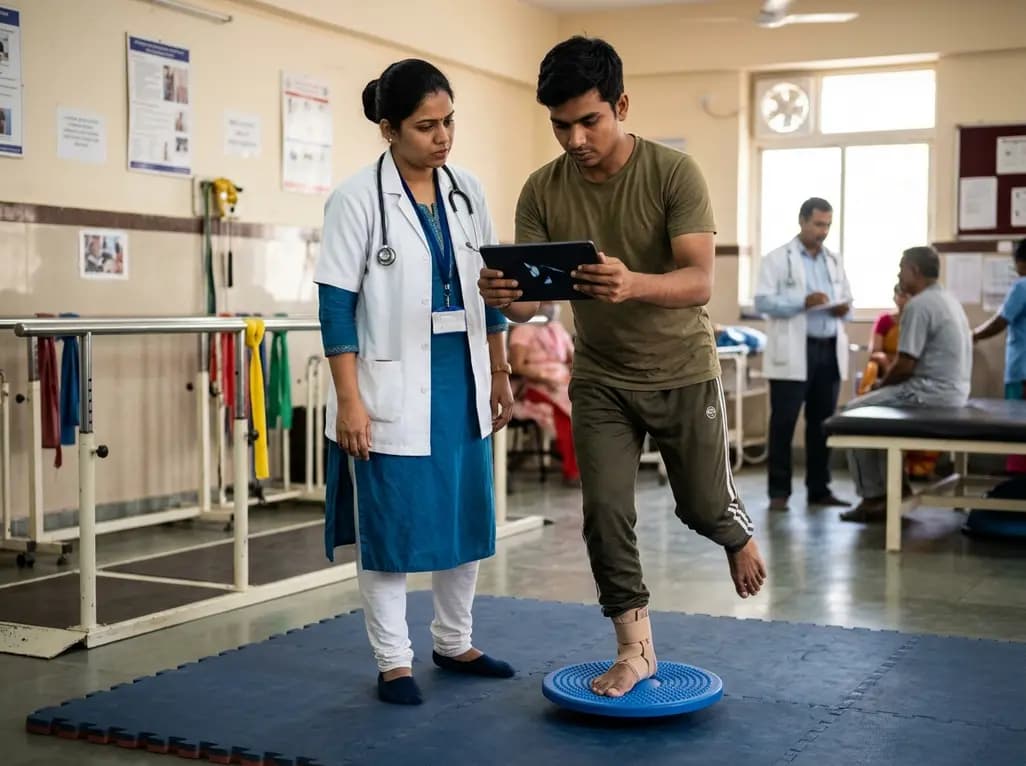
A randomized controlled trial demonstrates that an eight-week dual-task training intervention significantly improves static and dynamic postural control over standard balance exercises in individuals with chronic ankle instability, addressing critical neurocognitive deficits during athletic and daily activities.
Today

A retrospective cohort study of 7,716 ICU patients from the MIMIC-IV database demonstrates that Gradient Boosting Decision Trees significantly outperform traditional SOFA scores in predicting in-hospital mortality among patients with sepsis and diabetes, with SHAP analysis providing clinical interpretability.
Today
