

Loading, please wait...
Loading, please wait...

Surgical resection provides immediate symptomatic relief and histological confirmation for patients presenting with secondary intracranial neoplasms. However, surgical intervention alone yields suboptimal cavity control without adjuvant radiation. Historically, clinicians utilized whole-brain radiotherapy, but cognitive sequelae led oncologists toward stereotactic radiosurgery and localized brachytherapy. Today, managing resected brain metastases requires balancing durable tumor eradication against toxicities like radiation necrosis. A landmark systematic review and meta-analysis synthesized evidence comparing pre-operative stereotactic radiosurgery against intraoperative cesium-131 brachytherapy. Consequently, this study offers vital insights for neurosurgeons and radiation oncologists selecting optimal perioperative treatments.
Traditionally, radiation oncologists delivered cavity stereotactic radiosurgery several weeks after surgical resection. Nevertheless, post-operative cavity irradiation introduces logistical delays and risks target volume changes as surgical cavities collapse or expand. In addition, seeding of microscopic disease into cerebrospinal fluid pathways during surgery poses a known hazard. To overcome these post-operative limitations, clinicians developed two distinct localized approaches. First, pre-operative stereotactic radiosurgery delivers targeted external beam radiation directly to intact tumors before surgical resection. Therefore, the radiation oncologist delineates sharp anatomical tumor margins, which decreases irradiated normal brain volume. Furthermore, radiating tumor cells before craniotomy sterilizes microscopic clones, thereby theoretically reducing leptomeningeal dissemination. In contrast, intraoperative cesium-131 brachytherapy implants radioactive seeds or collagen tiles directly into the resection cavity during surgery. As a result, treatment begins immediately without post-operative convalescent delays. Cesium-131 delivers low-energy radiation with a rapid dose fall-off, which spares distant neurocognitive pathways while delivering concentrated cytocidal doses locally. Moreover, the phase 3 ROADS trial demonstrated superior surgical-bed control with cesium-131 tiles compared to post-operative stereotactic radiotherapy. Thus, both pre-operative radiosurgery and intraoperative brachytherapy emerged as promising alternatives to post-operative irradiation.
The systematic review evaluated 15 pre-operative radiosurgery cohorts encompassing 918 patients and four cesium-131 brachytherapy cohorts comprising 207 patients. Overall, both modalities established remarkably high rates of oncologic disease containment within treated cavities. The pooled 12-month local control reached 97 percent with cesium-131 brachytherapy and 90 percent with pre-operative stereotactic radiosurgery. Although the standard random-effects model showed a borderline statistical trend favoring brachytherapy, meta-regression revealed a significant advantage. Furthermore, when investigators analyzed studies reporting observed raw patient counts, cesium-131 achieved an impressive 99 percent local control compared to 90 percent for radiosurgery. This difference reflects continuous intraoperative delivery that treats surgical margins immediately upon excision. In contrast, surgical cavity edges occasionally exhibit microscopic residual cells that external beam treatments might under-dose if tissue margins shift before surgery. Nevertheless, both interventions demonstrated superior local containment compared to historic observation cohorts. Moreover, median overall survival remained comparable across cohorts, reaching 15.6 months with brachytherapy and 14.4 months with pre-operative radiosurgery. When excluding the outlying trial cohort, median survival for brachytherapy was 11.0 months. Consequently, oncologists can anticipate strong cavity preservation with either technique, though cesium-131 demonstrates slight numeric superiority in crude tumor control rates.
To understand why cesium-131 brachytherapy demonstrated higher crude local control, investigators explored fractionation patterns within pre-operative radiosurgery cohorts. Significantly, pre-operative protocols varied substantially regarding the delivery of single-fraction versus hypofractionated radiation doses. The subgroup analysis revealed that hypofractionated pre-operative radiosurgery achieved a remarkable 96 percent 12-month local control rate. Conversely, single-fraction pre-operative radiosurgery achieved only 86 percent local control, generating a statistically significant disparity. Therefore, the apparent superiority of cesium-131 brachytherapy over radiosurgery largely disappeared when comparing brachytherapy against hypofractionated radiosurgery regimens. Radiation oncologists frequently de-escalate doses during single-fraction treatments for larger lesions to minimize adjacent parenchymal necrosis. Unfortunately, this conservative single-fraction dose reduction often compromises cytocidal efficacy against aggressive radioresistant clones. In contrast, hypofractionated external regimens safely escalate the biologically effective dose over three to five sessions while preserving healthy brain architecture. Similarly, cesium-131 delivers a sustained high biological dose over several weeks without causing excessive acute normal tissue strain. Consequently, clinicians must recognize that radiation biology and dosing schedules strongly dictate local recurrence risk. Optimizing radiosurgery schedules through hypofractionation bridges the efficacy gap, delivering outcomes comparable to intraoperative brachytherapy implants.
Beyond local cavity containment, neuro-oncologists must carefully evaluate adverse toxicities, specifically leptomeningeal disease and symptomatic radiation necrosis. Historically, post-operative cavity radiosurgery carried elevated rates of leptomeningeal dissemination due to intraoperative tumor cell spillage. In this meta-analysis, leptomeningeal disease rates remained relatively modest across both specialized approaches. Patients treated with cesium-131 brachytherapy experienced an overall leptomeningeal disease rate of 9.1 percent, compared to 5.1 percent among patients receiving pre-operative radiosurgery. Although pre-operative external radiation sterilizes cells before surgical disruption, the observed difference between modalities did not reach statistical significance. Similarly, symptomatic radiation necrosis occurred infrequently in both cohorts. Radiation necrosis was identified in 0.7 percent of brachytherapy cases versus 5.2 percent of pre-operative radiosurgery cases, showing no statistically significant variation. Because cesium-131 exhibits steep dose fall-off, neighboring normal brain parenchyma absorbs minimal extraneous radiation exposure. Likewise, pre-operative radiosurgery conforms radiation tightly to the intact sphere before resection, minimizing cavity border over-treatment. Consequently, both techniques provide clean safety margins compared to historical post-operative stereotactic regimens. Clinicians can therefore reassure patients that neither strategy excessively increases toxic parenchymal necrosis or diffuse cerebrospinal fluid seeding.
Multidisciplinary neuro-oncology teams must weigh operational practicalities alongside statistical efficacy when selecting therapeutic modalities. Intraoperative cesium-131 brachytherapy eliminates external radiation appointments entirely, providing an attractive one-and-done intervention for surgical candidates. In addition, patients can promptly initiate necessary systemic therapies, such as targeted agents or immune checkpoint inhibitors, without delaying for postoperative radiation planning. Furthermore, brachytherapy serves as an invaluable salvage option for lesions arising in previously irradiated brain regions where re-irradiation with external beams carries unacceptable risks. However, brachytherapy requires meticulous radiation safety protocols, interdisciplinary surgical coordination, and specialized regulatory permissions. Conversely, pre-operative stereotactic radiosurgery requires no physical implants or specialized operating room radiation precautions, making it accessible across standard radiotherapy centers. Moreover, pre-operative radiosurgery allows comprehensive histological evaluation after tissue resection without foreign body artifacts in future surveillance neuroimaging. For patients with solitary large lesions requiring urgent surgical decompression, delaying craniotomy for pre-operative radiation planning may occasionally prove challenging. Therefore, centers should select modalities based on tumor size, patient performance status, institutional expertise, and urgency of systemic disease control. Both modalities clearly surpass older historical paradigms, offering personalized precision care for secondary brain malignancies.
Although this meta-analysis synthesizes substantial international evidence, several clinical questions demand prospective clarification. Currently, direct randomized comparisons evaluating pre-operative stereotactic radiosurgery against intraoperative cesium-131 brachytherapy remain scarce. Retrospective heterogeneity across institutional cohorts introduces potential selection biases regarding patient age, functional performance, baseline tumor diameters, and histology. Furthermore, modern oncology increasingly incorporates systemic targeted therapies and immune checkpoint blockade, which significantly modify intracranial responses. Researchers must actively investigate how intracranial brachytherapy and stereotactic radiosurgery synergize with systemic immunotherapy without exacerbating neuroinflammation or delayed radionecrosis. Additionally, health economic analyses represent an essential consideration for diverse healthcare ecosystems, particularly within developing nations. Intraoperative collagen tile brachytherapy incurs distinct upfront procedural and radiopharmaceutical acquisition expenses, whereas stereotactic radiosurgery relies primarily on capital equipment and repeated linear accelerator sessions. Prospective cost-effectiveness evaluations comparing quality-adjusted life years, salvage intervention requirements, and travel burdens will provide actionable guidance for resource allocation. Ultimately, ongoing randomized clinical trials will refine patient stratification criteria, clarifying which metastatic presentations benefit maximally from each innovative intervention.
Cesium-131 brachytherapy continuously emits low-energy radiation directly into the cavity edges, delivering a high biologically effective dose immediately after tumor removal. In contrast, clinicians often de-escalate single-fraction external radiosurgery doses for larger brain tumors to avoid brain necrosis. Consequently, hypofractionated radiosurgery matches brachytherapy control rates by delivering higher cumulative doses safely.
Pre-operative stereotactic radiosurgery targets intact tumors before craniotomy, theoretically sterilizing malignant cells before surgical instruments can disrupt them. While this systematic review identified lower leptomeningeal disease rates with pre-operative radiosurgery compared to brachytherapy (5.1% versus 9.1%), the numerical difference was not statistically significant. Both modalities maintain acceptable leptomeningeal safety profiles.
Cesium-131 brachytherapy implants radiation tiles during surgery, allowing immediate therapeutic delivery without post-operative treatment visits. This single-stage approach enables patients to resume systemic chemotherapy or immunotherapy faster. Conversely, pre-operative stereotactic radiosurgery requires radiotherapy planning sessions before surgery, though it avoids intraoperative isotope handling and post-surgical radiation delays entirely.
Disclaimer: This content is for informational and educational purposes only. It is not intended to be a substitute for professional medical advice, diagnosis, or treatment. Always seek the advice of your physician or other qualified health provider with any questions you may have regarding a medical condition. Refer to the latest local and national guidelines for clinical practice.
References

Read summarized clinical updates, watch expert medical content, and earn CME certifications right from your smartphone.
Open your smartphone camera to scan and install.





A systematic review compares pre-operative stereotactic radiosurgery and intraoperative cesium-131 brachytherapy for resected brain metastases. While cesium-131 achieved 97% 12-month local control versus 90% for radiosurgery, hypofractionated radiosurgery matched brachytherapy outcomes with similar safety profiles.
Today

A large retrospective cohort study demonstrates that explainable machine learning models, notably XGBoost, accurately predict hospital admission at emergency triage. By analyzing routine triage parameters, hospitals can streamline bed allocation, decrease boarding times, and alleviate acute care overcrowding.
Today

A new quality-improvement initiative reveals that universal maternal mental health screening in the NICU increased screening rates from 29.5% to 95.0%, with nearly 60% of screened mothers requiring psychosocial referrals, highlighting the urgent need for embedded mental health resources.
Today
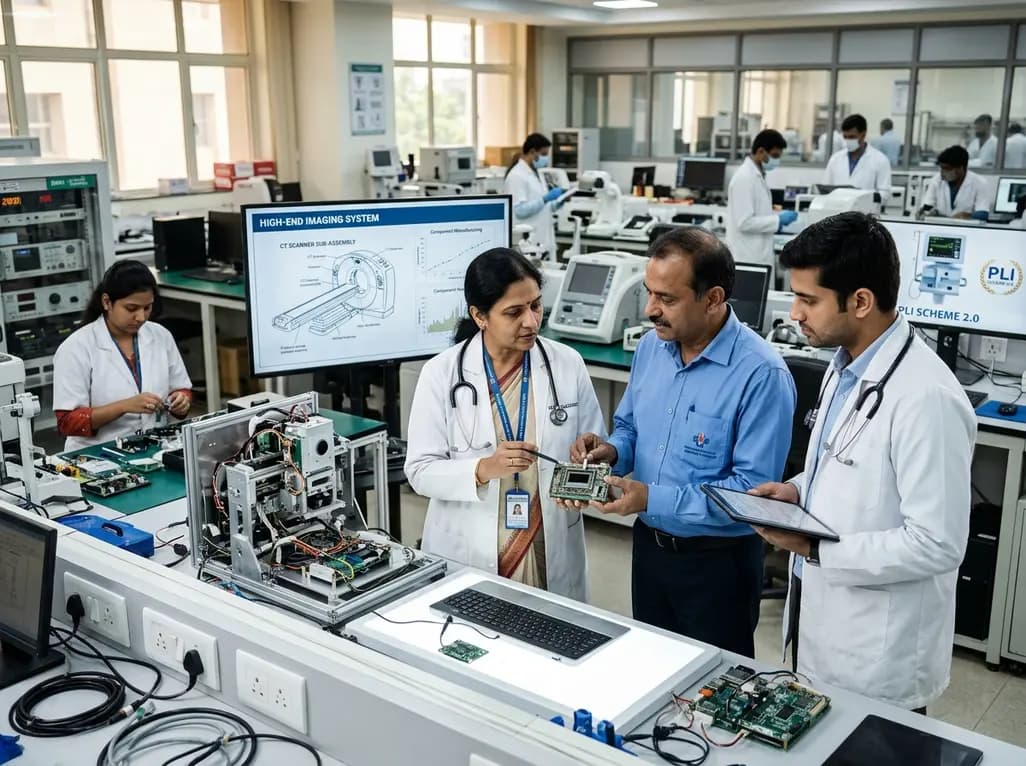
The Department of Pharmaceuticals has extended the medical devices PLI scheme to 2035-36 with a Rs 2,700 crore outlay. Featuring relaxed investment barriers and eliminated sales thresholds, the revised framework targets deep manufacturing, high-end diagnostics, critical MedTech components, and supply resilience.
Today
A metabolomic study reveals that aging delays glutathione synthesis and gamma-glutamylcysteine accumulation following muscle injury. Although precursor supplementation targets this enzymatic bottleneck, in vitro tests show no immediate effect on myogenesis, highlighting the complexity of muscle repair in older adults.
Today

A systematic review evaluates psychological interventions for smoking cessation in diabetes, showing short-term success but highlighting challenges in long-term abstinence.
Today
