.webp&w=384&q=75)

Loading, please wait...
Loading, please wait...

Optimizing preoperative HbA1c bariatric surgery protocols remains a crucial priority for surgical teams worldwide. Clinicians routinely assess glycated hemoglobin prior to metabolic operations. However, significant debate persists regarding rigid glycemic cutoffs. Historically, surgical teams delayed elective procedures for patients with elevated glycemia. They feared increased wound failure, anastomotic leakage, and hospital readmissions. However, recent evidence indicates that a single biomarker fails to predict short-term outcomes accurately. Therefore, comprehensive risk profiling must integrate metabolic, demographic, and phenotypic variables to optimize clinical outcomes effectively.
Metabolic surgery offers durable benefits for individuals living with obesity and type 2 diabetes mellitus. Surgical intervention induces rapid neurohormonal shifts, enhances incretin secretion, and restores peripheral insulin sensitivity. Consequently, many patients achieve swift glycemic improvement. Nevertheless, surgical teams have historically approached candidates with elevated glycated hemoglobin with hesitation. Chronic hyperglycemia impairs immune responses, suppresses neutrophil function, and compromises tissue perfusion. Therefore, surgeons often anticipate higher rates of surgical site infections, delayed wound healing, and anastomotic dehiscence. In response, many programs instituted arbitrary HbA1c thresholds, frequently withholding surgery when levels exceeded seven or eight percent. However, delaying metabolic surgery prolongs vascular damage in progressive diabetes. Furthermore, rapid pharmacological reduction before surgery does not consistently lower perioperative complications. Thus, clinicians require nuanced evidence regarding true short-term morbidity drivers. Modern research increasingly questions whether moderate hyperglycemia independently drives adverse 30-day outcomes. As a result, experts advocate for multivariate risk modeling rather than rigid numerical cutoffs.
A rigorous study conducted at a tertiary center in the United Arab Emirates evaluated 1,778 consecutive bariatric patients operated between 2019 and 2024. Researchers extracted comprehensive perioperative parameters and 30-day postoperative outcomes from a prospective registry. The investigators stratified the cohort into two groups: controlled HbA1c (6.5 percent or less, comprising 1,557 patients) and elevated HbA1c (greater than 6.5 percent, comprising 221 patients). Notably, baseline demographics differed between cohorts. Patients presenting with elevated HbA1c were older, averaging 43.2 years compared to 34.6 years in the controlled group. In addition, patients in the elevated group exhibited higher comorbid disease rates. To eliminate confounding, investigators implemented inverse probability weighting using propensity scores. This technique balanced age, sex, and body mass index across both groups. Furthermore, researchers applied unsupervised principal component analysis followed by K-means clustering. This dual approach allowed investigators to evaluate whether HbA1c alone drove complications or whether distinct multivariate clusters dictated surgical safety.
The findings from this propensity-weighted analysis challenge traditional assumptions regarding isolated glycemic markers. After adjusting for confounding factors through inverse probability weighting, elevated preoperative HbA1c alone did not cause a significant surge in 30-day major complications. Instead, baseline physiological health, chronological age, and vascular phenotype played decisive roles in determining short-term morbidity. Consequently, clinicians must recognize that elevated glycemia operates within a complex physiological network. When surgeons evaluate candidates for sleeve gastrectomy or gastric bypass, relying exclusively on arbitrary HbA1c thresholds can needlessly delay metabolic surgery. Moreover, strict cutoffs penalize older patients who have long-standing diabetes and established insulin resistance. Although perioperative glucose monitoring remains essential to prevent acute metabolic crises, chronic glycated hemoglobin should not serve as an absolute gatekeeper. Therefore, multidisciplinary teams should view preoperative HbA1c bariatric surgery metrics as continuous variables that guide holistic perioperative management rather than binary disqualifiers.
Rather than relying on linear thresholds, the study utilized principal component analysis and K-means clustering to uncover underlying patient archetypes. This unsupervised machine learning methodology identified distinct multivariate subgroups that conventional analyses overlook. Specifically, clustering revealed that chronological age synergizes with chronic hyperglycemia to amplify postoperative vulnerability. Young patients with elevated HbA1c demonstrated robust physiological resilience and favorable 30-day recovery profiles. In contrast, older patients with elevated HbA1c clustered into a distinct high-risk category characterized by elevated perioperative complications and extended hospitalizations. This crucial distinction highlights the value of phenotyping over single-variable decision-making. Furthermore, clustering models allow surgical teams to distinguish between disease chronicity and transient glycemic elevations. By grouping patients through algorithmic multidimensional clustering, clinicians can design targeted perioperative interventions. For example, high-risk clusters may benefit from intensive intraoperative monitoring and structured post-discharge surveillance. Consequently, machine learning tools empower clinicians to personalize metabolic care pathways efficiently.
These statistical insights hold immense relevance for healthcare practitioners in India, where diabesity continues to escalate rapidly. South Asian individuals characteristically develop type 2 diabetes at lower body mass indices and younger ages compared to Western populations. Consequently, Indian physicians frequently encounter candidates with severe insulin resistance, pronounced visceral adiposity, and suboptimal glycemic control. Applying rigid international cutoffs would inappropriately exclude thousands of deserving Indian patients from metabolic surgery. Instead, Indian clinicians must adopt multidimensional risk stratification that integrates age, diabetes duration, end-organ function, and visceral adiposity. Furthermore, Indian multidisciplinary teams comprising bariatric surgeons, endocrinologists, and dietitians must coordinate closely. While clinicians must avoid operating during acute metabolic decompensation, they should avoid indefinite surgical delays aimed at achieving arbitrary glycemic targets. Additionally, teams must implement proactive glycemic protocols, including continuous glucose monitoring and cautious SGLT2 inhibitor cessation, to mitigate perioperative complications. Ultimately, multivariate risk assessment will expand access to curative metabolic interventions across India.
Current clinical evidence suggests that clinicians should not cancel bariatric surgery based strictly on an isolated elevated HbA1c level. While severe acute hyperglycemia requires stabilization to prevent diabetic ketoacidosis, moderate chronic elevations do not independently increase 30-day major complications. Instead, surgical teams should evaluate the patient’s complete clinical profile, including age, functional status, and organ reserve, ensuring comprehensive perioperative glycemic management rather than imposing arbitrary administrative delays.
Multivariate clustering demonstrates that chronological age significantly amplifies the surgical risk associated with chronic hyperglycemia. While younger patients with elevated HbA1c often possess sufficient physiological resilience to undergo uncomplicated procedures, older patients with elevated HbA1c face heightened vulnerability. This older subgroup demonstrates higher rates of 30-day postoperative complications, longer hospital stays, and slower wound recovery, necessitating specialized anesthetic management, closer hemodynamic monitoring, and structured post-discharge follow-up.
Indian patients require tailored perioperative strategies due to their elevated visceral adiposity and early cardiometabolic vulnerability. Clinicians must discontinue sodium-glucose cotransporter-2 inhibitors at least three days prior to surgery to avoid euglycemic diabetic ketoacidosis. Furthermore, teams should institute perioperative capillary blood glucose or continuous glucose monitoring, optimize basal insulin titration, ensure diligent hydration, and provide early mobilization to minimize infection, acute kidney injury, and venous thromboembolism risks.
Disclaimer: This content is for informational and educational purposes only... Refer to the latest local and national guidelines for clinical practice.
References

Read summarized clinical updates, watch expert medical content, and earn CME certifications right from your smartphone.
Open your smartphone camera to scan and install.





A recent UAE cohort study shows that preoperative HbA1c alone does not dictate 30-day bariatric surgery morbidity. Multivariate clustering and propensity weighting reveal that age combined with hyperglycemia defines high-risk phenotypes, offering vital lessons for clinical practice in India.
4 weeks back

A systematic review of 41 preclinical studies reveals that baicalin dampens systemic inflammation, inhibits NF-κB and NLRP3 pathways, and improves organ preservation in sepsis models. However, substantial study heterogeneity and a complete lack of human clinical trials highlight the need for further translational research.
Today
Discover the crucial distinctions between mesonephric and mesonephric-like proliferations of the female genital tract. Learn the key histomorphologic, immunohistochemical, and molecular differences essential for accurate diagnosis and clinical management.
Today
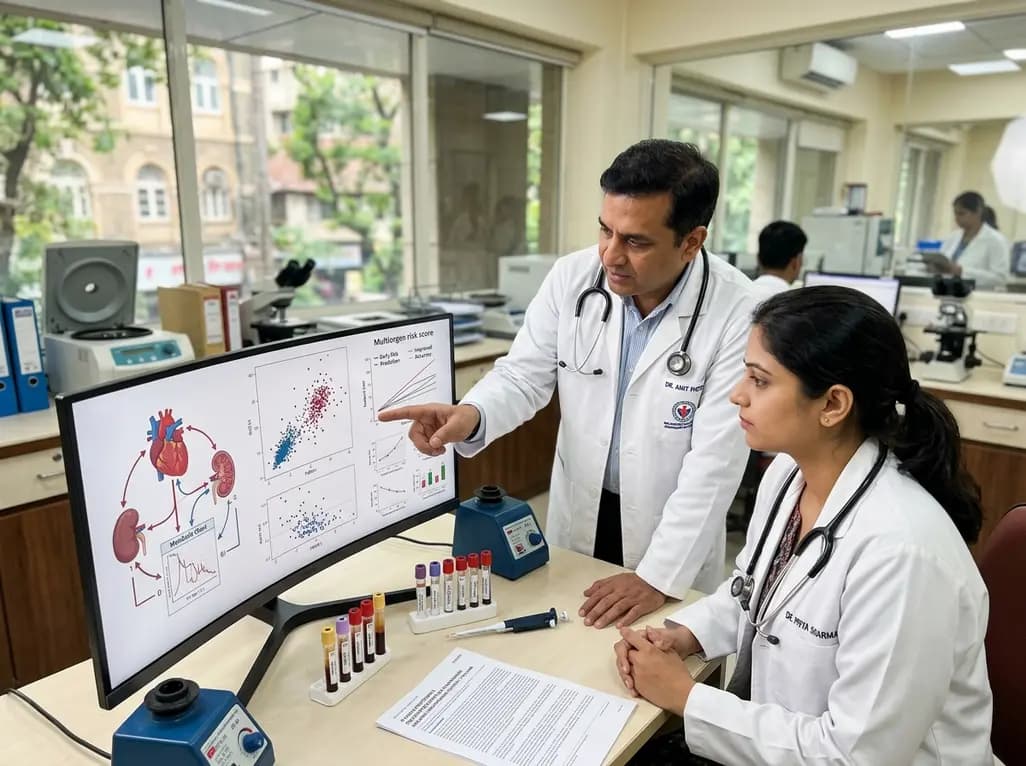
A large UK Biobank study reveals that plasma proteomic signatures capture preclinical organ damage and improve multiorgan risk prediction across early CKM syndrome stages 0 to 2 beyond traditional PREVENT clinical models.
Today
A narrative review investigates whether the articularis genus muscle functions as an independent anatomical entity or blends with the vastus intermedius. We evaluate its morphology, role in retracting the suprapatellar bursa, and direct clinical significance in anterior knee pain and arthroplasty.
Today

A Bayesian multilevel meta-analysis reveals that aerobic training combined with moderate carbohydrate restriction modestly lowers HbA1c in type 2 diabetes. However, sparse data and very low certainty leave incremental benefits over exercise or diet alone unproven, highlighting the need for individualized care.
Today
