.webp&w=384&q=75)

Loading, please wait...
Loading, please wait...

Acute ischemic stroke and intracerebral hemorrhage demand immediate therapeutic intervention to salvage vulnerable brain tissue. Because cerebral ischemia destroys millions of neurons each minute, delivering neuroprotective or hemodynamic therapies before hospital arrival offers substantial clinical value. However, conducting rigorous prehospital stroke trials within conventional emergency medical services (EMS) presents multifaceted logistical, scientific, and ethical hurdles. A recent international consensus statement published in Stroke addresses these barriers. The statement provides investigators with actionable recommendations regarding patient selection, ethical consent, pragmatic trial design, and technological integration.
Operational complexity represents a significant challenge for emergency medical services personnel during hyperacute clinical research. Emergency paramedics manage critical patient stabilization while coordinating transport to comprehensive stroke centers. Consequently, layering complex clinical trial protocols onto standard resuscitation pathways risks delaying definitive acute reperfusion therapy. Investigators must develop lean, streamlined study workflows that minimize on-scene time. For example, prehospital protocols should restrict on-scene data entry to essential eligibility criteria. Furthermore, clinical trials must evaluate interventions that personnel can administer rapidly, such as intramuscular injections, transdermal patches, or pre-packaged intravenous infusions. In addition, ambient environmental factors complicate medication integrity inside conventional ambulances. Extreme temperature fluctuations during field operations demand robust cold-chain monitoring systems. EMS agencies require tailored storage equipment and temperature-tracking sensors to preserve investigational medicinal products. Therefore, researchers must establish clear logistical procedures with emergency response teams before initiating recruitment. Close collaboration between academic stroke centers and municipal ambulance networks ensures that research protocols do not disrupt routine emergency care.
Accurate field identification of eligible stroke patients remains a major obstacle for field investigators. Paramedics frequently encounter stroke mimics, including hypoglycemia, severe migraines, functional neurological disorders, and seizures. Consequently, enrolling non-stroke patients dilutes trial power and exposes participants to unnecessary pharmacological risks. To mitigate this issue, expert panels recommend validated prehospital neurological assessment scales. Standardized screening instruments, such as the Los Angeles Prehospital Stroke Screen or the Cincinnati Prehospital Stroke Scale, enhance diagnostic precision in transit. Moreover, large vessel occlusion screening tools help identify individuals who require direct diversion to endovascular thrombectomy centers. Emerging digital health tools provide further diagnostic support. Paramedics can connect directly with hospital-based vascular neurologists via secure mobile telemedicine platforms. Real-time video evaluations enable rapid joint assessments, refining patient selection before drug delivery. Similarly, non-invasive portable biomarkers and electroencephalographic caps show promise for differentiating acute ischemia from intracerebral hemorrhage. Ultimately, combining clinical acumen with objective diagnostic technology ensures accurate candidate selection in conventional ambulances.
Securing informed consent represents one of the most intricate ethical challenges in emergency stroke research. Acute cerebral injury frequently causes severe aphasia, cognitive impairment, or altered consciousness. Therefore, most acute stroke victims cannot provide direct informed consent during initial prehospital assessment. Furthermore, family members or legally authorized surrogates may not be present at the emergency scene. To prevent exclusionary selection bias and delays, researchers often utilize exception-from-informed-consent or deferred consent frameworks. Regulatory bodies permit these models only under strict institutional review board oversight. Investigators must demonstrate that the clinical condition is life-threatening and that the potential intervention holds prospective therapeutic benefit. In addition, research teams must execute thorough community consultation and public notification campaigns prior to trial initiation. Once paramedics stabilize the patient and identify family members, investigators must approach surrogates promptly to disclose enrollment. Surrogates retain full autonomy to continue trial participation or withdraw consent without altering standard clinical care. Thus, balanced consent frameworks protect vulnerable individuals while advancing critical resuscitation science.
Designing statistical architectures for ambulance-based studies requires specialized methodological approaches. Traditional individual-level fixed randomization often proves difficult in fast-paced field scenarios. For instance, carrying multiple active and placebo treatment kits inside standard emergency vehicles creates stocking complexity and potential dispensing errors. Consequently, many trialists recommend cluster-randomized or stepped-wedge designs. In these pragmatic paradigms, entire ambulance stations or calendar periods alternate between active and control interventions. This structure reduces cognitive burden on paramedics and prevents treatment cross-contamination during emergency responses. Furthermore, investigators must select clinically meaningful primary endpoints that reflect ultra-early stabilization. While the modified Rankin Scale assessed at 90 days remains the gold standard functional metric, intermediate surrogate endpoints provide valuable pathophysiological insights. Researchers frequently monitor early neurological recovery at 24 hours, infarct growth rates, and peri-hematoma edema expansion. In addition, adaptive trial designs permit mid-study modifications, such as sample size re-estimation or arm dropping based on pre-specified interim analyses. Accordingly, rigorous statistical modeling preserves scientific power while accommodating the unpredictable realities of emergency transit.
Scalable digital solutions play a transformative role in standardizing prehospital research operations across regional health systems. While mobile stroke units with built-in computed tomography scanners offer immense diagnostic capability, their capital costs limit widespread deployment. In contrast, conventional ambulance fleets operate ubiquitously across urban, suburban, and rural geographies. Integrating lightweight, internet-connected mobile tablets allows paramedics to input trial variables directly into secure electronic data capture registries. Furthermore, automated dispatch algorithms can identify prospective candidates based on caller emergency descriptions. These digital triggers alert nearby study-equipped paramedic units to respond immediately. Cloud-based software systems also manage inventory distribution, alerting pharmacy monitors when investigational kits near expiration dates. Moreover, wearable physiological sensors enable continuous transmission of vital signs to receiving trauma and stroke teams. As artificial intelligence software advances, predictive triage algorithms will guide paramedics through complex inclusion criteria in seconds. Consequently, scalable digital infrastructure democratizes research participation, allowing resource-constrained emergency systems to contribute meaningfully to global stroke innovation.
Prehospital stroke trials encounter hurdles such as compressed therapeutic timeframes, diagnostic uncertainty in field settings, and high paramedic workloads during emergencies. Furthermore, investigators must resolve strict informed consent challenges, manage rapid on-scene randomization, and ensure cold-chain drug integrity during transit. Overcoming these barriers requires standardized triage algorithms, resilient mobile technology, and robust multidisciplinary coordination.
Deferred or exception-from-informed-consent frameworks allow paramedics to administer ultra-early investigational interventions when patients lack decision-making capacity and legally authorized representatives are absent. Consequently, researchers inform surrogates or patients as soon as feasible post-stabilization to secure ongoing trial consent. Regulatory authorities enforce strict ethical criteria, requiring prior community consultation and extensive public disclosure.
Mobile stroke units offer specialized prehospital computed tomography, but they remain costly and geographically restricted. In contrast, conventional ambulances cover vast diverse populations across urban and rural healthcare regions. Therefore, testing neuroprotective or hemodynamic strategies within standard emergency fleets provides superior operational scalability, broader global generalizability, and equitable trial representation across healthcare delivery models.
Disclaimer: This content is for informational and educational purposes only... Refer to the latest local and national guidelines for clinical practice.
References

Read summarized clinical updates, watch expert medical content, and earn CME certifications right from your smartphone.
Open your smartphone camera to scan and install.





An international expert consensus statement in Stroke outlines key operational, ethical, and technological priorities for designing and conducting prehospital stroke trials within conventional emergency medical services, establishing a practical framework for ultra-early acute intervention research.
Today

A retrospective analysis of over 100,000 voluntary testing visits reveals shifting trends in HIV, syphilis, and HCV seropositivity. The findings highlight the critical role of integrated triple screening, behavioral risk assessment, and rapid linkage to care in modern clinical practice.
Today

A recent qualitative study evaluates institutional gaps across health, police, and justice sectors in supporting survivors of intimate partner violence. Healthcare providers must bridge procedural fragmentation with empathetic, trauma-informed care and cross-sector coordination to safeguard vulnerable patients.
Today

A study evaluates axillary arteriovenous fistula creation for resolving pulmonary arteriovenous malformations after bidirectional cavopulmonary connection. The technique achieved 75% clinical improvement and successfully bridged patients to total cavopulmonary connection.
Today

A cross-sectional study reveals a strong positive correlation between problematic internet use and kinesiophobia in adults aged 18-45 with non-specific low back pain, highlighting how digital overuse reinforces movement fear and complicates musculoskeletal recovery.
Today
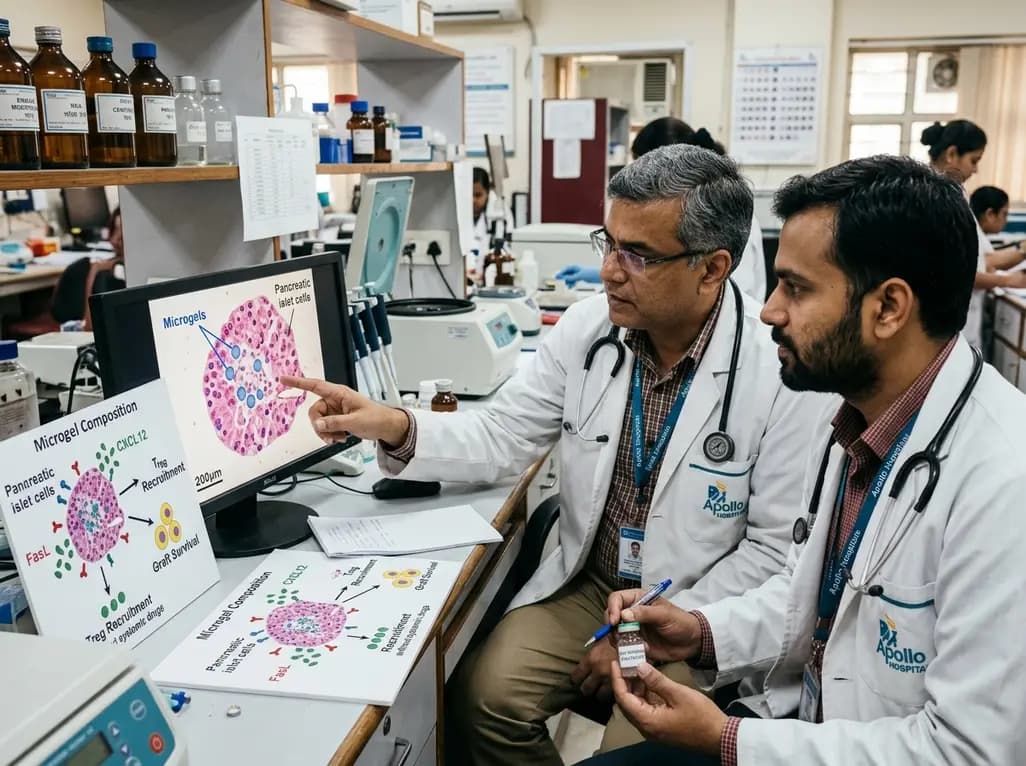
A novel microgel platform presenting FasL and protease-resistant CXCL12 enables sustained allogeneic islet survival and glycemic control without systemic immunosuppression, enhancing local Treg recruitment and graft revascularization.
Today
