

Loading, please wait...
Loading, please wait...

Prehospital stroke triage remains a critical decision in emergency neurovascular care. When emergency medical teams identify acute neurological deficits, they face a pivotal dilemma between local stabilization and specialized intervention. Consequently, clinicians frequently debate whether bypassing primary centers to reach comprehensive facilities improves functional recovery. A comprehensive systematic review published in Neurology evaluates this vital clinical controversy.
Acute ischemic stroke from large vessel occlusion demands rapid reperfusion to salvage ischemic brain tissue. For years, healthcare systems utilized the traditional drip-and-ship transport model. At community facilities, clinicians promptly administer intravenous thrombolysis before arranging secondary interfacility transfer. However, interhospital transfers introduce substantial logistical delays that postpone endovascular thrombectomy. Consequently, many regional networks implemented prehospital stroke triage protocols that bypass primary centers. Under this mothership model, paramedics transport suspected large vessel occlusion cases directly to a comprehensive stroke center. Although direct transport shortens time to arterial catheterization, it inevitably prolongs initial ambulance transit times. Therefore, emergency teams risk delaying systemic thrombolytic therapy during extended travel. Understanding whether accelerated thrombectomy offsets postponed thrombolysis remains essential for stroke care systems globally. Recent international clinical investigations provide necessary clarity on this operational trade-off.
To resolve these controversies, researchers conducted an extensive systematic review across major biomedical databases through December 2025. The investigators analyzed eighteen eligible clinical investigations encompassing 14,516 stroke patients. Specifically, the dataset incorporated two randomized controlled trials, eleven before-and-after studies, and five cross-sectional reports. The study population displayed balanced demographic representation, including 52% men and 48% women. Notably, the authors acknowledged that nonrandomized studies carried a high risk of confounding bias. Nevertheless, the aggregate data offered robust statistical power to evaluate procedural milestones and clinical endpoints. The research team evaluated whether direct bypass altered administration rates of thrombolytic or mechanical interventions. Additionally, they quantified the exact time intervals required to initiate intravenous drugs and arterial groin puncture. Through random-effects meta-analyses, the authors synthesized heterogeneous real-world data alongside rigorous clinical trials. This detailed synthesis delivers meaningful operational insights for emergency medical systems worldwide.
The meta-analysis revealed intriguing findings regarding reperfusion delivery and critical procedural timelines. Patients undergoing prehospital bypass experienced similar overall odds of receiving mechanical thrombectomy compared to control cohorts. Similarly, the likelihood of receiving intravenous thrombolysis remained statistically indistinguishable between both transport groups. However, temporal metrics diverged significantly between the two operational pathways. Direct bypass to a comprehensive center achieved a median reduction of 63.9 minutes in time to femoral puncture. This dramatic acceleration represents a profound clinical advantage for time-sensitive mechanical recanalization. In contrast, randomized controlled trials demonstrated that direct transport delayed intravenous thrombolysis by a median of 34 minutes. Interestingly, nonrandomized observational studies did not replicate this substantial thrombolysis delay. This divergence suggests that urban transport networks and rapid prehospital notification can mitigate transit delays. Hence, the mother-ship strategy trades earlier systemic drug infusion for markedly faster mechanical vessel recanalization.
Neurological recovery at ninety days served as the primary clinical outcome across the analyzed trials. Encouragingly, patients managed under prehospital bypass protocols demonstrated significantly higher rates of functional independence. These patients achieved favorable functional outcomes, defined as a modified Rankin Scale score of zero to two. Meta-analytic calculations confirmed a 23% increase in the odds of achieving functional independence at three months. Therefore, the clinical benefits of earlier endovascular recanalization appear to outweigh modest thrombolysis delays in ischemic stroke. Conversely, the analysis uncovered an alarming safety hazard among patients suffering from acute intracerebral hemorrhage. Paramedics cannot reliably distinguish large vessel ischemic strokes from intracranial bleeds using clinical severity scores alone. Consequently, patients with intracerebral hemorrhage who experienced extended bypass transport suffered a 30% increase in mortality. Extended transit times likely delayed crucial medical stabilization, intensive blood pressure reduction, and surgical decompression. This heightened mortality emphasizes the unintended dangers of prehospital bypass for non-ischemic emergencies.
These meta-analytic findings offer vital lessons for developing stroke networks across India and comparable emerging regions. In Indian metropolitan regions, severe traffic congestion and vast geographic distances complicate interhospital transfers and emergency transit. While direct bypass expedites thrombectomy in advanced centers, traffic delays could catastrophically prolong transport for undifferentiated intracranial hemorrhage. Furthermore, many district and community hospitals across India now possess acute computed tomography scanners to initiate thrombolysis safely. Therefore, bypassing these regional facilities may inadvertently deny timely thrombolysis to patients whose occlusions might recanalize pharmacologically. Stroke networks must consequently establish nuanced, context-specific protocols rather than blanket bypass mandates. Emergency services should integrate validated prehospital assessment scales alongside rapid telemedicine communication with stroke neurologists. Additionally, developing dedicated stroke ambulances equipped with mobile imaging could eliminate diagnostic uncertainty entirely. Tailoring routing decisions based on real-time transit modeling will optimize clinical outcomes while minimizing severe transport risks.
Multidisciplinary teams must balance procedural speed against potential diagnostic misclassification when designing local stroke transport protocols. Evidence remains insufficient to endorse routine, indiscriminate prehospital bypass for all patients with severe acute deficits. Instead, healthcare administrators and clinical leaders should evaluate their regional geography, ambulance availability, and transfer capabilities. When transfer times between local community centers and comprehensive facilities remain short, primary center stabilization offers substantial safety. Conversely, where interfacility transfers consistently exceed two hours, direct routing to comprehensive stroke centers may confer net neurological benefit. Furthermore, emergency personnel require extensive continuous training in validated stroke scales, such as the RACE or LAMS scores. Improving prehospital diagnostic accuracy reduces the frequency of transporting non-ischemic patients away from immediate emergency stabilization. Ultimately, individual healthcare systems must customize their transport architecture to ensure equitable, rapid, and safe stroke intervention for every patient.
Prehospital bypass significantly accelerates mechanical intervention while moderately delaying chemical thrombolysis. Patients routed directly to comprehensive centers achieve arterial groin puncture approximately 64 minutes faster than those undergoing secondary interfacility transfer. Conversely, randomized trials show that direct bypass delays intravenous thrombolysis by roughly 34 minutes due to extended ambulance travel. Clinicians must weigh the proven neuroprotective advantage of earlier thrombectomy against the potential disadvantages of delayed intravenous fibrinolytic administration.
Bypassing primary facilities increases mortality because patients with intracerebral hemorrhage require immediate stabilization, acute blood pressure control, and rapid diagnosis. Prehospital triage tools cannot reliably distinguish hemorrhagic strokes from ischemic occlusions without advanced neuroimaging. Consequently, direct bypass subjects bleeding patients to prolonged ambulance transit without therapy. This delay postpones critical intensive care unit admission, reversal of coagulopathy, and urgent neurosurgical decompression, resulting in a thirty percent increase in mortality risk.
Emergency medical personnel utilize validated prehospital neurological assessment scales to identify suspected large vessel occlusions before hospital arrival. Widely adopted clinical instruments include the Rapid Arterial Occlusion Evaluation score, the Los Angeles Motor Scale, and the Cincinnati Prehospital Stroke Severity Scale. These structured bedside examinations evaluate cortical signs, including gaze deviation, aphasia, hemineglect, and severe motor weakness. Although these screening instruments display reasonable predictive accuracy, they still carry misclassification rates that complicate triage decisions.
Disclaimer: This content is for informational and educational purposes only and should not be considered medical advice. Always consult a qualified healthcare provider for diagnosis and treatment. Refer to the latest local and national guidelines for clinical practice.
References

Read summarized clinical updates, watch expert medical content, and earn CME certifications right from your smartphone.
Open your smartphone camera to scan and install.





A systematic review evaluated severity-based prehospital stroke triage bypassing primary stroke centers for comprehensive centers. While bypass expedited endovascular thrombectomy and improved 90-day functional independence, it increased thrombolysis delay and intracranial hemorrhage mortality.
Today
A large retrospective cohort study demonstrates that explainable machine learning models, notably XGBoost, accurately predict hospital admission at emergency triage. By analyzing routine triage parameters, hospitals can streamline bed allocation, decrease boarding times, and alleviate acute care overcrowding.
Today

A new quality-improvement initiative reveals that universal maternal mental health screening in the NICU increased screening rates from 29.5% to 95.0%, with nearly 60% of screened mothers requiring psychosocial referrals, highlighting the urgent need for embedded mental health resources.
Today
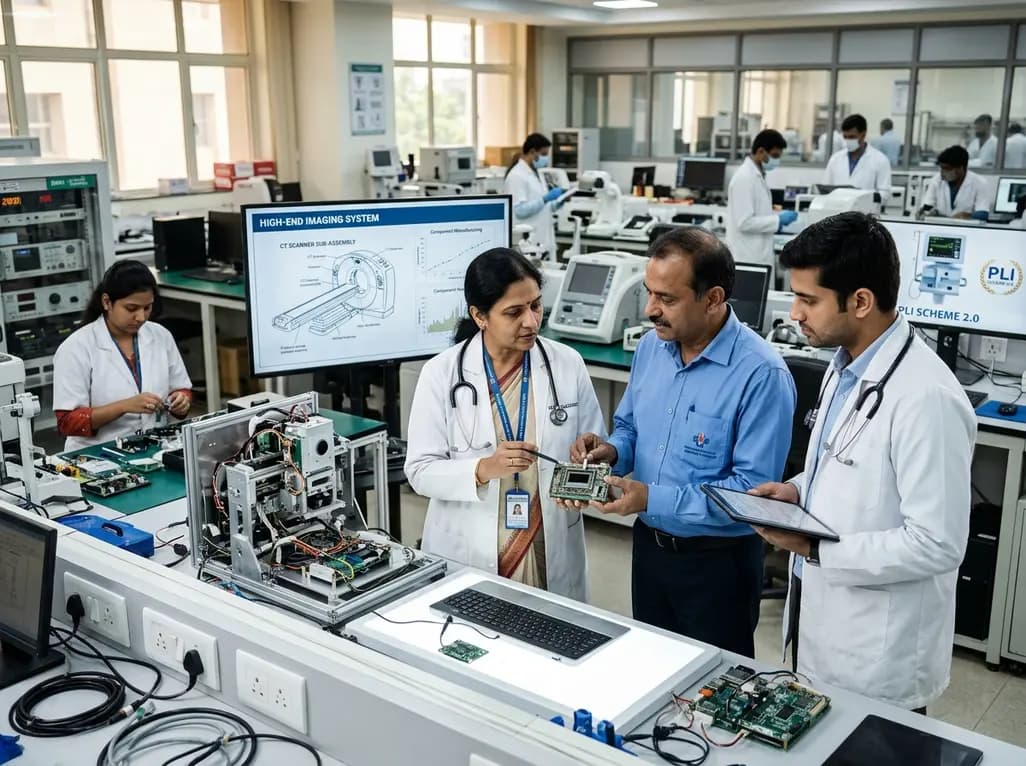
The Department of Pharmaceuticals has extended the medical devices PLI scheme to 2035-36 with a Rs 2,700 crore outlay. Featuring relaxed investment barriers and eliminated sales thresholds, the revised framework targets deep manufacturing, high-end diagnostics, critical MedTech components, and supply resilience.
Today
A metabolomic study reveals that aging delays glutathione synthesis and gamma-glutamylcysteine accumulation following muscle injury. Although precursor supplementation targets this enzymatic bottleneck, in vitro tests show no immediate effect on myogenesis, highlighting the complexity of muscle repair in older adults.
Today

A systematic review evaluates psychological interventions for smoking cessation in diabetes, showing short-term success but highlighting challenges in long-term abstinence.
Today
