.webp&w=384&q=75)

Loading, please wait...
Loading, please wait...

Acute traumatic pain represents one of the most frequent yet undertreated emergencies encountered during emergency medical transit. Providing rapid relief remains challenging because establishing intravenous access frequently consumes valuable minutes. Consequently, emergency medical services seek reliable non-invasive alternatives. In this context, inhaled methoxyflurane serves as an attractive option because patients can self-administer the volatile agent under paramedic supervision. A pioneering Canadian feasibility study investigated whether paramedics could integrate this inhalational analgesic into routine prehospital protocols. The preliminary findings offer essential insights for emergency clinicians, trauma teams, and medical directors seeking efficient pain relief strategies.
Acute pain management in prehospital environments presents distinct operational obstacles. Traditionally, paramedics rely on parenteral opioids such as morphine or fentanyl. Although these intravenous agents provide effective analgesia, they require cannulation, carry significant respiratory risks, and mandate constant hemodynamic monitoring. In contrast, inhaled methoxyflurane delivers rapid analgesia via a handheld green whistle device without requiring vascular access.
Furthermore, methoxyflurane possesses unique pharmacological characteristics that suit emergency scenarios. When patients inhale low analgesic doses (3 mL), the drug exerts rapid pain control within minutes through central nervous system modulation. Moreover, patient-controlled administration empowers trauma victims to titrate their own relief. Paramedics can rapidly instruct alert patients to inhale the vapor during splinting, extrication, or transport.
Additionally, non-opioid strategies diminish the likelihood of opioid-induced nausea, profound sedation, and respiratory depression. This advantage proves particularly valuable in crowded trauma networks and ambulance systems where resources remain constrained. Therefore, introducing a stable, portable, and easily deployable volatile analgesic addresses a critical gap in early trauma stabilization.
To evaluate practical field deployment, researchers initiated a prospective single-centre observational study within a large Canadian paramedic system. This pilot phase directly informed the operational architecture of an upcoming multicentre stepped-wedge cluster randomized trial. Specifically, the study team enrolled adult trauma patients aged 18 years or older who presented with severe or moderate discomfort.
Eligibility criteria mandated a Glasgow Coma Scale score of 14 or higher and a numeric rating scale pain score of at least 4 out of 10. Once enrolled, patients self-administered a single 3 mL dose of the medication through the specialized inhaler. In addition, paramedics received structured training to recognize contraindications, guide inhalation, and document serial vital signs.
Primary feasibility outcomes focused on regulatory timelines, trial readiness, protocol compliance, and data completeness. Secondary endpoints captured pain reduction, transport efficiency, and drug-related adverse events. Consequently, this investigation evaluated not only patient outcomes but also system-wide readiness for paramedic-led clinical trials. By scrutinizing real-world logistics, the trialists established essential benchmarks for future randomized prehospital interventions.
The study yielded valuable operational data regarding prehospital trial execution. Foremost, paramedic protocol compliance reached an impressive 95%, with crews correctly applying the research protocol in 92 out of 97 eligible patient encounters. Furthermore, crews documented post-treatment pain scores in 90% of instances, demonstrating excellent documentation fidelity during stressful trauma responses.
However, systemic hurdles influenced trial initiation timelines. The investigators obtained research ethics board approval in 93 days, which slightly exceeded their predetermined target. Subsequently, achieving full operational trial readiness required 404 days following ethics approval, missing the original feasibility benchmark. Paramedic equipment procurement, regulatory alignments, and inter-agency training accounted for most of these procedural delays.
Nevertheless, the high field compliance confirms that frontline crews can reliably integrate investigational analgesics into urgent trauma protocols. Frontline providers maintained meticulous records despite transport pressures and high-stress scenarios. As a result, the authors concluded that prehospital research remains highly viable when supported by comprehensive training, even though administrative setup requires generous timelines.
In terms of clinical efficacy, the study confirmed meaningful and rapid pain alleviation. Among patients who received the intervention, the median numeric rating scale pain score dropped from 8 out of 10 at baseline to 5 out of 10 following inhalation. This three-point reduction provided clinically meaningful relief, enabling smoother extrication, comfortable splinting, and calmer ambulance transit.
Equally important, the overall safety profile aligned closely with international emergency registries. Adverse events occurred in approximately 23% of participants, but these reactions were uniformly mild and transient. Patients reported minor somnolence, mild dizziness, and slight nausea, none of which required emergency reversal or critical medical interventions.
Importantly, no patients experienced respiratory depression, airway compromise, or clinically concerning blood pressure drops throughout the prehospital observation window. Most crucially, paramedics observed zero serious adverse events related to the inhalational agent. Historically, nephrotoxicity concerns emerged from high-dose methoxyflurane general anesthesia during the twentieth century. In contrast, modern prehospital protocols utilize minimal, self-limiting doses that avoid toxic fluoride accumulation. Thus, the low-dose formulation demonstrated robust clinical safety during emergency ground transport.
The implications of this feasibility trial extend far beyond Canadian borders. In fast-growing emergency systems, such as those across India and other emerging healthcare landscapes, trauma represents a major public health challenge. Road traffic accidents and acute orthopedic injuries frequently cause intense distress before hospital arrival. Yet, prehospital providers often lack authorization or equipment to administer controlled parenteral opioids safely.
Consequently, non-opioid inhalational agents present an attractive solution for emergency medical technicians and basic life support units. Because the inhaler requires no venous puncture, providers can deliver rapid comfort without delaying evacuation. Furthermore, decentralized administration reduces the administrative burden of tracking narcotic inventory in transit ambulances.
Additionally, initiating definitive analgesia at the initial point of injury enhances patient cooperation and facilitates smoother trauma team evaluations upon emergency department arrival. Therefore, adopting low-dose volatile analgesia could modernize prehospital trauma protocols in diverse clinical environments. By bridging the gap between injury scene and hospital reception, emergency systems can mitigate trauma-induced hyperadrenergic stress. In summary, the Canadian feasibility data provide a solid foundation for expanding prehospital pain management programs worldwide.
Inhaled methoxyflurane provides remarkably fast analgesia, typically taking effect within six to eight breaths or one to two minutes. Because the drug absorbs directly across alveolar membranes into systemic circulation, it bypasses the delays associated with establishing intravenous access. Patients control their own dosing by inhaling continuously or intermittently, which produces rapid pain relief during emergency extrication and initial limb splinting.
Historical nephrotoxicity occurred only when anesthesiologists administered prolonged high doses of methoxyflurane during major surgical procedures decades ago. In modern prehospital trauma care, patients receive a strictly limited low dose of 3 mL, which produces inorganic fluoride levels well below toxic renal thresholds. Consequently, contemporary clinical studies and international registry data confirm that short-term prehospital administration does not impair renal function in hemodynamically stable trauma victims.
Paramedics must avoid administering methoxyflurane in patients with altered consciousness, documented Glasgow Coma Scale below 14, or severe head trauma. Furthermore, known hypersensitivity to fluorinated anesthetics, personal or family history of malignant hyperthermia, and established severe renal or hepatic impairment represent absolute contraindications. Clinicians should also withhold the agent if significant respiratory compromise exists or if patients take nephrotoxic medications.
Disclaimer: This content is for informational and educational purposes only... Refer to the latest local and national guidelines for clinical practice.
References

Read summarized clinical updates, watch expert medical content, and earn CME certifications right from your smartphone.
Open your smartphone camera to scan and install.





A Canadian prehospital feasibility study evaluates inhaled methoxyflurane for acute trauma pain. With 95% protocol adherence and significant pain reduction from 8/10 to 5/10, inhaled methoxyflurane demonstrates strong operational viability and safety, guiding future multicentre randomized trials.
Today
A systematic review of 41 preclinical studies reveals that baicalin dampens systemic inflammation, inhibits NF-κB and NLRP3 pathways, and improves organ preservation in sepsis models. However, substantial study heterogeneity and a complete lack of human clinical trials highlight the need for further translational research.
Today
Discover the crucial distinctions between mesonephric and mesonephric-like proliferations of the female genital tract. Learn the key histomorphologic, immunohistochemical, and molecular differences essential for accurate diagnosis and clinical management.
Today
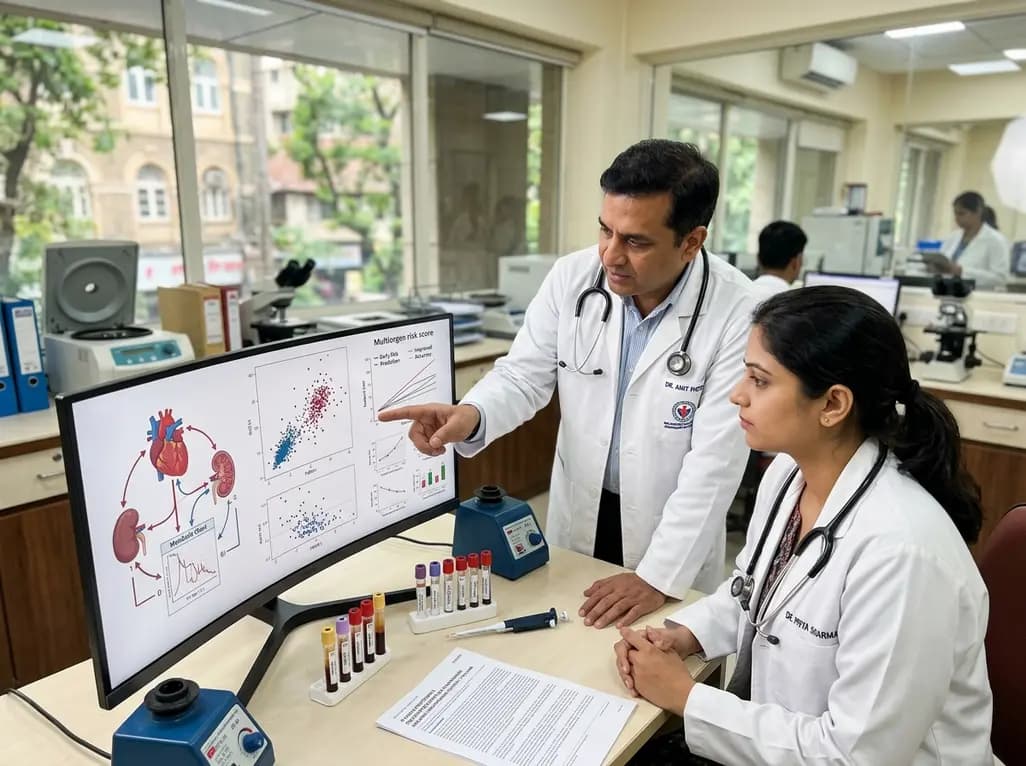
A large UK Biobank study reveals that plasma proteomic signatures capture preclinical organ damage and improve multiorgan risk prediction across early CKM syndrome stages 0 to 2 beyond traditional PREVENT clinical models.
Today
A narrative review investigates whether the articularis genus muscle functions as an independent anatomical entity or blends with the vastus intermedius. We evaluate its morphology, role in retracting the suprapatellar bursa, and direct clinical significance in anterior knee pain and arthroplasty.
Today

A Bayesian multilevel meta-analysis reveals that aerobic training combined with moderate carbohydrate restriction modestly lowers HbA1c in type 2 diabetes. However, sparse data and very low certainty leave incremental benefits over exercise or diet alone unproven, highlighting the need for individualized care.
Today
