.webp&w=384&q=75)

Loading, please wait...
Loading, please wait...
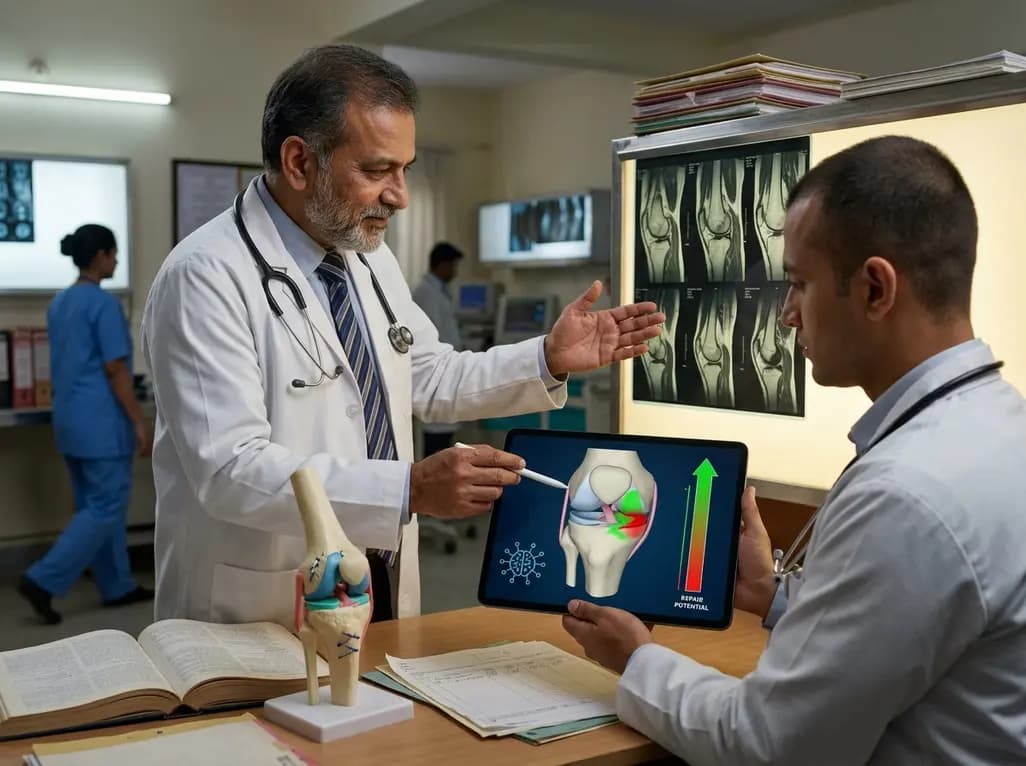
In the modern era of orthopedic surgery, the philosophy of 'save the meniscus' has become a cornerstone of knee preservation strategies. Historically, surgeons often resorted to partial or total meniscectomies, but long-term data now unequivocally show that such procedures significantly accelerate the progression of osteoarthritis. Consequently, meniscal repair has become the preferred intervention whenever feasible. However, determining whether a tear is truly repairable remains a significant challenge during the preoperative phase. This is where meniscal repairability prediction using advanced analytics becomes vital. While traditional MRI evaluation provides a baseline for diagnosis, it often lacks the nuance required to predict intraoperative findings with high precision. Surgeons frequently encounter surprises during arthroscopy, which can lead to changes in the surgical plan and patient expectations. Therefore, developing a more robust, objective method to assess repairability before the patient ever enters the operating room is a high priority for the medical community. By integrating clinical data with radiology-derived features, clinicians can now leverage machine learning to bridge the gap between initial imaging and actual surgical outcomes, ensuring better preparation for both the medical team and the patient.
To address the inherent uncertainties in preoperative planning, researchers recently conducted a comprehensive retrospective study involving 491 patients who underwent knee MRI followed by arthroscopic surgery. This study, spanning the years 2018 to 2023, focused on developing a radiology-centered machine learning model. The investigative team analyzed a wide array of preoperative predictors, including demographic variables, injury mechanisms, and a detailed suite of MRI-derived features. Specifically, the study systematically assessed factors such as meniscal morphology, bone marrow edema, joint effusion, and the integrity of the cruciate ligaments. Furthermore, the researchers evaluated tear displacement, ramp lesions, and extrusion distances. Two experienced musculoskeletal radiologists performed these assessments to ensure data quality, with interobserver agreement measured using Cohen's kappa and intraclass correlation coefficients. To refine the model, the team employed the Least Absolute Shrinkage and Selection Operator (LASSO) regression. This technique allowed them to identify the 13 most informative predictors from a large pool of variables. Subsequently, they trained several models, including logistic regression, random forest, gradient boosting machines (GBM), and support vector machines (SVM). Each model underwent rigorous five-fold stratified cross-validation and hyperparameter tuning to ensure maximum predictive accuracy and clinical reliability.
The results of the study revealed that machine learning can indeed offer high-level insights into meniscal repairability. Among the various algorithms tested, the logistic regression model achieved the highest performance, demonstrating a cross-validated area under the receiver operating characteristic curve (AUC) of 0.777. This was followed closely by the SVM and random forest models. The study identified 13 key preoperative predictors spanning eight clinically relevant domains. Notably, multivariable logistic regression highlighted several critical factors that influenced the likelihood of a successful repair. For instance, the presence of an Anterior Cruciate Ligament (ACL) injury was found to be a significant negative predictor. Specifically, patients with concomitant ACL injuries were less likely to have a repairable meniscus compared to those with isolated tears. Conversely, patient age showed a direct relationship with the outcome, where slightly older age was associated with specific tear types that clinicians deemed repairable under certain circumstances. Additionally, the study utilized calibration metrics and decision curve analysis (DCA) to confirm the model's practical utility. These metrics demonstrated that the machine-learning-based approach provides a reliable framework for meniscal repairability prediction, significantly outperforming traditional, subjective assessments commonly used in daily practice.
Radiological assessment remains the backbone of preoperative orthopedic evaluation, yet its interpretation is often subjective. This research highlighted the importance of a systematic approach to MRI-derived features. By focusing on variables like tear displacement and bone marrow edema, the machine learning models were able to identify patterns that might be subtle to the human eye. For example, the distance of meniscal extrusion and the presence of ramp lesions are critical markers that influence the mechanical environment of the knee. When these features are fed into a machine learning algorithm, the system can weigh their importance relative to clinical data like Body Mass Index (BMI) and the time elapsed since the initial injury. This synergy between clinical history and high-resolution imaging creates a more holistic view of the joint's health. Moreover, the study's focus on a radiology-centered model emphasizes that the radiologist's role is evolving from a descriptive one to a predictive one. Instead of merely identifying a tear, the integration of AI allows for a more detailed prognosis regarding the biological and mechanical potential for healing. This shift is essential for optimizing the selection of candidates for repair versus those who may truly require a meniscectomy.
For surgeons, the ability to accurately predict meniscal repairability carries profound implications for patient management. When a surgeon can confidently tell a patient that their meniscus is likely repairable based on an objective model, it changes the conversation regarding postoperative rehabilitation. Meniscal repairs typically require a more conservative and prolonged recovery period compared to meniscectomies, involving restricted weight-bearing and limited range of motion. Consequently, accurate preoperative counseling helps patients plan their personal and professional lives more effectively. Furthermore, these predictive models assist in surgical theater preparation. If a high probability of repair is indicated, the surgical team can ensure that all necessary specialized suturing equipment and biological adjuncts are readily available. This reduces the likelihood of intraoperative delays and helps streamline the workflow. In the context of the Indian healthcare system, where patient volume is high and resources must be managed efficiently, such objective tools can significantly improve the quality of care. By reducing the rate of unexpected findings during arthroscopy, surgeons can perform more targeted interventions, ultimately leading to higher success rates and improved long-term joint preservation for their patients.
Looking forward, the integration of machine learning into routine clinical practice represents the next frontier in orthopedic medicine. While the current study provides a robust foundation, further external validation in diverse patient populations is necessary to confirm the generalizability of these models. In India, where the prevalence of sports-related knee injuries is rising, the implementation of such tools could revolutionize how sports medicine clinics operate. Future iterations of these models might incorporate automated image segmentation, where the AI directly analyzes the raw MRI pixels to identify features even more precisely than human observers. Additionally, combining these predictive tools with patient-reported outcome measures could help create a comprehensive 'success score' for meniscal surgery. This would not only predict whether a repair is possible but also how well the patient is likely to function years after the procedure. As data sharing and collaborative research between institutions become more common, the accuracy of these algorithms will continue to refine. Therefore, clinicians should stay abreast of these technological advancements, as meniscal repairability prediction will likely become a standard component of the preoperative workup, ensuring that every patient receives the most appropriate and effective treatment for their specific condition.
Predicting repairability is challenging because standard MRI scans may not always reveal the precise quality of the meniscal tissue or the exact stability of the tear. While imaging can show the location and type of a tear, the final decision often depends on the biological 'feel' and mechanical stability observed during arthroscopy. Machine learning helps by identifying subtle patterns across multiple data points that traditional human analysis might overlook.
An ACL injury significantly alters the biomechanics of the knee, often leading to increased tibial translation and secondary stress on the menisci. The study indicated that concomitant ACL injuries can reduce the probability of a meniscus being repairable. This is likely due to the complex nature of the associated tears and the altered biological environment within a destabilized joint, which may complicate the healing process after a repair.
Yes, machine learning models like the ones discussed can be integrated into clinical workflows as decision-support tools. As these models are based on routinely collected data like patient age, BMI, and standard MRI features, they do not require specialized equipment beyond a computer. In India, such tools could help surgeons manage high patient loads by providing objective data to guide surgical planning and improve the accuracy of preoperative patient counseling.
Disclaimer: This content is for informational and educational purposes only and does not constitute medical advice. Always seek the advice of a physician or other qualified health provider with any questions you may have regarding a medical condition. Refer to the latest local and national guidelines for clinical practice.
References
Hao P et al. Preoperative MRI and clinical indicators for predicting meniscal repairability: a machine learning-based study. J Orthop Surg Res. 2026 Jul 04. doi: 10.1186/s13018-026-07095-6. PMID: 42401973.
Goes RA et al. Prediction of reparability of meniscal tears in sports practitioners: Accuracy of magnetic resonance imaging. Rev Bras Ortop. 2020. doi: 10.1055/s-0040-1710300.
Felisaz PF et al. Role of MRI in predicting meniscal tear reparability. Skeletal Radiol. 2017. doi: 10.1007/s00256-017-2700-z.

Read summarized clinical updates, watch expert medical content, and earn CME certifications right from your smartphone.
Open your smartphone camera to scan and install.





A recent study demonstrates how machine learning models using preoperative MRI and clinical data can accurately predict meniscal repairability, aiding surgeons in better decision-making and improving long-term knee health for patients with complex meniscus tears.
3 months ago

A retrospective cohort study of 7,716 ICU patients from the MIMIC-IV database demonstrates that Gradient Boosting Decision Trees significantly outperform traditional SOFA scores in predicting in-hospital mortality among patients with sepsis and diabetes, with SHAP analysis providing clinical interpretability.
Today
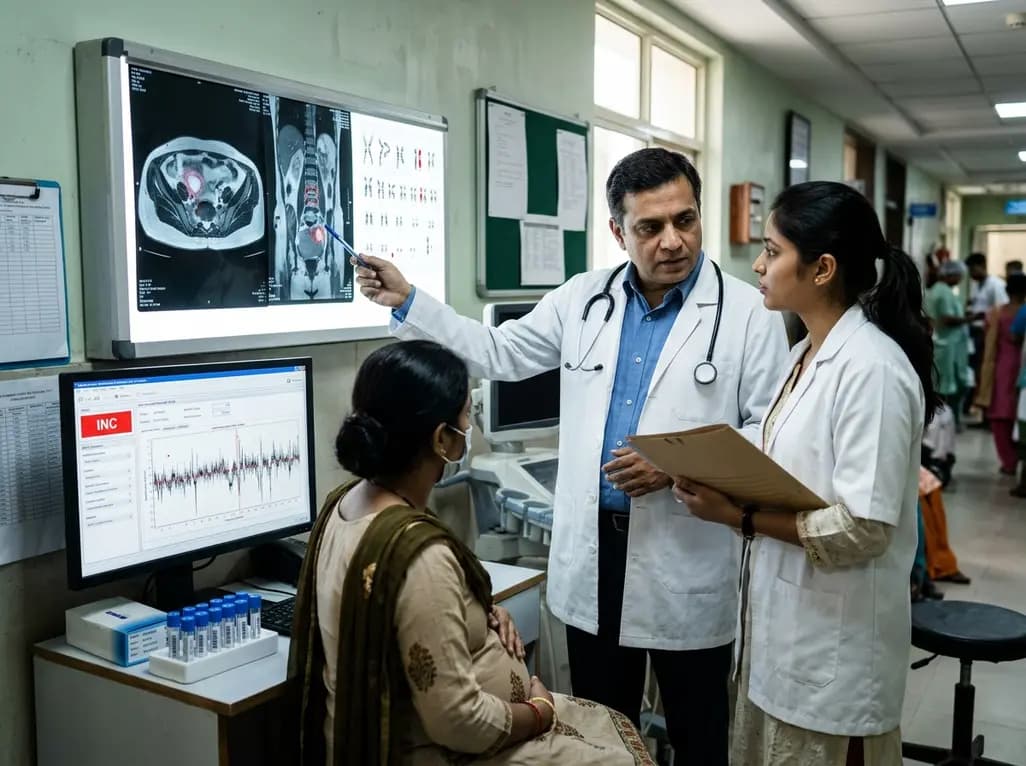
Occult maternal malignancy accounts for 3.82% of persistent unreportable NIPT results with genomic noise. Multiple chromosomal aberrations, notably on chromosome 18, warrant thorough oncological evaluation and whole-body MRI to ensure timely maternal diagnosis while preserving fetal care.
Today
This article reviews the forensic and clinical complexities of acute myocarditis arising on left ventricular hypertrophy in children, highlighting early diagnostic red flags and multidisciplinary postmortem autopsy protocols.
Today

This comparative study evaluates posterior labral tears with and without glenohumeral instability, highlighting distinct demographic patterns, MRI underestimation in stable shoulders, and successful arthroscopic repair outcomes.
Yesterday

A clinical study demonstrates that early intervention with tocilizumab, either as monotherapy or bridged with corticosteroids, achieves significant proptosis reduction and resolves active inflammation in treatment-naive thyroid eye disease.
Yesterday
