.webp&w=384&q=75)

Loading, please wait...
Loading, please wait...

Early identification of early-onset bipolar disorder offers a crucial window for timely clinical intervention. Bipolar disorder often manifests during adolescence or early adulthood, yet diagnostic delays frequently exceed several years. Consequently, affected individuals face elevated risks of educational disruption, substance misuse, and self-harm. Recent research demonstrates that machine learning models applied to routine electronic health records can reliably forecast disease onset before overt syndromic presentation. By transforming longitudinal clinical notes and structured records into predictive metrics, modern clinical informatics presents a scalable strategy to mitigate diagnostic latency.
Accurate recognition of early-onset bipolar disorder remains one of the most formidable challenges in child and adolescent psychiatry. Pediatric bipolar presentations often diverge sharply from classic adult phenotypes. Young patients commonly present initially with unipolar depressive episodes, severe irritability, or emotional dysregulation. As a result, clinicians frequently diagnose major depressive disorder or attention-deficit/hyperactivity disorder years before the emergence of hypomanic or manic episodes. Furthermore, treating unrecognized bipolar pathology with antidepressant monotherapy carries substantial risk of precipitating manic switching or rapid mood cycling.
Therefore, closing this diagnostic gap represents an urgent priority. Although clinician assessments and structured interviews provide invaluable diagnostic depth, resource limitations hinder universal deployment across community practices. Digital phenotyping through electronic health records addresses this barrier directly. By continuously aggregating diagnostic codes, medication prescriptions, laboratory requests, and unstructured narrative notes, health systems capture subtle prodromal signals. Consequently, automated algorithms can alert clinicians to elevated vulnerability, guiding vigilant monitoring and personalized therapeutic planning.
To establish clinically actionable predictive tools, researchers at the Mass General Brigham health system implemented a sophisticated machine learning framework. The investigation analyzed comprehensive longitudinal health records from individuals aged 10 to 25 years. Crucially, the investigators evaluated three separate cohorts to reflect distinct clinical contexts: a general youth population exceeding 300,000 individuals, a subcohort of over 105,000 patients with previous mental health visits, and an enriched cohort of over 35,000 youth diagnosed with mood disorders or attention-deficit/hyperactivity disorder.
In addition, the team adopted a prospective landmark modeling design. This rigorous methodological architecture explicitly aligns with actual clinical practice by evaluating prediction horizons across prospective windows rather than relying on retrospective hindsight. The researchers extracted extensive structured clinical data alongside unstructured narrative text, which underwent natural language processing to extract meaningful semantic concepts. Hence, this dual-source data pipeline enabled the models to capture both formal administrative billing patterns and nuanced behavioral observations recorded during routine clinical encounters.
The study evaluated diverse predictive algorithms, including deep neural networks and ensemble methods. Among the tested architectures, tree-based models achieved superior discriminative performance across diverse healthcare strata. Specifically, random forests and light gradient-boosting machines delivered areas under the receiver operating characteristic curve ranging between 0.74 and 0.89 across varied cohorts and time horizons. These performance levels demonstrate robust discriminative power in distinguishing future bipolar cases from non-bipolar trajectories.
Importantly, the models retained high accuracy across both broad population screening and enriched specialty settings. In general pediatric cohorts, the algorithms effectively filtered high-risk outliers from broad ambulatory visits. Meanwhile, within enriched psychiatric subcohorts, the algorithms successfully differentiated impending bipolar transitions from persistent unipolar illness or uncomplicated neurodevelopmental disorders. Because the algorithms demonstrated consistent predictive stability across multi-year forecast windows, they prove viable for meaningful preventative scheduling rather than merely signaling imminent crisis.
Deploying artificial intelligence within live clinical environments demands computational efficiency and clear interpretability. Complex high-dimensional models with thousands of obscure variables often introduce computational latency and impede clinical comprehension. Addressing this practical hurdle, the researchers performed extensive feature reduction experiments. Remarkably, models trained on a greatly reduced set of critical variables achieved predictive accuracy comparable to models utilizing the exhaustive feature catalog.
Consequently, this algorithmic parsimony offers substantial operational advantages for real-world hospital deployment. Reduced feature models minimize the computational burden required for real-time risk calculation in busy outpatient settings. Furthermore, concise feature matrices reduce vulnerability to documentation disparities across different electronic health record vendors. By identifying the most influential predictors, such as previous psychotropic exposures, specific emotional symptom combinations, and healthcare utilization frequency, clinicians gain clear clinical insight into the physiological and behavioral patterns driving risk calculations.
Integrating predictive analytics into psychiatric care requires cautious stewardship and strict ethical standards. An algorithmic risk score must never replace nuanced psychiatric evaluation or clinical discernment. Instead, these computational tools serve as clinical decision support systems that prompt comprehensive diagnostic review. When an alert flags elevated bipolar risk, clinicians should conduct structured developmental evaluations, review family psychiatric histories, and initiate tailored psychoeducation.
Moreover, clinicians must maintain vigilance regarding potential algorithmic bias and systemic disparities. Disparities in documentation practices across socioeconomic and racial demographics can inadvertently distort risk estimation. Therefore, multidisciplinary oversight teams comprising psychiatrists, pediatricians, ethicists, and medical informaticists must supervise model deployment. Such collaborative governance ensures that automated screening promotes health equity rather than reinforcing structural inequities in pediatric mental healthcare delivery.
The successful development of scalable electronic health record models signals a paradigm shift toward prospective, preventive psychiatry. However, establishing broader external validity across independent healthcare networks remains essential. Differences in local clinical charting, demographic composition, and regional referral behaviors require rigorous multi-center external validation before universal commercialization or widespread clinical adoption.
Additionally, future investigations should evaluate whether integrating digital biomarkers, such as wearable biometric data or genetic risk profiles, enhances discriminative power. Combining automated record screening with proactive psychoeducational interventions may fundamentally transform youth psychiatric care. Ultimately, identifying vulnerable youth before significant psychosocial impairment occurs allows clinicians to preserve neurodevelopmental trajectories and dramatically improve long-term outcomes.
Predicting bipolar disorder through health records enables early clinical identification before severe mania or functional impairment occurs. This proactive strategy shortens lengthy diagnostic delays, prevents inappropriate medication regimens such as uninhibited antidepressant monotherapy, and facilitates timely psychoeducation, family engagement, and close clinical surveillance during critical developmental phases.
Tree-based models, including random forests and light gradient-boosting machines, demonstrated robust discriminative ability with area under the receiver operating characteristic curve values between 0.74 and 0.89. These algorithms reliably differentiated youth at risk across general ambulatory cohorts and enriched psychiatric clinical settings.
Yes, researchers demonstrated that models utilizing a condensed, optimized set of features achieved predictive accuracy comparable to full-scale models. This streamlined computational architecture allows practical integration into existing electronic health record infrastructure without imposing heavy computational demands or causing electronic charting lag.
Disclaimer: This content is for informational and educational purposes only and is not intended to substitute professional medical advice, diagnosis, or treatment. Always seek the advice of your physician or another qualified health provider with any questions you may have regarding a medical condition. Refer to the latest local and national guidelines for clinical practice.
References
1. Wang B et al. Prediction of early-onset bipolar using electronic health records. J Child Psychol Psychiatry. 2025 Aug. doi: 10.1111/jcpp.14131. PMID: 39967306.
2. McGrath JJ, Al-Hamzawi A, Alonso J, et al. Age of onset and cumulative lifetime risk of mental disorders: a cross-national analysis of 29 countries. Lancet Psychiatry. 2023;10(9):668-681.
3. Oliver D, Spada G, Englund A, et al. Using Electronic Health Records to Facilitate Precision Psychiatry: Progress and Challenges. Schizophr Bull. 2024;50(5):1012-1025.

Read summarized clinical updates, watch expert medical content, and earn CME certifications right from your smartphone.
Open your smartphone camera to scan and install.





Discover how advanced machine learning models leverage longitudinal electronic health record data to predict early-onset bipolar disorder in children and young adults, achieving strong discriminative accuracy and paving the way for proactive psychiatric intervention.
Today

A recent Journal of Clinical Oncology study demonstrates that industry payments to oncologists directly sway prescribing behavior. Oncologists who received marketing transfers favored promoted therapies over non-promoted alternatives, highlighting critical ethical concerns for evidence-based cancer practice.
Today

A recent qualitative study examines how college students seek digital sexual health information under persistent uncertainty. Discover the concept of functional trust, the clinical hazards of search abandonment, and evidence-based approaches clinicians can adopt to guide youth toward verified reproductive healthcare.
Today
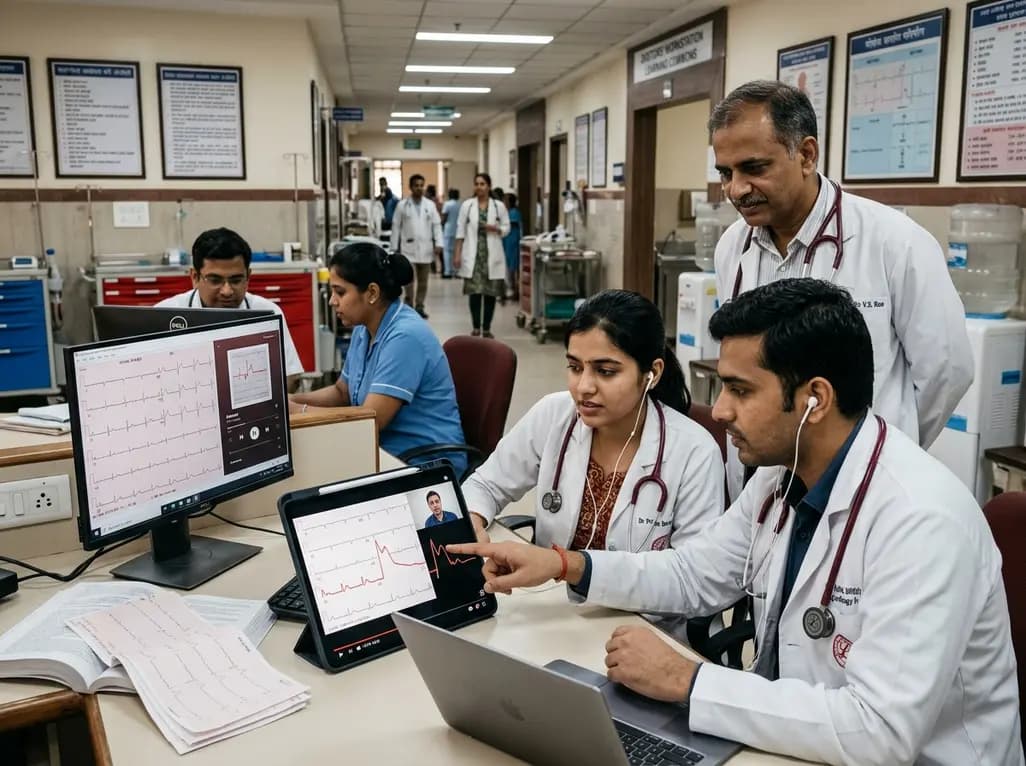
A randomized controlled trial demonstrates that curated FOAMed videos and podcasts produce superior gains in high-risk ECG interpretation and acute coronary syndrome clinical decision-making compared with print-based materials among interprofessional emergency care teams.
Today

A study reveals that Ginsenoside Rg3 attenuates osteoarthritis progression by modulating the Nrf2-mediated autophagy pathway, reducing chondrocyte apoptosis, and curbing extracellular matrix degradation, offering promising chondroprotective potential.
Today

A cross-sectional study demonstrates that lower pediatric motor competence strongly correlates with adverse metabolic syndrome markers, including central adiposity, elevated triglycerides, and low HDL cholesterol, emphasizing early neuromuscular interventions in youth with overweight and obesity.
Today
