.webp&w=384&q=75)

Loading, please wait...
Loading, please wait...

Congenital anomalies remain a leading cause of perinatal mortality and long-term childhood disability worldwide. While maternal folic acid supplementation represents an established preventive pillar, recent scientific breakthroughs emphasize that preconception vitamin B12 status in both partners plays an equally decisive role in fetal morphogenesis. A landmark prospective cohort study published in the Annals of Internal Medicine provides compelling evidence that elevating parental cobalamin concentrations before fertilization substantially curtails the risk of major structural birth defects.
Researchers from the Children's Hospital of Fudan University conducted an extensive prospective investigation using data from the prestigious Shanghai Preconception Cohort. Specifically, the investigative team enrolled 3,032 prospective couples who supplied venous blood samples within four months prior to conception. In addition, the researchers analyzed a larger maternal cohort comprising 17,765 women tested at four months of gestation or earlier.
The investigators directly quantified red blood cell folate and serum vitamin B12 concentrations using standardized, high-precision laboratory assays. Consequently, the research avoided the recall biases typical of dietary self-reporting questionnaires. Clinical teams systematically recorded birth defects across live births, stillbirths, and medically indicated pregnancy terminations due to severe fetal malformations. Furthermore, pediatricians followed all surviving infants for up to one full year after delivery to capture late-diagnosed structural defects. Notably, the observed anomalies in this cohort encompassed various cardiovascular and structural abnormalities rather than isolated neural tube closures, thereby expanding clinical understanding beyond traditional neural tube pathology and highlighting broad developmental implications. This rigorous design established reliable baseline biomarker profiles across both parents during critical reproductive windows.
The prospective study demonstrated a striking dose-response association between parental micronutrient status and fetal developmental outcomes. Most notably, rising maternal preconception vitamin B12 levels correlated linearly with a profound reduction in birth defect rates. Among mothers in the lowest cobalamin category of under 148 pmol/L, the predicted birth defect prevalence reached 49.6 cases per 1,000 pregnancies. Conversely, mothers achieving the highest cobalamin tier of 590 pmol/L or greater exhibited a prevalence of only 16.2 per 1,000 pregnancies.
Remarkably, paternal vitamin B12 concentrations demonstrated a parallel protective pattern across the cohort. Prospective fathers in the lowest baseline cobalamin tier had an offspring defect prevalence of 55.5 per 1,000, whereas men in the highest tier had a prevalence of 24.0 per 1,000. Therefore, paternal nutritional wellness directly influences embryogenesis alongside maternal health. This key finding challenges the historical clinical dogma that periconceptional nutritional optimization rests exclusively on maternal biology. Both prospective parents actively contribute metabolic and epigenetic assets necessary for robust embryonic viability and normal anatomical development. Consequently, clinicians should encourage prospective fathers to actively participate in periconceptional health assessments alongside their partners.
The investigation also clarified the complex physiological interplay between gestational folate levels and fetal development. While preconception red blood cell folate showed less pronounced trends, postconception maternal red blood cell folate demonstrated substantial protective associations during embryonic organogenesis. Specifically, women maintaining red blood cell folate levels between 906 and 1,131 nmol/L during early gestation experienced significantly fewer fetal anomalies compared to those with concentrations below 453 nmol/L.
However, the researchers observed a clear threshold effect rather than an indefinite linear decline in anomaly rates. Maternal red blood cell folate concentrations exceeding 1,131 nmol/L yielded plateauing protective benefits without delivering extra reduction in defect incidence. Thus, achieving adequate physiological saturation remains the primary therapeutic target during early organogenesis. Because neural tube closure and cardiac septation occur during the earliest weeks after fertilization, sustaining optimal erythrocyte folate reserves throughout this critical window ensures seamless cellular replication and tissue differentiation. Clinicians must therefore ensure timely maternal folate repletion before organogenesis finishes. Furthermore, regular monitoring of red blood cell folate offers a more dependable metric of cellular stores than fluctuating serum folate measurements.
Biochemically, folate and vitamin B12 operate synergistically within the one-carbon metabolic pathway to drive essential cellular functions. Vitamin B12 serves as an indispensable coenzyme for methionine synthase, which catalyzes the remethylation of homocysteine to methionine. Subsequently, methionine generates S-adenosylmethionine, the primary universal methyl donor for cellular transmethylation reactions and chromatin remodeling. When cellular cobalamin or folate levels decline, intracellular homocysteine accumulates, creating cellular oxidative stress and disrupting critical developmental pathways.
Furthermore, one-carbon metabolism regulates the epigenetic programming of gametes and early blastocysts. In prospective fathers, severe cobalamin deficiency induces abnormal sperm DNA methylation patterns and causes chromatic fragmentation. As a result, suboptimal paternal nutrition can transmit aberrant epigenetic signatures directly into the zygote at fertilization. Similarly, maternal cobalamin insufficiency impairs rapid embryonic cell division and impedes genomic stability during early organogenesis. Consequently, concurrent adequacy of both micronutrients is essential to prevent chromosomal fragility, avoid cellular senescence, and maintain structural integrity during embryonic formation. These intricate molecular interactions explain why isolated folic acid supplementation without adequate cobalamin may fail to fully protect against congenital abnormalities.
These findings hold profound significance for clinical practice and public health across the Indian subcontinent. India has one of the highest prevalences of vitamin B12 deficiency globally, largely driven by traditional lacto-vegetarian and plant-predominant dietary patterns. Moreover, gastrointestinal malabsorption, Helicobacter pylori gastritis, and widespread metformin usage further exacerbate cobalamin depletion among reproductive-age adults. While national health programs actively promote maternal folic acid, public health policies rarely address paternal nutritional status or periconceptional cobalamin repletion.
Therefore, obstetricians, primary care physicians, and reproductive endocrinologists must expand standard preconception screening protocols to encompass both partners. Clinicians should routinely assess both maternal and paternal vitamin B12 and folate status at least three to four months prior to planned conception. When deficiency is detected, structured supplementation with oral methylcobalamin or cyanocobalamin should accompany standard folic acid prescriptions. Educating both partners about dietary sources, including fortified foods, dairy, eggs, and lean meats, empowers families to establish optimal micronutrient baselines before fertilization occurs. Integrating couple-based nutritional strategies into routine outpatient practice could significantly lower the national burden of structural birth anomalies.
Healthcare professionals should adopt a holistic, couple-centric strategy during pre-pregnancy consultations. Routine baseline evaluations should ideally incorporate serum vitamin B12, complete blood counts, and red blood cell folate rather than serum folate alone. Because red blood cell folate reflects sustained tissue saturation over three months, it provides far superior clinical diagnostic value during preconception planning.
Additionally, medical practitioners must customize supplementation dosages based on baseline biochemical assays and dietary histories. For adults with moderate cobalamin deficiency, daily oral doses of 500 to 1,000 mcg of vitamin B12 rapidly restore hepatic and cellular tissue stores. In addition, prospective mothers should continue standard folic acid supplementation of 400 to 500 mcg daily, or 5 mg daily for high-risk cohorts, starting three months before conception. Clinicians must caution patients against unmonitored megadose supplements, emphasizing balanced regimens overseen by qualified healthcare providers. Systematic follow-up ensures therapeutic compliance and optimal fetal safety. By establishing personalized supplementation regimens early, practitioners can optimize biological conditions for both gametogenesis and embryonic implantation.
Q1: Why is paternal vitamin B12 status important before conception?
Paternal vitamin B12 status directly influences spermatogenesis, sperm DNA methylation, and chromatin structural integrity. When prospective fathers experience cobalamin deficiency, defective one-carbon metabolism induces oxidative stress and epigenetic alterations in spermatozoa. Consequently, these epigenetic anomalies can be transmitted to the oocyte at fertilization, impairing early embryonic division and significantly increasing the offspring's vulnerability to major structural birth defects and developmental complications.
Q2: How does vitamin B12 interact with folic acid to prevent birth defects?
Vitamin B12 and folic acid act as indispensable co-factors within the cellular one-carbon metabolic cycle. Cobalamin serves as an essential coenzyme for methionine synthase, facilitating homocysteine conversion to methionine and enabling critical transmethylation reactions. When vitamin B12 is deficient, intracellular folate becomes functionally trapped in an inactive form, which stalls nucleotide synthesis, compromises DNA replication, and elevates the risk of severe congenital anomalies during early fetal organogenesis.
Q3: When should prospective parents begin vitamin B12 and folate supplementation?
Prospective parents should ideally evaluate and optimize their nutritional status at least three to four months before attempting conception. This preparatory window coincides with the 74-day human spermatogenesis cycle in men and allows women to build adequate red blood cell folate and cobalamin tissue reserves. Establishing optimal micronutrient saturation prior to fertilization guarantees that vital metabolic support is immediately available during the critical first trimester organ development.
Disclaimer: This content is for informational and educational purposes only. It does not constitute medical advice or replace professional judgment. Refer to the latest local and national guidelines for clinical practice.
References

Read summarized clinical updates, watch expert medical content, and earn CME certifications right from your smartphone.
Open your smartphone camera to scan and install.





A prospective study reveals that higher parental vitamin B12 levels before conception, paired with maternal RBC folate during early pregnancy, significantly decrease the incidence of congenital anomalies, underscoring the critical need for comprehensive couple-based periconceptional nutritional care.
4 weeks back

Red blood cell transfusion is critical in sickle cell disease management but brings significant immunological complexity, including alloimmunisation and iron overload. Extended RBC phenotyping and tailored protocols optimize clinical safety.
Today
Discover the crucial distinctions between mesonephric and mesonephric-like proliferations of the female genital tract. Learn the key histomorphologic, immunohistochemical, and molecular differences essential for accurate diagnosis and clinical management.
Today
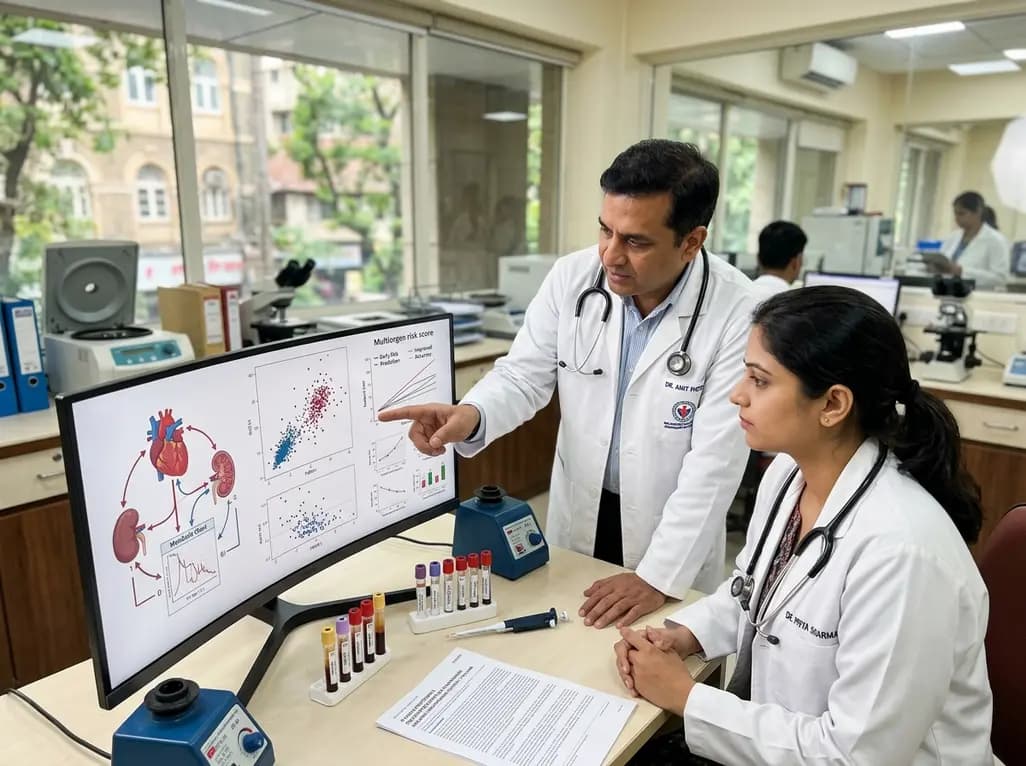
A large UK Biobank study reveals that plasma proteomic signatures capture preclinical organ damage and improve multiorgan risk prediction across early CKM syndrome stages 0 to 2 beyond traditional PREVENT clinical models.
Today

A retrospective CBCT study reveals that superior TMJ space asymmetry correlates moderately with occipital condyle-atlas-axis asymmetry in unilateral TMJ osteoarthritis, highlighting an imaging correlate between jaw biomechanics and upper cervical alignment rather than a standalone diagnostic marker.
Today

A Bayesian multilevel meta-analysis reveals that aerobic training combined with moderate carbohydrate restriction modestly lowers HbA1c in type 2 diabetes. However, sparse data and very low certainty leave incremental benefits over exercise or diet alone unproven, highlighting the need for individualized care.
Today
