.webp&w=384&q=75)

Loading, please wait...
Loading, please wait...

The landscape of precision oncology breast cancer treatment is undergoing a revolutionary shift. Indeed, clinical trial data presented at the ASCO annual meeting shows that genomic testing helps patients safely skip chemotherapy. Specifically, researchers evaluated Veracyte's Prosigna genomic test in the OPTIMA trial. This trial enrolled over 4,400 patients with early-stage, high-risk breast cancer.
Indeed, the results revealed that more than two-thirds of the patients safely avoided chemotherapy when Prosigna guided their care. Furthermore, the Prosigna group achieved a 5-year cancer-free survival rate of 93.7%. Consequently, this rate proved statistically non-inferior to the 94.9% rate observed in the chemotherapy group.
To determine this, the test analyzes the activity of 50 specific genes in tumor tissue. Subsequently, it generates a Risk of Recurrence score to guide clinical decisions. Because chemotherapy causes severe long-term side effects like neuropathy, this test represents a major milestone.
In addition to breast cancer updates, researchers presented important findings regarding advanced prostate cancer treatments. Specifically, the phase II ARACOG trial directly compared the cognitive impact of two common androgen receptor pathway inhibitors. These drugs are darolutamide and enzalutamide.
Although both agents show similar efficacy in controlling prostate cancer, their impact on cognitive function differs significantly. For instance, the study monitored 111 patients over 24 weeks using computer-based cognitive testing. Consequently, the researchers found that patients treated with darolutamide experienced substantially less decline in memory and thinking.
Specifically, the median decrease in cognitive scores was 15.8% with darolutamide. In contrast, patients on enzalutamide experienced a 36.1% decline. Therefore, clinicians must consider these distinct cognitive effects when choosing between these available treatment options.
Furthermore, managing side effects remains a critical aspect of cancer care. For example, chemotherapy-induced thrombocytopenia often forces doctors to delay essential cancer treatments. To address this, researchers evaluated an oral medication called avatrombopag.
Originally, this drug received approval for treating liver disease. However, a mid-stage trial demonstrated its remarkable efficacy in patients with gastrointestinal cancers. Because the results were highly positive, the researchers stopped the trial early.
Indeed, nearly 66% of patients receiving avatrombopag recovered their platelet counts within two weeks. In contrast, only 17% of patients in the placebo group achieved similar recovery. As a result, this oral option helps patients maintain chemotherapy schedules without needing weekly injections.
Q1: What is the primary benefit of the Prosigna genomic test in breast cancer?
The Prosigna genomic test analyzes 50 specific genes in tumor tissue to develop a Risk of Recurrence score. Consequently, this helps oncologists identify high-risk patients who can safely skip chemotherapy.
Q2: How do darolutamide and enzalutamide differ in their side effects?
While both drugs are highly effective, darolutamide causes significantly less cognitive decline than enzalutamide. Specifically, patients on darolutamide showed a 15.8% cognitive decline compared to 36.1% for those on enzalutamide.
Q3: How does avatrombopag assist gastrointestinal cancer patients during chemotherapy?
Avatrombopag is an oral medication that successfully treats chemotherapy-induced thrombocytopenia. Therefore, it helps patients maintain high platelet counts and avoid harmful chemotherapy delays.
Disclaimer: This content is for informational and educational purposes only. It does not constitute medical advice or replace professional judgment. Refer to the latest local and national guidelines for clinical practice.
References

Read summarized clinical updates, watch expert medical content, and earn CME certifications right from your smartphone.
Open your smartphone camera to scan and install.





New clinical trials highlight how genomic testing helps breast cancer patients skip chemo and compare cognitive side effects of prostate cancer therapies....
4 months ago

Explore vital recurrent stroke predictors in lacunar stroke patients managed with intensive blood pressure lowering. This analysis examines trial findings from SPS3 to uncover residual vascular risks, metabolic factors, and targeted secondary prevention strategies for high-risk neurological patients.
Today

Odisha has established India's first state-level clinical protocol specifically tailored for pregnant women with sickle cell disease. Developed with NHM and UNICEF, the framework provides structured antenatal screening, crisis mitigation, standardized referral pathways, and specialized interdisciplinary care.
Today

India is advancing preventive healthcare by integrating genomics, artificial intelligence, and quantum technologies. With the SANGAM programme sequencing one million Indian genomes, clinicians can unlock personalized therapies, detect cardiometabolic risks early, and curb the burden of diabetes and heart disease.
Today
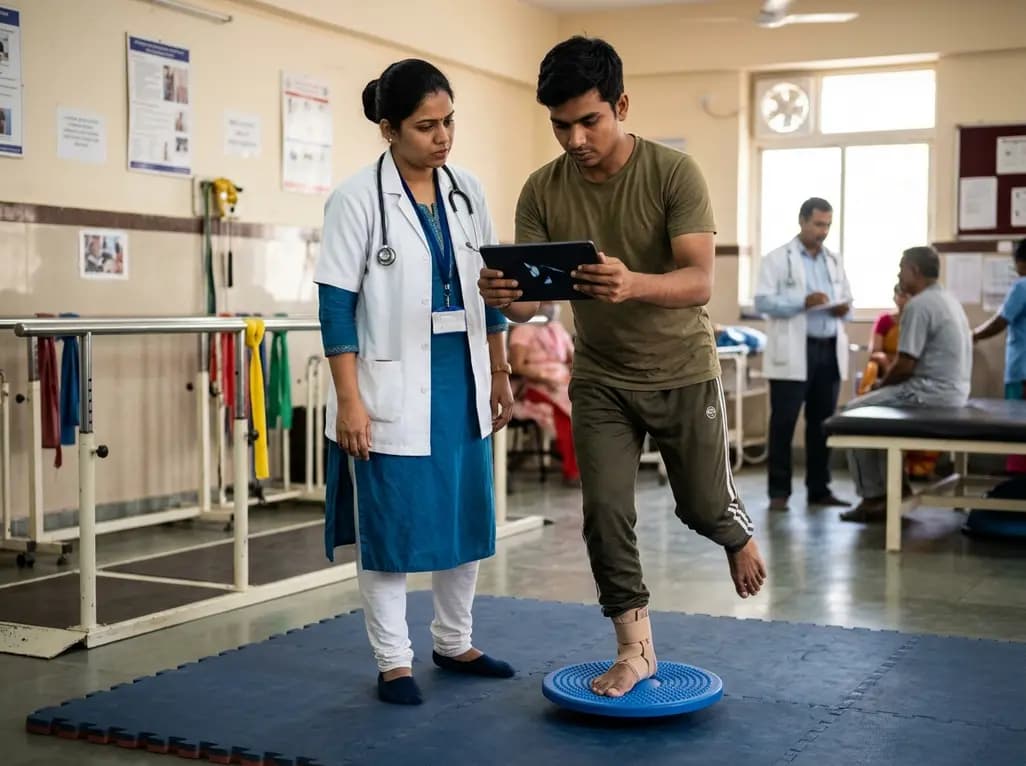
A randomized controlled trial demonstrates that an eight-week dual-task training intervention significantly improves static and dynamic postural control over standard balance exercises in individuals with chronic ankle instability, addressing critical neurocognitive deficits during athletic and daily activities.
Today

A retrospective cohort study of 7,716 ICU patients from the MIMIC-IV database demonstrates that Gradient Boosting Decision Trees significantly outperform traditional SOFA scores in predicting in-hospital mortality among patients with sepsis and diabetes, with SHAP analysis providing clinical interpretability.
Today
