

Loading, please wait...
Loading, please wait...

Modern auditory rehabilitation increasingly emphasizes personalized programming to maximize cognitive processing and peripheral nerve stimulation. Cochlear implants successfully restore hearing sensation in individuals with profound sensorineural hearing loss; however, broad variability in postoperative speech discrimination persists across recipients. Recent audiological research demonstrates that precise T-level fitting significantly enhances speech recognition and restores physiological loudness growth. Furthermore, by replacing default behavioral estimates with adaptive psychophysical threshold measurements, clinicians can tailor electrical stimulation to each patient's unique neural survival patterns. Consequently, this refined paradigm bridges the gap between device engineering and individual neurophysiology, offering superior hearing outcomes.
In conventional cochlear implant programming, clinicians often establish threshold stimulation levels, or T-levels, using broad clinical interpolation or default software algorithms. While these standard profiles provide a baseline functional dynamic range, they frequently overlook localized electrode-to-nerve interface variations. Specifically, spiral ganglion degeneration and residual neural health differ substantially across individual electrode contacts within the cochlea. Therefore, applying uniform electrical stimulation profiles can cause subtle sound deprivation or induce channel cross-talk. When T-levels are set too low, patients lose subtle soft speech cues that are vital for consonant perception. Conversely, setting thresholds excessively high introduces continuous background auditory noise and shrinks the usable dynamic range. Recent clinical evidence indicates that precise T-level fitting overcomes these limitations by mapping each electrode channel directly to the recipient's true electrical detection threshold. Consequently, fine-tuning these electrical boundaries allows the processor to deliver clean, unattenuated acoustic information. Ultimately, optimizing these individual stimulation thresholds establishes a stable foundation for long-term auditory rehabilitation.
A prospective exploratory study rigorously evaluated individualized electrical threshold mapping in thirty-five experienced adult cochlear implant recipients. In this protocol, researchers systematically fitted individual electrode contacts to true electrical hearing thresholds using a standardized adaptive procedure. Rather than relying on static clinical guesses, investigators precisely matched electrical stimuli to behavioral detection boundaries. As a result, the measured adjustments exhibited considerable inter-electrode variability. Threshold alterations ranged from a reduction of 4.8 clinical levels to an increase of 9.9 clinical levels. Notably, the overall mean adjustment was modest at 0.5 clinical levels, yet the standard deviation reached 15.7 clinical levels. This substantial variance proves that global threshold shifts fail to address localized requirements of individual electrode contacts. Consequently, these objective measurements demonstrated how electrical micro-adjustments directly govern higher-level auditory processing.
The objective performance data revealed striking enhancements in speech discrimination after recipients underwent individual threshold optimization. In particular, monosyllabic word recognition improved significantly across all tested sound pressure levels, highlighting dramatic perceptual gains. At conversational speech levels of 65 dB SPL, speech discrimination scores increased from a baseline mean of 64% to an impressive 74%. Moreover, this robust ten percent absolute increase occurred without altering upper comfort levels or processor frequency allocations. Soft speech perception at 50 dB SPL also demonstrated profound improvement, enabling users to register low-amplitude phonemes. Similarly, speech recognition at 80 dB SPL remained exceptionally sharp without inducing uncomfortable loudness distortion. Furthermore, when clinicians compared these postoperative outcomes against preoperative predictive models, recipients who received individualized fitting consistently surpassed their predicted speech recognition trajectories. These empirical findings demonstrate that auditory performance plateaus often reflect suboptimal device programming rather than biological barriers. Therefore, precision audiometry represents a vital mechanism for unlocking latent auditory capability in long-term implant recipients.
Beyond isolated speech recognition scores, auditory rehabilitation aims to recreate natural, intuitive loudness perception for environmental sounds. In normal acoustic hearing, the human ear processes intensity non-linearly, providing clear perceptual distinction between quiet, moderate, and loud auditory events. However, cochlear implant stimulation directly depolarizes auditory nerve fibers, compressing dynamic ranges and distorting subjective loudness growth. Using the Oldenburg Categorical Loudness Scaling methodology, researchers tracked how individualized threshold adjustments affected perceptual loudness categories. Significantly, the results demonstrated that individualized programming restored closer-to-normal loudness growth trajectories across broad dynamic ranges. Patients differentiated quiet whispered speech from ambient noise with greater subjective ease. Furthermore, comfortable listening levels remained secure, preventing abrupt transitions into uncomfortably loud sensation areas. As a consequence, patients reported heightened sound comfort and reduced listening fatigue during demanding social interactions. Thus, accurate electrical boundary alignment ensures that recipients experience a more harmonious and natural auditory landscape.
In India, cochlear implantation has expanded rapidly through supportive government healthcare schemes and growing institutional initiatives. However, long-term audiological follow-up often struggles to match initial surgical volumes across busy regional centers. Many adult recipients retain legacy processor maps programmed during initial activation years earlier. Consequently, these individuals may experience suboptimal speech comprehension and impaired vocational attainment. Introducing standardized, individualized threshold fitting protocols during routine review appointments can substantially uplift auditory outcomes without demanding costly hardware replacements. Furthermore, Indian ENT departments can train speech-language pathologists and audiology officers to conduct rapid adaptive psychoacoustic fitting during routine checkups. This targeted intervention is particularly valuable for bilingual or multilingual Indian patients who require sharp consonant discrimination across linguistically diverse phonetic environments. Additionally, maximizing speech clarity in high ambient noise environments remains crucial in bustling Indian urban spaces. Therefore, integrating personalized fitting protocols represents a cost-effective, high-yield clinical strategy that dramatically improves real-world auditory performance across the country.
Traditional cochlear implant programming frequently relies on default software estimates, clinical interpolation between anchor electrodes, or subjective patient impressions. In contrast, precise T-level fitting utilizes an individualized adaptive psychoacoustic protocol to measure the exact electrical stimulation threshold for every electrode contact. Consequently, this detailed mapping captures micro-level variations in neural survival, preventing sound omission at soft speech levels while optimizing the total usable dynamic range.
Monosyllabic word recognition relies heavily on the clear perception of low-energy consonant acoustic cues. When stimulation thresholds are improperly calibrated or set too low, recipients cannot detect subtle phonemic transitions. By establishing precise electrical thresholds across all channels, individualized fitting restores critical audibility for soft speech components. As a result, patients experience greater phonemic clarity and immediate auditory discrimination improvements without needing higher conversational sound volumes or excessive listening effort.
Yes, experienced adult cochlear implant recipients derive substantial audiological benefits from threshold re-fitting. Over time, tissue impedances, neural responsiveness, and electrode positioning can gradually evolve, rendering initial programming maps suboptimal. Re-calibrating threshold levels through a standardized adaptive procedure refines loudness differentiation and restores lost speech audibility. Therefore, clinical re-fitting serves as an impactful, non-invasive therapeutic strategy to rejuvenate auditory performance in established device users experiencing plateaued speech comprehension.
Disclaimer: This content is for informational and educational purposes only and is not intended as a substitute for professional clinical judgment or individualized patient management. Refer to the latest local and national guidelines for clinical practice.
References

Read summarized clinical updates, watch expert medical content, and earn CME certifications right from your smartphone.
Open your smartphone camera to scan and install.





A prospective study demonstrates that individualized, precise T-level fitting significantly boosts monosyllabic speech recognition across varying sound pressure levels and restores categorical loudness growth in adult cochlear implant recipients, highlighting the value of fine-tuned electrical thresholds.
Today
A study in acute care and ICUs reveals that clinicians prefer in-person interpretation over remote modalities during high-stakes encounters, end-of-life discussions, and severe patient communication barriers like delirium, highlighting the indispensable value of human presence in critical care.
Today
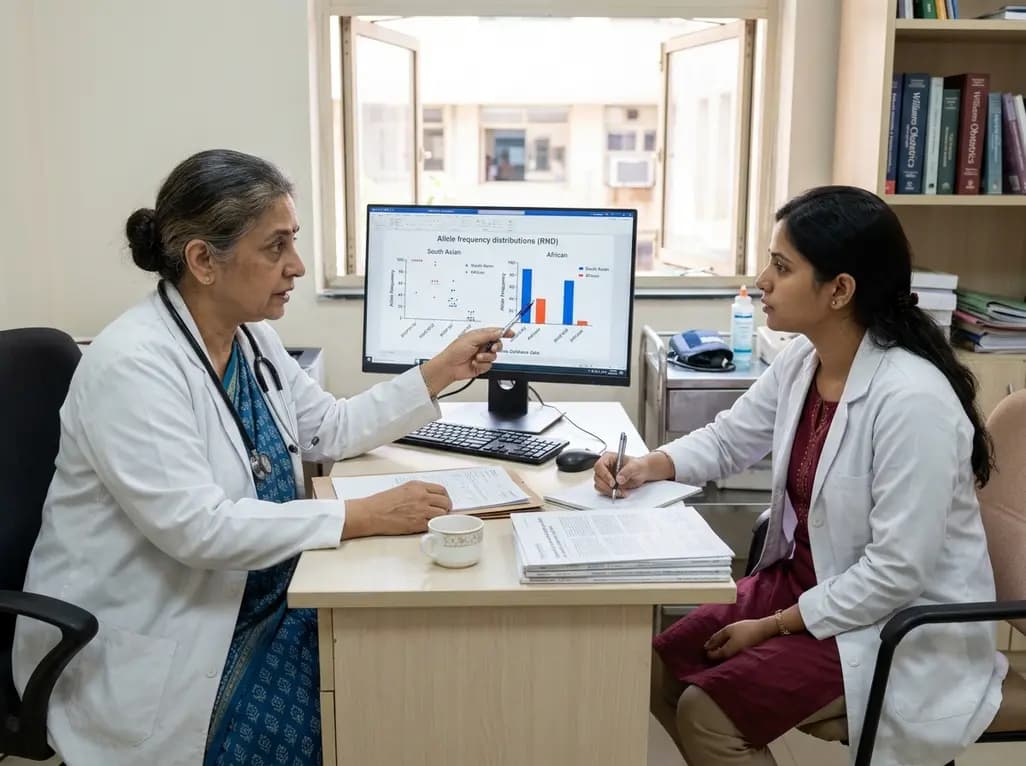
Large genomic databases like gnomAD and All of Us offer crucial insights into the population prevalence of partial RHD genotypes. Identifying these variants helps clinicians mitigate anti-D alloimmunization risks in transfusion medicine and obstetric care across diverse ancestral populations.
Yesterday

A retrospective cohort study evaluated low-dose (50 mg) versus standard-dose (100 mg) alteplase in high-risk pulmonary embolism. The study showed comparable 24-hour hemodynamic stability and mortality, alongside a significant reduction in mechanical ventilation duration and fewer major bleeding events.
Today
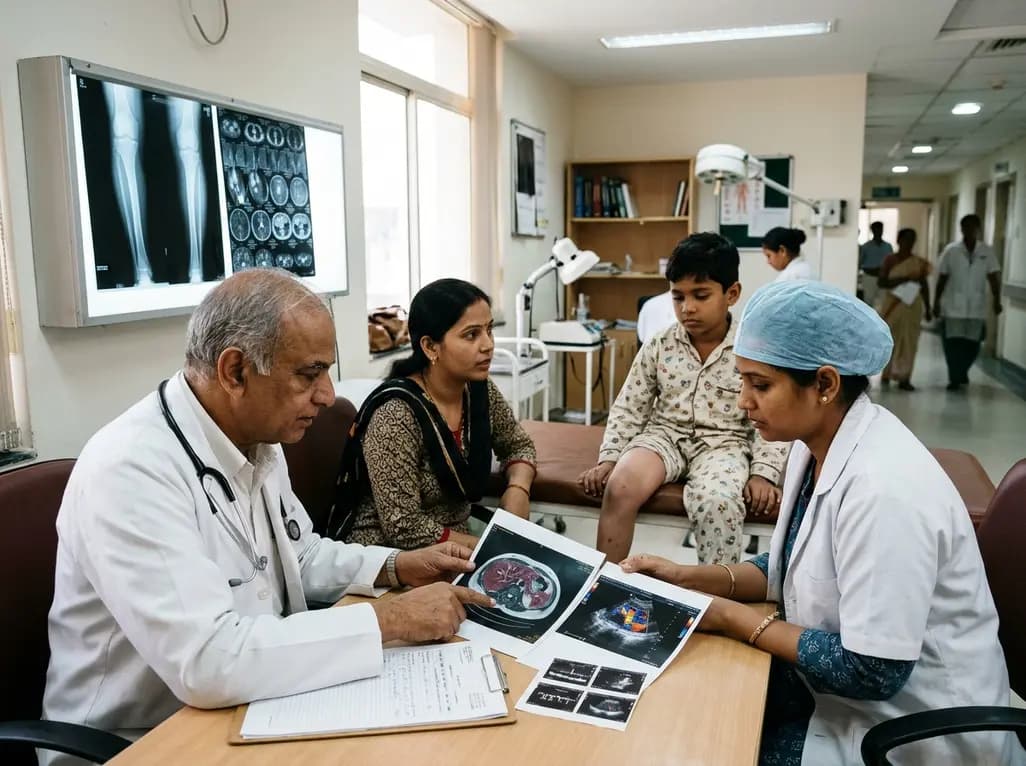
Deep intramuscular vascular malformations in pediatric Klippel-Trenaunay syndrome can mimic Maffucci syndrome. Multimodality imaging with Doppler ultrasound and MRI, along with histopathology, ensures prompt differential diagnosis, targeted surgical debulking, and optimized conservative surveillance.
Today
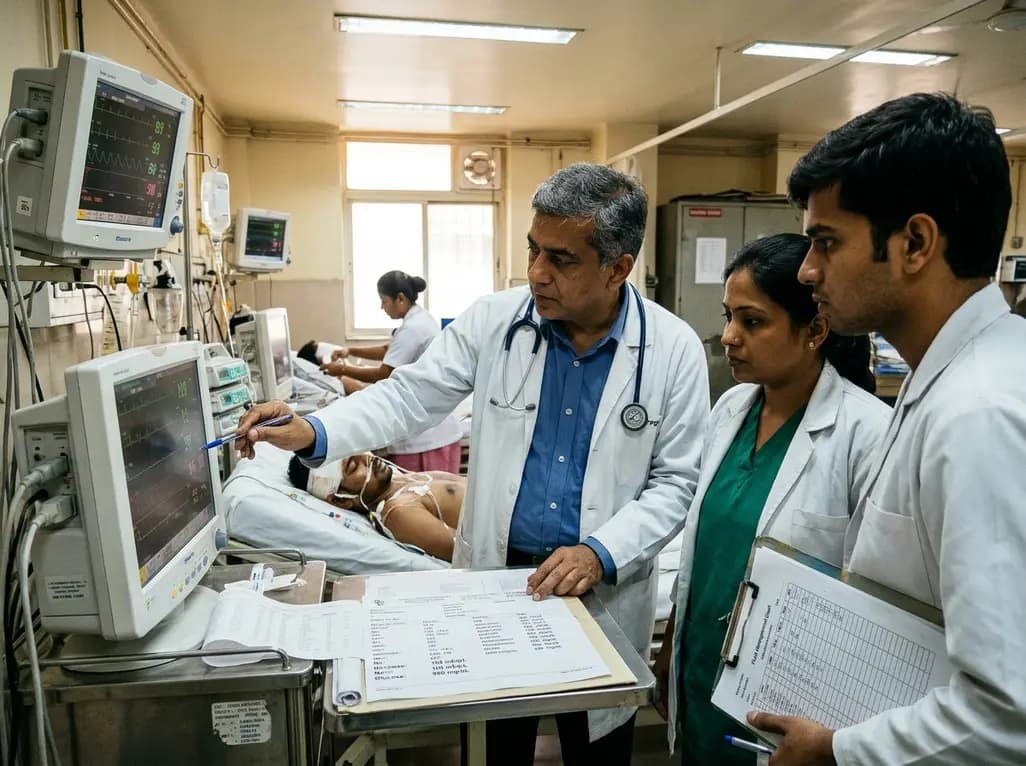
A complex clinical case reveals how adipsic hypernatremia after traumatic brain injury, combined with hyperosmolar hyperglycemic state, triggers life-threatening dehydration and extensive venous thromboembolism, emphasizing the vital role of meticulous fluid management and vigilance.
Today
