.webp&w=384&q=75)

Loading, please wait...
Loading, please wait...

Cardiovascular wellness before conception plays a critical role in determining maternal and fetal outcomes. In assisted reproduction, optimizing pre-pregnancy cardiovascular health has emerged as a fundamental determinant of successful live births. Emerging clinical evidence confirms that pre-existing cardiometabolic status significantly influences vascular adaptation during gestation. Consequently, reproductive endocrinologists and obstetricians must closely evaluate cardiometabolic risk factors before initiating embryo transfer protocols. In a recent comprehensive retrospective cohort study, investigators examined the direct association between maternal baseline vascular wellness and obstetric complications following frozen embryo transfer cycles. Their findings clearly demonstrated that women with suboptimal cardiovascular profiles faced substantially greater hazards of adverse pregnancy outcomes. These complications included hypertensive disorders of pregnancy, gestational diabetes mellitus, preterm delivery, and macrosomic births. Therefore, establishing a thorough vascular evaluation before fertility treatment offers a vital opportunity to improve maternal and neonatal health. Understanding these associations enables clinicians to guide prospective mothers toward proactive health modifications. Ultimately, targeted pre-conception interventions can mitigate avoidable obstetric risks and enhance long-term maternal vascular longevity.
The study evaluated cardiovascular wellness using the standardized framework established by the American Heart Association. Specifically, the researchers assessed key biomedical parameters, including blood pressure, fasting plasma glucose, and serum lipid profiles, alongside body mass index. Investigators classified participants into distinct cardiovascular health tiers based on these objective parameters. Among the 1521 women undergoing their first in vitro fertilisation or intracytoplasmic sperm injection cycle, substantial differences in baseline vascular health were observed. Notably, the researchers used modified Poisson regression models with restricted cubic splines to quantify risk relationships accurately. In addition, they calculated population-attributable fractions to project the clinical benefit of improving vascular parameters before embryo implantation. These analytical models allowed investigators to detect both linear and non-linear patterns of obstetric disease progression. Suboptimal metabolic markers often remain asymptomatic in younger reproductive-age women. However, these silent physiological deviations can impair normal early trophoblast invasion and subsequent spiral artery remodeling. Thus, baseline biochemical screening provides critical baseline metrics that predict gestational vascular stability throughout the entire pregnancy course.
The cohort study revealed striking differences in clinical outcomes between patients with ideal and compromised cardiovascular profiles. Specifically, women in the low-to-moderate cardiovascular health category experienced significantly elevated rates of pregnancy complications compared to those in the high cardiovascular health group. Hypertensive disorders of pregnancy showed the most dramatic increase, with affected patients demonstrating a 2.61-fold higher risk. Similarly, the risk of developing gestational diabetes mellitus rose by 82% among individuals with suboptimal vascular health. In addition, these women faced double the risk of preterm birth and a 28% higher likelihood of delivering large-for-gestational-age infants. Furthermore, advanced spline modeling showed a direct linear relationship between declining cardiovascular health scores and the logarithmic risk of hypertensive disorders and preterm delivery. Conversely, gestational diabetes and large-for-gestational-age outcomes exhibited non-linear associations, indicating complex metabolic thresholds. Crucially, population-attributable fraction analyses estimated that up to 36.1% of these adverse pregnancy outcomes could be prevented by optimizing pre-pregnancy cardiovascular health. Consequently, these robust data emphasize that cardiovascular status directly dictates obstetric safety.
Several biological mechanisms explain why maternal vascular dysfunction elevates adverse pregnancy outcomes after frozen embryo transfer. First, frozen embryo transfer cycles frequently utilize programmed hormone replacement therapy, which lacks an active corpus luteum. In natural conceptions, the corpus luteum releases essential vasoactive substances, such as relaxin, that facilitate systemic maternal vasodilation. Consequently, the absence of these factors places higher demands on intrinsic maternal endothelial function. When underlying subclinical endothelial dysfunction or metabolic derangements exist, maternal blood vessels fail to adapt adequately to the hemodynamic surge of pregnancy. Furthermore, chronic low-grade vascular inflammation impairs deep trophoblast invasion and prevents physiological spiral artery remodeling. As a result, poor placental perfusion triggers maternal endothelial activation, accelerating the development of preeclampsia and fetal distress. Additionally, pre-existing insulin resistance and dyslipidemia disrupt placental nutrient transport mechanisms, driving excessive fetal growth and large-for-gestational-age neonates. Therefore, baseline cardiovascular fitness acts as the primary buffer against the physiological and hormonal stresses inherent to assisted reproduction.
These findings carry profound implications for contemporary fertility practices across reproductive medicine centers worldwide. Fertility specialists frequently focus heavily on ovarian reserve, embryology metrics, and endometrial thickness while overlooking baseline vascular health. However, achieving pregnancy is only the initial step in delivering a healthy newborn. Therefore, clinical teams must integrate comprehensive cardiometabolic assessments into standard pre-conception workups for every fertility candidate. Identifying metabolic syndrome, borderzone hypertension, or early dyslipidemia allows clinicians to implement timely therapeutic strategies before scheduling frozen embryo transfers. Moreover, recognizing high-risk vascular profiles can guide transfer cycle protocols. For example, clinicians might consider modified natural cycle transfers over programmed cycles to preserve endogenous corpus luteum function whenever feasible. In addition, early identification warrants proactive surveillance, such as initiating low-dose aspirin prophylaxis early in gestation to reduce preeclampsia risk. Consequently, closing the gap between reproductive endocrinology and preventive cardiology optimizes clinical pathways for prospective parents.
Achieving ideal cardiovascular fitness prior to embryo transfer requires structured, multidisciplinary lifestyle and clinical interventions. First, dietary modifications focusing on whole grains, lean proteins, vegetables, and reduced refined sugars enhance insulin sensitivity and endothelial reactivity. Furthermore, engaging in regular moderate-intensity aerobic exercise improves peripheral vascular compliance and supports weight management before conception. In patients with established metabolic disorders, clinicians should optimize glycemic control and blood pressure using pregnancy-safe pharmacotherapies before attempting implantation. Additionally, smoking cessation and stress reduction programs play indispensable roles in minimizing systemic oxidative stress. Clinicians should educate couples regarding how pre-conception cardiometabolic health directly affects placental vascular health and neonatal birth weight. Furthermore, routine follow-up with internal medicine specialists or cardiologists ensures sustained blood pressure control throughout the peri-implantation period. As evidence demonstrates, pre-pregnancy cardiometabolic optimization could theoretically avert more than one-third of major obstetric complications. Therefore, investing time in cardiovascular conditioning before frozen embryo transfer creates a resilient physiological foundation for both mother and child.
Suboptimal pre-pregnancy cardiovascular health significantly increases the risk of severe obstetric complications following frozen embryo transfer. Women with low-to-moderate vascular health face a 2.6-fold higher risk of hypertensive disorders of pregnancy, an 82% greater risk of gestational diabetes, and doubled rates of preterm birth. Poor baseline endothelial function and metabolic dysregulation impair normal placental development during assisted reproductive cycles.
Cardiovascular health before fertility treatment is primarily defined by objective biomedical metrics including blood pressure, fasting blood glucose levels, lipid panels, and body mass index. Evaluating these parameters according to American Heart Association standards allows clinicians to detect subclinical cardiometabolic dysfunction. Identifying these risk factors enables targeted lifestyle or medical interventions before starting embryo transfer protocols.
Yes, optimizing cardiovascular fitness before frozen embryo transfer can prevent between 11% and 36% of major adverse pregnancy outcomes. Structured lifestyle interventions, including balanced nutrition, regular aerobic physical activity, weight management, and smoking cessation, improve systemic endothelial function. These proactive pre-conception measures enhance placental vascular adaptation, significantly lowering the likelihood of preeclampsia, gestational diabetes, and preterm delivery.
Disclaimer: This content is for informational and educational purposes only. It is not intended to be a substitute for professional medical advice, diagnosis, or treatment. Always seek the advice of your physician or other qualified health provider with any questions you may have regarding a medical condition. Refer to the latest local and national guidelines for clinical practice.
References

Read summarized clinical updates, watch expert medical content, and earn CME certifications right from your smartphone.
Open your smartphone camera to scan and install.





A cohort study reveals that low-to-moderate pre-pregnancy cardiovascular health significantly increases risks of hypertensive disorders, gestational diabetes, and preterm birth following frozen embryo transfer, underscoring the need for preconception cardiometabolic care.
4 weeks back

A nationwide multicenter study identified three COPD clinical phenotypes, finding that mild smoking males experience the highest rate of rapid lung function decline. A CatBoost model using six routine clinical and socioeconomic variables accurately stratifies high-risk patients for early therapeutic intervention.
Today
Discover the crucial distinctions between mesonephric and mesonephric-like proliferations of the female genital tract. Learn the key histomorphologic, immunohistochemical, and molecular differences essential for accurate diagnosis and clinical management.
Today
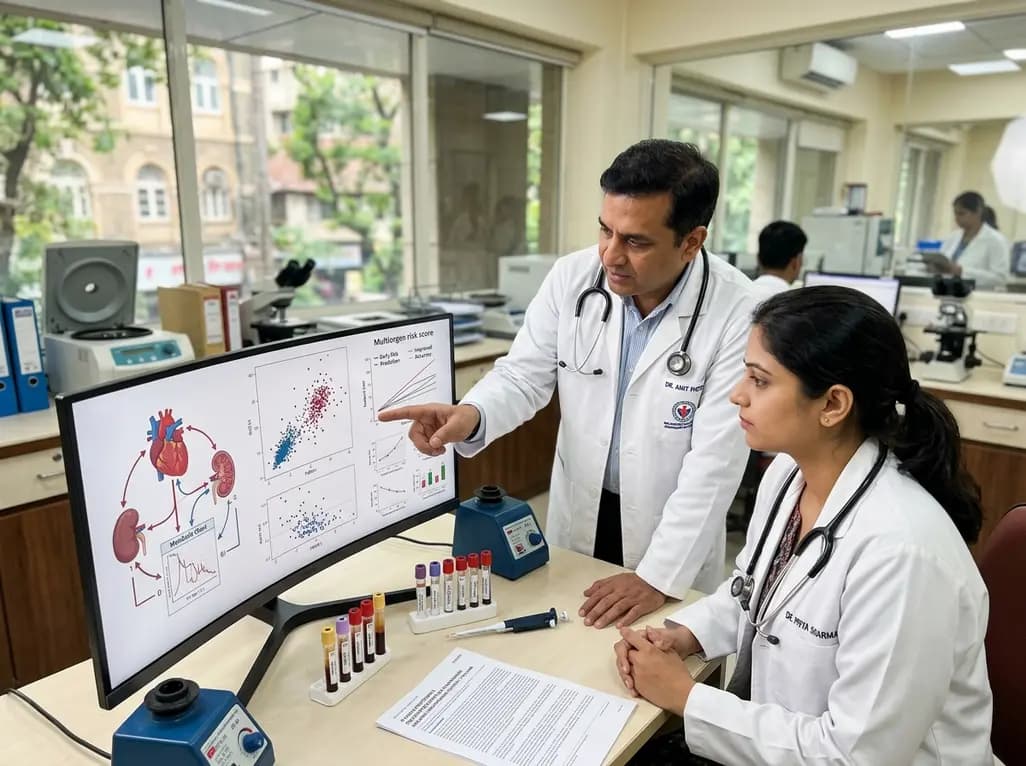
A large UK Biobank study reveals that plasma proteomic signatures capture preclinical organ damage and improve multiorgan risk prediction across early CKM syndrome stages 0 to 2 beyond traditional PREVENT clinical models.
Today
A narrative review investigates whether the articularis genus muscle functions as an independent anatomical entity or blends with the vastus intermedius. We evaluate its morphology, role in retracting the suprapatellar bursa, and direct clinical significance in anterior knee pain and arthroplasty.
Today

A Bayesian multilevel meta-analysis reveals that aerobic training combined with moderate carbohydrate restriction modestly lowers HbA1c in type 2 diabetes. However, sparse data and very low certainty leave incremental benefits over exercise or diet alone unproven, highlighting the need for individualized care.
Today
