.webp&w=384&q=75)

Loading, please wait...
Loading, please wait...

Standard chemotherapeutic and targeted oncological interventions eliminate the majority of malignant cells during initial therapy. However, a minute subpopulation of cells often evades eradication and drives disease relapse. Investigating this phenomenon, researchers at the National Centre for Biological Sciences in Bengaluru have uncovered vital clues regarding non-genetic cancer drug tolerance. Unlike traditional resistance driven by irreversible genetic mutations, this transient survival state relies on epigenetic and transcriptomic dynamics. Consequently, cancer cells preserve a cellular memory that enables them to endure pharmacotherapy. Identifying these expression profiles before treatment begins offers a transformative avenue for proactive oncological intervention.
Malignant tumors display remarkable heterogeneity across cellular populations. While primary therapies kill sensitive tumor clones, persistent clones survive through transient phenotypic adaptation. Therefore, oncologists frequently observe disease recurrence despite initial radiologic or biochemical regression. These surviving cells do not necessarily acquire de novo genomic mutations. Instead, they exploit fluctuating gene expression states that modulate metabolism, anti-apoptotic signaling, and drug transport. Consequently, these cellular states remain stable across several mitotic divisions, establishing a functional cellular memory.
Historically, tracking such non-genetic survival programs required laborious lineage-tracing experiments across multiple generations. Investigators had to culture cells over extended timelines to observe clonal evolution and identify specific memory genes. Unfortunately, clinical oncology settings cannot accommodate these longitudinal in vitro assays because patient biopsies yield only static, single-time-point specimens. As a result, detecting drug-tolerant persister cells in real-world clinical samples remained an unresolved biomedical challenge. Clinicians and researchers lacked reliable computational frameworks to extract dynamic historical memory from static tissue biopsies.
To address this clinical limitation, computational biologists at NCBS engineered an innovative algorithmic framework named Power-Seek. The research team utilized Random Matrix Theory to analyze single-cell RNA sequencing data obtained from a single static snapshot. Single-cell RNA sequencing captures instantaneous gene transcription across thousands of individual tumor cells. However, unmasking long-term transcriptomic memory from a single snapshot requires sophisticated mathematical modeling.
Specifically, the investigators demonstrated that memory genes generate distinctive power-law signatures within the eigenspectrum of the cellular covariance matrix. When cells share an ancestral lineage or persistent epigenetic state, their gene expression fluctuations correlate in measurable mathematical distributions. Consequently, Power-Seek identifies these subtle statistical traces without requiring prior lineage tracking, cell-cycle timers, or longitudinal culture replicates. By analyzing covariance patterns across thousands of single cells simultaneously, the algorithm accurately segregates memory genes from random transcriptional noise. Thus, Power-Seek converts static biopsy transcriptomics into dynamic predictive insights regarding drug survival mechanisms.
The researchers initially validated the Power-Seek algorithm using established, peer-reviewed single-cell datasets from malignant melanoma. In those historical benchmarks, scientists had identified memory genes through exhaustive, multi-week lineage tracing. Remarkably, Power-Seek identified the very same critical memory genes using only a single static data point. This benchmark confirmed that mathematical power-law signatures reliably reflect authentic lineage-dependent cellular memory.
Subsequently, the team applied Power-Seek to clinical tissue samples harvested directly from patients with human breast cancer. The algorithm successfully identified memory genes associated with treatment resistance without requiring experimental perturbation. Moreover, comparative analysis revealed substantial functional overlap between memory genes identified in melanoma and those detected in breast carcinomas. These shared pathways govern vital cell survival processes, including epithelial-to-mesenchymal transition, stress mitigation, and altered mitochondrial bioenergetics. Therefore, distinct solid malignancies appear to utilize conserved transcriptomic strategies to endure pharmacological insult. This cross-tumor conservation underscores the broad applicability of the algorithm across diverse clinical oncology domains.
The development of Power-Seek carries profound diagnostic and therapeutic implications for modern medical oncology. Currently, clinical oncologists select targeted regimens based on static genomic sequencing, which identifies targetable somatic driver mutations. However, genomic panels often fail to predict non-genetic drug tolerance that leads to therapeutic failure. By integrating single-cell transcriptomics with Power-Seek, clinicians may soon identify drug-tolerant populations prior to initiating first-line therapy.
Furthermore, identifying specific memory genes creates unprecedented opportunities for rational combination therapies. Because memory genes activate before drug exposure, clinicians could administer adjuvant agents to disable these survival programs preemptively. For example, combining standard kinase inhibitors with compounds targeting memory-associated pathways could prevent persister cells from surviving initial therapeutic cycles. Additionally, this methodology can refine patient risk stratification by identifying individuals harboring high proportions of pre-existing tolerant clones. Consequently, precision oncology can evolve beyond reactive salvage therapy toward proactive, mathematically guided interception of drug resistance.
Although Power-Seek demonstrates remarkable diagnostic power, ongoing translational efforts aim to optimize its integration into routine pathology workflows. The investigators plan to investigate how distinct memory genes interact within complex intracellular regulatory networks. In addition, future research will explore spatial transcriptomics to understand how the tumor microenvironment influences memory gene expression. Malignant cells interact continuously with stromal fibroblasts, immune infiltrates, and extracellular matrix components, which modulate cellular plasticity.
Moreover, expanding this computational tool across broader hematological and solid tumors will validate its universal utility. Future clinical trials must evaluate whether therapeutic regimens tailored around memory gene profiles improve progression-free and overall survival rates. As single-cell sequencing costs decrease, computational algorithms like Power-Seek will become accessible tools in hospital pathology laboratories across India and worldwide. Ultimately, deciphering cellular memory bridges the gap between molecular biophysics and personalized clinical oncology, helping clinicians eliminate resistant cancer clones before disease progression occurs.
Q1: What is the primary difference between genetic drug resistance and cancer drug tolerance?
Genetic drug resistance arises from permanent DNA mutations that alter drug targets or activate bypass survival pathways irreversibly. In contrast, cancer drug tolerance involves non-genetic, reversible transcriptional and epigenetic states. Certain cancer cells switch specific genes on or off, allowing them to endure pharmacotherapy temporarily. These memory states persist through cell divisions without altering the underlying genetic sequence.
Q2: How does the Power-Seek algorithm identify memory genes from a single snapshot?
Power-Seek utilizes Random Matrix Theory to analyze gene covariance patterns in single-cell RNA sequencing data. When cells share inherited gene expression states, their transcriptional fluctuations create distinct power-law signatures in the covariance matrix eigenspectrum. The algorithm detects these mathematical signatures from a single time-point sample, eliminating the historical need for multi-day lineage tracking experiments.
Q3: How might this discovery influence future clinical cancer therapy?
This discovery enables clinicians to identify drug-tolerant cancer cells before initiating treatment. Because memory genes are active prior to drug administration, oncologists can design preemptive combination therapies to disable these survival mechanisms. This proactive strategy prevents minimal residual disease, reduces recurrence rates, and provides personalized treatment regimens tailored to both genetic and transcriptomic tumor profiles.
Disclaimer: This content is for informational and educational purposes only. It does not constitute medical advice or replace professional judgment. Refer to the latest local and national guidelines for clinical practice.
References

Read summarized clinical updates, watch expert medical content, and earn CME certifications right from your smartphone.
Open your smartphone camera to scan and install.





NCBS researchers in Bengaluru develop Power-Seek, an algorithm using single-cell RNA sequencing to identify memory genes driving cancer drug tolerance from a single snapshot, paving the way for preemptive therapies against treatment resistance.
last month

A systematic review of 41 preclinical studies reveals that baicalin dampens systemic inflammation, inhibits NF-κB and NLRP3 pathways, and improves organ preservation in sepsis models. However, substantial study heterogeneity and a complete lack of human clinical trials highlight the need for further translational research.
Today
Discover the crucial distinctions between mesonephric and mesonephric-like proliferations of the female genital tract. Learn the key histomorphologic, immunohistochemical, and molecular differences essential for accurate diagnosis and clinical management.
Today
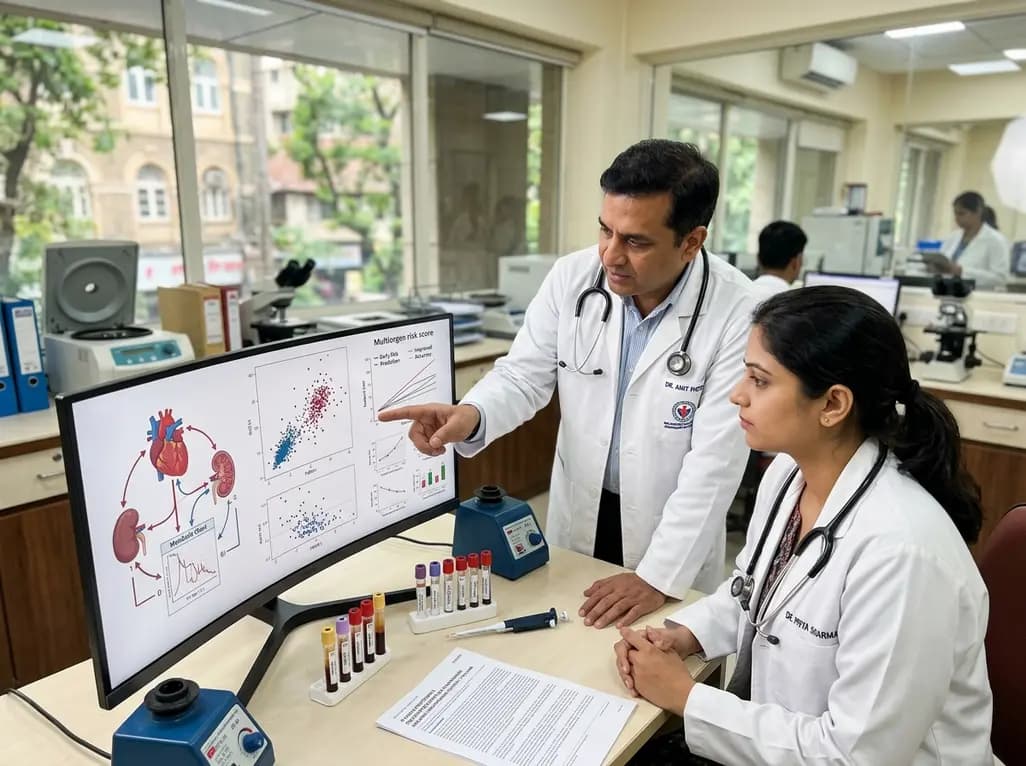
A large UK Biobank study reveals that plasma proteomic signatures capture preclinical organ damage and improve multiorgan risk prediction across early CKM syndrome stages 0 to 2 beyond traditional PREVENT clinical models.
Today
A narrative review investigates whether the articularis genus muscle functions as an independent anatomical entity or blends with the vastus intermedius. We evaluate its morphology, role in retracting the suprapatellar bursa, and direct clinical significance in anterior knee pain and arthroplasty.
Today

A Bayesian multilevel meta-analysis reveals that aerobic training combined with moderate carbohydrate restriction modestly lowers HbA1c in type 2 diabetes. However, sparse data and very low certainty leave incremental benefits over exercise or diet alone unproven, highlighting the need for individualized care.
Today
