.webp&w=384&q=75)

Loading, please wait...
Loading, please wait...

Postoperative knee pain remains a significant challenge for patients recovering from anterior cruciate ligament reconstruction (ACLR). Although surgeons often achieve functional stability, patients frequently report lingering discomfort during the recovery process. The Multicenter Orthopaedic Outcomes Network (MOON) group recently conducted a comprehensive study to track pain levels over a decade. Consequently, their findings offer a clearer picture of long-term recovery trajectories for these individuals.
The research team followed a large cohort of 3,272 patients across multiple surgical centers. Specifically, they utilized the Knee injury and Osteoarthritis Outcome Score (KOOS) to measure pain at 2, 6, and 10 years post-surgery. Furthermore, the results indicated that while nearly 26% of patients experienced significant pain at the 2-year mark, this number did not increase over time. Notably, the prevalence of pain actually trended slightly downward as the decade progressed. Moreover, persistent pain at every single follow-up point was remarkably rare. For instance, only 5.6% of patients reported moderate to severe pain consistently across the entire 10-year period. Therefore, clinicians can confidently inform patients that most long-term pain is transient rather than a permanent disability.
Additionally, these findings highlight the importance of realistic expectation management during the initial years of recovery. However, the presence of early pain does not necessarily predict a decade of suffering. Thus, focusing on comprehensive rehabilitation remains the best strategy for optimizing long-term patient comfort and joint health.
While up to 26% of patients report significant pain at two years, only about 5.6% experience moderate to severe pain consistently over a ten-year period.
No, data suggests that pain prevalence remains stable or slightly decreases between the 2-year and 10-year follow-up intervals.
Disclaimer: This content is for informational and educational purposes only... Refer to the latest local and national guidelines for clinical practice.
References
Cantrell WA et al. Prevalence of Postoperative Knee Pain After ACL Reconstruction at 2, 6, and 10 Years of Follow-up: Data From the MOON Group. Am J Sports Med. 2026 Feb 08. doi: 10.1177/03635465251414661. PMID: 41655193.
Spindler KP, Huston LJ, Wright RW, et al. Ten-Year Outcomes and Risk Factors After Anterior Cruciate Ligament Reconstruction: A MOON Longitudinal Prospective Cohort Study. Am J Sports Med. 2018;46(4):815-825.
Magnussen RA, Reinke EK, Huston LJ, et al. Neither Residual Anterior Knee Laxity Up to 6 mm nor a Pivot Glide Predict Patient-Reported Outcome Scores or Subsequent Knee Surgery Between 2 and 6 Years After ACL Reconstruction. Am J Sports Med. 2021;49(10):2631-2637.

Read summarized clinical updates, watch expert medical content, and earn CME certifications right from your smartphone.
Open your smartphone camera to scan and install.





Data from the MOON Group shows that while initial postoperative knee pain is common, very few patients experience persistent pain up to 10 years after surge...
8 months ago
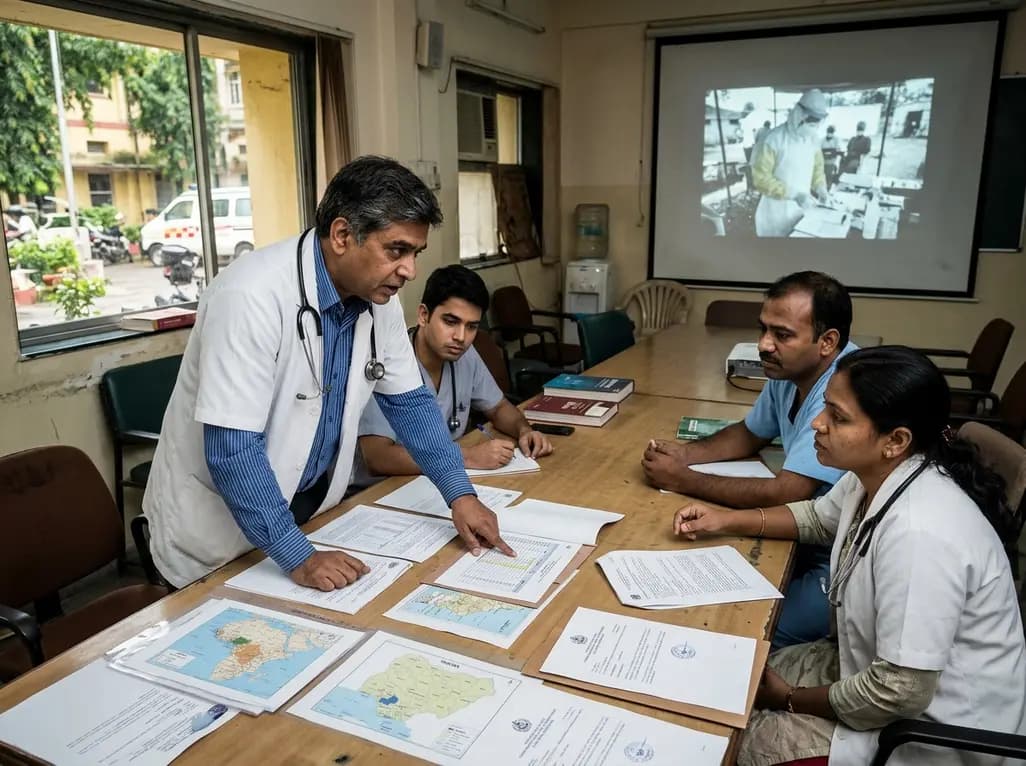
Following Nigeria's first recorded Ebola case linked to regional travel, the Africa CDC has convened an emergency ministerial summit. This alert underscores critical clinical priorities for healthcare professionals, including differentiating early viral infection from malaria, implementing barrier nursing, and triage.
Today

Leucine Rich Bio has introduced South Asia's first comprehensive vaginal microbiome test, BugSpeaks. By profiling microbial dysbiosis, pathogens, and antimicrobial resistance, this next-generation diagnostic platform provides clinicians with deeper insights into recurrent infections, fertility, and reproductive health.
Today

Review how tailored exercise programs benefit frail older patients with heart failure. Explore pathophysiological mechanisms, individualized training prescriptions, and strategies to overcome adherence barriers in clinical practice.
Today

This comparative study evaluates posterior labral tears with and without glenohumeral instability, highlighting distinct demographic patterns, MRI underestimation in stable shoulders, and successful arthroscopic repair outcomes.
Today

A clinical study demonstrates that early intervention with tocilizumab, either as monotherapy or bridged with corticosteroids, achieves significant proptosis reduction and resolves active inflammation in treatment-naive thyroid eye disease.
Today
