.webp&w=384&q=75)

Loading, please wait...
Loading, please wait...

Pediatric intensive care units (PICUs) achieve remarkable survival rates today, but critical illness often leaves lasting consequences for young survivors and their families. Approximately one-third of children surviving critical illness experience persistent physical, cognitive, psychological, or developmental impairments, collectively termed post-intensive care syndrome in pediatrics (PICS-p). Concurrently, caregivers carry immense psychological burdens, frequently reporting severe anxiety, depression, and post-traumatic stress after discharge. Despite these documented challenges, modern healthcare systems largely lack standardized transitional pathways to bridge the gap between intensive care discharge and community reintegration. Establishing structured post-PICU shared care models is essential to optimize long-term child health and support caregiver well-being.
Critical illness in early childhood occurs during vulnerable stages of organ maturation and neurodevelopment. Consequently, systemic inflammation, sedative exposure, prolonged mechanical ventilation, and physiological stress can disrupt developmental trajectories. Children recovering from critical conditions frequently demonstrate behavioral disturbances, sleep disruptions, motor regression, and functional limitations. Furthermore, the trauma of witnessing a child’s critical illness severely impacts parents and family dynamics.
Caregivers frequently struggle to coordinate complex outpatient appointments, manage medication adjustments, and identify developmental delays. In traditional healthcare systems, parents transition abruptly from highly monitored intensive care environments to self-directed community follow-up. This sudden shift often amplifies parental anxiety and leads to fragmented medical care. Therefore, structured follow-up models that actively involve community general practitioners (GPs) and primary care pediatricians offer a vital solution to maintain continuity of care.
To evaluate structured outpatient support, investigators conducted a multicenter, pilot hybrid effectiveness-implementation randomized controlled trial across two tertiary PICUs in Queensland, Australia. The trial enrolled parents of children aged two months to under four years who had survived critical illness. The primary objective focused on assessing trial feasibility alongside intervention acceptability, appropriateness, and preliminary effectiveness.
Researchers randomized parent-child dyads into two distinct arms: a six-month collaborative GP shared-care intervention or standard self-directed active control. In the intervention group, tertiary intensive care teams partnered directly with local primary care clinicians, establishing structured clinical handover protocols, scheduled developmental surveillance visits, and proactive parental support. In contrast, families in the active control arm navigated standard self-directed outpatient follow-up. By examining both clinical outcomes and implementation metrics, the trial generated valuable data on how primary care clinicians can actively support recovery after pediatric critical illness.
The trial demonstrated compelling evidence regarding caregiver mental health. Notably, parenting stress was substantially lower in the collaborative shared-care cohort compared to the active control group at six months. The intervention group recorded a median parenting stress score of 20 (IQR, 12–47), whereas the active control group recorded a median score of 42 (IQR, 19–66), reflecting a statistically significant reduction.
However, rates of child neurodevelopmental vulnerability remained comparable between both arms at six months follow-up. Specifically, 39% of children in the shared-care cohort exhibited neurodevelopmental vulnerability compared to 44% in the active control group. This finding aligns with the understanding that established neurodevelopmental changes require longer follow-up intervals and intensive multidisciplinary rehabilitation. Importantly, alleviating caregiver stress serves as a crucial mediator for long-term child developmental recovery, because resilient, well-supported parents provide enriched home environments that directly foster pediatric resilience.
Evaluating implementation outcomes is essential when designing sustainable models of care. The pilot trial demonstrated high intervention fidelity (96%), high participant retention (81%), and strong parental acceptability (71% to 86%). These robust figures indicate that families deeply value structured guidance from primary care physicians during post-discharge recovery. However, the study also identified practical challenges, including a modest initial recruitment rate of 42% and variable intervention feasibility scores ranging from 35% to 82%.
These implementation barriers highlight system-level complexities in coordinating transitional care. Primary care physicians often face heavy workloads, limited consultation times, and varying familiarity with specialized post-intensive care guidelines. To address these hurdles, health networks must establish streamlined electronic communication pathways, standardized discharge summaries, and dedicated billing mechanisms that support extended consultations. Simplifying inter-provider communication ensures that primary care physicians can effectively lead community-based surveillance without administrative burden.
The findings from this landmark pilot study provide a practical roadmap for pediatric clinicians, intensivists, and primary care physicians worldwide. Transitioning a critically ill infant or toddler home requires deliberate, longitudinal collaboration rather than isolated discharge instructions. Healthcare institutions must integrate structured developmental screening tools, proactive mental health screening for caregivers, and rapid referral networks for allied health services into standard primary care workflows.
Additionally, tertiary pediatric centers should implement standardized electronic discharge handover templates specifically highlighting critical illness exposures, sedation duration, and potential developmental flags. Empowering primary care providers with targeted clinical resources allows early detection of subtle motor, speech, or behavioral setbacks. Ultimately, adopting shared-care paradigms bridges the gap between acute hospital rescue and long-term community recovery, ensuring that vulnerable children achieve their full developmental potential.
Pediatric post-intensive care syndrome encompasses new or worsening physical, cognitive, emotional, and social impairments following critical illness. It affects both young survivors and their family members. Routine follow-up is critical because early developmental delays, behavioral changes, and parental psychological distress often emerge months after hospital discharge. Structured surveillance enables clinicians to initiate timely physical therapy, speech rehabilitation, and psychological interventions before minor deficits become persistent long-term disabilities.
Collaborative shared care provides parents with continuous guidance, structured medical oversight, and direct reassurance from trusted primary care physicians. Instead of navigating confusing healthcare systems alone, caregivers receive clear follow-up schedules, proactive check-ins, and coordinated multidisciplinary referrals. This structured clinical partnership validates caregiver concerns, demystifies recovery milestones, reduces feelings of isolation, and significantly alleviates the psychological burden associated with managing a vulnerable recovering child at home.
Yes, primary care clinicians are exceptionally well positioned to monitor long-term neurodevelopmental recovery due to their ongoing relationship with families. By utilizing standardized screening instruments and detailed discharge summaries from intensive care units, primary care clinicians can systematically track motor milestones, language acquisition, and behavioral patterns. When subtle developmental vulnerabilities are identified early, clinicians can immediately initiate appropriate specialist consultations, early childhood intervention programs, and targeted developmental therapies.
Disclaimer: This content is for informational and educational purposes only and is not intended as medical advice. Healthcare professionals should exercise their independent clinical judgment. Refer to the latest local and national guidelines for clinical practice.
References

Read summarized clinical updates, watch expert medical content, and earn CME certifications right from your smartphone.
Open your smartphone camera to scan and install.





A pilot hybrid RCT shows that collaborative GP shared care post-PICU significantly alleviates parenting stress compared to self-directed care in young children, supporting integrated transitional follow-up pathways.
last month

A systematic review of 41 preclinical studies reveals that baicalin dampens systemic inflammation, inhibits NF-κB and NLRP3 pathways, and improves organ preservation in sepsis models. However, substantial study heterogeneity and a complete lack of human clinical trials highlight the need for further translational research.
Today
Discover the crucial distinctions between mesonephric and mesonephric-like proliferations of the female genital tract. Learn the key histomorphologic, immunohistochemical, and molecular differences essential for accurate diagnosis and clinical management.
Today
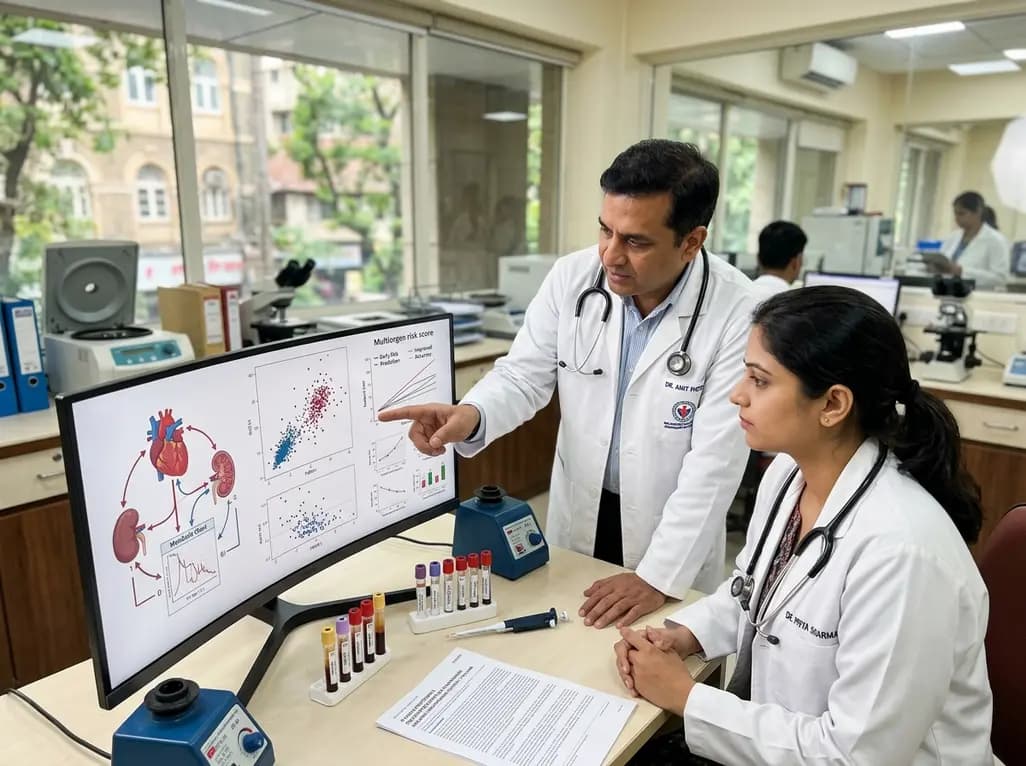
A large UK Biobank study reveals that plasma proteomic signatures capture preclinical organ damage and improve multiorgan risk prediction across early CKM syndrome stages 0 to 2 beyond traditional PREVENT clinical models.
Today
A narrative review investigates whether the articularis genus muscle functions as an independent anatomical entity or blends with the vastus intermedius. We evaluate its morphology, role in retracting the suprapatellar bursa, and direct clinical significance in anterior knee pain and arthroplasty.
Today

A Bayesian multilevel meta-analysis reveals that aerobic training combined with moderate carbohydrate restriction modestly lowers HbA1c in type 2 diabetes. However, sparse data and very low certainty leave incremental benefits over exercise or diet alone unproven, highlighting the need for individualized care.
Today
