

Loading, please wait...
Loading, please wait...

Critically ill patients frequently develop nonconvulsive seizures and nonconvulsive status epilepticus. Because these conditions lack obvious motor signs, clinicians cannot detect them through clinical examination alone. Consequently, diagnostic delays often occur, leading to secondary brain injury and elevated mortality. Traditional electroencephalography remains the historical gold standard for neurological monitoring. However, conventional setups require specialized technologists who are often unavailable during nights or weekends. To overcome this critical bottleneck, point-of-care EEG has emerged as a rapid diagnostic platform. Non-specialist clinical teams can apply these streamlined devices at the bedside within minutes. Therefore, point-of-care EEG provides immediate electrographic surveillance during acute clinical deterioration. While smaller hospitals clearly gain from portable diagnostic tools, questions remained regarding tertiary facilities. Tertiary centers already maintain extensive conventional electroencephalography infrastructure. Nevertheless, delays still occur in these academic settings. Understanding whether rapid bedside monitoring offers additive value in fully resourced environments is essential for optimizing acute neurocritical workflows.
Investigators addressed this diagnostic question through a multicenter observational subanalysis derived from the SAFER-EEG trial. The study evaluated 1,074 acute care patients across four large tertiary hospitals in the United States. Each participating medical center maintained comprehensive, round-the-clock conventional electroencephalography services. Among the total study cohort, researchers identified 197 patients with confirmed electrographic seizures. Specifically, 137 individuals received conventional monitoring first, whereas 60 patients underwent initial evaluation with point-of-care EEG. The research team compared time from order to recording start, overall duration to seizure identification, and monitoring location. Furthermore, investigators analyzed patient subgroups who were actively seizing upon recording initiation or within two hours. Baseline clinical severity and pre-existing comorbidities remained comparable across both cohorts. By focusing on confirmed seizure cases, the study rigorously assessed whether rapid device deployment translates into tangible time savings within well-equipped academic facilities.
The study demonstrated dramatic differences in diagnostic timeliness between the two monitoring modalities. Patients evaluated with point-of-care EEG achieved a median order-to-start time of 0 hours, reflecting near-immediate bedside application. Conversely, patients assigned to conventional systems experienced a median order-to-start delay of 2.1 hours. This two-hour operational gap represents a critical window where active neuronal injury continues unchecked. Importantly, among patients who were seizing at the exact moment recording began, time from hospital admission to seizure detection was vastly shorter with rapid monitoring. Patients in the point-of-care EEG cohort achieved seizure detection in a median of 0.6 hours from admission. In contrast, conventional monitoring required 6.0 hours to identify active seizures in that same subgroup. Thus, rapid monitoring identified life-threatening electrical events more than five hours earlier. Furthermore, half of all point-of-care patients demonstrated electrographic seizures within two hours of evaluation, confirming the platform's high diagnostic yield during critical early triage.
Beyond accelerating initial seizure diagnosis, rapid bedside monitoring transformed downstream clinical management and resource utilization. Notably, total recording duration was significantly shorter for patients who initially received point-of-care EEG compared to conventional systems. Bedside clinicians obtained immediate diagnostic answers, allowing teams to treat or rule out nonconvulsive status epilepticus efficiently. As a result, 37.5% of patients monitored with point-of-care systems did not require subsequent conventional monitoring. This reduction in unnecessary continuous recordings conserved specialized neurodiagnostic resources and minimized technologist fatigue. In addition, survivors in the rapid monitoring cohort exhibited a clear numerical trend toward shorter total hospital length of stay. Emergency departments served as a primary point of deployment, initiating rapid brain wave surveillance long before intensive care transfer occurred. Therefore, integrating rapid bedside tools streamlined institutional workflows while simultaneously protecting patients from prolonged delays inherent to standard scheduling channels.
Rapid electrographic feedback fundamentally alters clinical decision-making at the bedside. When patients present with unexplained comas or altered mental status, physicians often administer empiric antiseizure medications without definitive proof. However, aggressive empiric therapy carries major risks, including respiratory depression, hypotension, and unnecessary endotracheal intubation. Conversely, delaying treatment in true status epilepticus increases pharmacoresistance and neurological morbidity. Bedside point-of-care monitoring provides immediate clarity, allowing physicians to target aggressive anticonvulsant escalation only to patients with true seizure activity. Meanwhile, teams can safely avoid over-sedation in patients whose encephalopathy stems from toxic or metabolic derangements. Moreover, automated audio and visual seizure detection algorithms integrated into modern devices support bedside nurses and acute care physicians during off-hours. Consequently, clinical teams initiate targeted interventions with greater confidence, improving the safety profile of acute neurocritical resuscitation.
The findings from the SAFER-EEG trial carry vital implications for contemporary hospital administration and critical care delivery. Even in hospitals with fully integrated conventional infrastructure, operational barriers delay specialized technologist arrival and electrode placement. Point-of-care EEG bridges this crucial gap, serving as an indispensable triage tool rather than a replacement for conventional diagnostics. For emergency departments and intensive care units, rapid electrographic triage establishes timely diagnosis, accelerates targeted therapy, and rationalizes scarce neurophysiology resources. Furthermore, healthcare systems in developing and middle-income regions face severe shortages of trained neurophysiology technicians and dedicated machines. Adopting portable, user-friendly bedside brain monitoring systems can democratize acute seizure detection across community and district hospitals. Ultimately, combining rapid frontline triage with conventional neurophysiology infrastructure optimizes clinical outcomes, shortens hospitalization, and establishes an efficient paradigm for neurocritical care management.
Point-of-care EEG uses a simplified, rapid-setup headband system that bedside clinical staff can apply within minutes. In contrast, conventional EEG requires specialized electroneurodiagnostic technologists and complex montage placement. Therefore, rapid bedside systems provide immediate brain wave monitoring during acute neurological deterioration when conventional diagnostic infrastructure faces scheduling or setup delays.
No, clinicians should view rapid brain monitoring as a triage and screening tool rather than a replacement. Although it rapidly identifies electrographic seizures, conventional EEG provides greater spatial resolution for subtle or focal abnormalities. Consequently, medical teams use rapid systems to initiate urgent therapy before transitioning selected complex cases to comprehensive continuous monitoring.
Nonconvulsive status epilepticus causes progressive neuronal injury and metabolic exhaustion without visible motor manifestations. Delays in diagnosis correlate directly with increased morbidity, refractory status epilepticus, and elevated mortality. Therefore, establishing prompt electrographic surveillance enables timely antiseizure medication administration, which preserves cerebral tissue and improves functional neurological recovery in critically ill patients.
Disclaimer: This content is for informational and educational purposes only... Refer to the latest local and national guidelines for clinical practice.
References

Read summarized clinical updates, watch expert medical content, and earn CME certifications right from your smartphone.
Open your smartphone camera to scan and install.





A multicenter subanalysis of the SAFER-EEG trial reveals that point-of-care EEG reduces time to seizure detection in tertiary centers with full conventional EEG capabilities, facilitating timely intervention and optimizing acute neurocritical care workflows.
Today

A real-world cross-sectional study in Thailand reveals that a web-based bone health self-assessment tool effectively captured clinical risk profiles, prompting DXA recommendations in 37% of users—over half of whom were below standard screening ages due to non-age clinical vulnerabilities.
Today

Researchers have engineered a sensitive electrochemiluminescent sandwich immunosensor utilizing silver nanoparticles and quantum dots to quantify placental growth factor, paving the way for rapid, accurate, and accessible early preeclampsia screening in clinical practice.
Today
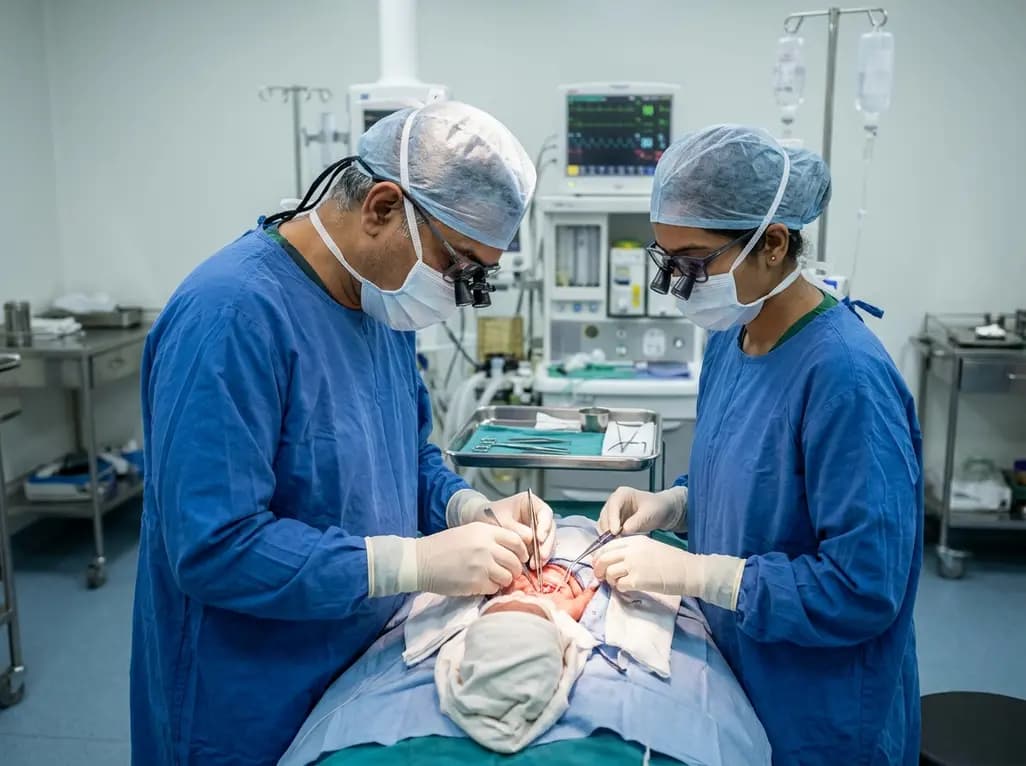
This report reviews the successful off-pump surgical retrieval of a migrated patent ductus arteriosus closure device in an 8-week-old preterm infant, preventing cardiopulmonary bypass morbidity while relieving aortic obstruction.
Today
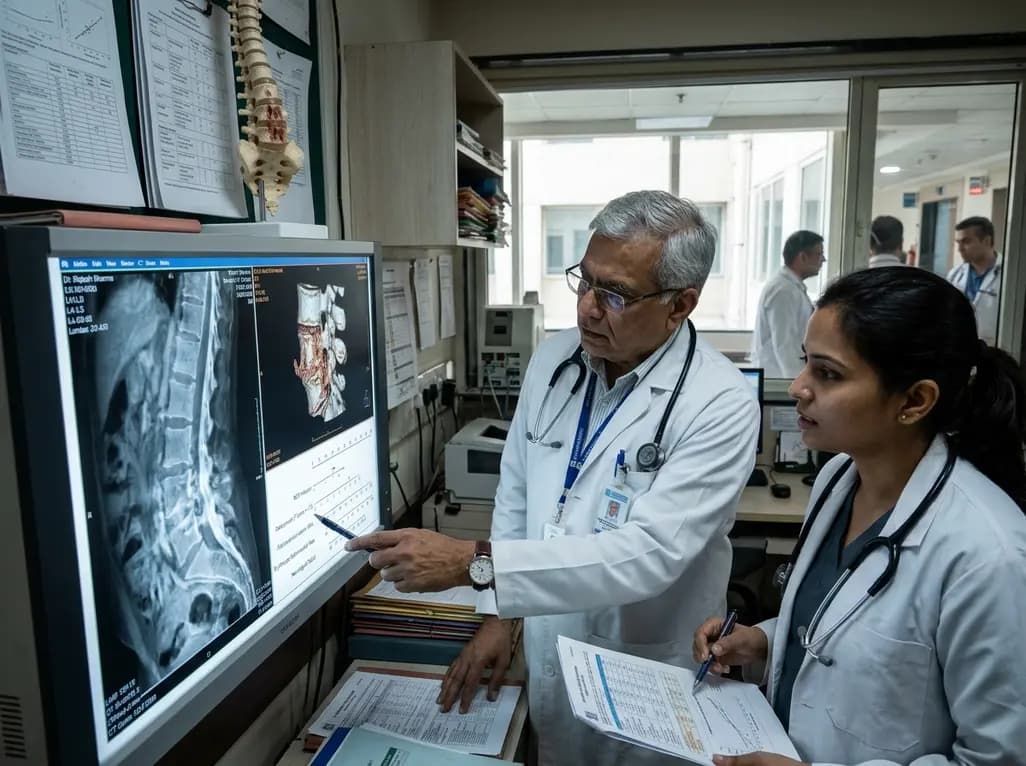
A new visual nomogram predicts postinfectious bone loss in spinal infection patients with high accuracy (AUC 0.946). Integrating markers like osteoporosis and MDR infection, the model aids early risk stratification to prevent spinal instability and deformity.
Today

As lifestyle diseases surge across India, clinicians face rising challenges from dietary misinformation and unmonitored therapies. Prioritising structured nutrition therapy, evidence-based self-care, and robust regulatory oversight offers a sustainable pathway to counter metabolic dysfunction and enhance patient health.
Today
