.webp&w=384&q=75)

Loading, please wait...
Loading, please wait...
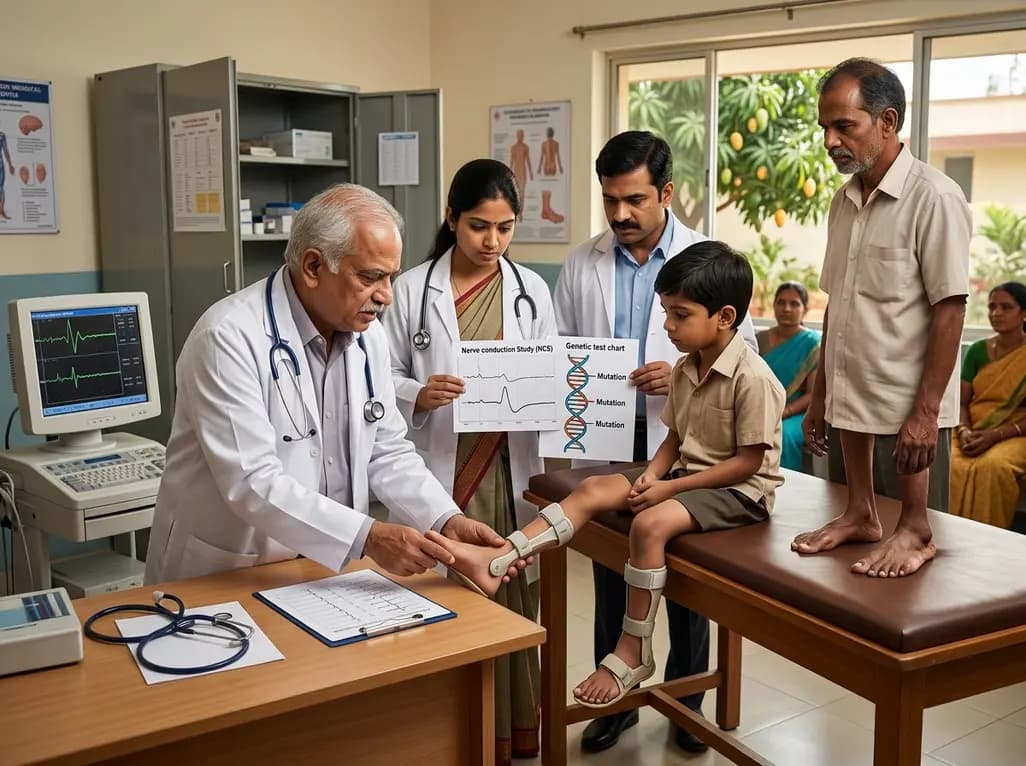
Charcot-Marie-Tooth (CMT) disease represents a group of clinically and genetically heterogeneous inherited peripheral neuropathies. Traditionally, the most common genetic cause is the duplication of the PMP22 gene, which leads to the CMT1A phenotype. However, clinicians are increasingly identifying PMP22 point mutations CMT as a distinct and often more severe subset of the disease. While gene duplications cause overexpression and deletions lead to hereditary neuropathy with liability to pressure palsies (HNPP), point mutations disrupt the protein structure more fundamentally. Consequently, these variants can result in a broad spectrum of clinical presentations ranging from mild sensory issues to profound infantile motor deficits. Understanding these rare mutations is essential for accurate diagnosis and long-term patient management.
Recent multicenter research conducted in Japan has provided critical insights into the genetic spectrum of these mutations. This study is particularly significant because point mutations are relatively rare, making large-scale clinical characterization challenging. By comparing 30 patients with point mutations against 57 with duplications, researchers have clarified the unique trajectory of this disease variant. Therefore, healthcare providers must look beyond the standard duplication tests when clinical symptoms appear unusually early or severe. This article delves into the pathophysiology, clinical contrasts, and diagnostic markers associated with these specific PMP22 variants to aid clinicians in their practice.
The peripheral myelin protein 22 (PMP22) is a critical 160-amino acid glycoprotein produced primarily by Schwann cells. It resides within the compact myelin of the peripheral nervous system and plays a vital role in the formation and maintenance of the myelin sheath. When PMP22 point mutations CMT occur, the resulting protein is often misfolded or fails to reach the cell membrane. Specifically, these abnormal proteins tend to accumulate within the endoplasmic reticulum or Golgi apparatus. This intracellular accumulation triggers cellular stress responses and eventually leads to Schwann cell apoptosis. As a result, the myelin sheath becomes unstable, leading to demyelination and secondary axonal loss.
Interestingly, the location of the mutation within the gene often dictates the clinical severity. Many pathogenic point mutations are found within the four well-conserved transmembrane domains of the protein. These transmembrane disruptions typically interfere with protein trafficking more severely than mutations in the extracellular loops. Furthermore, some variants act through a dominant-negative effect, where the mutant protein interferes with the function of the wild-type protein. In contrast, other variants might lead to a simple loss of function. Consequently, the pathological mechanism is far more complex than the gene dosage effect seen in CMT1A duplications. This complexity explains why point mutations often result in more aggressive disease phenotypes compared to their duplication counterparts.
A landmark 2026 study by Yano and colleagues analyzed over 3,300 Japanese patients to compare point mutations with the more common PMP22 duplications. The findings were striking regarding disease onset and progression. Specifically, patients with point mutations experienced disease onset significantly earlier, often at birth or within the first year of life. In contrast, the duplication group had a median onset age of approximately 35 years. This massive disparity highlights that PMP22 point mutations CMT often present as congenital hypomyelinating neuropathy or Dejerine-Sottas syndrome (HMSN III). Therefore, pediatric neurologists should prioritize point mutation screening in infants presenting with hypotonia and delayed motor milestones.
Moreover, the study revealed that point mutations are frequently sporadic rather than familial. Only about 14% of point mutation patients had a positive family history, compared to over 60% of those with duplications. This suggests a high rate of de novo mutations, which can complicate the diagnostic process for clinicians relying on family pedigree. Additionally, the functional outcomes for these patients were notably poorer. Patients with point mutations were significantly less likely to remain ambulatory compared to those with duplications. Consequently, the clinical management of these patients requires more intensive rehabilitation and orthopedic support from a much younger age. These findings underscore the necessity of early genetic intervention to provide accurate prognostic counseling to families.
Electrophysiological studies remain a cornerstone in the evaluation of inherited neuropathies. In the context of PMP22 point mutations CMT, nerve conduction studies (NCS) often reveal profound abnormalities that distinguish them from other variants. The Japanese study found that upper limb compound muscle action potentials (CMAPs) were frequently undetectable in patients with point mutations. Specifically, 18 out of 25 point mutation patients showed absent CMAPs, whereas only one out of 50 duplication patients had a similar finding. This lack of detectable electrical response reflects the severe loss of large-diameter motor axons and the high degree of demyelination occurring early in life.
Furthermore, when conduction is detectable, the velocities are typically extremely slow, often falling below 10-15 m/s. For clinicians in India, where access to advanced genetic panels may be limited in rural settings, these electrophysiological findings serve as a critical red flag. While CMT1A usually presents with uniform slowing of conduction, point mutations often show more heterogeneous or severe patterns. Additionally, the study identified four novel variants: p.T23K, p.R95Sfs*16, p.M111R, and p.P144R. These novel findings expand the known genetic spectrum and emphasize the importance of using whole-exome analysis or comprehensive gene panels. Consequently, if a standard CMT1A duplication test returns negative in a severely affected child, clinicians must immediately progress to sequencing the PMP22 gene.
One of the most challenging aspects of PMP22 point mutations is the broad phenotypic variability. Depending on the specific amino acid change, a mutation might cause everything from Dejerine-Sottas syndrome to a phenotype indistinguishable from HNPP. For example, the Japanese study identified two splice-site variants (c.78 + 3G > T and c.79-2A > G) that were specifically associated with HNPP. This indicates that some point mutations result in a partial loss of function rather than a toxic gain of function. In contrast, most other missense variants were associated with severe polyneuropathy. Therefore, clinicians cannot assume that a point mutation always implies an aggressive course; the specific genotype is paramount.
Additionally, some patients may present with atypical features like hearing loss, which is more common in CMT1E (the subtype often used for PMP22 point mutations) than in CMT1A. This multisensory involvement requires a coordinated care approach involving audiologists and ophthalmologists. Furthermore, because many of these mutations are de novo, genetic counseling must address the low recurrence risk for parents but the high transmission risk for the patient’s future offspring. This nuance is vital for family planning and emotional support. Consequently, the integration of clinical, electrophysiological, and genetic data is the only way to navigate this complex spectrum effectively. Healthcare providers should utilize this data to tailor their monitoring frequency and intervention strategies for each individual patient.
The management of PMP22 point mutations CMT remains largely supportive, but the diagnostic landscape is rapidly changing. In India, the increasing availability of Next-Generation Sequencing (NGS) and gene panels has made it easier to identify these rare variants. Early diagnosis allows for proactive management, such as the use of ankle-foot orthoses (AFOs) to prevent contractures and physical therapy to maintain muscle bulk. Moreover, identifying the exact mutation is becoming increasingly important as we enter the era of gene-specific clinical trials. While there are currently no approved disease-modifying treatments, several strategies like antisense oligonucleotides (ASOs) and small molecules aimed at reducing PMP22 expression are under investigation.
Furthermore, the high severity of point mutations necessitates a multidisciplinary team approach. This team should include neurologists, physiotherapists, occupational therapists, and genetic counselors. Because these patients often lose ambulation earlier, nutritional support and pulmonary monitoring may also become necessary in the later stages of severe forms. Therefore, the goal of the clinician should be to maximize quality of life through early and aggressive supportive care. The Japanese study provides a roadmap for what clinicians can expect, emphasizing that we must prepare for a more challenging clinical course in point mutation cases. By staying informed about the genetic spectrum, doctors in India can improve the standard of care for these rare but significant cases of inherited neuropathy.
PMP22 duplications (CMT1A) involve an extra copy of the gene, leading to protein overexpression and a typically milder, adult-onset disease. In contrast, point mutations involve specific amino acid changes that often cause protein misfolding. This leads to much earlier disease onset, often in infancy, and more severe motor disability and ambulation loss.
Patients with PMP22 point mutations often exhibit extremely severe nerve conduction abnormalities. A hallmark finding is the high frequency of undetectable compound muscle action potentials (CMAPs) in the upper limbs. When conduction is detectable, it is usually remarkably slow, reflecting the severe demyelination and secondary axonal loss characteristic of these variants.
Standard CMT tests often focus only on the common 17p11.2 duplication. However, many severely affected patients carry rare point mutations that are missed by duplication testing. Sequencing the PMP22 gene is essential for these patients to provide a definitive diagnosis, offer accurate prognostic counseling, and ensure eligibility for future gene-specific clinical trials.
Disclaimer: This content is for informational and educational purposes only and does not constitute medical advice, diagnosis, or treatment. Always seek the advice of a qualified healthcare provider with any questions regarding a medical condition. Refer to the latest local and national guidelines for clinical practice.
References
Yano C et al. Genetic spectrum and clinical features of PMP22 point mutations in Japanese Charcot-Marie-Tooth disease. J Neurol. 2026 Jun 29. doi: 10.1007/s00415-026-13946-3. PMID: 42371158.
Li J, Parker B, Martyn C, Natarajan C, Guo J. The PMP22 gene and its related diseases. Mol Neurobiol. 2013;47:673-98. doi: 10.1007/s12035-012-8370-x.
Liu X, Duan X, Zhang Y, Fan D. Clinical and Genetic Diversity of PMP22 Mutations in a Large Cohort of Chinese Patients With Charcot-Marie-Tooth Disease. Front Neurol. 2020;11:630. doi: 10.3389/fneur.2020.00630.

Read summarized clinical updates, watch expert medical content, and earn CME certifications right from your smartphone.
Open your smartphone camera to scan and install.





A comprehensive 2026 study highlights that PMP22 point mutations in Charcot-Marie-Tooth disease present with significantly earlier onset and greater severity compared to gene duplications. Learn about the genetic spectrum, electrophysiological markers, and diagnostic implications for clinicians.
3 months ago

Recent epidemiological data reveals a dramatic surge in summer heat mortality driven by human-induced climate warming. This analysis explores the pathophysiological impacts on cardiac and renal systems, diagnostic dilemmas in death certification, and essential emergency cooling protocols for acute clinical care.
Today

Odisha has established India's first state-level clinical protocol specifically tailored for pregnant women with sickle cell disease. Developed with NHM and UNICEF, the framework provides structured antenatal screening, crisis mitigation, standardized referral pathways, and specialized interdisciplinary care.
Today

India is advancing preventive healthcare by integrating genomics, artificial intelligence, and quantum technologies. With the SANGAM programme sequencing one million Indian genomes, clinicians can unlock personalized therapies, detect cardiometabolic risks early, and curb the burden of diabetes and heart disease.
Today
A randomized controlled trial demonstrates that an eight-week dual-task training intervention significantly improves static and dynamic postural control over standard balance exercises in individuals with chronic ankle instability, addressing critical neurocognitive deficits during athletic and daily activities.
Today

A retrospective cohort study of 7,716 ICU patients from the MIMIC-IV database demonstrates that Gradient Boosting Decision Trees significantly outperform traditional SOFA scores in predicting in-hospital mortality among patients with sepsis and diabetes, with SHAP analysis providing clinical interpretability.
Today
