.webp&w=384&q=75)

Loading, please wait...
Loading, please wait...
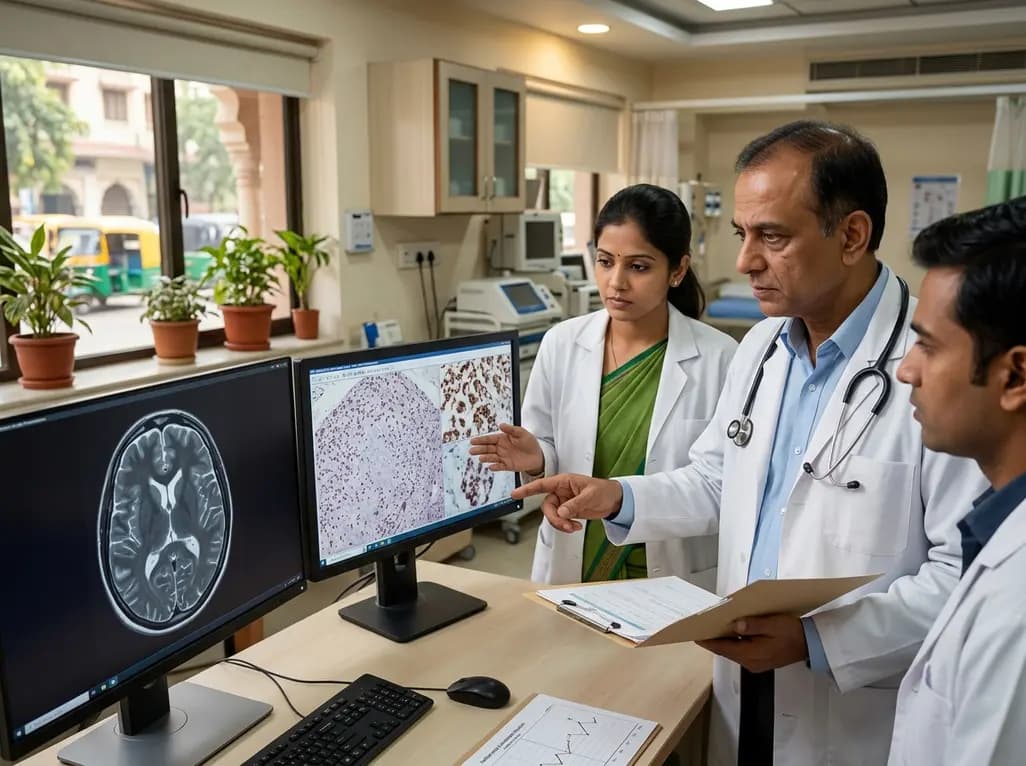
Pleomorphic xanthoastrocytomas (PXAs) are exceptionally rare brain tumors that predominantly affect children and young adults. Historically classified as WHO grade 2 or 3 neoplasms, these circumscribed astrocytic gliomas often localize in the superficial temporal lobes. Consequently, they possess a high propensity for inducing tumor-related epilepsy. Recent clinical data suggest that pleomorphic xanthoastrocytoma epilepsy outcomes are deeply intertwined with the tumor's molecular landscape and surgical success. Furthermore, epilepsy is frequently the sentinel symptom that leads to the initial diagnosis in nearly 70% of patients. Despite their relatively indolent nature compared to diffuse gliomas, the management of PXA requires a nuanced understanding of both oncological control and seizure suppression. Most importantly, clinicians must recognize that while surgical resection often yields high rates of immediate seizure freedom, long-term outcomes vary significantly based on molecular markers. By examining these factors, medical professionals can better prognosticate the clinical course for their patients. Therefore, integrating molecular profiling into standard diagnostic protocols is no longer optional but essential for modern neuro-oncological care. This section explores how these rare tumors disrupt cortical networks and why seizure control remains a primary metric for treatment success.
One of the most striking findings in recent retrospective analyses is the high prevalence of unrecognized focal seizures. Specifically, nearly one-third of patients with PXA experience focal episodes that go undiagnosed until a major seizure event occurs. This delay often stems from the subtle nature of focal-aware seizures, which may present as transient sensory changes or psychological phenomena. However, these symptoms are often misattributed to stress or other non-neurological conditions. Moreover, the anatomical localization of PXA in the temporal lobe typically produces complex semiology that requires a detailed, anatomically guided history. Clinicians must actively screen for these events because early detection can lead to earlier surgical intervention. Additionally, patient education regarding the diverse manifestations of epilepsy is vital. If a patient reports intermittent auras or brief episodes of confusion, a high index of suspicion for tumor-related activity is warranted. Notably, the underreporting of these events may mask the true duration of the disease before the index presentation. Consequently, a thorough neurological evaluation must include a dedicated seizure history to ensure no subtle diagnostic clues are missed. Ultimately, bridging this gap in recognition is critical for improving early-stage pleomorphic xanthoastrocytoma epilepsy outcomes and overall patient safety.
Surgical intervention remains the cornerstone of treatment for patients with pleomorphic xanthoastrocytoma. Fortunately, the majority of patients achieve significant relief from tumor-related epilepsy following the first surgical resection. Data indicate that approximately 78.9% of patients remain seizure-free in the period following the initial surgery but prior to any tumor recurrence. This high rate of success underscores the importance of achieving a gross total resection whenever possible. Furthermore, surgeons often utilize intraoperative electrocorticography (ECoG) to map the epileptogenic zone surrounding the tumor. By removing not just the tumor mass but also the highly irritable peritumoral tissue, the likelihood of long-term seizure control increases. However, the success of surgery depends on the location of the tumor relative to eloquent brain regions. In cases where the tumor involves critical functional zones, subtotal resection may be necessary, which can impact subsequent seizure frequency. Additionally, the role of adjuvant therapies like radiation or chemotherapy must be considered if the tumor shows high-grade features. Despite these complexities, the primary goal of surgery remains twofold: cytoreduction and seizure elimination. Therefore, a multidisciplinary approach involving both neurosurgeons and epileptologists is essential for optimizing pleomorphic xanthoastrocytoma epilepsy outcomes post-operatively.
In the era of precision medicine, the molecular profile of a tumor provides invaluable prognostic information. Specifically, the loss of ATRX expression has emerged as a significant predictor of favorable pleomorphic xanthoastrocytoma epilepsy outcomes. Research demonstrates that patients with ATRX loss have a much higher probability of achieving long-term seizure freedom compared to those without this mutation. In one study, 87.5% of patients with ATRX loss remained seizure-free at their most recent follow-up, whereas only 20% of those without the loss achieved the same status. This stark difference suggests that molecular features may influence the intrinsic epileptogenicity of the tumor cells or the surrounding microenvironment. Furthermore, other mutations such as BRAF V600E are also common in PXAs and may play a role in seizure phenotypes. Understanding these genetic drivers allows clinicians to tailor their counseling and monitoring strategies. For instance, a patient with a molecular profile associated with poor seizure control might require more aggressive anti-seizure medication (ASM) management. Additionally, these findings pave the way for potential targeted therapies that could address both tumor growth and epilepsy simultaneously. Consequently, molecular testing is now a vital component of the diagnostic workup for all suspected PXA cases.
For patients who have achieved seizure freedom after surgery, the recurrence of seizures is an alarming clinical sign. Recent data suggest that breakthrough seizures are highly predictive of tumor recurrence, often preceding visible changes on MRI. Remarkably, over 83% of patients who experienced seizure recurrence were found to have tumor progression on neuroimaging within a 30-day window. This close temporal relationship highlights the role of seizures as a sensitive biomarker for oncological activity. Therefore, any new-onset seizure in a previously stable patient must be treated as a neuro-oncological emergency. Clinicians should not delay in ordering high-resolution MRI with contrast to evaluate for recurrent disease. Furthermore, the management of these breakthrough seizures often requires a combination of surgical re-intervention and adjustment of ASMs. However, if the tumor has progressed to a higher grade, the epilepsy may become more resistant to standard pharmacological treatments. Additionally, the psychological impact of seizure recurrence on patients cannot be overstated, as it often signals a worsening prognosis. Consequently, vigilant monitoring and rapid response to changes in seizure status are paramount. Ultimately, the ability to act quickly upon seizure recurrence can significantly alter the management trajectory and potentially improve survival.
The long-term management of PXA-associated epilepsy requires seamless coordination between several medical specialties. Neurologists, neuro-oncologists, and neurosurgeons must work together to balance the side effects of medications with the goals of tumor control. Notably, some anti-seizure medications may interact with chemotherapy agents, requiring careful selection of the drug regimen. Furthermore, as patients survive longer due to improved surgical and medical care, the focus must shift toward quality of life. Achieving seizure freedom is a primary driver of life satisfaction for these patients. Consequently, regular follow-ups should include not only imaging but also detailed reviews of seizure frequency and medication tolerability. Moreover, the evolution of WHO grading and molecular classifications means that long-term survivors may benefit from re-evaluating their pathology with modern techniques. In India, where access to advanced molecular testing is expanding, clinicians should advocate for comprehensive profiling to better guide treatment. Additionally, supporting patients through the emotional challenges of living with a rare brain tumor is a crucial component of care. Therefore, a holistic approach that addresses both the physical and neurological aspects of the disease is necessary. In conclusion, while PXAs are rare, the lessons learned from their epilepsy outcomes provide a roadmap for managing tumor-related epilepsy across various low-grade gliomas.
ATRX loss is a significant molecular marker associated with improved seizure freedom. Specifically, patients with this loss demonstrate an 87.5% rate of seizure freedom at long-term follow-up compared to only 20% in those without the mutation. This suggests that the molecular subtype of the tumor plays a critical role in its epileptogenic potential.
A breakthrough seizure is a sensitive indicator of tumor recurrence. Research shows that over 83% of patients who experience a new seizure after a period of freedom have MRI-confirmed tumor progression within 30 days. Consequently, any new seizure activity warrants immediate neuroimaging to rule out oncological recurrence or progression.
The primary challenge lies in the recognition of focal seizures, which nearly 32% of patients experience without initial diagnosis. These seizures are often subtle and can be mistaken for non-neurological issues. A detailed, anatomically guided history focusing on temporal lobe semiology is essential for identifying these events early in the clinical course.
Disclaimer: This content is for informational and educational purposes only. It is not a substitute for professional medical advice, diagnosis, or treatment. Always seek the advice of your physician or other qualified health provider with any questions you may have regarding a medical condition. Refer to the latest local and national guidelines for clinical practice.
References
Nathan CL et al. Epilepsy characteristics and outcomes in patients with pleomorphic xanthoastrocytomas. J Neurooncol. 2026 Jun 19. doi: 10.1007/s11060-026-05607-2. PMID: 42319547.
Zhou J et al. Seizure characteristics and outcomes in patients with pleomorphic xanthoastrocytoma. Neuro-Oncology Advances. 2025;7(1):vdaf134. doi: 10.1093/noajnl/vdaf134.
MedLink Neurology. Pleomorphic xanthoastrocytoma: Clinical features and molecular classification. Updated 2024. Available at: https://www.medlink.com/articles/pleomorphic-xanthoastrocytoma.

Read summarized clinical updates, watch expert medical content, and earn CME certifications right from your smartphone.
Open your smartphone camera to scan and install.





New research highlights that ATRX loss and tumor recurrence are major factors in pleomorphic xanthoastrocytoma epilepsy outcomes. While 79% of patients achieve initial seizure freedom after surgery, breakthrough seizures often precede MRI-visible tumor recurrence by 30 days.
3 months ago

Explore vital recurrent stroke predictors in lacunar stroke patients managed with intensive blood pressure lowering. This analysis examines trial findings from SPS3 to uncover residual vascular risks, metabolic factors, and targeted secondary prevention strategies for high-risk neurological patients.
Today

A comprehensive scoping review synthesises evidence linking prenatal maternal mental health to long-term offspring neurodevelopment, evaluating neuroendocrine, inflammatory, and epigenetic pathways while highlighting clinical screening and future research priorities.
Today

The Directorate General of Health Services directs Indian states to halt the hazardous reuse and reprocessing of single-use medical devices. Discover regulatory implications under the Drugs and Cosmetics Act, critical infection risks, legal liabilities, and operational changes required across clinical specialties.
Today

Mitochondria-targeted nanoparticles self-assembled from EGCG and L-glutamic acid effectively restore mitochondrial homeostasis, suppress synovial inflammation, and attenuate chondrocyte senescence in osteoarthritis, offering a promising disease-modifying nanotherapy.
Today

India is advancing preventive healthcare by integrating genomics, artificial intelligence, and quantum technologies. With the SANGAM programme sequencing one million Indian genomes, clinicians can unlock personalized therapies, detect cardiometabolic risks early, and curb the burden of diabetes and heart disease.
Today
