

Loading, please wait...
Loading, please wait...

In modern tertiary hospitals, plastic surgery consultations provide vital reconstructive expertise for patients across diverse medical specialties. Although public perception frequently associates plastic surgery with elective aesthetic enhancements, inpatient reality centers on complex wound management and restorative care. Furthermore, recent longitudinal hospital data reveals that consultation requests have expanded dramatically across medical and surgical wards.
Historically, clinicians and the public alike have mischaracterized plastic surgery as a purely cosmetic field. However, general hospital practice demonstrates an entirely different clinical reality. Reconstructive surgeons routinely serve as indispensable problem solvers for difficult inpatient complications across diverse wards. Consequently, inpatient teams frequently rely on their advanced anatomical expertise to treat extensive soft tissue deficits, acute dehiscence, and necrotizing infections.
During the pre-pandemic era, baseline consultation volumes already reflected consistent institutional demand. Ward physicians sought expert guidance for complex wound coverage, local flap design, and tissue viability assessments. Moreover, reconstructive surgeons provided crucial recommendations regarding microvascular perfusion and functional preservation. Rather than performing superficial enhancements, these specialists restored physical form, preserved limb mobility, and shielded exposed vital structures. In tertiary medical centers, this restorative focus remains essential to comprehensive recovery. Because hospitalized patients increasingly present with multiple comorbidities, the skilled presence of reconstructive surgeons ensures safe transitions toward healing. Additionally, their early involvement prevents catastrophic wound failure and minimizes prolonged inpatient stays.
A rigorous nine-year longitudinal study of 4,205 inpatient consultations at Peking Union Medical College Hospital reveals an impressive clinical trajectory. Despite severe operational challenges during the peak pandemic years from 2020 through 2022, total consultation volume excluding emergency visits rose steadily. Furthermore, when healthcare systems entered the post-pandemic period between 2023 and 2025, consultation demand surged even more noticeably.
This sustained growth highlights the essential nature of plastic surgery within tertiary hospital infrastructure. While pandemic lockdowns constrained elective operations, ward consultations for urgent reconstructive problems continued without interruption. Consequently, clinicians recognized that deferring reconstructive evaluations compromised patient outcomes and extended hospital bed utilization. Therefore, admitting teams maintained continuous communication with reconstructive specialists to safeguard acute recovery. This sustained trajectory confirms that inpatient reconstructive consultations represent an enduring clinical priority rather than an elective hospital service. Ultimately, these longitudinal trends reflect a permanent expansion of collaborative surgical practice. Accordingly, hospital departments now regard reconstructive surgeons as primary partners in acute patient stabilization.
In the post-pandemic era, referral sources diversified far beyond conventional surgical boundaries. While trauma and general surgery historically requested the most evaluations, significant referral increases emerged from medical oncology, endocrinology, infectious diseases, and dermatology. Concurrently, surgical services including neurosurgery, gynecology, hepatic surgery, and orthopedics generated markedly higher consultation numbers.
These evolving patterns reflect broader changes in inpatient disease severity and modern therapeutics. For instance, endocrinologists frequently manage complicated diabetic foot ulcers requiring urgent debridement and targeted coverage. Similarly, medical oncologists administer advanced antineoplastic regimens that compromise wound healing, resulting in complex cutaneous breakdowns. Neurosurgical and orthopedic teams also seek specialized reconstruction to cover exposed instrumentation or delicate neural structures. As a result, cross-specialty collaboration has transitioned from an occasional option into a core clinical requirement. In addition, infectious disease specialists consistently involve plastic surgeons to eliminate necrotic reservoirs. Thus, multidisciplinary coordination ensures superior clinical management across complex hospital admissions. Furthermore, prompt bedside communication resolves severe anatomical defects before life-threatening systemic sepsis develops.
Among all consultation reasons documented over the nine-year period, requests for wound evaluation and management expanded most dramatically after the pandemic. Furthermore, the overall volume of specialized surgical procedures performed by plastic surgeons increased substantially. Hospitalized patients increasingly present with advanced age, compromised microcirculation, and complex chronic wounds that resist standard dressing regimens.
Reconstructive surgeons offer advanced procedural therapies including negative pressure dressing optimization, radical debridement, split-thickness grafting, and complex flap transposition. When standard local therapies fail, delayed consultation frequently permits tissue necrosis, deep osteomyelitis, and bacteremia. Conversely, timely bedside assessment allows plastic surgeons to clear devitalized tissue and prepare a clean, vascularized wound bed. In addition, performing definitive microvascular reconstruction protects exposed bone, reduces chronic discomfort, and prevents secondary amputations. Consequently, clinical departments increasingly recognize that early surgical consultation accelerates recovery and shortens inpatient stays. Therefore, specialized wound interventions now represent an essential component of modern inpatient healing algorithms. Accordingly, early intervention avoids costly revisions and promotes superior anatomical recovery.
The steady rise in consultation demand carries important operational implications for hospital leadership, workforce planning, and residency education. Traditionally, healthcare administrators allocate plastic surgery staff primarily according to elective surgical schedules. However, longitudinal consultation analyses reveal that inpatient consultative responsibilities require substantial daily dedicated time. Inadequate staffing models inevitably cause consultation delays, prolonged bed occupancy, and compromised inpatient workflows.
Consequently, tertiary hospitals must establish structured consultation rosters to ensure prompt bedside assessments and timely operative intervention. Furthermore, healthcare facilities should provide dedicated emergency operating room slots for urgent reconstructive cases. On an academic level, surgical residency programs must align training curricula with practical hospital demands. Although aesthetic surgery remains a vital aspect of plastic surgery education, training programs must place equal emphasis on complex wound biology, microsurgical reconstruction, and interdepartmental collaboration. By strategically aligning institutional resources with actual consultation volumes, healthcare systems can enhance patient safety, decrease preventable surgical complications, and foster efficient interdisciplinary care. Ultimately, this structural adaptation ensures sustainable hospital operations and superior patient outcomes.
Non-surgical departments like endocrinology, oncology, and infectious diseases increasingly care for medically complex inpatients with compromised tissue healing. Chronic diabetic foot ulcers, radiation wounds, and refractory tissue infections require advanced surgical evaluation beyond conventional medical management. Plastic surgeons provide expert debridement, specialized negative pressure therapy, and definitive reconstructive options. Consequently, their early multidisciplinary involvement prevents severe systemic complications, restores functional anatomical barriers, and shortens overall hospital stay for vulnerable medical inpatients.
Although the pandemic disrupted elective surgical scheduling, inpatient reconstructive consultations rose consistently across all pandemic phases. In the post-pandemic period, consultation demand accelerated significantly across multiple hospital wards. Delayed outpatient presentations, acute viral disruptions, and heightened clinical awareness created a surge in advanced, non-healing wounds. Consequently, inpatient teams relied more heavily on reconstructive plastic surgeons to perform bedside assessments, complex wound debridement, and specialized coverage procedures to facilitate safe hospital discharge.
Early plastic surgery involvement provides specialized wound bed preparation, precise anatomical assessment, and targeted reconstructive interventions before severe complications develop. When consulted promptly, plastic surgeons evaluate underlying tissue vascularity, clear necrotic tissue, and implement advanced closure methods, such as skin grafts or local flaps. Consequently, this proactive collaboration reduces deep tissue infections, prevents secondary limb amputations, and mitigates expensive prolonged hospitalizations, thereby significantly improving clinical outcomes for complex inpatients.
Disclaimer: This content is for informational and educational purposes only... Refer to the latest local and national guidelines for clinical practice.
References

Read summarized clinical updates, watch expert medical content, and earn CME certifications right from your smartphone.
Open your smartphone camera to scan and install.





A 9-year longitudinal analysis of 4,205 inpatient consultations demonstrates that plastic surgery has expanded far beyond cosmetic procedures, becoming an indispensable pillar of complex wound care, reconstructive surgery, and multidisciplinary hospital management across and beyond the COVID-19 pandemic.
Today
Following regulatory scrutiny over chemical contaminants in packaged water, food safety authorities have highlighted acceptable chemical thresholds. This clinical overview outlines the toxicological profile of bromate and polycyclic aromatic hydrocarbons, their health impacts, and essential patient guidance.
Today

Mosaic trisomy 20 presents a unique diagnostic challenge. Although frequently viewed as a benign artifact in prenatal testing, true mosaicism causes distinct skeletal, gastrointestinal, and renal manifestations. Skin fibroblast karyotyping provides definitive confirmation and guides long-term multidisciplinary care.
Today

A nationwide Swedish register study of 46,479 VTE patients found no significant increase in major or fatal bleeding with concomitant DOAC and SSRI therapy compared to DOACs alone, though all-cause mortality was modestly elevated, offering reassuring safety data for clinicians managing both conditions.
Today
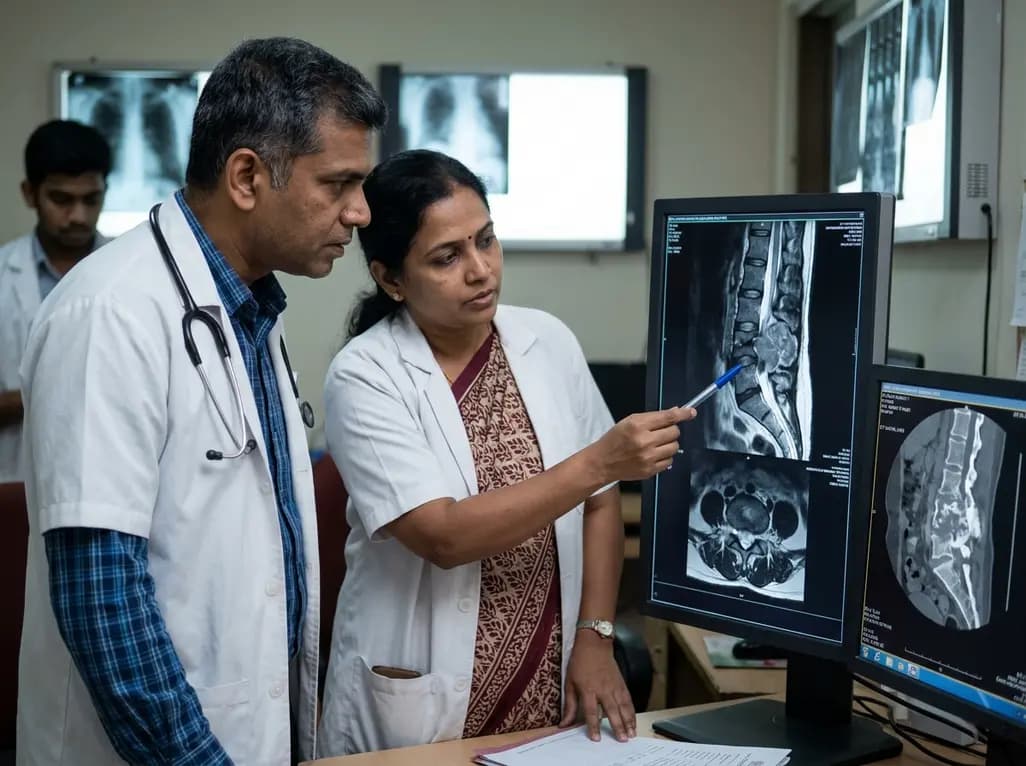
Primary spinal bone tumors can mimic benign nerve sheath tumors as foraminal dumbbell lesions. Learn to recognize crucial CT red flags and prevent delays.
Today
A recent investigation assesses the impact of succinate supplements on metabolic health, energy intake, and muscle remodeling in mice fed high-fat or ketogenic diets. Although succinate briefly blunts hyperphagia, it fails to improve long-term glycemic control or alter skeletal muscle hypertrophy.
Today
