.webp&w=384&q=75)

Loading, please wait...
Loading, please wait...

Cushing's disease remains one of the most formidable endocrine disorders, characterized by severe hypercortisolemia driven by corticotroph pituitary adenomas. While endonasal transsphenoidal resection serves as the cornerstone of therapy, achieving durable remission remains difficult. Consequently, forecasting long-term tumor control and predicting post-surgical outcomes after pituitary surgery Cushing's disease represents a critical clinical objective. Conventional prognostic assessments rely on individual biochemical and radiological markers, but these isolated variables frequently fail to capture complex clinical realities. A recent landmark study published in the Journal of Neurosurgery illustrates the power of supervised machine learning in overcoming these prognostic limitations. By evaluating multidimensional clinical datasets, researchers developed tree-based models capable of accurately predicting intervention-free survival and identifying patients at high risk for treatment failure. As a result, multidisciplinary neuroendocrine teams can improve pre-surgical counseling, tailor operative strategies, and design individualized postoperative surveillance protocols that optimize long-term patient health.
Transsphenoidal pituitary surgery represents the established first-line intervention to achieve rapid endocrinological remission while preserving normal pituitary gland tissue. However, approximately twenty to thirty percent of patients experience disease persistence or subsequent recurrence during long-term monitoring. Historically, clinicians evaluated isolated prognostic markers, such as baseline serum adrenocorticotropic hormone, tumor dimensions, and cavernous sinus invasion. Although these clinical markers offer valuable baseline insights, solitary parameters frequently lack sufficient precision to forecast long-term outcomes accurately. In contrast, supervised machine learning algorithms evaluate multivariate, non-linear relationships across diverse physiological and anatomical characteristics simultaneously. Therefore, tree-based predictive architectures can synthesize complex clinical variables into reliable prognostic assessments. In this retrospective investigation, researchers specifically analyzed intervention-free survival across a median follow-up period of 56 months. They defined therapeutic success as sustained biochemical remission without secondary salvage interventions, such as repeat transsphenoidal resection, stereotactic radiosurgery, or medical adrenal suppressive therapy. Furthermore, the study demonstrated that routine post-surgical follow-up protocols benefit significantly from incorporating automated risk stratification. By stratifying patients at baseline, clinicians can identify vulnerable individuals early, implement intensive hormonal surveillance, and avoid delayed therapeutic responses.
The researchers systematically analyzed medical records from 150 consecutive patients who underwent endonasal transsphenoidal resection for Cushing's disease between 2013 and 2023. They extracted comprehensive data regarding baseline characteristics, operative techniques, histopathological confirmations, immediate postoperative biochemical profiles, and long-term endocrine status. Subsequently, the investigators trained and tested decision tree and random forest classifiers using an 80/20 cohort split to assess predictive capacity on unseen clinical data. Within the total cohort, 42 patients, representing 28 percent, eventually required secondary salvage interventions due to persistent hypercortisolemia or clinical recurrence. Consequently, overall intervention-free survival rates after primary surgery stood at 83 percent at three years and 78 percent at five years. When evaluated on the unseen test set, the decision tree model demonstrated an outstanding 91 percent accuracy. Furthermore, the algorithm achieved 87 percent sensitivity and 89 percent specificity, confirming its robust discriminatory power. Unlike obscure artificial neural networks, decision tree models produce an intuitive, transparent flowchart that clinicians can easily interpret. Thus, multidisciplinary surgical teams can directly integrate these algorithmic pathways into clinical conferences without encountering algorithmic opacity.
To identify which clinical features exerted the greatest prognostic impact, the investigators employed random forest algorithms to evaluate variable importance through minimal depth calculations. Interestingly, random forest modeling identified four primary predictors: maximum tumor diameter, Knosp grade, patient age, and body mass index. Multivariable Cox proportional hazards analysis further demonstrated that smaller tumor diameter detectable on preoperative magnetic resonance imaging significantly correlated with prolonged intervention-free survival. Specifically, each millimeter decrease in tumor dimension provided a measurable reduction in recurrence hazard. In contrast, the absence of an identifiable adenoma on preoperative imaging proved to be a strong negative predictor. Because MRI-negative microadenomas require blind hemi-hypophysectomy or extensive gland exploration, achieving microscopic gross-total resection remains technically demanding. Moreover, elevated Knosp grades indicated invasive growth into the adjacent cavernous sinus, which impedes radical surgical removal. Most remarkably, body mass index emerged as an influential predictive feature alongside chronological age. Although traditional teaching emphasized anatomical margins and tumor dimensions, this finding emphasizes that metabolic derangements significantly affect surgical outcomes, demanding comprehensive post-surgical metabolic stabilization.
These algorithmic insights provide actionable advantages for endocrine and neurosurgical teams treating Cushing's disease. Because the decision tree model utilizes readily accessible clinical parameters, clinicians can perform risk stratification immediately before surgical intervention without requiring specialized assays. For instance, a patient presenting with an MRI-occult tumor, high Knosp invasion, and elevated body mass index carries substantial risk for treatment failure. Consequently, surgical teams can discuss realistic expectations preoperatively, preparing the patient for the potential need for multimodal salvage therapies. Furthermore, this pre-intervention classification assists surgeons in evaluating the safety of radical cavernous sinus exploration versus planned adjuvant stereotactic radiosurgery. Postoperatively, high-risk patients warrant aggressive biochemical monitoring, incorporating midnight salivary cortisol and low-dose dexamethasone suppression tests at frequent intervals. Conversely, patients stratified into low-risk categories can safely avoid excessive imaging and testing, reducing anxiety and financial burden. Additionally, the prominent role of body mass index underscores the importance of integrating structured weight management into neuroendocrine clinics, addressing metabolic risk factors alongside hormonal normalization.
The demonstrated predictive accuracy of tree-based machine learning models highlights the transformative potential of artificial intelligence in neuroendocrinology. However, widespread clinical adoption requires rigorous external validation across independent, multicenter patient cohorts. Because surgical expertise and high-resolution imaging protocols vary significantly between medical centers, validating the model across diverse populations remains paramount. Furthermore, future investigations plan to integrate quantitative radiomics and automated computer vision into existing algorithmic frameworks. Researchers are currently developing advanced registry tools that automatically extract volumetric and textural imaging features from preoperative magnetic resonance scans. By combining radiomic textures with continuous clinical data from electronic health records, artificial intelligence platforms will generate dynamic, real-time risk scores throughout the patient journey. Additionally, incorporating post-surgical hormonal nadirs, such as immediate morning serum cortisol and plasma corticotropin levels, will refine model specificity further. As these predictive technologies evolve, machine learning will move beyond retrospective validation to become an essential, interactive clinical decision-support tool, improving long-term outcomes and preserving endocrine function for patients worldwide.
Intervention-free survival defines the duration during which a patient remains free from disease recurrence or persistence requiring salvage therapy after initial surgery. Consequently, clinicians use this metric to track long-term cure. In this study, intervention-free survival reached 83 percent at three years and 78 percent at five years postoperatively.
Visible tumors on preoperative magnetic resonance imaging allow neurosurgeons to identify and resect microadenomas with greater anatomical precision. In contrast, non-visible lesions frequently necessitate exploratory gland exploration. Therefore, patients without MRI-detectable lesions experience higher rates of persistent hypercortisolemia and lower intervention-free survival, requiring closer long-term endocrine surveillance.
Higher body mass index often correlates with severe metabolic dysregulation and altered baseline steroid hormone dynamics. Furthermore, elevated adiposity can complicate clinical assessment and postoperative recovery. The random forest model highlighted body mass index as a top predictor, showing that metabolic status significantly influences long-term biochemical control following endonasal surgery.
Disclaimer: This content is for informational and educational purposes only... Refer to the latest local and national guidelines for clinical practice.
References

Read summarized clinical updates, watch expert medical content, and earn CME certifications right from your smartphone.
Open your smartphone camera to scan and install.





A tree-based machine learning model demonstrates 91% accuracy in predicting long-term intervention-free survival after endonasal surgery for Cushing's disease. Key prognostic variables include tumor size, Knosp grade, patient age, and BMI, offering clinicians a powerful tool for personalized treatment planning.
last month
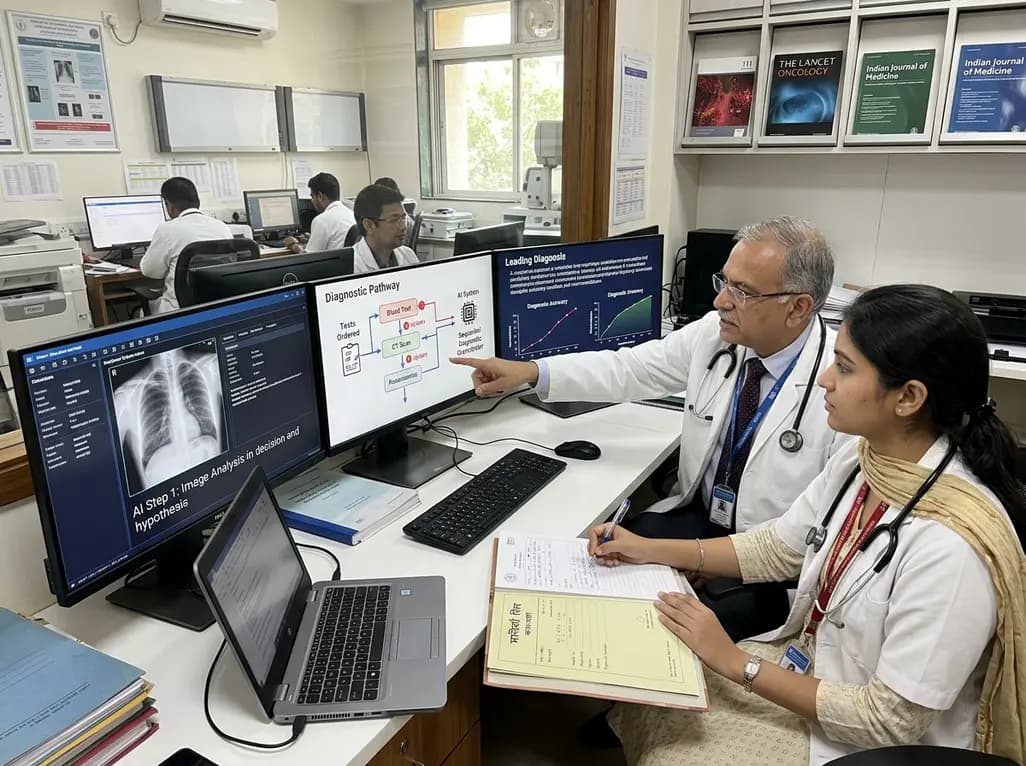
A breakthrough peer-reviewed study demonstrates that a sequential AI diagnosis system can mirror real-world clinical reasoning. By ordering stepwise tests and updating hypotheses dynamically, this multi-agent orchestrator achieved superior diagnostic accuracy while reducing investigative costs.
Today

A prenatal case highlights severe glutaric acidemia type II presenting as bilateral hyperechoic cystic kidneys at 18 weeks. Whole-exome sequencing revealed a novel homozygous ETFDH frameshift variant, demonstrating the power of rapid genetic testing in fetal renal anomalies.
Today

Review how tailored exercise programs benefit frail older patients with heart failure. Explore pathophysiological mechanisms, individualized training prescriptions, and strategies to overcome adherence barriers in clinical practice.
Yesterday

This comparative study evaluates posterior labral tears with and without glenohumeral instability, highlighting distinct demographic patterns, MRI underestimation in stable shoulders, and successful arthroscopic repair outcomes.
Yesterday

A clinical study demonstrates that early intervention with tocilizumab, either as monotherapy or bridged with corticosteroids, achieves significant proptosis reduction and resolves active inflammation in treatment-naive thyroid eye disease.
Yesterday
