.webp&w=384&q=75)

Loading, please wait...
Loading, please wait...

Surgical specialties require intense physical stamina, rapid decision-making, and significant emergency coverage. Consequently, orthopedic surgeons face a high risk of occupational burnout and diminished well-being. To mitigate these chronic stressors, healthcare policymakers recently introduced nationwide physician work style reform initiatives. These legislative measures seek to regulate excessive overtime hours and foster sustainable clinical environments. However, understanding whether legislative limits alone translate into measurable improvements in quality of life remains essential for medical administrators and clinical practitioners worldwide.
Orthopedic surgery remains one of the most physically demanding fields in modern clinical practice. Surgeons routinely perform prolonged manual procedures, manage acute trauma cases, and handle heavy inpatient volumes. Therefore, chronic fatigue and occupational distress frequently compromise surgeon health and career longevity. When policymakers enacted physician work style reform, the primary goal was capping monthly overtime to protect clinicians from severe exhaustion.
Furthermore, excessive work hours directly correlate with medical errors, cognitive fatigue, and diminished job satisfaction across high-volume surgical departments. By establishing legal thresholds on overtime, health authorities aimed to stimulate institutional restructuring. Hospitals had to reconsider task allocation, administrative burden, and emergency shift rotations. Nevertheless, real-world data tracking surgeons longitudinally through these transitions have been scarce. Evaluating longitudinal outcomes provides vital insight into how work hour restrictions actually alter physician daily life and clinical performance.
To evaluate the real-world impact of these legislative changes, researchers conducted a comprehensive longitudinal observational study. The investigators enrolled 79 full-time orthopedic surgeons affiliated with a university hospital network. The cohort completed paired prospective surveys across two consecutive periods: baseline in 2023 prior to reform implementation and follow-up in 2024 after official enforcement.
Additionally, the researchers measured multiple objective and subjective health dimensions. They tracked monthly overtime hours alongside standardized assessment instruments. Specifically, they utilized the EuroQol 5-Dimension 5-Level (EQ-5D-5L) questionnaire and the 36-Item Short Form Health Survey (SF-36) to evaluate health-related quality of life. Furthermore, they measured anxiety and depression symptoms using the validated Hospital Anxiety and Depression Scale (HADS). Paired categorical and continuous variables were evaluated with McNemar tests and Wilcoxon signed-rank tests, ensuring robust statistical tracking over time.
Interestingly, the quantitative analysis revealed only modest shifts in working hours. Monthly overtime hours decreased slightly from 49.2 ± 23.6 hours at baseline to 46.0 ± 22.1 hours post-reform. However, this reduction did not achieve statistical significance. Similarly, the proportion of surgeons working extreme overtime—defined as 80 or more overtime hours per month—decreased from 10.1% to 7.6%, representing a positive directional trend without statistical significance.
Moreover, psychological symptom scores demonstrated stability rather than drastic reduction. The study observed no significant changes in HADS anxiety or depression subscales between the two survey periods. These findings indicate that simple overtime restrictions do not automatically alleviate psychological distress among surgeons. Because surgeons carry heavy emotional responsibility for patient outcomes, cognitive burdens persist regardless of minor fluctuations in scheduled hours. Thus, mitigating surgeon anxiety demands more comprehensive psychological and institutional support systems.
In contrast to the psychological metrics, overall health-related quality of life showed statistically significant enhancement. Mean EQ-5D-5L index scores improved significantly from 0.86 ± 0.10 before the reform to 0.89 ± 0.10 following implementation. Furthermore, analysis of SF-36 subscales revealed a notable trend toward improvement in the role physical domain, reflecting reduced physical interference with daily professional responsibilities.
Importantly, closer examination revealed that the median EQ-5D score remained unchanged across the cohort. The overall mean improvement occurred primarily because low-scoring outliers experienced meaningful gains. Consequently, the reform appeared most beneficial for surgeons who suffered the greatest baseline physical impairment and distress. Relieving even a fraction of peak workload provided tangible physical relief to the most vulnerable clinicians, demonstrating that regulatory caps offer protective floors against severe physical exhaustion.
These findings provide crucial lessons for hospital leaders, department chairs, and regulatory bodies worldwide. Regulating duty hours represents a valuable foundational step, but legislative caps cannot serve as a standalone solution for physician wellness. Although duty caps protect against extreme overwork, they do not automatically optimize daily workflow efficiency or reduce cognitive strain.
Therefore, healthcare organizations must implement multifaceted systemic strategies. Facilities should invest in digital documentation tools, expand multidisciplinary support staff, and delegate non-clinical administrative tasks away from operating surgeons. In addition, institutions must foster a supportive departmental culture where taking rest is normalized. When hospitals combine structured duty limits with targeted organizational support, surgeons can maintain peak operative performance while safeguarding their long-term health and well-being.
The reform establishes regulatory caps on monthly overtime to prevent excessive work hours. In observational findings, monthly overtime decreased modestly from 49.2 to 46.0 hours, and clinicians working over 80 overtime hours dropped from 10.1% to 7.6%. While these numerical reductions were not statistically significant, they established vital structural boundaries that curtailed extreme duty excesses across surgical departments.
Surgeons did not exhibit significant reductions in Hospital Anxiety and Depression Scale scores following the reform. Psychological distress in surgical specialties stems from complex factors, including clinical responsibility, operative complications, and administrative burdens. Consequently, limiting working hours alone without comprehensive emotional and departmental support mechanisms proves insufficient to resolve deep-seated anxiety or depressive symptoms.
The statistically significant rise in mean EQ-5D quality of life scores occurred because severely impaired outliers experienced substantial relief. While surgeons with high baseline well-being remained steady, those suffering from extreme fatigue gained noticeable physical and functional benefits. Thus, the reform functioned primarily as a protective safety net for the most vulnerable practitioners.
Disclaimer: This content is for informational and educational purposes only and does not constitute formal medical or legal advice. Healthcare professionals should evaluate organizational policies, occupational health standards, and patient safety requirements independently. Refer to the latest local and national guidelines for clinical practice.
References

Read summarized clinical updates, watch expert medical content, and earn CME certifications right from your smartphone.
Open your smartphone camera to scan and install.





A longitudinal study evaluates the impact of physician work style reform on orthopedic surgeons, revealing modest improvements in quality of life but highlighting the need for broader systemic interventions beyond duty hour caps alone.
last month

A nationwide multicenter study identified three COPD clinical phenotypes, finding that mild smoking males experience the highest rate of rapid lung function decline. A CatBoost model using six routine clinical and socioeconomic variables accurately stratifies high-risk patients for early therapeutic intervention.
Today
Discover the crucial distinctions between mesonephric and mesonephric-like proliferations of the female genital tract. Learn the key histomorphologic, immunohistochemical, and molecular differences essential for accurate diagnosis and clinical management.
Today
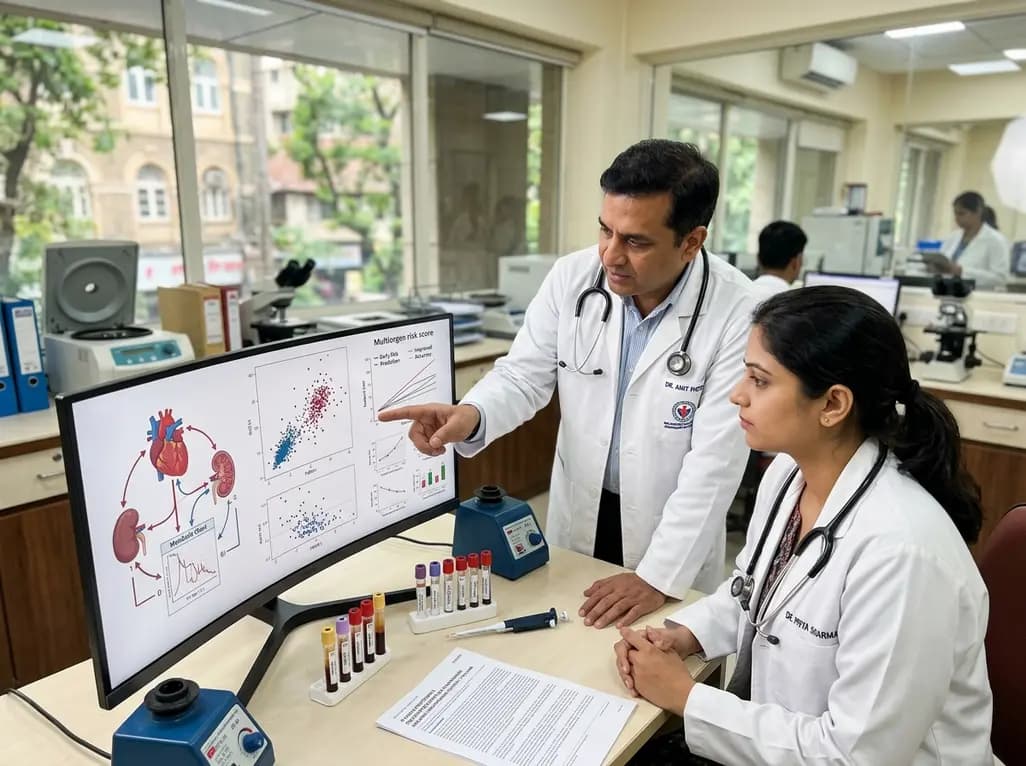
A large UK Biobank study reveals that plasma proteomic signatures capture preclinical organ damage and improve multiorgan risk prediction across early CKM syndrome stages 0 to 2 beyond traditional PREVENT clinical models.
Today
A narrative review investigates whether the articularis genus muscle functions as an independent anatomical entity or blends with the vastus intermedius. We evaluate its morphology, role in retracting the suprapatellar bursa, and direct clinical significance in anterior knee pain and arthroplasty.
Today

A Bayesian multilevel meta-analysis reveals that aerobic training combined with moderate carbohydrate restriction modestly lowers HbA1c in type 2 diabetes. However, sparse data and very low certainty leave incremental benefits over exercise or diet alone unproven, highlighting the need for individualized care.
Today
